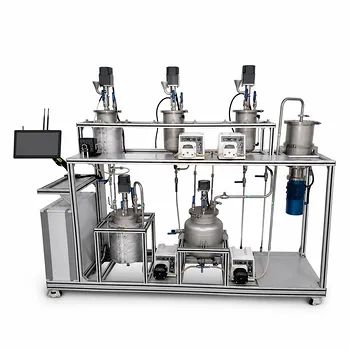
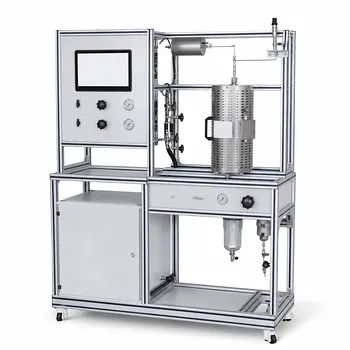
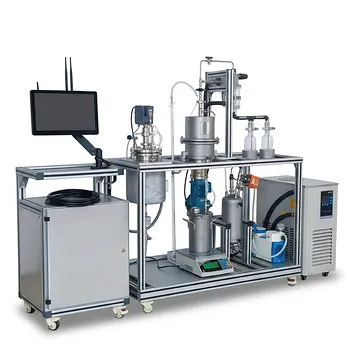
Taming the biomass-to-chemicals conversion at pilot scale demands a design that harmonizes three complex worlds: living biological systems, demanding fluid mechanics, and efficient product recovery. The critical design considerations are precise control of the bioreactor microenvironment—temperature, pH, and dissolved oxygen—robust mixing systems that can handle high-solid, viscous slurries without damaging cells or enzymes, and tightly integrated downstream separation to continuously remove platform chemicals and avoid feedback inhibition.
Bioprocess pilot plants succeed or fail at the intersection of biology and engineering. The deepest need is not simply building a reactor, but designing an integrated chain where enzyme activity, microbial health, and mass transfer are balanced against shear forces, while product removal keeps the reaction driving forward. Master these interacting constraints, and the pilot plant becomes a reliable scale-up engine.
Mastering the Microenvironment: Precision Control Systems
Temperature, pH, and Dissolved Oxygen – The Biological Triad
Enzyme-catalyzed hydrolysis and fermentation are exquisitely sensitive to their surroundings. Temperature directly dictates reaction kinetics and, if it drifts outside a narrow window, can irreversibly denature the protein catalysts that break down cellulose or starch.
pH controls the active site charge on enzymes and the metabolic pathways of fermenting microbes. A deviation of even 0.2 pH units can cut product yield drastically. Pilot plants must therefore deploy automated dosing of acid or base with minimal lag time.
For aerobic organisms, dissolved oxygen (DO) is the key electron acceptor that sustains growth and product formation. The design must integrate spargers and agitation to maintain DO above the critical concentration, while accounting for the higher oxygen demand that often accompanies high-cell-density cultures.
The Role of Feedback Loops in Pilot-Scale Validation
A pilot plant is not a laboratory flask. Heat and mass transfer patterns shift with scale, making it essential to embed cascaded PID control loops. These systems continuously monitor sensors and adjust heating jackets, cooling coils, and gas flow to maintain setpoints.
Documenting the control system’s response is vital for scale-up. The pilot plant must act as a truth source, revealing where process time constants change and where sensor placement becomes problematic—information that will define the manufacturing facility.
Taming the Slurry: High-Solids Handling and Mixing
The Challenge of Viscous Biomass Feeds
Raw biomass substrates like milled corn stover or crystalline cellulose absorb water and create non-Newtonian, high-viscosity slurries. At solids loadings above 15-20%, the rheology often becomes yield-stress, requiring disproportionate power to initiate and sustain flow.
This environment demands mixing strategies that can overcome inertia without creating zones of nutrient starvation or localized toxin buildup. Inadequate mixing leads to mass transfer limitation, slowing hydrolysis rates and making the pilot data unrepresentative of the true biological potential.
Impeller Geometry and Agitator Power – A Delicate Balance
The bioreactor’s internal hydrodynamic profile is largely defined by impeller geometry. Axial-flow hydrofoil impellers may provide gentle bulk circulation, while radial-flow Rushton turbines excel at gas dispersion for oxygen transfer—but at the cost of higher shear.
Designing for biomass conversion means choosing an agitator package that ensures sufficient mass transfer while protecting shear-sensitive macromolecules. Tip speed and local energy dissipation rates become the critical dials. Exceeding the shear tolerance of a cellulase enzyme complex or a fungal hyphae will permanently destroy catalytic activity, even if the reactor appears perfectly mixed.
Selecting the Right Bioreactor Configuration
The classic stirred-tank reactor is only one pathway. When shear sensitivity or mass transfer demands are extreme, alternative configurations become critical design considerations.
Airlift loop fermenters use gas buoyancy for circulation, providing inherently low shear stress ideal for delicate cells. Fluidized bed bioreactors suspend immobilized enzyme particles with upward fluid flow, decoupling biomass retention from hydraulic residence time and enabling continuous operation with high throughputs.
Packed bed bioreactors, filled with immobilization carriers, allow for perfusion culture where product is continuously harvested while cells are retained—a powerful tool for processes plagued by feedback inhibition. Other specialized systems, such as hollow fiber bioreactors (for integrated product separation) or mechanically stirred photobioreactors (for photosynthetic organisms), should be evaluated when the biological system dictates a non-traditional design. The pilot plant’s architecture must fit the organism, not the other way around.
The Critical Integration of Downstream Separation
Preventing Product Inhibition through Continuous Removal
Many platform chemicals, such as ethanol, butanol, or organic acids, accumulate in the broth and directly inhibit the enzymes or microbes that produce them. A pilot plant that merely ferments without removing product will misrepresent real-world achievable titers and rates.
The design must therefore embed in-situ product recovery (ISPR). Interfacing the bioreactor with membrane filtration, extraction columns, or pervaporation units allows continuous withdrawal of the inhibitory compound, keeping the biological machinery running at full speed.
Choosing Appropriate Unit Operations and Their Scale-Up Challenges
Membrane filtration systems—ultrafiltration or nanofiltration—are common choices, but they face fouling from residual biomass and proteins. Pilot plant operation should generate a fouling model to inform cleaning-in-place (CIP) strategies for commercial scale.
Chromatography offers high selectivity but introduces pressure drop and cost complexities. The pilot plant becomes a testing ground where the trade-off between recovery purity and operational simplicity is quantified, providing the data needed to select the right separation technology long before a factory is built.
Ensuring Safe and Scalable Mechanical Design
Classifying the Reactor as a Pressure Vessel
Pilot units often operate under non-isothermal or pressurized conditions—during steam sterilization or high-temperature hydrolysis. This immediately elevates the reactor from a simple tank to a coded pressure vessel.
Mechanical design must include calculations for wall thickness, head types, and nozzle orientations according to ASME or local codes. Overlooking this requirement creates a serious safety hazard and can delay regulatory approval of the scaled process. The pilot plant must not only be functional but certifiably safe for the operating conditions it will endure.
Material Selection and Sterilization Integrity
Every wetted part must withstand repeated sterilization cycles—typically using steam at 121°C—without corrosion or leaching. The choice of stainless steel (316L is standard) or advanced polymers must be validated against the chemical environment of the biomass slurry, which can be both acidic and abrasive.
Seal and gasket integrity, along with proper valve selection, ensures that sterile boundaries are maintained. A single contamination event in a pilot plant can invalidate months of trial data, making this an unspoken but uncompromising design pillar.
Understanding the Trade-offs and Common Pitfalls
No single design parameter can be maximized in isolation. The most recurring trade-off is between intense mixing for mass transfer and the shear damage it inflicts on biocatalysts. High-solids loading pushes productivity but demands exponentially more agitator power and risks creating dead zones.
In-situ product removal adds remarkable efficiency but multiplies the complexity of sterility maintenance and capital cost. Choosing a sophisticated bioreactor type (like a fluidized bed) solves immobilization issues but introduces challenges in particle attrition and bed channeling at scale. A pilot plant design that ignores these tensions will produce data that leads to a flawed commercial design; a smart design embraces them and uses the pilot runs to find the optimal operating envelope.
Making the Right Choice for Your Pilot Plant Goal
Once the core principles are clear, the final design must align with the specific mission of the pilot campaign. Here is how to orient your choices:
- If your primary focus is maximizing enzyme longevity and reusability: Prioritize a packed bed or fluidized bed configuration with immobilized enzymes, and couple it with gentle in-situ product removal like pervaporation. This decouples shear from residence time.
- If your primary focus is highest volumetric productivity with free cells: Choose a high-performance stirred-tank reactor with carefully selected axial impellers to balance mass transfer and shear, and invest heavily in a cascade control system for temperature, pH, and DO.
- If your primary focus is scaling a shear-sensitive filamentous organism: Shift toward an airlift loop fermenter and accept a potentially lower mass transfer coefficient in exchange for preserving mycelial integrity, using downstream concentration to compensate for lower titers.
- If your primary focus is demonstrating end-to-end process integration for a novel platform chemical: Design the pilot plant with modular downstream skids (membrane filtration, chromatography) that can be swapped and tuned, making the pilot a flexible tool for techno-economic validation rather than a fixed production unit.
The best pilot plant is never a scaled-down version of a dream factory—it is a purpose-built investigation platform that masters the delicate dance between biology and hardware.
Summary Table:
| Design Aspect | Key Challenge | Engineering Solution |
|---|---|---|
| Microenvironment | Enzyme denaturation & pH drift | Cascaded PID loops, automated dosing, DO control |
| Mixing & Rheology | Viscous, high-solids slurries | Optimized impeller geometry, low-shear configurations |
| Downstream Prep | Feedback inhibition & fouling | In-situ product recovery (ISPR), modular separation skids |
| Mechanical Design | Sterilization & high pressure | ASME-coded pressure vessels, 316L stainless steel |
Are you scaling up your bioprocess or biomass conversion research? LABPARK provides state-of-the-art Educational and Vocational Unit Operations Pilot Plants in chemical engineering, bioprocess & biotech, and environmental & water treatment. Specifically designed for universities, research institutes, and enterprises, our systems offer the precision and scalability needed to bridge the gap between lab scale and commercial production. Contact us today to find the perfect pilot plant solution for your facility!
Related Products
- Natural Product Extraction Unit Operations Training Pilot Plant
- Bio-fermentation Ethanol Production Practical Training Unit Operations Pilot Plant
- Fixed Bed Gas Solid Catalytic Reaction Educational Pilot Plant
- High-Gravity Emulsification and Mass Transfer Educational Pilot Plant
- Fixed-Bed Chemical Reaction and Gas Dust Tar Removal Unit Operations Pilot Plant
People Also Ask
- How to Demo Solubility Sensitivity in SFE Pilot Plants? Practical Thermodynamics
- How do pilot plants differentiate physical vs chemical extraction? Enhance Chemical Engineering Training
- How are HTU and NTU applied to determine extraction column height? Guide to Pilot Plant Scaling
- Why use split-plot designs in pilot plants instead of CRD? Optimize process parameters effectively.
- How can Hotelling's T² & Q statistics detect pilot plant abnormalities? Optimize Safety