Scaling and deposits in pilot plants are not a single problem, but a diagnostic signature of your water chemistry. They are primarily caused by the precipitation of sparingly soluble minerals as water is heated or concentrated, combined with the introduction of treatment chemicals that can become foulants if not managed correctly. The key chemical components you'll identify are calcium, magnesium, silica, phosphate, carbonate, sulfate, and iron, but a deeper analysis often reveals more complex players like barium, manganese, and aluminum.
The central challenge isn't just knowing the chemical components of scale, but understanding their specific origin and the complex interferences they cause during analysis. A deposit rich in phosphate might point to a deliberate chemical treatment program, while one containing barium sulfate or manganese reveals a fundamental source-water issue or a process failure. Accurate diagnosis is the only path to meaningful operational correction.
The Genesis of Scale: Beyond the Basics
While the ultimate cause is always supersaturation, the specific mechanism in your pilot plant dictates the scale's exact composition. You must move beyond a generic label of "mineral precipitation" to identify the root operational driver.
Concentration Effects in Thermal Systems
The most straightforward cause is the concentrating of dissolved salts. In boiler feed units and heat exchangers, water evaporates, leaving behind species that were once dilute.
Calcium bicarbonate, soluble in cool source water, decomposes with heat to form insoluble calcium carbonate scale. Similarly, silica and various sulfates will precipitate as their solubility limits are rapidly exceeded under high-temperature, high-pressure conditions. This is a physical chemistry problem born from thermal cycling.
The Introduction of Treatment Chemicals
Not all deposits are natural. Your treatment program can be the direct source of the problem if poorly designed or controlled.
The cold lime-barium process, a softening technique, intentionally introduces barium to remove sulfate, but it often results in tenacious barium sulfate deposits directly within the boiler itself. Similarly, injecting orthophosphates to control calcium creates a deliberate precipitate: a soft sludge of hydroxyapatite. This is a successful treatment if the sludge stays dispersed, but it becomes a destructive scale if injection points, like dosing into the feedwater line instead of the boiler drum, cause premature plugging in preheaters.
Corrosion as a Deposit Precursor
Scale isn't always a simple precipitate; it's frequently a corrosion product. Iron's journey from the pipe wall to the deposit is a critical path to understand.
As steel surfaces corrode, they release ferrous ions into the water. Under boiler conditions, these ions form insoluble iron oxides and hydroxides. These corrosion products then act as a nucleation site, binding with other precipitates like phosphates and silicates to form dense, multi-layered deposits that are far more insulating and troublesome than a single-component scale.
Deconstructing the Deposit's Chemistry
A chemical analysis reveals a layered story. The primary reference lists common elements (Ca, Mg, Na, SiO₂, CO₃, SO₄, PO₄), but their behavior and hidden interferences are what define a successful investigation.
The Deliberately Formed: Phosphate and Carbonate Compounds
The presence of calcium and magnesium phosphates is a direct fingerprint of your orthophosphate treatment program. These are meant to form a fluid sludge, not hard scale, so their presence in a hard deposit signals a failure in blowdown rates or chemical injection points.
Barium, however, is an unintentional precipitant when it forms barium sulfate, a deposit so stubbornly insoluble that it will remain in the acid-insoluble residue during analysis and can even be misidentified as lead sulfate. This distinction is vital for tracing the problem back to a specific softening process.
The Source-Water Intruders: Silica, Manganese, and Iron
These components originate in your water supply and are among the most diagnostically revealing. Silica (SiO₂) forms a glassy, extremely insulating scale that is impervious to simple acid cleaning and requires carbonate fusion for analysis.
Manganese (Mn) is a subtle saboteur. Found in natural water, it forms deposits accelerated by bacteria, but its main threat in the lab is analytical. It interferes dramatically with magnesium estimation, causing large errors by co-precipitating with chemical agents like 8-hydroxyquinoline. Iron (Fe), whether from source water or corrosion, binds with phosphate to create dense deposits and complicates analysis, requiring careful digestion in nitric acid to fully liberate the phosphate for measurement.
Understanding the Analytical Trade-offs
Quantifying these components is a strategic puzzle due to chemical interference. The most prominent challenge is phosphate.
Phosphate's interference is pervasive. It prevents the accurate determination of cations like calcium and magnesium using standard methods. This forces an essential ion-exchange separation step before you can even begin to quantify other key elements. You can’t just measure what’s there; you must first isolate it.
Other trade-offs include the choice of precipitation agents. Using cupferron or alpha-benzoinoxime to separate iron, copper, molybdenum, and vanadium is necessary for understanding corrosion, but it adds procedural complexity. A choice must also be made in phosphate measurement: a crucial step involves neutralizing vanadium interference with ferrous sulfate and meticulously controlling the precipitation temperature of ammonium phosphomolybdate to exactly 20°C or less to ensure complete precipitation without contamination.
Making the Right Choice for Your Goal
The analytical and operational path you choose depends entirely on what you need to learn from the deposit.
- If your primary focus is optimizing an anti-scalant program: Your key component is free cation concentration. Monitor the efficacy of chelating agents like EDTA, which forms a stable 1:1 hexadentate complex with Ca²⁺ and Mg²⁺, reducing their free ion levels to as low as 10⁻⁷ mol·dm⁻³ to prevent precipitation entirely.
- If your primary focus is diagnosing a treatment process failure: Look for the unintentional signals. Analyze the acid-insoluble residue for barium sulfate from softening processes or target manganese interference to ensure it's not masking a magnesium scaling problem. The location of a phosphate deposit inside a preheater versus a boiler drum tells you more than its concentration.
- If your primary focus is studying corrosion-driven fouling mechanisms: Your analysis must go beyond simple ions. Focus on isolating transition metals like iron, copper, and molybdenum using specific organic precipitants to understand the rate of material loss and its direct contribution to insulating deposit layers.
By transforming a scale sample from a list of elements into a coherent narrative of its origin, you gain the power to move from simply cleaning a clogged pilot plant to fundamentally redesigning its operation.
Summary Table:
| Deposit/Scale Type | Common Cause | Diagnostic / Analytical Insight |
|---|---|---|
| Calcium Carbonate | Thermal concentration | Classic indicator of thermal cycling & hard water. |
| Barium Sulfate | Cold lime-barium process | Highly insoluble; signals softening treatment failure. |
| Silica (SiO₂) | Source-water intrusion | Glassy, highly insulating; requires carbonate fusion. |
| Iron Oxides | System corrosion | Acts as a nucleation site, forming multi-layered scale. |
| Phosphates | Poor chemical dosing | Indicates incorrect injection points or low blowdown rates. |
Optimize Your Water Treatment Research with LABPARK
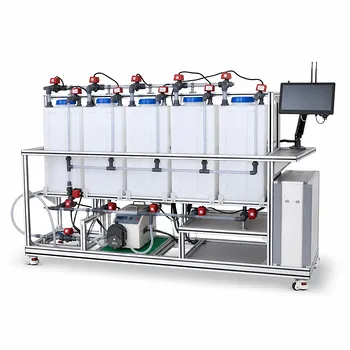
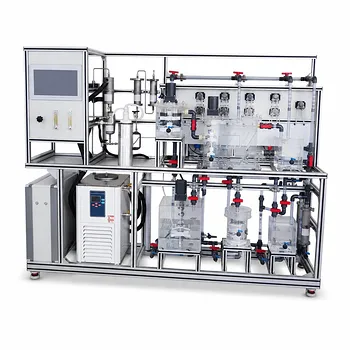
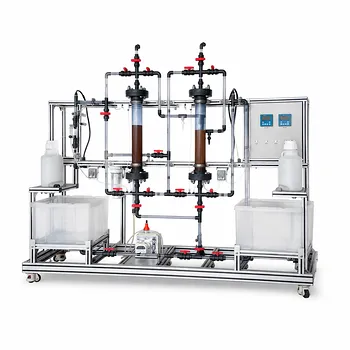
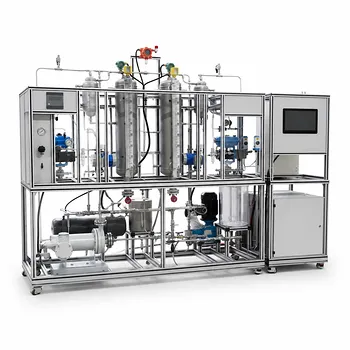
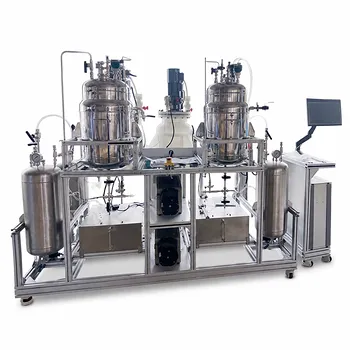
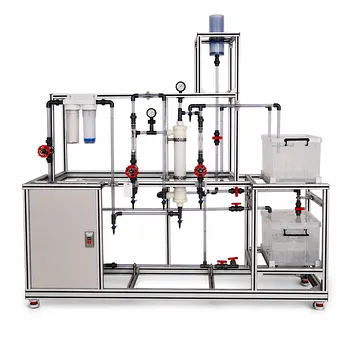
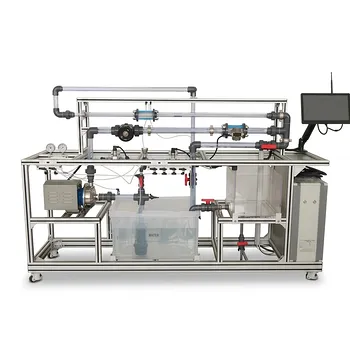
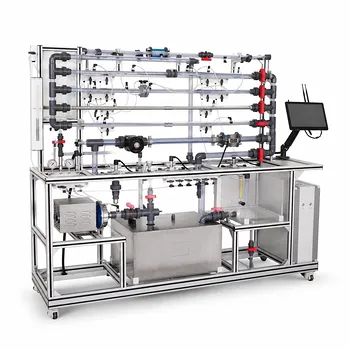
Preventing scale and managing complex water chemistry requires reliable, real-world testing environments. LABPARK designs and manufactures premium Educational and Vocational Unit Operations Pilot Plants in chemical engineering, bioprocess & biotech, and environmental & water treatment.
Whether you are a university, research institute, or enterprise, our pilot plants help you accurately simulate process conditions, evaluate anti-scalant treatment programs, and train personnel on industry-standard systems.
Contact LABPARK today to explore how our pilot plants can enhance your research and training capabilities!
Related Products
- Electrochemical Water Treatment Educational Unit Operations Pilot Plant
- Thermal Desorption Exhaust Gas and Tail Water Treatment Educational Pilot Plant
- Ion Exchange Water Purification Educational Pilot Plant for Engineering Unit Operations
- Alkaline Membrane Water Electrolysis Educational Pilot Plant Unit Operations Training System
- Water Electrolysis Hydrogen Production and Storage Educational Pilot Plant
People Also Ask
- What design features do educational electrochemical pilot plants utilize to manage gas liberation and water loss?
- How can unit operations pilot plants show lead-acid concentration vs state of charge? Real-time monitoring guide.
- How do educational electrochemical pilot plants scale up electrolysis? Master industrial engineering.
- How to Estimate Sulfate in Water Treatment Pilot Plant Deposits: Gravimetric Guide
- How can foaming be managed during steam generation experiments in water treatment unit operations pilot plants? Tips