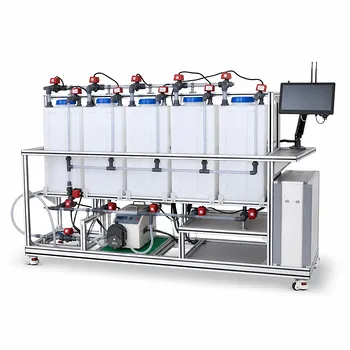
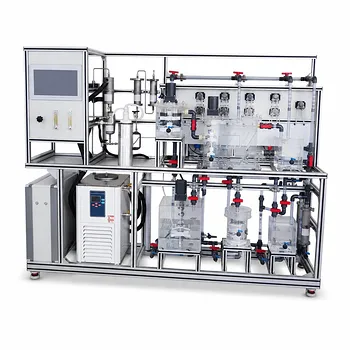
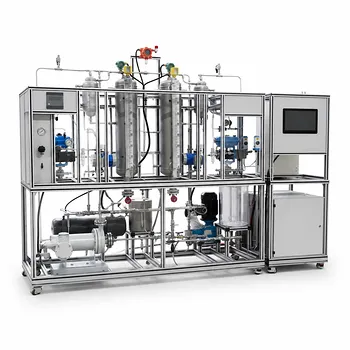
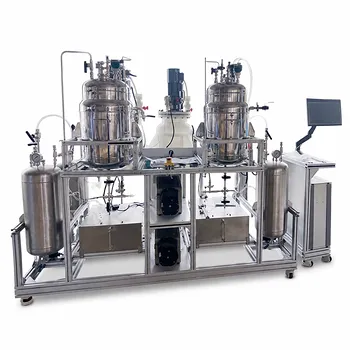
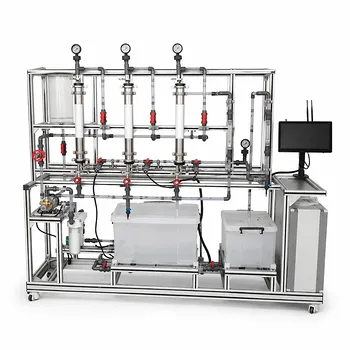
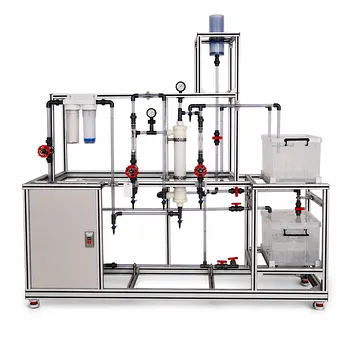
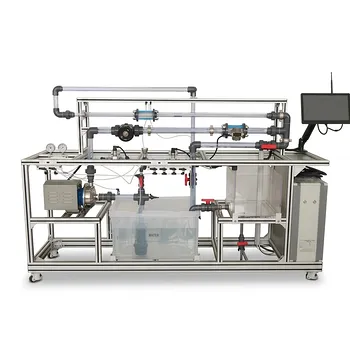
The definitive configuration for studying arsenic and lead removal from acidic wastewater is a continuous-flow pilot plant that sequentially combines precise chemical precipitation, controlled flocculation, gravity sedimentation, and pressure filtration. This integrated system is not merely a row of tanks—it’s a deliberate simulation of a full-scale industrial treatment plant, allowing you to manipulate pH and oxidation-reduction potential (ORP) to transform soluble toxins into filterable, solid particles that meet discharge standards.
While the surface goal is to "remove" heavy metals, the deep scientific challenge is mastering solubility control. A pilot plant configured for this task must treat the system as a chemical reactor first and a plumbing system second. The core insight is that precise, real-time pH adjustment with an alkaline agent is the primary lever, but for arsenic, you must also manipulate oxidation state to achieve the lowest possible effluent concentrations.
The Chemical Heart of the Configuration
The entire plant must be built around the central principle of converting dissolved ions into insoluble particulate matter.
The Role of the Primary Precipitation Reactor
You need a continuously stirred tank reactor (CSTR) at the head of the process. Roughly 50% of total system volume should be dedicated to this stage. This is where raw, acidic wastewater is blended with a neutralizing slurry.
The most industrially relevant approach is to dose with a lime slurry (calcium hydroxide). As the pH rises into the alkaline range (typically 9.0–9.5 for lead), the lead ions react with hydroxide to form lead hydroxide precipitates. The reaction is not instantaneous; adequate hydraulic retention time in this first tank is non-negotiable to allow crystal nucleation to begin.
The Critical Twist for Arsenic Removal
Removing arsenic is more chemically demanding than removing lead. If your acidic wastewater contains arsenite (As(III)), simple pH adjustment with lime to form calcium arsenite is insufficiently effective. Your pilot plant configuration must include a pre-oxidation step before or within the first reactor.
You must inject an oxidizing agent, such as sodium hypochlorite, to convert As(III) to arsenate (As(V)). This directly enables the formation of highly insoluble calcium arsenate, which precipitates optimally within the same pH range used for lead hydroxide. Monitoring ORP here is just as vital as monitoring pH.
Selecting the Optimal Neutralizing Agent
Your choice of alkali directly determines sludge characteristics and operating cost. A pilot plant should be plumbed to allow comparison between two reagents:
- Hydrated Lime (Ca(OH)₂): The low-cost industrial default. It forms dense, easily dewatered sludge with high solids content but adds to the total dissolved solids load.
- Sodium Hydroxide (NaOH): Produces a smaller volume of sludge, but the resulting metal hydroxide particles are often gelatinous and notoriously difficult to dewater.
Understanding the Trade-offs
Objectively, a chemical precipitation line creates a new problem while solving another. You cannot design the plant without confronting sludge management.
The Hidden Cost of Toxic Sludge
The precipitation process concentrates the arsenic and lead into a hazardous solid phase. Your pilot plant configuration must, therefore, include a sludge handling train. The clear effluent from the top of the clarifier is not the only outcome—the thickened slurry from the bottom is your ultimate waste product.
The volume and water content of this sludge becomes a primary cost driver if this were a real plant. A configuration that ignores dewaterability has failed to address the deep need of practical treatment feasibility.
Co-Precipitation Complexities
Real industrial wastewater is never a pure solution of just lead and arsenic. The pilot plant must account for iron interference. If ferric iron is present, the ORP and pH ranges shift non-linearly. Ferric hydroxide co-precipitates at low pH and can encapsulate or adsorb other metals, which changes the settling behavior you observe. You should plan experimental runs that spike the feed with common industrial background metals to see how your carefully controlled pH setpoint holds up.
Engineering the Physical Unit Operations
Chemistry alone doesn't separate the solid from the liquid; fluid mechanics do.
Material Compatibility and Sensor Placement
The reactor, pipes, and valves must be constructed of acid-resistant materials like PVC or PTFE-lined components for the acidic feed stream. The most common point of failure in a lab pilot plant is sensor fouling. You must configure automatic pH probes in a recirculation loop with automatic cleaning mechanisms if you intend to run continuously for hours. Manual grab sampling is not robust enough to characterize precipitation kinetics.
The Flocculation-Sedimentation Sequence
After the CSTR, you must guide the water through a tapered flocculation zone. This requires gentle, low-shear mixing to aggregate the microscopic precipitate particles into larger, settleable flocs. A high molecular weight polymer flocculant dosing system is essential here. Without it, fine calcium arsenate particles will remain in suspension and carry over the weir of the downstream clarifier.
The sedimentation basin itself—a lamella plate clarifier is ideal for a pilot scale—must then provide a strictly quiescent zone. You configure the plant to vary the surface overflow rate until you see a "floc blanket" forming and no pin floc escaping in the effluent.
Solid-Liquid Separation Polish
Even the best clarifier allows a few fine particles through. To simulate a true "zero discharge" goal, you must terminate the line with a filter. A vacuum filter or a small-scale centrifuge is preferable to a sand filter here. A vacuum filter allows you to analyze the filter cake directly, building a practical understanding of sludge dewatering rates—a parameter of intense interest when scaling up to industrial design.
Making the Right Choice for Your Goal
The final job of the pilot plant is to provide transferable data. Your configuration choices should be driven by the specific data you need to extract.
- If your primary focus is fundamental chemistry: Simplify the physical plant. Use the exact configuration of a pH-controlled CSTR followed by batch filtration. Focus on atomic absorption spectroscopy analysis of the filtrate at 0.1 pH unit intervals to map precise solubility curves for As(V) and Pb.
- If your primary focus is process engineering scale-up: Run the continuous configuration with a sludge recycle line returning settled solids to the CSTR. This thickens the reactor inventory and simulates full-scale reactor solids retention time, a critical parameter for crystal growth that dramatically improves dewaterability.
- If your primary focus is resource recovery: reconsider chemical precipitation entirely for lead. You would bypass the lime tank and redirect the acidic feed to a downstream ion-exchange column or electrodialysis cell, using the acid stability of certain resins to concentrate lead for potential reclamation, leaving the arsenic to be handled separately.
The pilot plant is your time machine for predicting full-scale outcomes before you break ground. The configuration you choose must not just clean the water, but also faithfully reproduce the operational headaches—and solutions—of the real industrial world it’s designed to simulate.
Summary Table:
| Process Stage | Key Reagents/Equipment | Primary Function |
|---|---|---|
| Pre-oxidation | Sodium hypochlorite (NaOCl) | Converts soluble As(III) to insoluble As(V) |
| Precipitation | CSTR & Lime Slurry (Ca(OH)₂) | Elevates pH (9.0-9.5) to precipitate lead and arsenic |
| Flocculation | Low-shear mixer & Polymer | Aggregates micro-precipitates into larger, settleable flocs |
| Clarification | Lamella plate clarifier | Separates solid sludge from clear effluent via gravity |
| Filtration | Vacuum filter or centrifuge | Performs final solid-liquid polish and allows cake analysis |
Elevate Your Research with LABPARK Pilot Plants
Ready to configure the ideal simulation setup for your laboratory? LABPARK provides state-of-the-art Educational and Vocational Unit Operations Pilot Plants in chemical engineering, bioprocess & biotech, and environmental & water treatment. Whether you represent a university, research institute, or enterprise, we deliver the precise, robust systems you need to achieve reliable experimental data.
Contact LABPARK today to discuss your customized pilot plant requirements!
Related Products
- Electrochemical Water Treatment Educational Unit Operations Pilot Plant
- Thermal Desorption Exhaust Gas and Tail Water Treatment Educational Pilot Plant
- Ion Exchange Water Purification Educational Pilot Plant for Engineering Unit Operations
- Alkaline Membrane Water Electrolysis Educational Pilot Plant Unit Operations Training System
- Water Electrolysis Hydrogen Production and Storage Educational Pilot Plant
People Also Ask
- What design features do educational electrochemical pilot plants utilize to manage gas liberation and water loss?
- How can unit operations pilot plants show lead-acid concentration vs state of charge? Real-time monitoring guide.
- How do educational electrochemical pilot plants scale up electrolysis? Master industrial engineering.
- How to Estimate Sulfate in Water Treatment Pilot Plant Deposits: Gravimetric Guide
- How can foaming be managed during steam generation experiments in water treatment unit operations pilot plants? Tips