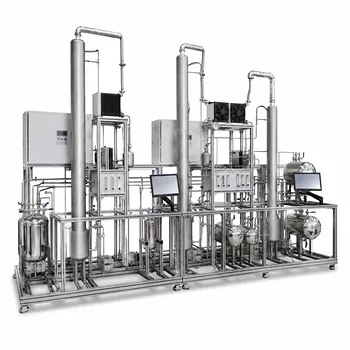
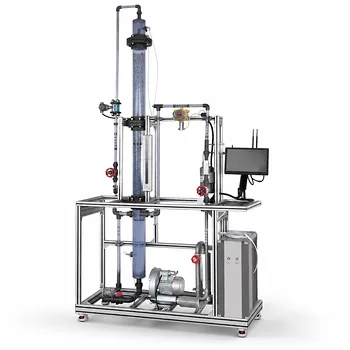
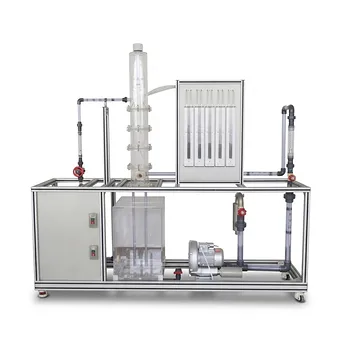
Cryogenic distillation, absorption, and adsorption represent three fundamentally different separation principles. In the context of hydrogen recovery, pressure swing adsorption (PSA) and membrane separation are the most industrially relevant and pedagogically powerful choices for a chemical engineering lab, while cryogenic distillation provides deep thermodynamic insight at high complexity, and absorption is largely relegated to acid gas removal rather than producing high-purity hydrogen.
For a teaching laboratory focused on hydrogen recovery, the real contest is between the thermodynamic depth of cryogenic distillation and the kinetic purity game-changers—PSA and membranes. Absorption, while crucial for gas treating, is a poor fit for producing a high-purity H₂ stream, making it more of a cautionary tale in process selection than a primary recovery method.
The Three Methods at a Glance
The core separation mechanisms drive everything from equipment design to the educational takeaways. Understanding them is the first step in mapping these technologies to a curriculum.
Cryogenic Distillation: The Thermodynamic Powerhouse
This method cools the entire gas stream to cryogenic temperatures (around 120 K). At these conditions, heavier hydrocarbons and impurities condense into a liquid phase that can be fractionated.
It’s a classic demonstration of vapor-liquid equilibrium and phase thermodynamics. However, it is notoriously energy-intensive and requires complex, high-investment equipment. Industrially, it excels in cracked gas separations (ethylene plants), not dedicated hydrogen purification.
Absorption: The Selective Solubility Trap
Absorption relies on a liquid solvent to selectively dissolve acid gases like CO₂ and H₂S. It’s a cornerstone of natural gas sweetening and syngas cleanup, built on mass transfer with chemical reaction.
But the critical limitation is clear: it cannot economically deliver high-purity hydrogen (80–95 vol% at best). The solvent invariably carries some hydrogen physically dissolved, and reaching product-grade purity would demand impractically tall columns and immense solvent rates.
Adsorption (PSA): The Surface-Driven Workhorse
Pressure swing adsorption exploits the fact that impurities like CO, CH₄, and CO₂ are preferentially attracted to solid surfaces at high pressure. When pressure is reduced, the adsorbent bed regenerates, releasing a highly pure hydrogen stream.
PSA units produce hydrogen up to 99.999% purity, making them the de facto standard for purge gas recovery and steam methane reforming. In a lab, they elegantly demonstrate dynamic mass transfer, breakthrough curves, and cyclic process optimization.
The Practical Reality in a Lab Curriculum
Translating these industrial profiles into a safe, instructive student experience is where the real comparison emerges. The primary reference underscores that PSA and membrane separation are the preferred technologies for purge gas recovery—a fact that should anchor any curriculum.
Why PSA and Membranes Dominate the Teaching Lab
Both technologies share traits that are ideal for a university setting: low operating pressure (relative to cryogenics), ambient temperature operation, and no inherent phase change that would demand massive energy or complex safety systems. Membranes, in particular, have no moving parts and operate continuously, allowing students to isolate mass transfer phenomena from thermal effects.
PSA adds the dynamic, cyclic dimension. Students can trace the pressure-swing cycle, measure breakthrough times, and instantly see how cycle timing affects purity and recovery. This hands-on link between process control and separation performance is priceless.
The Cryogenic Distillation Exception
Running a cryogenic distillation column in a teaching lab is undeniably impressive. It immerses students in low-temperature materials science, insulation design, and multi-component phase envelopes.
But the reality is one of immense complexity and safety hazards. Handling liquid nitrogen baths, potential oxygen enrichment, and the energy cost of reaching 120 K means this is often a demonstration unit or a capstone design project, not a routine weekly experiment. Its pedagogical value lies in thermodynamic fundamentals, not in mimicking industrial H₂ recovery.
Absorption: The Rich Lesson That Isn’t About H₂ Recovery
Absorption columns are ubiquitous in chemical engineering labs—but for the right reasons. They teach packed column hydraulics, mass transfer coefficients, and chemical reaction kinetics when using solvents like amines.
For hydrogen recovery, however, they teach a different, perhaps more valuable lesson: process selection failure. Students learn that a technology with a high mass-transfer efficiency for one solute (CO₂) can be fundamentally mismatched when the goal is to reject a low-solubility, high-value product. It’s a masterclass in defining the separation objective first.
Understanding the Educational Trade-offs
A responsible lab curriculum must balance foundational knowledge, modern relevance, and operational safety. Each technology presents a distinct profile of these trade-offs.
Safety and Operational Complexity
Cryogenic distillation ranks highest in both safety risk and infrastructure demand. The combination of low temperatures, potential for pressure buildups, and the necessity for multi-stage compressors puts it in a different league than a bench-top PSA unit. Adsorption and membrane rigs operate at moderate pressures (often below 10 bar) with inert gases, vastly simplifying hazard analysis.
Throughput and Time to Insight
PSA and membrane setups can produce data within a single lab session. A breakthrough curve on a small adsorbent bed emerges in minutes, allowing students to test multiple variables. A cryogenic run could take hours just to reach steady state. The faster the feedback loop, the deeper the learning when you have only a 3-hour lab period.
Industrial vs. Fundamental Focus
If the goal is to mirror what operators use to recover 70–90% of hydrogen from purge gas, then PSA and membranes are the only honest answer. If the goal is to embed multicomponent VLE, fugacity, and equation-of-state modeling, then cryogenic distillation becomes a uniquely rich, albeit extreme, case study.
How to Build Your Hydrogen Recovery Lab Module
The right choice depends entirely on your educational objective, budget, and tolerance for complexity. Below is a goal-aligned guide based on the primary reference’s core findings.
- If your primary focus is industrial relevance and safe, rapid experimentation: Invest in a small-scale PSA unit or a hollow-fiber membrane rig. Students will directly observe the non-thermal, kinetic separation that dominates the H₂ recovery industry.
- If your primary focus is teaching rigorous thermodynamics with an iconic unit operation: Integrate a cryogenic distillation experiment as a capstone, design-project-only experience. Accept that it is not an H₂ recovery mimic but a profound lesson in phase behavior.
- If your primary focus is demystifying mass transfer fundamentals and the limits of solvent-based separations: Use the classic amine absorption column to recover CO₂ from a mixed stream, and frame the exercise around why this excellent CO₂ removal tool fails to deliver pure H₂.
The most enduring lesson a hydrogen recovery module can offer isn’t which button to push, but the wisdom to see that the separation problem itself dictates the solution—thermodynamics, kinetics, and safety all pulling the process engineer toward the one right choice for the moment.
Summary Table:
| Method | Separation Mechanism | H₂ Purity Level | Primary Educational Value | Safety & Complexity |
|---|---|---|---|---|
| Cryogenic Distillation | Phase thermodynamics (VLE) | Medium | Deep thermodynamic modeling | High risk, complex setup |
| Absorption | Selective solubility (solvent) | Low (80-95%) | Mass transfer & process limitations | Moderate safety risks |
| Adsorption (PSA) | Surface attraction (pressure swing) | Very High (99.999%) | Dynamic kinetics & rapid curves | Safe, fast experimentation |
Bring Hands-On Process Engineering to Your Lab
Equip your students and researchers with industry-standard training technology. LABPARK provides specialized Educational and Vocational Unit Operations Pilot Plants in chemical engineering, bioprocess & biotech, and environmental & water treatment.
Whether you want to demonstrate gas adsorption (PSA), absorption columns, or distillation systems, we help universities, research institutes, and enterprises build safe, effective, and highly educational lab environments. Contact LABPARK today to find the perfect pilot plant for your curriculum!
Related Products
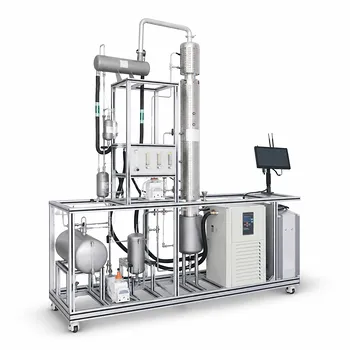
- Multi-Functional Special Distillation Educational Pilot Plant
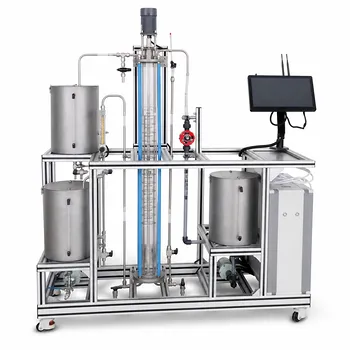
- Continuous Sieve-Plate Distillation Pilot Plant for Unit Operations Laboratory Education
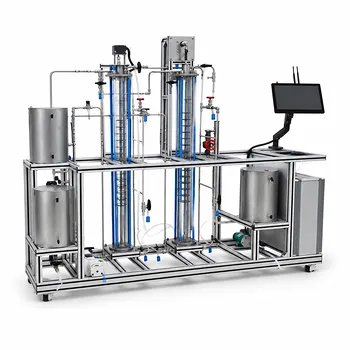
- Multi-Modal Distillation Unit Operations Training Pilot Plant
- Continuous Batch Extractive Distillation Educational Pilot Plant
- Dual-Mode Rectification Pilot Plant for Practical Training Unit Operations
People Also Ask
- Why does simple distillation yield higher efficiency than flash distillation? Key thermodynamic differences.
- How does double temperature difference control improve distillation pilot plants? Stabilize purity.
- How to Integrate Spectroscopy in Distillation Pilot Plants for Advanced Process Control
- How to Verify Distillation Boundary Lines & Composition Regions with Pilot Plants
- Why is the acentric factor important in pilot plants? Fluid property prediction.