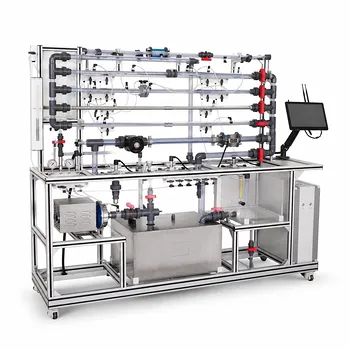
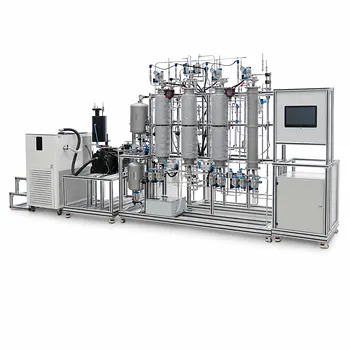
The moment polymerization completes, the downstream reality diverges completely. Suspension polymerization leaves you with hard polymer beads suspended in water, demanding a straightforward solid-liquid separation train. Emulsion polymerization creates a stable colloidal latex that behaves like a thick liquid, forcing you to either package it as a liquid product or aggressively break that stability to recover a solid. These two paths dictate entirely different pilot plant equipment, time, and cost profiles.
The core difference boils down to product morphology: suspension gives a filterable bead, while emulsion gives an un-filterable latex. If your product must be a dry powder, suspension offers a direct drying route; if you need a liquid latex or solid rubber, emulsion requires coagulation and dewatering—adding complexity but unlocking unique polymer properties.
How the Polymerization Method Shapes Your Downstream Process
The seeds of downstream processing are planted the moment you choose your polymerization mechanism. Understanding the physical state of the product right after reaction explains why the equipment lists look so different.
Suspension Polymerization: Designing for Bead Recovery
In suspension polymerization, monomer droplets with dissolved initiator polymerize into rigid, spherical particles typically 10–1000 µm in diameter. These beads are dispersed in water but are not colloidally stable—they settle or can be filtered with ease.
The continuous water phase acts as an excellent heat sink during the reaction, but its role in downstream is equally critical: it simply needs to be removed. Residual dispersants (like polyvinyl alcohol) must be washed out to ensure purity, but the bead’s macro-scale size makes filtration rapid and washing efficient.
Emulsion Polymerization: Two Paths from Colloidal Latex
Emulsion polymerization proceeds via micellar nucleation, generating polymer particles that are 50–500 nm in size, stabilized by surfactants. This produces a milky, kinetically stable latex where particles resist aggregation.
Because the particles are sub-micron, they pass straight through conventional filters. If the latex is your final product (for paints, adhesives, or coatings), you merely need to remove stray coagulum (“grit”) and possibly concentrate the solids. If you need dry polymer, however, you must first deliberately destroy the colloidal stability—coagulation—before you can separate the polymer from the water.
The Critical Equipment Differences in a Pilot Plant
A pilot plant must mirror these two realities. The unit operations printed on the P&ID change drastically.
The Suspension Isolation Train: Filter, Wash, Dry
For suspension polymer beads, the downstream sequence is relatively compact. A pressure filter or basket centrifuge first removes the bulk of the water. The wet cake then goes through a washing step (often on the same filter) to displace dissolved dispersants and residual monomer.
Finally, the washed beads enter a fluidized bed dryer or a rotary vacuum dryer to reduce moisture to the specification limit. Sieving or air classification may follow to remove oversized clumps or fines. The entire train can be designed as a semi-continuous or batch operation.
The Emulsion Solid Route: Coagulation and Dewatering
When solid polymer must be recovered from emulsion latex, the pilot plant must first break the emulsion. This typically happens in a stirred coagulation tank, where an acid (e.g., sulfuric acid) or salt (e.g., calcium chloride) is added to neutralize the surfactant charge and cause particles to agglomerate into a crumb-like mass.
That crumb slurry then goes to a dewatering extruder or a centrifuge-decanter system to squeeze out the majority of the water. A final drying step is often still required, but the initial mechanical dewatering is essential because the incoming slurry is dilute. The equipment must handle a corrosive, sticky wet polymer.
The Emulsion Liquid Route: Filtration and Packaging
When the latex is sold as a liquid, the downstream processing is simplest but no less critical. A vibrating screen or cartridge filter removes “grit”—coagulated bits that would plug spray nozzles or ruin film appearance. The latex may then be concentrated through vacuum stripping or ultrafiltration to raise solids content, followed by packaging into drums or totes. The pilot plant in this case looks more like a formulation plant.
Why the Difference Matters: Purity, Morphology, and Process Control
Beyond equipment, the downstream method directly touches product quality and the validity of your pilot data.
Residual Dispersants and Wash Efficiency
Suspension polymer beads carry surface-active stabilizers that must be removed to avoid impacting clarity or dielectric properties. Washing efficiency, measured by conductivity of the filtrate, is a key scale-up parameter. A poorly designed wash cycle in the pilot can hide purity deficits that will surface in production.
Latex Stability and Coagulation Reproducibility
For emulsion processes that target solid polymer, coagulation is a sensitive step. pH, salt concentration, and shear rate dictate crumb size and downstream dewatering efficiency. Inconsistent coagulation in the pilot plant makes it impossible to reliably scale up to a continuous dewatering extruder. Maintaining consistent latex stability before coagulation is thus a critical control point.
Understanding the Trade-offs
No single method is universally superior. The choice of downstream train carries clear trade-offs you must acknowledge in your pilot plant design.
Isolation Simplicity vs. Product Versatility
Suspension polymerization offers a direct, low-waste route to dry polymer powder. However, you are limited to rigid, non-film-forming beads that may not meet the performance profile of a high-molecular-weight emulsion polymer. Emulsion polymerization gives you the option of a ready-to-use liquid product or a high-performance solid, but at the cost of adding coagulation and dewatering steps—each with its own waste streams and capital expense.
The Hidden Burden of Emulsion Waste
Coagulation generates a low-pH, high-salinity aqueous effluent from the decanter or extruder. A pilot plant that ignores this waste stream design will quickly face operational bottlenecks. In contrast, suspension’s waste is mainly water with trace dispersants, significantly simpler to handle.
Making the Right Choice for Your Pilot Plant
Your downstream design must be dictated by the final product form you intend to prove out. Align your capital and time accordingly.
- If your primary focus is a dry, easy-to-isolate powder for molding or compounding: Choose suspension polymerization. The direct filter-wash-dry train is faster to commission and scale.
- If your primary focus is a liquid coating, adhesive, or paint: Emulsion polymerization is the obvious path. Invest your pilot plant budget in fine filtration and packaging, not in solid separation equipment.
- If your primary focus is a high-performance solid elastomer or synthetic rubber: Emulsion polymerization followed by coagulation is often essential to achieve the required molecular weight. Acceptance of the downstream complexity—coagulation tanks, dewatering extruders, and waste treatment—becomes a non-negotiable part of your pilot philosophy.
The design of your downstream pilot plant is not an afterthought; it is a direct consequence of the polymerization’s fundamental particle physics. Choose the path that most efficiently bridges your reaction product to your customer’s final form.
Summary Table:
| Parameter | Suspension Polymerization | Emulsion Polymerization (Solid Route) | Emulsion Polymerization (Liquid Route) |
|---|---|---|---|
| Product State | Rigid beads (10–1000 µm) | Crumb-like solid mass | Stable colloidal latex (50–500 nm) |
| Primary Isolation Step | Direct solid-liquid filtration | Chemical coagulation & mechanical dewatering | Fine filtration (grit removal) & concentration |
| Key Equipment | Pressure filter, basket centrifuge, fluidized bed dryer | Coagulation tank, dewatering extruder/decanter | Vibrating screen, cartridge filter, ultrafiltration unit |
| Waste Profile | High-volume water with trace dispersants | High-salinity, low-pH aqueous effluent | Minimal (mostly grit residue & wash water) |
Scale Up Your Polymerization Processes with LABPARK
Designing a high-performance chemical engineering or bioprocess pilot plant requires the right unit operations. LABPARK provides premium Educational and Vocational Unit Operations Pilot Plants in chemical engineering, bioprocess & biotech, and environmental & water treatment.
We help universities, research institutes, and enterprises bridge the gap between bench-scale chemistry and industrial production with robust, reliable, and versatile systems.
Ready to equip your facility with advanced separation, filtration, and polymerization technologies? Contact LABPARK today to discuss your project requirements!
Related Products
- Polymerization Granulation and Pellet Processing Educational Unit Operations Pilot Plant
- High-Gravity Emulsification and Mass Transfer Educational Pilot Plant
- Ethyl Acetate Synthesis Unit Operations Pilot Plant for Practical Training
- Methanol Synthesis and Catalyst Performance Evaluation Educational Unit Operations Pilot Plant
- Natural Product Extraction Unit Operations Training Pilot Plant
People Also Ask
- How do educational unit operations pilot plants address safety and waste management when scaling up?
- How do educational unit operations pilot plants bridge theory and design? Bridge the Engineering Gap
- Why Compare Predicted and Experimental Excess Enthalpy? Key to Accurate Pilot Plant Scale-up
- When to transition from PID to adaptive control in pilot plants? Key process indicators.
- How to study gasification in pilot plants? Compare exit gas composition & efficiency