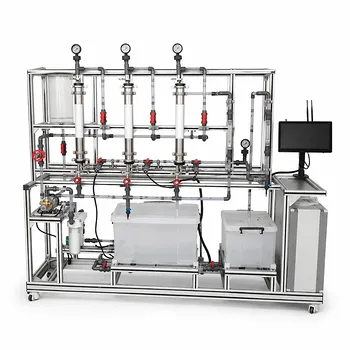
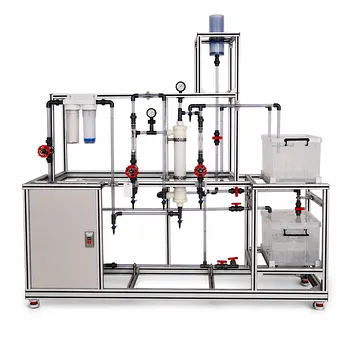
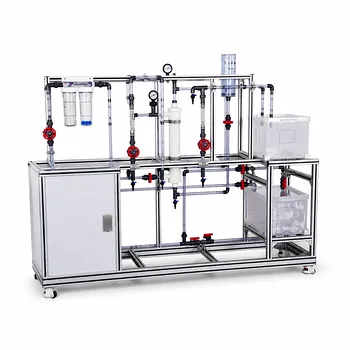
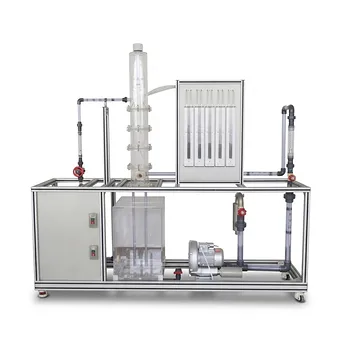
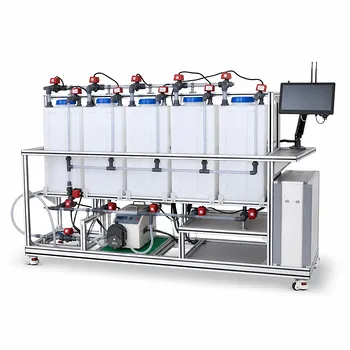
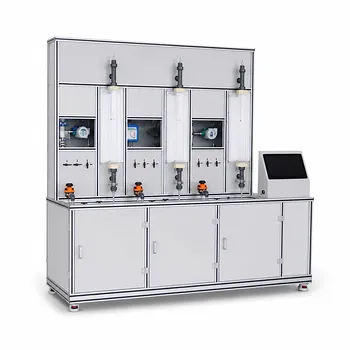
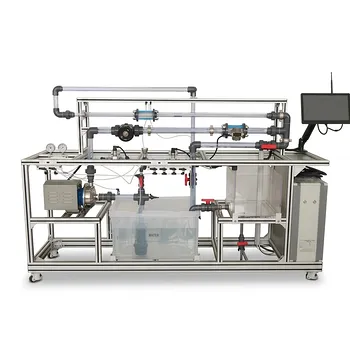
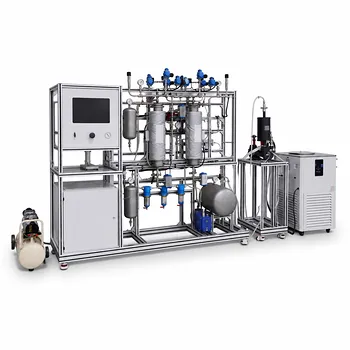
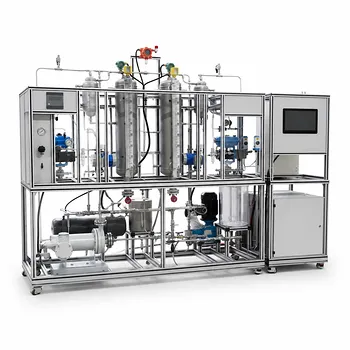
To effectively teach membrane separation, an educational pilot plant must move beyond theory and immerse students in the distinct industrial contexts of MF, UF, and RO. These pilot plants should demonstrate the technologies through application-specific unit operations: Microfiltration (MF) for wastewater bioreactors and suspended solids removal, Ultrafiltration (UF) for oil-water separation and protein concentration, and Reverse Osmosis (RO) for seawater desalination and high-purity water production. The most impactful systems let users swap modules, feed real-world mixtures, and directly observe how pore size and operating pressure govern performance and fouling.
The central insight: A well-designed pilot plant reveals that it’s not just about pore size—it’s about matching the right driving force and industrial scenario to the target impurity. The goal is to make the invisible trade-offs between pressure, selectivity, and membrane lifespan tangible.
Understanding the Core Separation Principles
Before students can appreciate the applications, they must grasp the physical fundamentals. The pilot plant should physically separate these processes so the user sees how membrane structure dictates everything.
Pore Size Defines the Barrier
The sieve becomes progressively tighter. MF membranes (0.1–10 μm) retain suspended solids, bacteria, and yeast. UF membranes (1–100 nm) catch macromolecules, colloids, and proteins. RO membranes (<1 nm) block hydrated ions and small solutes.
This gradient must be physically visible in the plant. One effective method is to use interchangeable skids so that running a feed through the MF unit clarifies it, while the same feed after UF becomes sparkling, and the RO permeate is ion-free.
Pressure Drives the Process
Smaller pores demand exponentially higher energy. MF operates at 0.1–0.2 MPa (a gentle nudge), UF needs 0.1–0.5 MPa, and RO requires 2–10 MPa to overcome the feed’s osmotic pressure.
The pilot plant’s pump and gauge setup should tell this story instantly. Watching a low-pressure pump easily drive MF flux, while the RO unit requires a high-pressure positive displacement pump, embeds the energy-cost relationship directly into the learning experience.
Designing an Application-Driven Pilot Plant
The true teaching power emerges when each membrane type is linked to its iconic industrial use. Abstract pore-size talk becomes memorable when students treat real wastewater, concentrate a protein, or make seawater drinkable.
MF Modules: Simulating Wastewater and Sterilization
The primary MF application to demonstrate is the Membrane Bioreactor (MBR). The pilot unit should combine a biological tank with an MF membrane to show how it replaces a conventional clarifier, producing high-quality effluent by retaining activated sludge and bacteria.
A secondary application is cold sterilization. Running a yeast or bacterial suspension through the MF module lets students measure log reduction values and plot flux against time, directly observing the cake-layer build-up that drives fouling research.
UF Modules: Showcasing Industrial Recovery and Bioprocessing
UF shines where heat destroys product value. The pilot plant should be configured to concentrate a protein solution (e.g., bovine serum albumin) or separate an oil-water emulsion, mimicking electrocoat paint recovery or metal cleaning bath recycling.
A clear sight glass and retentate sampling port are critical here. Students need to see the milky retentate thicken as permeate water exits clear, linking the molecular weight cut-off theory to a visible outcome. This also allows for calculating recovery rates and analyzing the impact of crossflow velocity on flux.
RO Modules: Demonstrating Desalination and High-Purity Water
RO modules must physically demonstrate the jump from filtration to ion exclusion. The most intuitive application is seawater or brackish water desalination, where a single pass can drop the conductivity to drinking-water levels.
Monitoring conductivity in real time both at the feed and permeate lines is essential. Students can immediately grasp salt rejection rates and the necessity of high pressure by adjusting the pump speed and plotting the flux versus applied pressure curve above the osmotic pressure threshold. Adding a pre-treatment step like a sand filter before the RO module powerfully illustrates real-world process integration.
Integrating Operational Analysis and Troubleshooting
A static demonstration is not enough. The pilot plant must be a live sensor platform for analyzing performance degradation, the universal challenge in membrane systems.
Monitoring TMP and Flux Decline
Trans-membrane Pressure (TMP) is the universal language of membrane health. The pilot plant should have pressure transducers on feed, retentate, and permeate lines so students can calculate TMP and correlate it with flux.
Plotting flux against TMP over time turns an abstract equation into a troubleshooting tool. As a UF or MF membrane fouls, students will see the flux drop at a constant pressure, forcing them to decide when to initiate a cleaning cycle—exactly the decision made in real plants.
Studying Fouling and Mitigation Strategies
The plant must intentionally foul to teach mitigation. Running a high-solids MF feed will cause irreversible fouling. The setup should then facilitate backwashing, air scouring, or chemical cleaning, and let students quantify the flux recovery.
Comparing fouling rates between applications reinforces material selection. An oily UF feed will foul differently than a protein solution. Allowing students to test different pre-treatment interventions (coagulation, pH adjustment) directly shows how operational choices impact membrane lifespan and energy consumption.
Understanding the Trade-offs
No single technology is a silver bullet, and the educational pilot plant must make these compromises transparent.
Higher selectivity always costs more energy. Watching the kilowatt-hour meter spike when the RO pump engages versus the gentle MF circulation pump provides a visceral, non-theoretical understanding of why industry uses a treatment train rather than a single stage.
Pore size cannot be viewed in isolation. A common pitfall is to assume the tighter the pore, the better. The pilot plant must demonstrate that putting a high-suspended-solids feed directly into an RO unit will immediately destroy the membrane, while an MF unit handles it effortlessly. This teaches students the critical role of pre-filtration and process sequencing.
Membrane life and scalability vary drastically. Even if a nanostructured MF membrane shows incredible flux in a benchtop module, the pilot plant can reveal the challenges of scaling up—uneven flow distribution, seal weaknesses, and the cost of replacement elements. This grounds research findings in practical engineering reality.
Making the Right Choice for Your Educational Focus
Design your pilot plant exercises based on the specific learning outcomes needed.
- If your primary focus is training operators for municipal and industrial water plants: Prioritize an integrated MF-RO skid that mimics a real treatment train, with extensive monitoring of TMP, conductivity, and automated cleaning protocols.
- If your primary focus is bioprocess and pharmaceutical education: Select a UF module capable of gentle concentration, with full data logging of crossflow velocity and permeate flux to teach yield optimization and the preservation of heat-sensitive molecules.
- If your primary focus is fundamental research and material testing: Ensure the plant has interchangeable membrane housings that accept flat-sheet or tubular modules, allowing students to test novel membranes against standard MF/UF/RO benchmarks under identical hydrodynamic conditions.
- If your primary focus is demonstrating sustainability and resource recovery: Configure the MF module for an MBR application and the RO for water reuse, showing the complete cycle from wastewater to recycled process water, while measuring the energy footprint of each step.
The ultimate goal of an educational pilot plant is to transform numeric pore-size ratings and pressure equations into a direct, unforgettable understanding of where each technology fits in the water treatment landscape—and what it costs to operate it.
Summary Table:
| Technology | Pore Size | Operating Pressure | Key Applications | Key Teaching Focus |
|---|---|---|---|---|
| Microfiltration (MF) | 0.1–10 μm | 0.1–0.2 MPa | Membrane Bioreactors (MBR), cold sterilization | Cake-layer fouling, log reduction, pre-treatment |
| Ultrafiltration (UF) | 1–100 nm | 0.1–0.5 MPa | Protein concentration, oil-water separation | Crossflow velocity, macromolecular recovery |
| Reverse Osmosis (RO) | <1 nm | 2–10 MPa | Seawater desalination, high-purity water | Osmotic pressure threshold, salt rejection rates |
Bring Membrane Separation to Life in Your Lab
LABPARK provides state-of-the-art Educational and Vocational Unit Operations Pilot Plants in chemical engineering, bioprocess & biotech, and environmental & water treatment for universities, research institutes, and enterprises. Our customizable skids allow students and researchers to swap modules, monitor real-time data, and master industrial membrane separation processes.
Ready to upgrade your engineering lab? Contact LABPARK today to get a customized pilot plant solution!
Related Products
- Multifunctional Membrane Separation Educational Pilot Plant with Ultrafiltration, Nanofiltration, Reverse Osmosis
- Multi-Functional Membrane Separation Educational Pilot Plant for Unit Operations Lab
- Ultrafiltration Membrane Separation Educational Pilot Plant
- Hollow Fiber Ultrafiltration Membrane Separation Educational Pilot Plant
- Multi-Functional Special Distillation Educational Pilot Plant
People Also Ask
- Pervaporation vs. Vapor Permeation: Handling Suspended Solids in Membrane Pilot Plants
- How do PEI, PVDF, and PSU membranes compare in pilot plants? Find the best fit.
- What are the trade-offs of polymer vs inorganic membranes in teaching pilot plants? Key laboratory comparison.
- How can operators optimize operating conditions and cleaning protocols in membrane separation pilot plants to mitigate fouling?
- What are the advantages of membrane separation in pilot plants? Efficient Organic Vapor Recovery