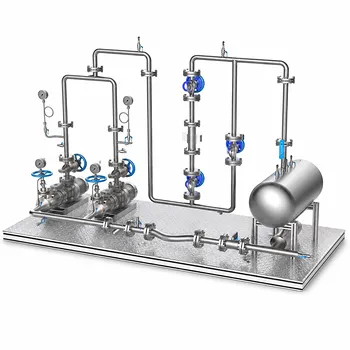
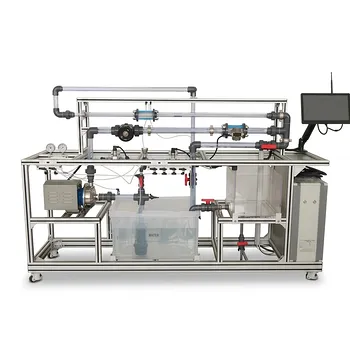
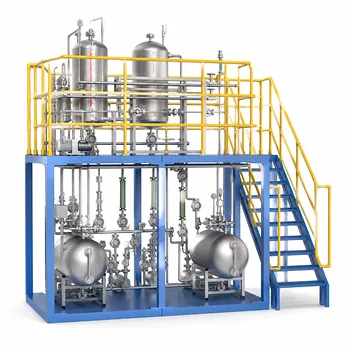
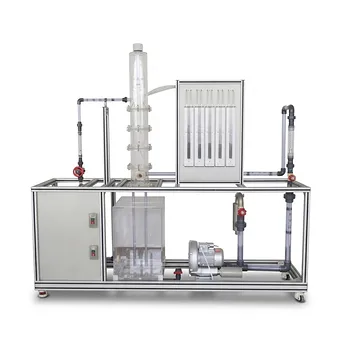
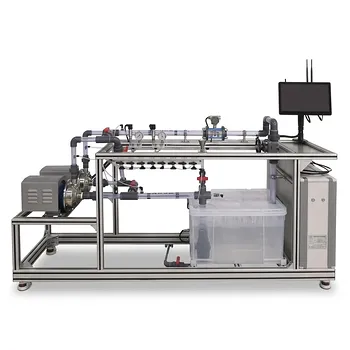
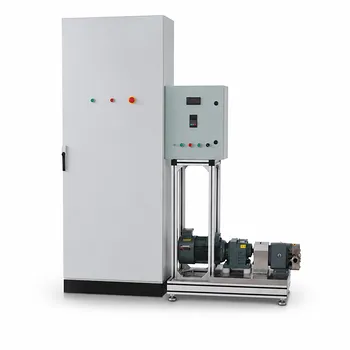
Hardness directly dictates a pilot plant's resistance to wear. In the abrasive environment of a chemical engineering teaching lab—where fluids often carry particulates or move at high velocity—components with higher material hardness exhibit significantly less surface erosion, directly extending service life and slashing the frequency of reactive maintenance.
While hardness is the frontline defense against abrasive wear in valves and pumps, it must be balanced with toughness and fatigue resistance. A myopic focus on hardness can lead to brittle failures, turning a predictable maintenance schedule into a catastrophic, educational-disrupting breakdown.
The Direct Link Between Hardness and Component Longevity
Hardness is the material's fundamental shield against the mechanical degradation of pump internals and valve seats. It measures a surface’s ability to resist penetration, abrasion, and deformation under load.
How Abrasive Wear Destroys Pilot Plant Components
In pilot-scale unit operations, a hard particle moving across a softer surface can gouge or cut material away. This abrasive wear is the primary mechanism that erodes impellers, casings, and valve sealing surfaces.
Specifying components with high surface hardness directly counteracts this. The material can simply withstand the cutting action of entrained solids or the impingement of high-velocity droplets without losing its geometric integrity.
The Cascade Effect on Service Life
When a valve seat or pump impeller maintains its original dimensions, it preserves clearances and sealing integrity. Operators avoid the classic downward spiral of increased internal leakage, which itself accelerates further erosion.
This dimensional stability means a high-hardness ball in a valve will seal against a soft seat for exponentially more cycles before failure. The component's functional life is, to a first approximation, a function of its wear volume, and hardness dramatically slows the rate of material loss.
The Impact on Maintenance in an Educational Laboratory
Beyond the simple delay of failure, material hardness reshapes the entire maintenance and operational strategy of a teaching pilot plant.
From Reactive to Planned Maintenance
In a university setting, unplanned downtime is costly—it directly undermines curriculum schedules, student projects, and research milestones. Hard components degrade predictably and slowly.
This allows technicians to move from a reactive, firefighting mode to a planned, preventive maintenance schedule. Pump overhauls or valve replacements can be planned for intersession breaks rather than disrupting a critical distillation experiment in week ten of the semester.
The Hidden Cost of Surface Degradation: Energy and Distortion
Surface wear isn't just about leaks. As supplementary data from pipe friction experiments show, once a surface roughens, its friction factor in turbulent flow increases significantly. A worn pump impeller or a roughened valve body creates a higher pressure drop.
This means the pump must work harder for the same flow rate, increasing energy consumption. More critically, this condition distorts experimental data. Students measuring pressure drops or pump curves will see results reflecting component degradation rather than the fundamental principles, compromising the educational value of the rig.
Understanding the Trade-offs: Hardness Is Not Invincible
Selecting a material solely on maximum hardness is a common engineering trap that can backfire spectacularly in a dynamic pilot plant.
The Hardness-Toughness Conflict
Toughness is a material's ability to absorb energy and plastically deform without fracturing. A very hard material, like a ceramic or fully hardened martensitic steel, excels at resisting surface wear but becomes brittle.
In a teaching lab, where valves are frequently actuated by trainees and pumps can experience accidental water hammer or cavitation, this brittleness is dangerous. A hard, brittle valve stem may snap under a student’s sudden torque rather than simply deforming. A catastrophic brittle fracture creates instant, catastrophic failure—the very opposite of the predictable, extended service life you're aiming for.
The Invisible Threat of Fatigue
Pilot plants undergo relentless thermal and pressure cycling. This cyclic loading requires fatigue strength, a property that often has an inverse relationship with hardness.
Components processed for maximum hardness can contain internal stresses that act as initiation points for fatigue cracks. A material with a high endurance limit may deform slightly on its surface over many cycles but will prevent the sudden, brittle fractures that high-hardness materials with poor fatigue resistance can suffer. In an educational setting where shutdowns and startups are frequent, fatigue resistance is essential for long-term structural integrity.
Making the Right Choice for Your Educational Pilot Plant
The optimal material selection requires aligning the component's hardness with the specific failure modes of your lab environment.
- If your primary focus is resisting the abrasive wear of slurries or catalyst particles: Choose high-hardness materials such as Stellite-coated valve trims or hardened duplex stainless steel for pump components. Accept that these parts will require careful handling to avoid impact damage.
- If your primary focus is preventing leaks and maintaining sealing integrity for clean but high-velocity fluids: A balance of hardness and toughness is ideal. Select a toughened martensitic stainless steel that can maintain a polished sealing surface without being susceptible to brittle overload from potential pressure spikes.
- If your primary focus is maximizing overall system robustness and safety in a high-traffic student lab: Do not maximize hardness. Select a material with a high fatigue limit and excellent toughness, such as an austenitic stainless steel for pump casings, and use a replaceable, hardened insert for the wear surfaces alone.
The goal is not the hardest individual component, but a reliable, safe, and educationally sound system that gracefully withstands both chemical attack and the very human errors of a learning environment.
Summary Table:
| Material Focus | Key Benefit | Potential Risk | Recommended Use Case |
|---|---|---|---|
| High Hardness | Resists abrasive wear & erosion | Brittle fracture under sudden impact | Slurry handling & abrasive fluids |
| Balanced Hardness & Toughness | Prevents leaks under pressure spikes | Moderate long-term surface wear | High-velocity clean fluids |
| High Toughness & Fatigue Limit | Resists thermal & pressure cycling | Faster surface degradation | High-traffic student labs with frequent startups |
Optimize your laboratory's learning outcomes and equipment longevity with durable, high-performance systems. LABPARK provides premium Educational and Vocational Unit Operations Pilot Plants in chemical engineering, bioprocess & biotech, and environmental & water treatment. Designed to withstand the rigorous demands of student labs and research environments, our pilot plants feature carefully selected, wear-resistant components to minimize maintenance and maximize service life.
Contact LABPARK today to custom-configure a robust, educationally sound pilot plant for your university, research institute, or enterprise!
Related Products
- Multi Pump Fluid Transport Process Piping Unit Operations Training Pilot Plant
- Chemical Pipeline Assembly and Fluid Transport Practical Training Unit Operations Pilot Plant
- Ethyl Acetate Synthesis Unit Operations Pilot Plant for Practical Training
- Multi-Modal Distillation Unit Operations Training Pilot Plant
- Natural Product Extraction Unit Operations Training Pilot Plant
People Also Ask
- Why distinguish Newtonian & non-Newtonian fluids in pilot plants? Prevent design errors.
- Why is the chemical plant startup schedule crucial? De-risk scale-up with pilot plants.
- When to transition from PID to adaptive control in pilot plants? Key process indicators.
- How do deviations in estimating latent heat impact pilot plant thermal systems? Avoid hardware mis-sizing.
- Why Use PTFE & Hastelloy in Chemical Pilot Plants? Prevent Corrosion & Ensure Safety