The container you choose can silently inflate your silica readings by over 15%—long before the sample ever enters your analyzer.
If you store a feed water or boiler water sample in standard soda glass or Pyrex, the container itself will leach silica into the solution, artificially raising the measured concentration. In a pilot plant study, a two‑week stay in soda glass pushed feed water from 2.0 ppm to 2.6 ppm and boiler water from 32.4 ppm to 37.7 ppm. To lock in true silica levels and avoid phantom scaling risks, you must switch to polyethylene, hard rubber, or resin‑lined containers.
The core insight: Glass containers—especially soda glass and Pyrex—are chemically active silica sources. Just holding a water sample can add enough dissolved silica to distort your pilot plant’s mass balances and scale‑prediction models. Only inert materials like polyethylene, hard rubber, or resin‑lined containers keep silica stable and your data trustworthy.
Why Accurate Silica Measurement Is Non‑Negotiable in Pilot Plants
In boiler feed water and steam‑condensate loops, silica is the enemy of reliable operation. Even marginal overestimates can send your team chasing false scaling problems or, worse, mask a real deposition threat.
The High Stakes of a Small Number
Silica forms hard, insulating scale on boiler tubes and turbine blades. In a pilot plant, every ppm matters—because what you measure dictates the chemical dosing, blowdown rates, and material choices you’ll carry forward to full scale.
A drift of 0.6 ppm in feed water or 5.3 ppm in boiler water (as seen in the reference data) is not trivial. It can completely change the calculated steam purity or silica carry‑over, undermining the pilot’s ability to validate treatment strategies.
Pilots Amplify Small Errors
Unlike a routine plant sample, pilot plant data is used to build predictive models and scale‑up correlations. An error introduced by the sample container gets baked into every downstream decision, magnifying its impact far beyond a single test.
The Hidden Leaching Effect of Glass Containers
Standard glassware looks inert, but it’s a reservoir of extractable silica. The longer your sample sits, the more silica dissolves into it.
How Soda Glass and Pyrex Donate Silica
Soda glass and Pyrex are silicate‑based materials. When water—especially high‑purity boiler water or aggressive feed water—contacts the glass surface, a slow dissolution reaction releases silicic acid into the sample.
The reaction is not linear. It depends on temperature, pH, and contact time, but even at ambient conditions, the effect is measurable and progressive.
Two Real‑World Examples from Pilot Studies
- Feed water stored in soda glass: Silica climbed from 2.0 ppm to 2.6 ppm after two weeks—a 30% increase.
- Boiler water stored in soda glass: Silica jumped from 32.4 ppm to 37.7 ppm over the same period—a 16% rise.
In both cases, the “leached” silica doesn’t come from the process. It’s purely a container artifact, and it will fool any analyzer downstream.
Why Two Weeks Are Just the Start
While the numbers above reflect a two‑week hold, even shorter storage can introduce detectable bias. The leaching begins immediately, and if you’re collecting multiple samples throughout the day, the cumulative drift can swamp normal process variability.
What Containers Actually Preserve Sample Integrity
The solution is straightforward: match your sample’s chemistry with a container that neither gives nor takes silica.
The Three Trusted Materials
Polyethylene, hard rubber, and resin‑lined containers are the only proven inert storage options for silica analysis.
- Polyethylene is inexpensive, widely available, and contributes zero silica.
- Hard rubber offers robust chemical resistance and silica‑free storage.
- Resin‑lined containers use an impermeable inner coating to isolate the sample from any substrate that could leach.
In all three, silica concentrations remain stable over time, eliminating the artificial rise seen with glass.
Why Inertness Matters More Than Sterility
It’s not about cleanliness—it’s about chemical compatibility. Even a “clean” Pyrex bottle leaches silica. The container must be inherently unreactive. Always verify that the material is specifically rated for trace silica work; some commodity plastics may contain silica fillers, so stick to the three tested families.
Understanding the Trade‑offs
Container choice isn’t just analytical pedantry; it forces a few operational compromises you should anticipate.
Convenience vs. Data Integrity
Glass bottles are ubiquitous in labs. They’re transparent, autoclavable, and reused endlessly. Switching to polyethylene or hard rubber often means:
- Less visibility (you can’t see the sample’s clarity).
- Single‑use or dedicated containers, which increases consumable costs and waste.
However, the “savings” of reusing glass are immediately offset by the cost of bad data—wrong chemical adjustments, mis‑scaling of pilot results, and lost confidence in the study.
Not All Plastics Are Equal
Avoid generic “plastic bottles” without knowing their composition. Some rigid plastics incorporate silicates as fillers or use mold‑release agents that can contaminate the water. Always verify that the container is explicitly recommended for trace silica analysis (low‑silica polyethylene or equivalent).
The Bigger Sampling Picture
Your container is only one link in the chain. If you’re using a simple grab sample that doesn’t represent the full cross‑section of the flow, you’ll face additional errors—like Increment Delineation Error—that no container material can fix. Treat the container as a necessary first step; pair it with a representative sampling system to achieve overall data reliability.
Making the Right Choice for Your Pilot Plant Goal
The container decision is binary: glass invites contamination; inert materials protect truth. Here’s how to translate that into daily practice.
- If your primary focus is long‑term sample storage or delayed analysis: Immediately replace all glass sample bottles with polyethylene, hard rubber, or resin‑lined containers. Keep a short holding time, but let the container material be your safety net.
- If your primary focus is field‑level convenience and reagent handling: Use dedicated polyethylene bottles for silica reagents and standards as well—glass reagent bottles will similarly contaminate the blank, shifting your calibration curves.
- If your primary focus is building a complete quality assurance protocol: Make container selection a mandatory checkpoint in your sampling SOP. Log the container material along with collection time, and never compare data from glass‑stored samples to data from inert containers without correcting for the known bias.
When your pilot plant data feeds into scale‑up decisions that can cost millions, the simple act of choosing polyethylene over Pyrex isn’t just good lab practice—it’s the foundation of a defensible result.
Summary Table:
| Container Material | Silica Leaching Effect | Suitability | Key Action |
|---|---|---|---|
| Soda Glass / Pyrex | High leaching (silica increases 16% - 30% in 2 weeks) | Unsuitable | Avoid entirely for silica analysis |
| Polyethylene | Zero leaching (keeps concentration stable) | Highly Recommended | Use for standard sample & reagent storage |
| Hard Rubber / Resin-Lined | Zero leaching (chemically inert/impermeable) | Recommended | Use for robust, long-term storage |
Secure Accurate Data with Precision Pilot Plants
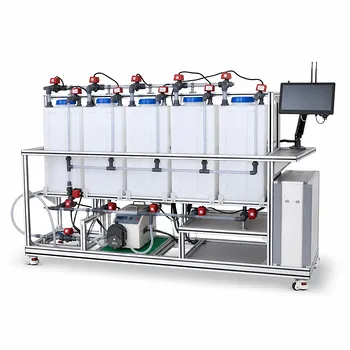
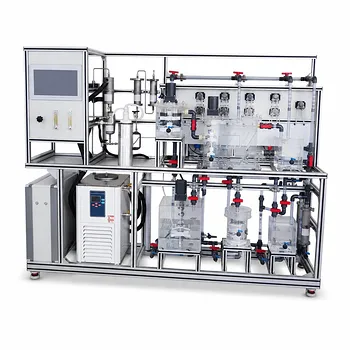
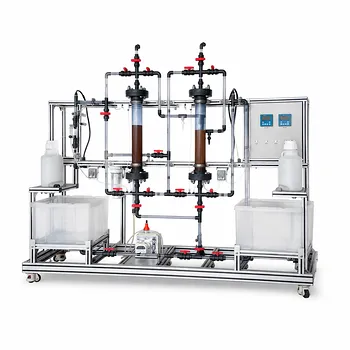
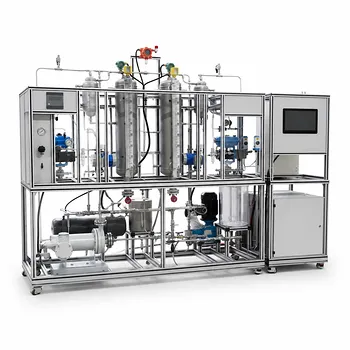
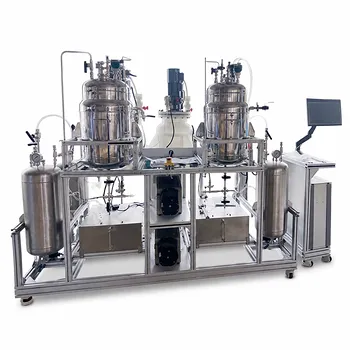
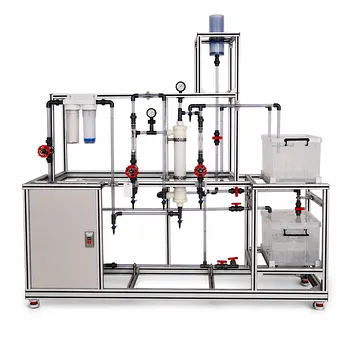
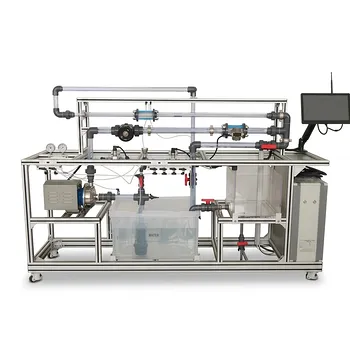
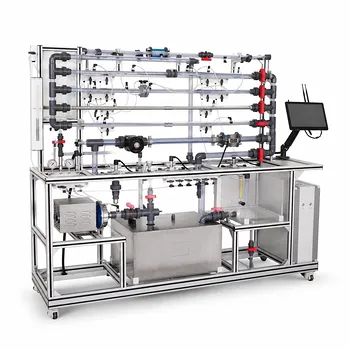
Scale-up success in water treatment depends on absolute data integrity. LABPARK provides premium Educational and Vocational Unit Operations Pilot Plants in chemical engineering, bioprocess & biotech, and environmental & water treatment. Designed specifically for universities, research institutes, and enterprises, our pilot plants ensure reliable, repeatable, and precise process monitoring.
Don't let sampling errors or sub-optimal setups compromise your research. Contact LABPARK today to discover how our engineered pilot plant solutions can elevate your laboratory or training facility's capabilities.
Related Products
- Electrochemical Water Treatment Educational Unit Operations Pilot Plant
- Thermal Desorption Exhaust Gas and Tail Water Treatment Educational Pilot Plant
- Ion Exchange Water Purification Educational Pilot Plant for Engineering Unit Operations
- Alkaline Membrane Water Electrolysis Educational Pilot Plant Unit Operations Training System
- Water Electrolysis Hydrogen Production and Storage Educational Pilot Plant
People Also Ask
- What design features do educational electrochemical pilot plants utilize to manage gas liberation and water loss?
- How can unit operations pilot plants show lead-acid concentration vs state of charge? Real-time monitoring guide.
- How do educational electrochemical pilot plants scale up electrolysis? Master industrial engineering.
- How to Estimate Sulfate in Water Treatment Pilot Plant Deposits: Gravimetric Guide
- How can foaming be managed during steam generation experiments in water treatment unit operations pilot plants? Tips