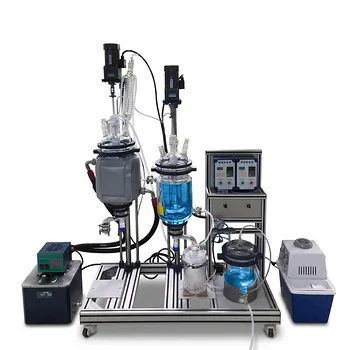
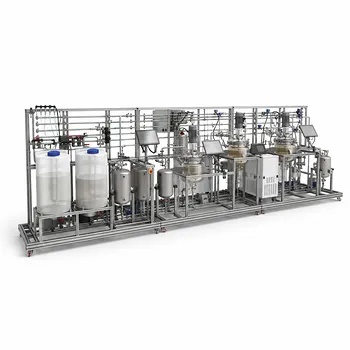
When purifying a costly, heat-sensitive pharmaceutical intermediate, choosing the wrong separation method can mean losing both product and profit. Crystallization dramatically outperforms distillation and evaporation on energy efficiency—its heat requirement is typically only one‑third to one‑tenth of the latent heat of vaporization. It also delivers unmatched selectivity for heat‑sensitive compounds, isolating ultra‑pure crystals from complex, multi‑component mixtures at mild temperatures that prevent thermal degradation.
Distillation and evaporation both rely on vaporization, demanding large amounts of energy and exposing sensitive molecules to potentially damaging heat. Crystallization, by contrast, operates through a low‑energy solid‑liquid phase change and exploits precise molecular recognition, making it the go‑to purification strategy when thermal stability and product purity are non‑negotiable. The choice, however, must balance these inherent advantages against practical constraints such as solvent selection, crystal handling, and the risk of impurity entrapment.
Energy Efficiency: Why Crystallization Consumes Far Less Energy
The Thermodynamic Advantage of Solid‑Liquid Phase Change
The single largest energy sink in distillation and evaporation is the latent heat required to turn liquid into vapor.
In a distillation or evaporation pilot plant, you must supply enough thermal energy to overcome strong intermolecular forces and create a gas phase. Crystallization, on the other hand, only needs to form an ordered solid lattice.
The heat of crystallization is typically 1/3 to 1/10 of the latent heat of vaporization. This means that, at the thermodynamic level, the energy bill for a crystallization run is inherently a fraction of what a comparable distillation or evaporation operation would demand.
Comparing Real Energy Demands in a Pilot Plant
Distillation columns in teaching or research settings consume energy both in the reboiler (to generate vapor) and in the condenser (to remove that heat). The total duty can be substantial, especially when high reflux ratios are needed for difficult separations.
Vacuum distillation, often prescribed for heat‑sensitive materials, adds further energy penalties. Maintaining a vacuum requires auxiliary pumps and increases the system’s heat loss due to larger temperature differences between the heating medium and the boiling liquid. Thicker vessel walls and more complex seals also drive up indirect energy costs during construction and maintenance.
A crystallization pilot plant, by contrast, typically only needs to control cooling or remove a small amount of solvent. Even when evaporative crystallization is used, the total vaporization load is far less than in a dedicated evaporation system because the aim is to create supersaturation, not to drive off most of the solvent. The result is a significantly lower carbon footprint and operating cost per kilogram of purified product.
Simple vs. Flash Distillation: Energy Context
Supplementary experiments in a pilot plant often compare simple (differential) distillation with flash distillation. In simple distillation, vapor is continuously removed and condensed, achieving a higher average distillate concentration than flash distillation, which equilibrates vapor with the final depleted liquid. Both configurations, however, still require the full latent heat of vaporization for every kilogram of material vaporized—an energy cost that crystallization sidesteps almost entirely.
Selectivity: Isolating One Component from a Complex Mixture
Molecular Recognition vs. Volatility Differences
Distillation separates molecules based on their boiling points—a bulk property that can be nearly identical for isomers or structurally similar compounds. Evaporation offers essentially no selectivity; it merely concentrates whatever is in solution, leaving both target molecules and impurities behind.
Crystallization works on a fundamentally different principle. As a crystal lattice forms, only molecules that fit perfectly into the growing structure are incorporated. This molecular‑level recognition allows crystallization to reject impurities that have almost identical boiling points, making it exceptionally selective even in multi‑component isomer blends.
Achieving High Purity Under Mild Conditions
The primary reference confirms that crystallization enables isolation of high‑purity crystals from complex mixtures under mild temperature conditions. This is critical for heat‑sensitive materials, where the high temperatures of distillation would degrade the product before any meaningful separation could occur.
With proper control, a single crystallization step can deliver purity levels that would require multiple distillation columns or a combination of evaporation and extraction. The process inherently avoids thermal decomposition and polymerisation, preserving the molecule’s integrity while selectively building a pure solid phase.
Thermodynamic vs. Kinetic Control of Selectivity
The crystalline form you obtain depends on whether you operate under thermodynamic or kinetic control, a nuance not available in distillation.
Slurry crystallization is the most effective method for inducing a solvent‑mediated transformation to the thermodynamically most stable polymorph. By choosing a solvent that provides high solubility (typically above an 8 mM threshold), you accelerate this transformation and drive out unstable crystal forms, further enhancing selectivity.
Cooling or evaporation crystallization, by contrast, often follows Ostwald’s law of stages, where the least stable polymorph appears first. While this can be useful for studying kinetics, it risks trapping a metastable form that may later transform and compromise purity. A well‑designed pilot plant lets users systematically vary cooling profiles, agitation, and seeding to steer the process toward the desired polymorph with minimal impurity incorporation.
Protecting Heat‑Sensitive Compounds: The Temperature Factor
Why Low‑Temperature Operation Matters
Distillation, even under vacuum, still requires boiling the mixture. Vacuum distillation lowers the boiling point but does not eliminate the heat input—and the thermal exposure can still be enough to degrade labile functional groups.
Crystallization can be carried out at ambient or sub‑ambient temperatures. Because the process relies on solubility differences rather than vaporization, you can often use cooling crystallization to precipitate the product at 0–25 °C, far below the degradation threshold of most sensitive biomolecules or pharmaceutical intermediates.
Vacuum Evaporation: A Lower‑Temperature Option with Caveats
Vacuum evaporation benefits heat‑sensitive materials by reducing the boiling point, which also increases the temperature difference between the heating steam and the boiling liquid, improving heat transfer. However, this advantage comes with trade‑offs: lower temperatures raise the solution viscosity, which can drastically reduce the overall heat‑transfer coefficient and slow down the process. Moreover, the auxiliary vacuum equipment adds capital cost and operational complexity.
For true heat‑sensitive purifications, crystallization often wins because it avoids the vapor phase entirely, sidestepping both thermal degradation and the mass‑transfer limitations that viscosity imposes on vacuum evaporation.
Understanding the Trade‑offs: When Crystallization Falls Short
Despite its strong advantages, crystallization is not a universal solution. Pilot‑plant operators must weigh several practical and technical limitations.
Solvent Selection and Downstream Processing
Crystallization usually requires a solvent that dissolves the target at high temperature but not at low temperature (or vice versa). Finding the right solvent can be a non‑trivial development task, and the solvent itself may later need to be removed from the crystal cake, adding a drying step and cost.
Evaporation, in contrast, needs no such solvent‑matching effort—it simply removes a volatile diluent. Distillation can often process mixtures without introducing an auxiliary solvent.
Kinetic Traps and Impurity Entrapment
Rapid crystallization or uncontrolled supersaturation can lead to physical entrapment of impurities or solvent inside the crystal lattice. Even if thermodynamics predict a pure phase, poor kinetics can ruin the product.
A pilot plant must therefore offer precise control over cooling rates, agitation speed, and seed addition. This adds instrumentation complexity but is essential to prevent occlusion of mother liquor in the growing crystals—something that is never a concern in a well‑run distillation.
Melt vs. Solution Crystallization: Operating Differences
Two distinct crystallization modes exist, each with its own constraints:
- Melt crystallization separates components by their freezing points, operating near the melting temperature without a solvent. It is driven solely by supercooling, with heat transfer and crystallization rate as the main control factors. This works well for ultra‑high‑purity organic chemicals but applies only to systems where the target can be melted and refrozen without decomposition.
- Solution crystallization relies on solubility changes (cooling or evaporation of solvent) and is driven by both supersaturation and supercooling, with mass transfer dominating the rate. It yields solid crystals and is more versatile for pilot‑scale teaching and research, but adds the complexity of working with solvents.
Incorporating both types in a pilot plant allows users to explore heat‑transfer‑driven and mass‑transfer‑driven solid‑liquid separation, but each requires distinct design and control strategies.
How to Choose the Right Unit Operation for Your Pilot‑Plant Goal
The best choice ultimately depends on your primary objective—whether it is minimizing energy use, protecting the product, or studying separation fundamentals. Consider these goal‑oriented guidelines.
- If your primary focus is absolute minimum energy consumption and carbon footprint: Choose crystallization. Its thermodynamic heat requirement is a fraction of that for distillation or evaporation, making it the most energy‑lean option for isolating a solid product.
- If your primary focus is purifying a heat‑sensitive, high‑value compound with stringent purity requirements: Crystallization is the clear winner. It operates at mild temperatures, avoids thermal degradation, and can deliver exceptional selectivity even for isomers—a feat distillation cannot match without excessive stages or vacuum.
- If your primary focus is concentrating a liquid product without changing its composition: Stick with evaporation. Crystallization would solidify the product, whereas evaporation simply removes diluent while keeping everything else in the liquid phase.
- If your primary focus is teaching the fundamentals of vapor‑liquid equilibrium and mass transfer: Distillation remains indispensable, despite its energy cost. Steam distillation can serve as a lower‑cost alternative for heat‑sensitive, water‑immiscible materials, demonstrating multi‑phase thermodynamic principles without the expense of a full vacuum system.
- If your primary focus is demonstrating kinetic versus thermodynamic control of polymorphs: Crystallization is the only technique that allows this. A well‑instrumented pilot‑scale crystallizer lets you tune cooling curves, solvent systems, and seeding to explore the entire landscape from Ostwald ripening to stable‑form conversion.
Crystallization’s twin gifts of low energy demand and gentle, molecular‑level selectivity make it an indispensable tool in any pilot plant dealing with heat‑sensitive compounds—but it shines brightest when its constraints are understood and its controls are handled with care.
Summary Table:
| Feature / Parameter | Crystallization | Distillation | Evaporation |
|---|---|---|---|
| Energy Demand | Low (1/3 to 1/10 of vaporization heat) | High (requires full latent heat of vaporization) | High (requires full latent heat of vaporization) |
| Selectivity | Extremely High (via molecular recognition) | Moderate (based on boiling point differences) | None (concentrates all non-volatile solutes) |
| Operating Temp. | Mild to low (ambient or sub-ambient) | High (requires boiling, even under vacuum) | Moderate to high (boiling point under vacuum) |
| Primary Limit | Complex solvent selection & kinetics | Thermal degradation risk for labile compounds | Low selectivity; risk of thermal damage |
Scale Up Your Chemical Engineering Training with LABPARK
Are you looking to enhance your laboratory's research capabilities or provide hands-on vocational training? LABPARK designs and supplies state-of-the-art Educational and Vocational Unit Operations Pilot Plants across chemical engineering, bioprocess & biotech, and environmental & water treatment disciplines.
Our custom-engineered pilot systems help universities, research institutes, and enterprises demonstrate complex thermodynamic and kinetic principles—from crystallization and distillation to evaporation.
Contact our specialists today to build the perfect pilot plant configuration for your institution!
Related Products
- Multi Functional Membrane Crystallization Educational Unit Operations Pilot Plant
- Potassium Salt Thermal Dissolution and Crystallization Separation Educational Unit Operations Pilot Plant
- Multi-Functional Special Distillation Educational Pilot Plant
- Ethyl Acetate Synthesis Unit Operations Pilot Plant for Practical Training
- Multi-Modal Distillation Unit Operations Training Pilot Plant
People Also Ask
- Why is precise temperature control critical in crystallization pilot plants? Key to Scale-Up Success
- Control Crystallization Pilot Plant Secondary Nucleation: 4 Key Adjustments
- What key factors should be considered when configuring a crystallization unit operations pilot plant?
- What are the benefits of integrating online PAT tools like ATR-FTIR into crystallization unit operations pilot plants?
- How to use crystallization pilot plant agitation speed to identify diffusion vs reaction growth?