Supercritical CO₂ extraction harnesses a solvent that vanishes, not evaporates.
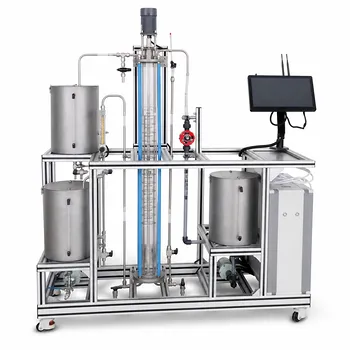
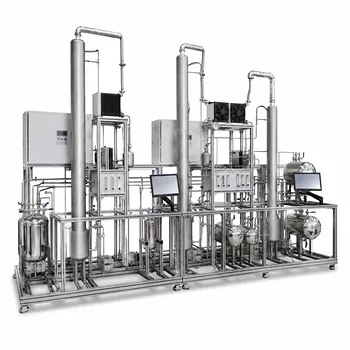
A Supercritical Fluid Extraction (SFE) pilot plant exploits carbon dioxide above its critical temperature (31 °C) and critical pressure (7.38 MPa). In this supercritical state, CO₂ combines the high diffusivity of a gas with the dense dissolving power of a liquid, allowing it to rapidly penetrate matrices and dissolve active compounds. Once extraction is complete, simply lowering the pressure causes the CO₂ to revert to a gas and escape completely, leaving a pure, solvent‑free extract with zero toxic residue. This fundamentally eliminates the safety, environmental, and purity issues that plague traditional organic solvents such as dichloromethane.
The central takeaway: SFE with supercritical CO₂ works because pressure‑controlled phase behaviour gives you a solvent that is simultaneously fast‑penetrating, highly solvating, and completely removable. The same pressure drop that recovers your extract also recycles your solvent—no residue, no hazardous waste, and no thermal degradation of delicate molecules.
How Supercritical CO₂ Achieves Superior Extraction
Gas‑Like Diffusivity Meets Liquid‑Like Density
In the supercritical region, CO₂ exhibits properties that bridge the gap between gas and liquid.
Its density—often 400 to 900 kg/m³—provides solvent power on par with organic liquids, while its viscosity (as low as 3 × 10⁻⁵ Pa·s) and high diffusivity (around 0.2 × 10⁻³ m²/s) enable mass transfer rates that are significantly faster than in conventional liquid‑liquid extraction.
This means scCO₂ can infiltrate a raw material matrix rapidly, dissolve target compounds efficiently, and then carry them away swiftly, cutting extraction times dramatically.
Tunable Solvent Power Through Pressure and Temperature
A defining advantage is the ability to tune selectivity simply by adjusting pressure and temperature.
Small changes near the critical point produce large shifts in density, altering which solutes the fluid can dissolve.
In an SFE pilot plant, operators can therefore target specific compound classes—removing caffeine from coffee beans without pulling out flavour‑critical chlorogenic acids, for example—by selecting the right pressure/temperature conditions, often without changing the solvent.
The Solvent That Disappears: Complete Removal Without Residue
The most transformative benefit is what happens after the extraction.
When the solute‑laden scCO₂ stream enters a separator at reduced pressure, the CO₂ instantly gasifies.
The extract precipitates or separates as a pure fraction, while the gaseous CO₂ is condensed and recycled in a closed loop.
No evaporation of a liquid solvent is required; there is simply no residual solvent to strip away. This eliminates the toxic residues that plague chlorinated solvents like dichloromethane—a substance classified as carcinogenic and notoriously difficult to remove to parts‑per‑million levels.
The Pilot Plant Loop: How It Works
The Closed‑Loop Cycle
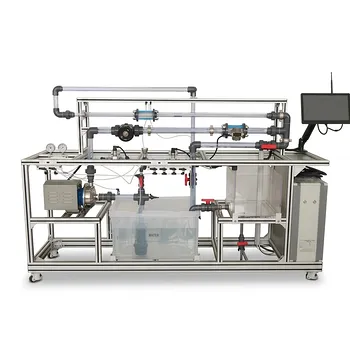
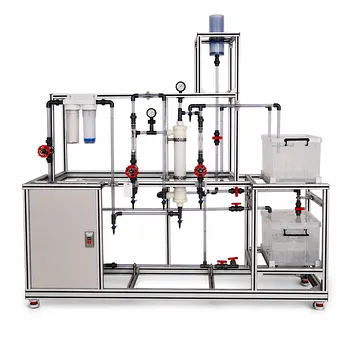
An SFE pilot plant operates as an integrated unit operation that demonstrates green engineering principles.
Liquid CO₂ is drawn from a reservoir and pumped through a high‑pressure pump to surpass the critical pressure.
It then passes through a heater to exceed 31 °C, transforming into injectable supercritical CO₂.
The scCO₂ flows into the extractor vessel, where it dissolves the desired active components from the solid or liquid feed.
Separation and Solvent Recovery
The loaded stream is directed to a separator where pressure and/or temperature are dropped, causing the extract to fall out of solution.
The now‑gaseous CO₂ exits the separator, passes through a condenser to become a liquid again, and returns to the reservoir for reuse.
This closed loop not only eliminates solvent waste but also provides a direct teaching demonstration of thermodynamics, mass transfer, and sustainable process design.
Comparing SFE to Traditional Organic Solvent Extraction
Residue and Toxicity: The Dichloromethane Problem
Traditional methods frequently rely on solvents like dichloromethane (CH₂Cl₂), which are toxic, carcinogenic, and extremely persistent.
Even after extensive heating and vacuum stripping, trace residues can remain, compromising product safety for food, cosmetics, and pharmaceuticals.
SFE circumvents this entirely: the solvent is CO₂, which is non‑toxic, non‑flammable, and leaves no trace after depressurisation.
Thermal Preservation of Heat‑Sensitive Compounds
Organic solvent extractions often require elevated temperatures to evaporate the solvent, which can degrade thermolabile bioactives—essential oils, delicate aromas, or pharmaceutical intermediates.
Because scCO₂ extraction operates at mild temperatures (typically 35–60 °C) and uses pressure rather than heat to recover the extract, it preserves molecular integrity and biological activity far better than distillation or solvent‑evaporation steps.
Understanding the Trade‑offs
When SCE Falls Short: Polarity and Matrix Challenges
Supercritical CO₂ is naturally non‑polar, which limits its ability to dissolve highly polar molecules.
To extract polar compounds, operators must add small amounts of a co‑solvent (such as ethanol), which partially negates the “solvent‑free” claim and adds a minor removal step.
Additionally, certain raw materials may compact under high pressure, channelling the fluid and reducing extraction efficiency—requiring careful feedstock preparation.
Capital Investment and Operational Complexity
An SFE pilot plant requires high‑pressure vessels, precision pumps, and explosive‑proof instrumentation, representing a significantly higher capital cost than simple Soxhlet or percolation setups.
Operating at supercritical conditions demands trained staff and meticulous attention to safety interlocks.
This makes SFE a high‑value tool for premium extracts, research, and teaching—but not always the most cost‑effective choice for low‑margin commodities with no purity constraints.
Making the Right Choice for Your Application
The decision to adopt an SFE pilot plant hinges on your product requirements, feedstock, and purity goals.
- If your primary focus is producing a completely solvent‑free extract for food, pharma, or nutraceuticals: SFE is the gold standard; it eliminates the regulatory headache of residual solvent limits.
- If your primary focus is protecting heat‑sensitive bioactives, aromas, or pigments: Choose SFE’s low‑temperature operation to maintain molecular structure and sensory properties.
- If your primary focus is rapid, scalable extraction with simplified downstream processing: The built‑in solvent recovery and fast mass transfer of scCO₂ can cut post‑extraction purification steps dramatically.
- If your primary focus is demonstrating green chemistry principles or researching extraction fundamentals: A pilot‑scale SFE unit provides a safe, observable platform to teach thermodynamics, mass transfer, and sustainable engineering.
Understanding both the remarkable physical properties of supercritical CO₂ and its practical limitations lets you decide whether this clean, tunable extraction platform aligns with the purity, safety, and performance demands of your project.
Summary Table:
| Feature | Supercritical CO2 (SFE) | Traditional Organic Solvents |
|---|---|---|
| Residue & Purity | Zero residue; CO2 evaporates completely | Trace toxic residues (e.g., dichloromethane) |
| Operating Temp | Mild temperatures (35–60 °C); preserves bioactives | High heat required; risks thermal degradation |
| Selectivity | Highly tunable via pressure/temperature shifts | Fixed selectivity based on the chosen solvent |
| Environmental Impact | Green & sustainable; CO2 is recycled in a closed loop | Hazardous waste generation; high disposal costs |
| Capital Investment | Higher initial cost due to high-pressure design | Lower initial cost; simpler setups |
Bring Advanced Green Chemistry to Your Lab or Facility
Are you looking to bridge the gap between academic theory and industrial practice? LABPARK provides state-of-the-art Educational and Vocational Unit Operations Pilot Plants in chemical engineering, bioprocess & biotech, and environmental & water treatment for universities, research institutes, and enterprises.
Our Supercritical Fluid Extraction (SFE) pilot plants offer hands-on training in thermodynamics and sustainable separation processes, ensuring your students and researchers achieve high-purity, solvent-free results.
Ready to upgrade your lab's capabilities? Contact us today to explore our custom pilot plant solutions!
Related Products
- Supercritical High-Gravity Flash Evaporation Educational Unit Operations Pilot Plant
- Educational Rotary Disc Liquid-Liquid Extraction Pilot Plant
- Comprehensive Liquid-Liquid Extraction Pilot Plant for Engineering Education
- Gallium and Indium Selective Extraction Educational Pilot Plant
- Multi-Functional Special Distillation Educational Pilot Plant
People Also Ask
- How is the heat transfer area calculated for an evaporation unit operations pilot plant during experimental design? Guide
- How to select educational evaporator pilot plants for thermal & scaling solutions? Complete Guide
- What is the practical significance of Kb in pilot plant evaporation? Master process design.
- How do flash calculations relate to flash evaporation pilot plants? Bridge Theory and Practice
- Vacuum vs. Atmospheric Evaporation: Key Pilot Plant Trade-Offs to Evaluate