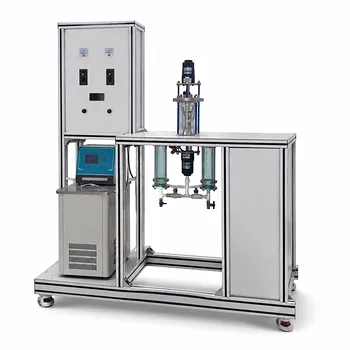
Nucleotide-derived coenzymes turn molecular biochemistry into measurable pilot-plant behavior. NAD, FAD, and Coenzyme A transfer electrons or chemical groups, while ATP and ADP govern cellular energy status. Their structures and intracellular ratios therefore inform how students operate bioreactors, interpret dissolved oxygen and redox data, design feeds, and connect metabolic pathways to scale-up decisions.
Core takeaway: Educational bioprocess pilot plants should teach coenzymes as both biochemical participants and process indicators. Students learn that oxygen transfer, nutrient feeding, pH, and substrate conversion influence cofactor regeneration—and that cofactor constraints can determine whether cells grow, produce a target metabolite, or shift into overflow and fermentative metabolism.
Why Coenzyme Structure Matters in Bioprocessing
NAD links carbon metabolism to redox control
NAD contains an adenine nucleotide portion linked to a nicotinamide-containing moiety. The nicotinamide ring accepts and donates reducing equivalents, allowing the NAD⁺/NADH pair to connect substrate oxidation with cellular energy generation and biosynthesis.
In a pilot plant, the important operational concept is not merely the total amount of NAD. It is the ability of the culture to continuously regenerate the oxidized or reduced form required by its active pathways.
FAD supports distinct electron-transfer chemistry
FAD contains a flavin group attached to an adenine nucleotide structure. Its flavin chemistry gives it redox behavior that differs from NAD, and it is frequently associated closely with particular enzymes rather than functioning only as a freely exchanging pool.
This distinction matters educationally. Students should not assume that adding more general “cofactor” to a medium will correct every activity problem; the relevant enzyme, organism, cofactor form, and binding mode must be identified.
Coenzyme A enables acyl-group transfer
Coenzyme A contains an adenosine-based portion and a reactive thiol group. The thiol forms thioester intermediates, allowing acyl groups to move through central metabolic and biosynthetic pathways.
In fermentation, CoA-dependent reactions connect carbon uptake to acetyl-CoA and other acyl intermediates. This gives students a molecular explanation for why carbon source, oxygen availability, and growth state can change the products formed by a culture.
ATP and ADP represent cellular energy state
ATP is a nucleotide triphosphate whose phosphate bonds support energy coupling and phosphoryl transfer. ATP hydrolysis is commonly considered in its Mg²⁺-complexed form, because magnesium affects the chemical and biological behavior of the nucleotide.
ATP is not usually classified as a coenzyme in the same way as NAD or FAD. It is more precisely the cell’s primary energy-transfer and phosphoryl-transfer currency, but it belongs in the same curriculum because ATP/ADP dynamics strongly influence transport, biosynthesis, maintenance, and growth.
How These Properties Appear in Pilot-Plant Operation
Oxygen transfer affects cofactor regeneration
Under aerobic conditions, respiratory metabolism reoxidizes reducing equivalents such as NADH and supports ATP production. Oxygen transfer therefore influences more than biomass formation: it helps determine whether the cell can maintain the redox balance required for continued substrate conversion.
Dissolved oxygen, agitation, aeration, pressure, and oxygen-transfer capacity become practical teaching variables. Students can relate a falling oxygen signal to changes in respiratory demand, redox state, growth rate, and product formation.
Oxygen limitation redirects metabolism
When oxygen availability cannot meet cellular demand, cells may use fermentative pathways to recycle reducing equivalents. Depending on the organism and conditions, this can increase formation of ethanol, organic acids, or other reduced products.
This provides a clear pilot-scale lesson: oxygen limitation is not simply a failure of the aeration system. It can be a deliberate process condition, an unintended scale-up effect, or a metabolic trigger that changes the product profile.
Nutrient feeds influence cofactor demand
Carbon, nitrogen, minerals, and precursor availability affect the rates of biosynthesis and energy consumption. A feed strategy can therefore change the demand for NAD(P)H, ATP, CoA-linked intermediates, and other cofactor-dependent reactions.
Students should evaluate feed decisions through both mass-balance and metabolic lenses. A feed that increases substrate availability may improve productivity, or it may increase oxygen demand and create redox imbalance if the cells cannot process the substrate at the required rate.
Redox and energy state affect conversion rates
The NADH/NAD⁺ balance provides a conceptual indicator of whether oxidation and reduction reactions are in equilibrium with the culture’s operating conditions. ATP/ADP behavior similarly reflects the balance between energy generation and energy consumption.
Pilot plants may not directly measure every intracellular cofactor in real time. Nevertheless, students can use dissolved oxygen, oxidation-reduction potential, off-gas measurements where available, substrate uptake, biomass, and product concentration to infer metabolic changes and test those inferences analytically.
What the Curriculum Should Teach
Start with structure–function relationships
Instruction should first establish how molecular structure enables function:
- NAD/NADH: reversible electron or hydride transfer.
- FAD/FADH₂: flavin-mediated redox chemistry associated with specific enzymes.
- Coenzyme A: acyl-group transfer through a reactive thiol.
- ATP/ADP: energy coupling and phosphoryl transfer.
The objective is not memorization alone. Students should be able to predict how a cofactor-dependent reaction responds to oxygen, substrate availability, enzyme activity, and cellular energy demand.
Connect enzyme kinetics to organism choice
Enzymes from different microorganisms can have different sequences, temperature ranges, pH optima, stability, and cofactor requirements. These differences prevent reliable scale-up based solely on the name of an enzyme or the reaction it catalyzes.
Pilot-plant exercises should therefore require students to document the enzyme source, required cofactor, operating range, and relevant metal-ion requirements before constructing a rate model or selecting a feed formulation.
Teach instrumentation as indirect metabolic observation
A strong curriculum treats process sensors as windows into cellular behavior rather than isolated control devices. Dissolved oxygen and oxidation-reduction potential can be interpreted alongside agitation, aeration, feed rate, pH, biomass, and product data.
Students should learn to distinguish between a direct measurement and a metabolic inference. For example, a redox-potential change may signal a shift in electron balance, but it should be evaluated against oxygen-transfer and analytical data before drawing a firm biochemical conclusion.
Use unit operations to complete the story
The biochemical state established in the bioreactor affects downstream operations. Fermentation, gas–liquid contact, cell removal, concentration, and product recovery should therefore be taught as a connected sequence rather than as unrelated equipment demonstrations.
This connection helps students understand that a metabolic shift caused by oxygen limitation or nutrient imbalance can alter broth composition, separation behavior, and overall process performance.
Build scale-up around constraints, not only volume
A larger vessel changes oxygen-transfer capacity, mixing time, heat removal, feed distribution, and the likelihood of local concentration gradients. These physical changes can produce different cofactor-regeneration conditions even when the nominal medium and setpoints remain unchanged.
Curriculum exercises should ask students to compare laboratory and pilot-scale data and identify which biological or engineering constraint caused the difference. This is more valuable than treating scale-up as a simple geometric enlargement.
Understanding the Trade-offs
More oxygen is not always the complete solution
Increasing aeration or agitation can improve oxygen availability and support respiratory metabolism. It can also increase power demand, foaming, shear exposure, and operating cost, while failing to solve a limitation caused by mixing, feed concentration, or enzyme capacity.
The correct lesson is to match oxygen-transfer changes to the diagnosed metabolic constraint rather than treating oxygen as an unconditional performance lever.
Cofactor addition may not restore activity
Supplying a cofactor or metal ion can help only when the relevant enzyme can use it and the concentration is appropriate. Excessive or incorrect supplementation may have no effect, disrupt regulation, or complicate downstream processing.
Students should distinguish cofactor availability from cofactor regeneration. A cell may contain sufficient total cofactor but still experience a functional shortage of the required redox or energy state.
Process signals are not direct intracellular measurements
Dissolved oxygen and redox potential are valuable process indicators, but they do not uniquely identify NADH, FADH₂, or ATP concentrations. Sensor readings can also be affected by mixing, probe response, calibration, and the physical properties of the broth.
Training should emphasize corroboration through sampling, analytical assays, off-gas data, and material balances where appropriate.
High productivity can conflict with stable operation
Pushing substrate feed or oxygen transfer may increase product formation temporarily while creating heat, oxygen, redox, or by-product problems. A process that achieves a high short-term rate may therefore have lower overall yield, robustness, or reproducibility.
Pilot plants are especially useful for teaching this trade-off because students can observe how control decisions affect the entire process rather than a single laboratory measurement.
How to Apply This to an Educational Pilot Plant
A practical curriculum can progress from molecular concepts to controlled experiments and finally to scale-up interpretation.
- If your primary focus is biochemical understanding: Use NAD, FAD, CoA, and ATP/ADP to teach structure–function relationships, redox balance, energy coupling, and enzyme-specific cofactor requirements.
- If your primary focus is bioreactor operation: Relate dissolved oxygen, oxidation-reduction potential, aeration, agitation, and feed rate to cofactor regeneration and metabolic shifts.
- If your primary focus is process control: Combine sensor data with biomass, substrate, product, and off-gas measurements to distinguish oxygen-transfer limitations from broader metabolic constraints.
- If your primary focus is scale-up: Compare laboratory and pilot data using oxygen transfer, mixing, feed distribution, heat removal, and enzyme or cofactor requirements as the principal sources of divergence.
- If your primary focus is vocational readiness: Require students to operate equipment, maintain calibration and safety records, diagnose deviations, and explain how biochemical mechanisms affect unit-operation performance.
When cofactor chemistry is taught alongside measurement, control, and scale-up, the pilot plant becomes a practical bridge between cellular metabolism and reliable biomanufacturing.
Summary Table:
| Biochemical factor | Pilot-plant relevance | Key teaching focus |
|---|---|---|
| NAD/NADH | Connects substrate oxidation, redox balance, and oxygen demand | Interpret redox shifts and cofactor regeneration |
| FAD/FADH₂ | Supports enzyme-specific electron-transfer reactions | Evaluate enzyme source and cofactor requirements |
| Coenzyme A | Transfers acyl groups through acetyl-CoA and related intermediates | Link carbon feeding to product formation |
| ATP/ADP | Reflects cellular energy generation and consumption | Understand growth, transport, and maintenance demands |
| Dissolved oxygen and ORP | Provide indirect evidence of metabolic changes | Correlate sensor data with biomass, substrate, and product results |
| Nutrient feeding | Changes cofactor demand, oxygen uptake, and overflow metabolism | Balance productivity with redox and process stability |
| Scale-up conditions | Affect mixing, oxygen transfer, heat removal, and feed distribution | Identify constraints that cause lab-to-pilot differences |
| Downstream unit operations | Broth composition and metabolic shifts affect recovery performance | Connect bioreactor decisions to complete process outcomes |
Build Practical Bioprocess Skills with LABPARK
Help students and researchers connect molecular metabolism with real process performance using LABPARK Educational and Vocational Unit Operations Pilot Plants. Our systems support hands-on training in chemical engineering, bioprocess and biotechnology, and environmental and water treatment.
For universities, research institutes, and enterprises, LABPARK pilot plants make it possible to teach and evaluate bioreactor operation, oxygen transfer, feeding strategies, process control, instrumentation, scale-up, and downstream unit operations in an integrated setting. Students can move from NAD, FAD, CoA, and ATP concepts to measurable decisions involving dissolved oxygen, redox potential, aeration, agitation, substrate conversion, and product recovery.
Contact LABPARK to discuss a pilot-plant configuration that matches your curriculum, research objectives, workforce-training needs, and process-development goals.
Related Products
- Continuous Batch Extractive Distillation Educational Pilot Plant
- High-Gravity Emulsification and Mass Transfer Educational Pilot Plant
- Multi-Reactor Educational Pilot Plant for Reaction Engineering Unit Operations
- Multi-Functional Special Distillation Educational Pilot Plant
- Polymerization Granulation and Pellet Processing Educational Unit Operations Pilot Plant
People Also Ask
- How is an extractive distillation pilot plant configured? Setup & Entrainer Roles
- Wilson vs. UNIQUAC: How to Choose the Right Thermodynamic Model for Your Pilot Plant
- How does the feed thermal state influence distillation pilot plant design and utility consumption?
- Why use non-ideal VLE calculations in distillation pilot plants? Ensure accurate scale-up & purity
- How to Configure a Distillation Pilot Plant? Key Steps for Multi-Mode Setup