The fundamental difference comes down to pressure and safety. Rhodium catalysts are 1,000 to 10,000 times more active than cobalt, allowing the hydroformylation reaction to proceed at pressures that are an order of magnitude lower. This directly translates into a pilot plant design that is inherently safer, less expensive, and mechanically simpler when using rhodium, whereas a cobalt-based plant is defined by its need for heavy-duty, high-pressure containment.
The choice of catalyst doesn't just change a parameter; it changes the entire engineering philosophy of the pilot plant. A rhodium-based unit is a versatile, low-pressure chemical processing system that's relatively easy to operate. A cobalt-based unit is, at its core, a complex high-pressure physics experiment that demands rigorous safety protocols and specialized equipment. The deep need is not just about making aldehydes—it's about choosing a platform that allows you to study the process safely and effectively within your research constraints.
The Cobalt Catalyst Unit: An Exercise in High-Pressure Engineering
Designing a pilot plant for an unmodified cobalt carbonyl catalyst is a masterclass in managing extreme conditions. The catalyst's low activity isn't just a kinetic inconvenience; it's the root cause of every major design decision.
The Tyranny of Partial Pressure
The cobalt catalyst requires a crushing operating pressure, typically between 200 and 450 bar, simply to remain stable. At lower pressures, the catalyst decomposes and precipitates as metallic cobalt, deactivating the system. This single fact dictates the entire mechanical design.
The reactor itself must be constructed from heavy-walled, forged steel. You're not just selecting a vessel; you're selecting a massive safety containment system. Piping, valves, and instrumentation must all be rated for these extreme pressures, drastically increasing material costs.
Feed System and Safety Interlocks
Compressing synthesis gas to 300 bar is an energy-intensive and technically demanding unit operation. Your gas feed system will require specialized, multi-stage diaphragm or piston compressors, not simple mass flow controllers at low pressure.
This high-pressure environment creates a significant stored energy hazard. The pilot plant's safety design must incorporate extensive interlocks, pressure relief systems routed to a safe vent, and physical barricades around the reactor. A leak is not just a maintenance issue; it's a potential catastrophic event.
Temperature Control in a Massive Vessel
These reactions operate at high temperatures (140–180°C) alongside the extreme pressure. Managing heat removal from a large, heavy-walled reactor is challenging. You're often dealing with a gas-liquid mass transfer-limited reaction with a relatively sluggish catalyst, requiring intense mixing and high internal cooling coil surface area.
The Rhodium Catalyst Unit: Enabling Precision and Accessibility
A modified rhodium catalyst, typically with phosphine ligands, completely alters the pilot plant's design priorities. Its exceptionally high activity moves the bottleneck away from the catalyst and allows the plant to focus on precision and product control.
Pressure as a Minor Design Point
The normal operating pressure drops from hundreds of bar to a benign 10–50 bar. This is a game-changer. The reactor can be a standard glass-lined or low-pressure stainless-steel stirred tank, much like you'd find in any fine chemical pilot plant. You can start the design with cost-effectiveness in mind, using standard ANSI 300 or 600 class piping.
This single change simplifies every downstream component, especially the gas-liquid separator. That unit goes from a dangerous high-pressure holding tank to a standard process vessel, making the entire reaction-separation loop safer to operate and study.
Advanced Selectivity and Downstream Design
The profound engineering trade-off isn't just about the reactor's pressure rating. The catalyst's chemistry directly determines your downstream separation unit's complexity. Cobalt gives you a poor normal-to-isobutyl aldehyde ratio of about 3–4:1.
A phosphine-modified rhodium catalyst can push that ratio to over 12:1, directly influencing the design of your product purification. The high selectivity for the linear aldehyde significantly reduces the reflux ratio and the number of theoretical stages required in downstream distillation columns. Your distillation unit becomes simpler and cheaper to build.
New Criticalities: Catalyst Poisoning and Recovery
With the extreme pressure hazard eliminated, the focus of the unit operations design shifts to protecting the catalyst. Rhodium is incredibly expensive, and it's highly sensitive to poisons like sulfur and oxygen.
Gas purification units at the reactor's front end become non-negotiable. You must implement precise syngas and propylene polishing beds to remove poisons down to parts-per-billion levels. The back end of the plant must integrate a highly efficient catalyst recovery loop, typically a thin-film evaporator or a vacuum distillation system, to separate the organic product from the non-volatile rhodium complex without thermal degradation.
Understanding the Trade-offs
The choice is not simply "modern vs. outdated." It's a balance between capital cost, safety, and research scope. Here is what you must accept with each path.
- Capital Expenditure: A cobalt pilot plant requires a massive investment in forged steel and safety systems. A rhodium plant's upfront capital cost is much lower, tied to standard equipment, but a few grams of catalyst stock will represent a significant, recurring operational expense.
- Operational Complexity: Cobalt unit ops are mechanical and safety-driven. Rhodium unit ops are analytical and chemical-purity-driven. The skill set required for the operator is fundamentally different.
- Product Spectrum Study: If your research goal includes studying how to control the linear-to-branched aldehyde ratio, rhodium offers you a wide window of observable, tunable chemistry. Cobalt's poor intrinsic selectivity makes such studies much harder to interpret.
- Kinetic Studies Limitation: The cobalt system, requiring high pressure for stability, often operates in a mass-transfer-limited regime. For a clear study of intrinsic kinetics, the low-pressure rhodium system, where you can more easily eliminate gas-liquid mass transfer limitations, is a far superior platform.
Making the Right Choice for Your Goal
The right catalyst system fundamentally is the one that lets you achieve your research or educational objectives safely and practically. The pilot plant is a tool, and you must fit the tool to the job.
- If your primary focus is process safety and broad educational access: Choose a phosphine-modified rhodium catalyst. The low-pressure operation is inherently safer for students and allows for a more visible, accessible plant design using standard components.
- If your core research is on catalyst recovery and poison-resistance processes: A rhodium pilot plant is essential. The economic driver of rhodium's cost makes the catalyst recovery unit operation (distillation, extraction) the most critical and interesting part of the system to study.
- If your primary objective is to study the fundamental chemistry of an unmodified cobalt system or to handle poison-laden feedstocks: You have no choice but to design the high-pressure platform. Accept that the majority of your budget and design effort will be consumed by the pressure containment and safety logic, not the reactor internals.
- If you need to study the reaction under strictly mass-transfer-limited conditions: The high-pressure cobalt system, with its heavy gas-to-liquid mass transfer driving force, is a tool deliberately suited for that purpose, though it requires accepting all the associated safety and cost constraints.
Ultimately, a hydroformylation pilot plant is a physical incarnation of the catalytic cycle it contains. By choosing rhodium, you build a tool for detailed chemical study. By choosing cobalt, you build a monument to high-pressure process safety. The catalyst's activity and stability don't just influence the design; they are the design.
Summary Table:
| Feature | Cobalt Catalyst System | Rhodium Catalyst System |
|---|---|---|
| Operating Pressure | High (200 - 450 bar) | Low (10 - 50 bar) |
| Reactor Material | Heavy-walled forged steel | Standard stainless steel or glass-lined |
| Safety Risk & Cost | High (requires barricades & interlocks) | Low to moderate (standard process safety) |
| Selectivity (N:I) | Poor (3-4:1) | High (>12:1) |
| Key Design Focus | High-pressure gas compression & safety | Feedstock purification & catalyst recovery |
Scale Up Your Chemical Engineering Research Safely with LABPARK
Designing pilot plants for challenging catalytic reactions requires precision engineering and uncompromising safety standards. LABPARK designs and manufactures premium Educational and Vocational Unit Operations Pilot Plants in chemical engineering, bioprocess & biotech, and environmental & water treatment for universities, research institutes, and enterprises.
Whether you need high-pressure systems for cobalt-catalyzed processes or precision purification setups for rhodium recovery, our team is ready to deliver. Contact LABPARK today to discuss your custom pilot plant requirements!
Related Products
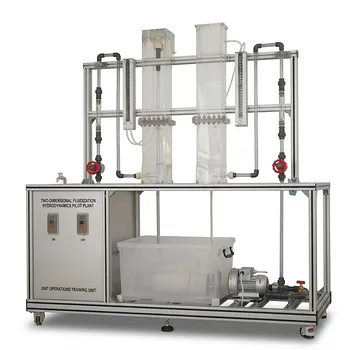
- Two-Dimensional Fluidization Hydrodynamics Educational Pilot Plant for Unit Operations Training
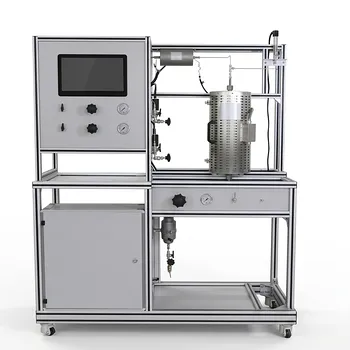
- Electrolytic Hydrogen Production Educational Unit Operations Pilot Plant
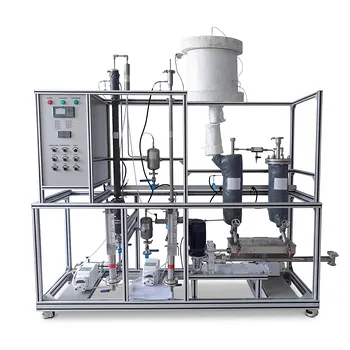
- 100L Continuous Loop Hydrogenation Educational Unit Operations Pilot Plant
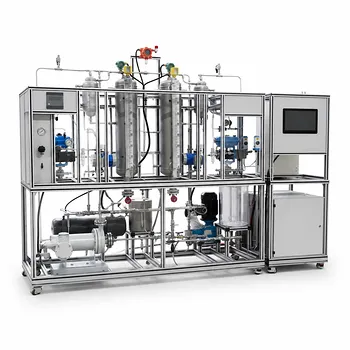
- Crude Benzene Hydrogenation Educational Unit Operations Pilot Plant
- Dual-Mode Rectification Pilot Plant for Practical Training Unit Operations
People Also Ask
- What pressure drop characteristics should students & researchers monitor in a fluidization pilot plant?
- How does active time pulsing mixing enhance fluid homogenization? Configuration Guide for Educational Pilot Plants
- How can acoustic chemometrics prevent reactor clogging in educational fluidized bed pilot plants?
- What is the operational significance of solids feed rate on emulsion phase dynamics in fluidized bed pilot plants?
- Why is UB/Ui critical in fluidized bed pilot plant modeling? Master Gas-Solid Contact