Block diagrams build cognitive scaffolding for a student’s first contact with a process, while detailed PFDs unlock the quantitative, systems-level thinking required to diagnose, optimize, and scale a unit operation. The former reduces an entire pilot plant to a few sequential rectangles so the learner grasps the overall mission before being drowned in numbers. The latter populates the same process with stream compositions, energy balances, and operating limits, forcing the student to treat the pilot plant not as a demonstration toy but as a rigorous thermodynamic system. In a well‑designed laboratory curriculum, these two diagrams are not competing views; they are deliberately sequenced teaching tools that transform passive observation into active, analytical reasoning.
Block diagrams answer “what happens and when,” giving novices a mental map they can hold in working memory. Detailed PFDs answer “how much, at what cost, and why,” pushing students to calculate, criticize, and improve the process. A pilot plant becomes a true learning instrument only when the curriculum moves intentionally from the first diagram to the second—and back again.
The Pedagogical Progression: From Orientation to Mastery
The Macro View: Block Diagrams as Cognitive Scaffolding
A block diagram teaches process sequencing without numeric noise.
Each rectangle represents a complete function—preheating, reaction, separation—allowing students to internalize the macro‑level material path. For a steam reforming pilot plant, a trainee immediately sees that the reformer outlet feeds the water‑gas shift unit, which then sends syngas to pressure swing adsorption. That mental model forms before a single flowrate is discussed.
This abstraction is not a shortcut; it is a deliberate instructional layer. It prevents cognitive overload by deferring detail until the student can answer “why is this unit here?” rather than “what is the connection’s pipe size?”
For vocational trainees and early undergraduates, block diagrams create the confidence to trace flows and predict the effect of a unit failure because the whole plant fits into a single glance.
The Quantitative Deep Dive: Detailed PFDs for Analytical Rigor
Once the process skeleton is understood, the detailed PFD forces the student to engage with the physics that govern the pilot plant.
Every major equipment symbol now carries stream numbers, component flowrates, temperatures, pressures, and heat duties. The diagram becomes a working document for material and energy balances. In a laboratory exercise, a student comparing a PFD’s design heat‑exchanger duty with actual logged data learns more than any textbook lecture: they see heat integration losses, approach temperatures, and the gap between ideal and real thermodynamics.
The PFD also introduces process constraints. A distillation column drawn with its condenser and reboiler temperatures makes it impossible to ignore the boiling‑point differences that determine separation. This is the moment when qualitative understanding crystallizes into the ability to predict what will change if a single parameter shifts.
How Pilot Plants Amplify Each Diagram’s Teaching Power
Bridging Conceptual Layout and Physical Reality
Educational pilot plants are modular by design, often built as miniature versions of industrial trains—raw material preparation, reaction, separation, recycle. A block diagram becomes the student’s initial orientation tour of these physical modules, mapping a blue‑colored preheater on the diagram to the actual unit they will touch.
A detailed PFD then layers operational targets onto that physical layout. The student sees not only that a catalytic reactor exists, but its space velocity, inlet temperature, and expected conversion. Because the pilot plant allows real‑time parameter changes, the PFD becomes a hypothesis‑testing platform: “If I lower the feed temperature by 10 °C, will the product purity drop as the energy balance predicts?”
From PFD to Hands‑On Control: The Path to P&IDs
The pedagogical function of the PFD is not isolated—it prepares the student for the Piping and Instrumentation Diagram (P&ID) that governs actual operation.
A PFD teaches the process intent; the P&ID adds control valves, safety interlocks, and utility lines. In a structured laboratory, students first read the PFD to understand what the plant is supposed to do thermodynamically, then use the P&ID to trace how a proportional‑integral control loop stabilizes a level or temperature to meet that intent. This ladder—block diagram → PFD → P&ID—is what turns a pilot plant from a static piece of hardware into a living curriculum for inherently safer, controllable design.
Understanding the Trade‑offs
When Block Diagrams Become a Liability
Block diagrams serve orientation, but over‑reliance can leave a student unprepared for real complexity.
A block labeled “separation” hides everything from tray counts to azeotrope formation. If a pilot‑plant exercise stops at the block level, a student will never ask whether a simple flash drum or a multi‑stage column is needed—or why. The diagram’s simplicity can falsely suggest that unit operations are interchangeable black boxes, stripping away the thermodynamic nuance that makes chemical engineering distinct.
The Hidden Danger of Premature PFD Exposure
Handing a novice a detailed PFD before they can outline the process in blocks often triggers symbol‑shock and disengagement.
The student fixates on a sea of numbers, valve counts, and bypass lines, unable to filter the essential from the auxiliary. Worse, they may memorize the diagram without understanding the causal relationships that matter—e.g., that increased reactor exotherm raises separation costs. The PFD must follow, not precede, the mental map a block diagram provides.
Making the Right Choice for Your Training Goal
The optimal choice depends entirely on what you need the learner to be able to do at that moment.
- If your primary focus is onboarding new students or vocational operators: Start with block diagrams. Let them confidently trace the sequence and identify unit boundaries before introducing a single number. Use the pilot plant to physically walk each block, narrating the purpose.
- If your primary focus is teaching quantitative process analysis and troubleshooting: Move immediately to the detailed PFD. Require students to extract key operating data and compare it against pilot‑plant readings, forcing them to explain deviations through mass and energy balances.
- If your primary focus is preparing learners for plant‑scale design and safety reviews: Use the PFD as a bridge to the P&ID. Insist they translate the PFD’s heat‑integration logic into the control‑loop and interlock logic visible on the P&ID and physically traceable on the pilot plant skid.
Deliberately staging block diagrams, detailed PFDs, and ultimately P&IDs converts a pilot plant from a piece of demonstration equipment into a layered instrument that teaches the way engineers actually think—first the story, then the science, then the safe execution.
Summary Table:
| Diagram Type | Primary Focus | Pedagogical Function | Target Audience |
|---|---|---|---|
| Block Diagram | Process sequencing & macro view | Cognitive scaffolding; reduces overload | Beginners & vocational trainees |
| Detailed PFD | Stream compositions & energy balances | Quantitative analysis; hypothesis testing | Advanced students & analytical training |
| P&ID | Control loops, piping & instrumentation | Bridging thermodynamic design to safe operations | Process control & safety design learners |
Transform Your Engineering Lab with LABPARK
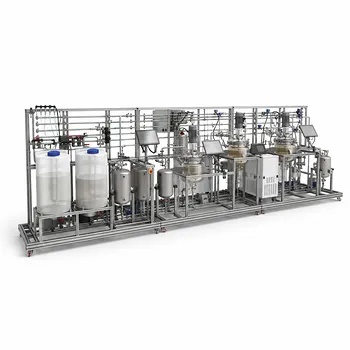
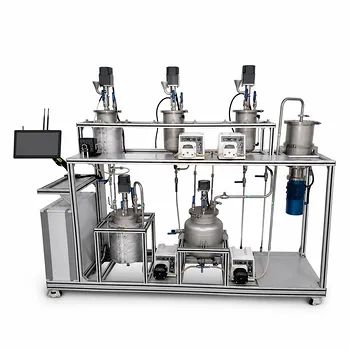
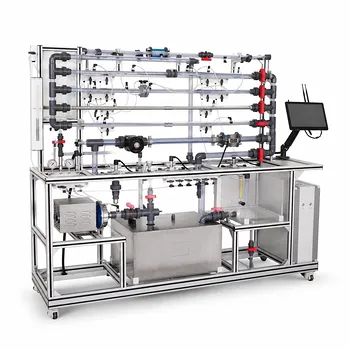
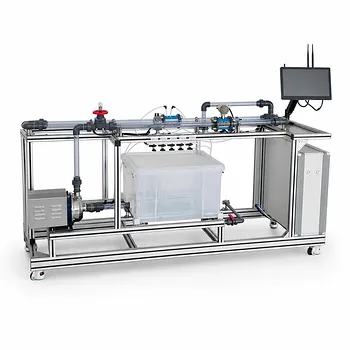
Translating process diagrams into physical operational skills requires the right training hardware. LABPARK provides state-of-the-art Educational and Vocational Unit Operations Pilot Plants across chemical engineering, bioprocess & biotech, and environmental & water treatment for universities, research institutes, and enterprises.
Our custom-built pilot plants allow students to transition seamlessly from block diagrams to complex PFDs and P&IDs in a safe, controlled environment.
Contact LABPARK today to discover how we can enhance your hands-on training curriculum!
Related Products
- Fixed-Bed Chemical Reaction and Gas Dust Tar Removal Unit Operations Pilot Plant
- Electrolytic Hydrogen Production Educational Unit Operations Pilot Plant
- Ethyl Acetate Synthesis Unit Operations Pilot Plant for Practical Training
- General Purpose Cosmetics Production Unit Operations Training Pilot Plant
- Continuous Batch Extractive Distillation Educational Pilot Plant
People Also Ask
- When to transition from PID to adaptive control in pilot plants? Key process indicators.
- How do deviations in estimating latent heat impact pilot plant thermal systems? Avoid hardware mis-sizing.
- Why Compare Predicted and Experimental Excess Enthalpy? Key to Accurate Pilot Plant Scale-up
- How to study gasification in pilot plants? Compare exit gas composition & efficiency
- Why Use PTFE & Hastelloy in Chemical Pilot Plants? Prevent Corrosion & Ensure Safety