The choice between an orifice plate and a Venturi meter for a fluid transport pilot plant is a direct trade-off between energy efficiency and capital cost.
Orifice plates are inexpensive and simple to produce, but they create a large permanent pressure drop that wastes fluid energy. Venturi meters, with their streamlined shape, recover almost all of the pressure and lose very little energy—yet they cost several times more to manufacture. In pilot plants where every pressure drop affects pump sizing and energy demonstration, this difference becomes the central selection criterion.
The decision hinges on your pilot plant’s primary objective. If you need to showcase energy‑efficient fluid mechanics and minimise system pressure loss, the Venturi meter justifies its higher cost. If upfront budget is the overriding constraint, the orifice plate remains the practical, low‑cost workhorse—provided you account for its high permanent head loss and ongoing maintenance.
The Fundamental Trade‑off in Differential Pressure Flowmeters
How the Two Meters Create Pressure Loss
An orifice plate forces the entire flow through a sharp‑edged hole. The fluid contracts into a jet, generating intense turbulence and eddies downstream. This kinetic energy cannot be recovered, resulting in a large permanent pressure drop that can exceed 60% of the measured differential.
In contrast, a Venturi meter uses a smooth, gradual contraction followed by a long, expanding cone. The fluid accelerates gradually in the converging section and then decelerates in the diverging section, converting kinetic energy back into static pressure. This design minimises eddy formation, so the permanent pressure loss is only 10–15% of the measured differential.
Why the Pressure Recovery Gap Matters in a Pilot Plant
A high permanent loss means your pump must work harder to deliver the same flow and pressure downstream. In a fluid transport pilot plant, this extra work directly increases motor power consumption and can mask the true hydraulic behaviour of the piping system.
Venturi meters preserve nearly the full line pressure, allowing students to isolate and observe other friction losses in the system. Orifice plates introduce an artificially large pressure sink that can distort energy‑balance calculations and make pump‑sizing exercises less representative of well‑designed industrial loops.
Cost Implications and Manufacturing Complexity
Upfront Price and Fabrication Effort
An orifice plate is nothing more than a thin metal disc with a bored hole, usually clamped between pipe flanges. It costs very little to produce and can be made in‑house by most workshops. This simplicity makes it the clear winner for capital‑starved projects.
A Venturi meter demands precision machining of two long, concentric cones to tight dimensional tolerances. The manufacturing process is time‑consuming and requires specialised equipment, which drives the purchase price several times higher than an equivalent orifice set.
Hidden Lifecycle Costs
While the orifice plate has a low purchase price, its sharp edge is prone to wear and erosion. As the edge rounds, the discharge coefficient shifts, requiring periodic recalibration or plate replacement. Over the life of a pilot plant, these maintenance interventions can add up.
Venturi meters have no sharp edges to erode. Their gradual profile is inherently robust, so long‑term calibration drift is minimal. The higher upfront cost can therefore be partially offset by lower maintenance and greater measurement stability if the plant runs continuously or handles abrasive fluids.
Matching the Meter to Your Pilot Plant’s Purpose
When Energy Efficiency Is a Learning Objective
If your curriculum emphasises pump energy consumption, pressure recovery, or efficient system design, the Venturi meter is the superior teaching tool. Its low permanent loss allows students to see how well‑designed fittings preserve pressure, and the results align closely with textbook fluid mechanics. In such plants, the extra cost pays for itself in clear, repeatable demonstrations.
When Budget Constraints Are Tight
For a basic fluid transport pilot plant where the goal is simply to measure flow, the orifice plate’s low cost and ease of installation are impossible to beat. As long as you specify a pump with enough head to overcome the added loss, students will still obtain valid flow data—though they will need to be explicitly taught why the pressure downstream is so much lower than predicted by ideal flow.
Educational Value of Comparison
Many vocational and university pilot plants intentionally include both an orifice and a Venturi meter in series. This arrangement lets trainees measure the permanent pressure loss of each instrument directly and calculate their pressure recovery factors. The side‑by‑side comparison transforms the trade‑off from an abstract lecture topic into an unforgettable hands‑on experiment.
Understanding the Trade‑offs and Common Pitfalls
The Hidden Effect on System Sizing
Choosing an orifice plate without accounting for its large permanent loss can lead to an undersized pump or misinterpretation of pipe friction factors. The extra head loss must be integrated into the pump selection early; otherwise the plant may fail to meet flow targets.
Physical Size and Installation Space
Venturi meters are longer and heavier than orifice plates. In a compact pilot skid, the additional length—especially the six‑diameter straight run required downstream—may be difficult to accommodate. Orifice plates, by contrast, fit neatly between standard flanges and require far less space.
Consider the Flow Nozzle as a Middle Ground
Though not part of the orifice‑Venturi binary, flow nozzles offer a compromise: they are simpler to machine than a full Venturi and can be installed between flanges, yet they recover significantly more pressure than an orifice. If both extreme cost and extreme energy efficiency can be relaxed, a nozzle can provide a balanced solution for training systems.
Making the Right Choice for Your Pilot Plant
The best meter is the one that aligns with what your pilot plant is meant to teach or test. Use these goal‑driven guidelines to decide.
- If your primary focus is energy efficiency and clear pressure‑recovery demonstration: Choose a Venturi meter. Its higher cost is justified by the low permanent loss and the realistic depiction of well‑designed fluid transport.
- If your primary focus is tight upfront budget and simple, replaceable instrumentation: Select an orifice plate, but confirm that the pump has sufficient head to overcome the added pressure drop and plan for periodic recalibration.
- If your primary focus is comprehensive student education on flow measurement trade‑offs: Install both an orifice and a Venturi (or a nozzle) in series. The direct comparison of energy losses delivers the deepest learning experience.
Investing in the right differential pressure meter means matching the instrument’s cost‑and‑loss profile to the exact story you want your pilot plant to tell.
Summary Table:
| Feature | Orifice Plate | Venturi Meter |
|---|---|---|
| Permanent Pressure Loss | High (>60% of differential) | Low (10–15% of differential) |
| Upfront Cost | Low (simple fabrication) | High (precision machining) |
| Maintenance Needs | High (sharp edge wears/erodes) | Low (durable, stable calibration) |
| Space Requirement | Compact (fits between flanges) | Long (requires straight pipe runs) |
| Primary Educational Value | Basic flow measurement & budget limits | Energy efficiency & pressure recovery |
Optimize Your Fluid Mechanics Lab with LABPARK
Choosing the right instrumentation is critical for accurate data and representative learning. LABPARK provides premium Educational and Vocational Unit Operations Pilot Plants in chemical engineering, bioprocess & biotech, and environmental & water treatment designed specifically for universities, research institutes, and enterprises.
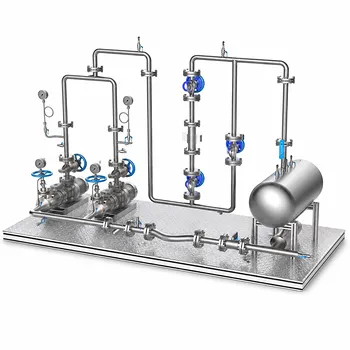
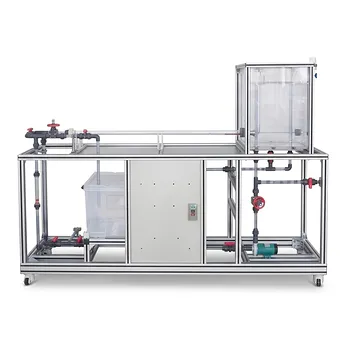
Whether you need customized flow loops featuring both orifice plates and Venturi meters for comparative study, or complete unit operation systems tailored to your curriculum, we deliver robust, high-performance equipment that fits your budget.
Contact LABPARK today to discuss your pilot plant requirements and get a professional consultation!
Related Products
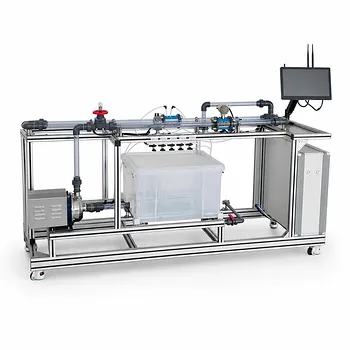
- Orifice and Venturi Flowmeter Calibration Educational Pilot Plant for Fluid Mechanics Laboratory
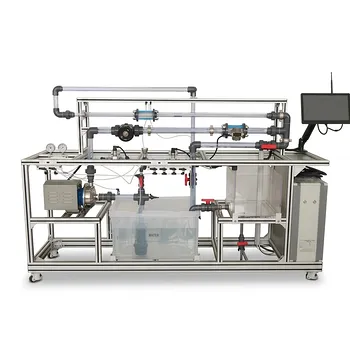
- Centrifugal Pump Performance and Orifice Flowmeter Calibration Educational Pilot Plant
- Fluid Transport and Piping Dynamics Practical Training Unit Operations Pilot Plant
- Quantitative Dosing and Liquid Flow Control Educational Unit Operations Pilot Plant
- Multi Pump Fluid Transport Process Piping Unit Operations Training Pilot Plant
People Also Ask
- What is the difference between static and stagnation pressure? Master Pilot Plant Flow Measurement
- How do pilot plants demonstrate siphon pressure variations? Visualizing Bernoulli's Energy Balance
- How do fluid mechanics training pilot plants facilitate the visualization and calculation of laminar and turbulent flows?
- How to update chemometric calibration models in pilot plants? Best practices for process engineers.
- Why are the laws of similitude critical in fluid flow pilot plants? Scale Up Safely