Knowledge Resources How do ergonomic and operational accessibility guidelines influence the equipment layout of a training pilot plant?
Author avatar

Tech Team · LABPARK

Updated 1 month ago

How do ergonomic and operational accessibility guidelines influence the equipment layout of a training pilot plant?


Safety and learnability dictate every inch of a training pilot plant’s design.
For educational pilot plants, ergonomic and operational accessibility guidelines directly shape where equipment is placed, how it is spaced, and how operators move through the facility. These rules ensure that frequently used instruments and valves sit at visible, reachable heights, that there is enough room to work safely around the skid, and that maintenance tasks—like pulling a tube bundle or replacing catalyst—never become dangerous or impossible.

A training plant’s layout is not just about process flow. It is a physical curriculum. Ergonomic accessibility guarantees that student operators can focus on learning without fighting the environment, while deliberate maintenance clearances protect long-term operability and teaching value.

The Human Factor: Why Ergonomics Drive Layout in Pilot Plants

In a training plant, the operator is not a seasoned technician but a student who is still building process understanding. Layout decisions must remove physical barriers to learning.

The Student Operator: A Different Kind of User

Students lack the muscle memory and situational awareness of experienced staff.
A badly placed sight glass or a valve hidden behind a pipe rack can cause confusion, discourage interaction, and even introduce safety hazards.
Design must assume that the operator has zero intuitive feel for the equipment—everything must be obvious in its placement and easy to actuate.

Reach Zones and Sightlines

Frequently monitored instruments, control valves, and sampling points must sit between waist and eye level for easy reading and quick manipulation.
Even floor-standing equipment should bring the human-machine interface into the operator’s natural sightline—often through angled control panels or locally mounted digital displays that complement the field devices.
When something cannot be placed ideally because of process constraints, the layout must provide a safe, stable platform or a visual aid (like a mirror for a distant level gauge) rather than forcing the operator to stretch or climb.

Maintenance as a Design Constraint, Not an Afterthought

Accessibility is not only about daily operation. In a teaching plant, every major component will be opened, explained, and reassembled multiple times over its life. Layouts that ignore maintenance will silently undermine safety and educational quality.

Clearance for Component Extraction

The primary reference explicitly calls out extracting heat exchanger tube bundles and replacing packing or catalyst in reactors and columns.
These tasks require linear pull-out clearances—often as long as the bundle itself—directly in front of the component.
A pilot plant’s skid layout must preserve these clear lanes, even if it means increasing the overall footprint or staggering equipment in a less conventionally compact arrangement.

Headroom and Access Platforms

Vertical accessibility is equally critical.
Columns and reactors need overhead clearance for lifting internals, and any elevated equipment must have properly sized platforms with handrails, not a makeshift arrangement.
When a distillation column is packed, students may need to see the packing and understand its installation; if the layout provides a disassembly zone with enough headroom for a small gantry crane, the training value skyrockets while the risk of injury drops.

Common Pitfalls in Training Plant Layout

The biggest mistakes come from chasing a “plant-like” look while ignoring the human factors and maintenance demands that unlock safe, effective learning.

Shrinking Footprint at the Cost of Safety

Educational space is often limited, and there is a temptation to condense the plant onto a minimal skid.
However, when clearance between vessels shrinks to the point where an operator cannot turn around without touching a hot surface, or a technician cannot safely extract a tube bundle, the plant becomes a liability, not a teaching tool.
Layout must start with the largest maintenance envelope and only then refine, not the other way around.

Overlooking the Rhythm of Education

A training plant operates in cycles: start-up, observation, data collection, shutdown, breakdown, and reassembly.
Each phase has a different accessibility profile. A sampling station that works perfectly during steady-state may become unreachable during an emergency shutdown drill if it sits behind a blocked valve.
Good layouts anticipate the instructional sequence and position equipment so that no step forces students into an awkward or unsafe posture.

Making the Right Choice for Your Training Plant

The principles are clear, but the implementation depends on which outcome matters most to your program. Use these goal-oriented guidelines to anchor your layout decisions.

  • If your primary focus is student safety and intuitive learning: Prioritize placing all frequently read gauges and frequently touched valves between elbow and eye height, even if that means rerouting piping or adding local indicators. Every inch of layout must serve visibility and physical comfort.
  • If your primary focus is long-term maintainability and uptime for multiple cohorts: Design pull-out clearances for tube bundles, catalyst beds, and column internals as non-negotiable dimensions. Then build the skid boundaries around those zones, accepting a larger footprint in exchange for decades of safe service.
  • If your primary focus is maximizing instructional value per square foot: Use glass-walled vessels, transparent sight glasses, and generous access pathways so students can observe internals and fluid behavior. Combine that with overhead clearance that allows a simple hoist for lifting internal components during guided teardowns.

By treating ergonomic and maintenance accessibility not as checklists but as design drivers, you create a training pilot plant that guides the student’s eye, hand, and mind at every step—safely and sustainably.

Summary Table:

Layout Factor Design Requirement Safety & Educational Impact
Reach & Sightlines Position instruments/valves at waist-to-eye level. Prevents student confusion and minimizes operational errors.
Maintenance Clearance Allocate linear pull-out lanes for tube bundles and catalysts. Enables safe component extraction and hands-on teaching.
Vertical Access Provide overhead clearance and secure platforms with handrails. Ensures safe inspection of columns and reactor internals.
Footprint Sizing Prioritize safety envelopes over extreme skid compaction. Prevents crowding and accidental contact with hot surfaces.

Build a Safer, More Effective Training Lab with LABPARK

Designing a pilot plant layout that balances student ergonomics with complex process requirements demands specialized expertise. LABPARK delivers high-performance Educational and Vocational Unit Operations Pilot Plants specifically designed for universities, research institutes, and enterprises.

Our custom-engineered solutions span key disciplines, including:

  • Chemical Engineering
  • Bioprocess & Biotech
  • Environmental & Water Treatment

We design every skid with optimal reach zones, maintenance clearances, and intuitive interfaces to ensure your facility serves as a safe, highly effective physical curriculum.

Ready to elevate your training capabilities? Contact LABPARK today to consult with our engineering team on your custom pilot plant layout.

Related Products

People Also Ask

Related Products

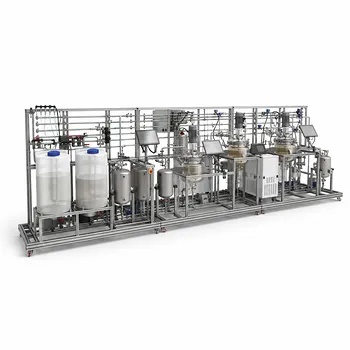
Natural Product Extraction Unit Operations Training Pilot Plant

Natural Product Extraction Unit Operations Training Pilot Plant

Integrated natural product extraction pilot plant for chemical engineering training bridges theory and industrial practice with modular extraction and evaporation/concentration units, hybrid touchscreen and manual control, realistic process simulation, and self-contained softened water and vacuum utilities.

Multi Pump Fluid Transport Process Piping Unit Operations Training Pilot Plant

Multi Pump Fluid Transport Process Piping Unit Operations Training Pilot Plant

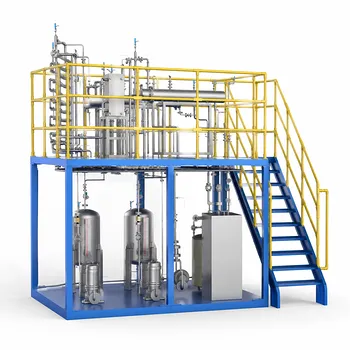
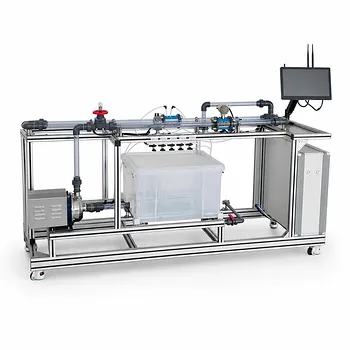
Industrial-scale multi-pump pilot plant for unit operations training in fluid transport and process piping, featuring real-material and semi-physical simulation modes, comprehensive pump and flowmeter calibration, and safety-enhanced two-tier platform, bridging academic theory and industrial practice for chemical engineering education.

Aspirin API Synthesis Unit Operations Training Pilot Plant

Aspirin API Synthesis Unit Operations Training Pilot Plant

An integrated pilot plant for aspirin API synthesis training, featuring batch reaction, recrystallization, and packed distillation modules. Offers dual-control operation, transparent vessels, and public utility simulation for safe, hands-on chemical engineering unit operations education. Ideal for university labs.

Multi-Modal Distillation Unit Operations Training Pilot Plant

Multi-Modal Distillation Unit Operations Training Pilot Plant

Multi-modal distillation pilot plant for practical unit operations training in chemical engineering education. Features real, analog, and semi-physical simulation modes, industrial construction, customizable for university labs. Hands-on fractionation columns, SCADA control, safety systems. Includes sight glasses, sampling ports, closed-loop recycling.

General Purpose Cosmetics Production Unit Operations Training Pilot Plant

General Purpose Cosmetics Production Unit Operations Training Pilot Plant

Integrated pilot-scale cosmetics production training plant for chemical engineering education featuring utility supply emulsification blending and filtration modules with dual touchscreen manual control customizable mobile design ideal for practical hands-on unit operations and advanced process control learning.

Dual-Mode Rectification Pilot Plant for Practical Training Unit Operations

Dual-Mode Rectification Pilot Plant for Practical Training Unit Operations

Industrial-scale dual-mode rectification pilot plant for chemical engineering practical training. Features real-material and simulated-material operation modes, sieve-plate column with sight glasses for visual observation of hydrodynamics, and customizable SCADA control for safe, hands-on learning of unit operations and mass transfer.

Bio-fermentation Ethanol Production Practical Training Unit Operations Pilot Plant

Bio-fermentation Ethanol Production Practical Training Unit Operations Pilot Plant

Bio-fermentation ethanol production pilot plant for hands-on training in unit operations: fermentation, solid-liquid filtration, membrane separation, and distillation. Bridges theory with industrial practice using industrial-grade components, customizable for university labs. Hybrid automated and manual control for comprehensive learning.

Ethyl Acetate Synthesis Unit Operations Pilot Plant for Practical Training

Ethyl Acetate Synthesis Unit Operations Pilot Plant for Practical Training

Modular and customizable pilot plant for ethyl acetate synthesis practical training. Integrates esterification reaction, liquid-liquid extraction, neutralization, and sieve-plate distillation unit operations. Bridging theory and real-world industrial processes. Designed for university chemical engineering labs

Dual Mode Heat Transfer Pilot Plant for Unit Operations Training

Dual Mode Heat Transfer Pilot Plant for Unit Operations Training

Engineering-scale dual-mode heat transfer pilot plant for hands-on unit operations training in chemical engineering. Features real and simulated modes, multiple heat exchanger types, comprehensive coefficient determination, and advanced process control with data acquisition for engineering students and researchers.

Comprehensive Multi-Modal Heat Transfer Unit Operations Pilot Plant for Engineering Training

Comprehensive Multi-Modal Heat Transfer Unit Operations Pilot Plant for Engineering Training

Comprehensive multi-modal heat transfer unit operations pilot plant for engineering training. Features four heat exchanger types, multi-media switching, and three operating modes. Hands-on experience in safety, optimization, and process control. Industrial-grade design with real-time data acquisition for chemical engineering labs.

Multi-Reactor Educational Pilot Plant for Reaction Engineering Unit Operations

Multi-Reactor Educational Pilot Plant for Reaction Engineering Unit Operations

Integrated bench-scale educational pilot plant for chemical engineering teaching featuring fixed bed fluidized bed and stirred tank reactors with web-based digital twin controls and safety interlocks for hands-on unit operations and reaction engineering comparative studies in one compact system.

Electrolyte Distillation Purification and Formulation Educational Pilot Plant

Electrolyte Distillation Purification and Formulation Educational Pilot Plant

Integrated bench-to-pilot scale educational pilot plant for electrolyte distillation, purification, and formulation with borosilicate glass construction, PLC automation, touchscreen HMI, and advanced industrial safety features for hands-on chemical process training, ideal for chemical engineering and materials science curricula.

Multimodal Absorption and Desorption Pilot Plant for Unit Operations Training

Multimodal Absorption and Desorption Pilot Plant for Unit Operations Training

Multimodal absorption and desorption pilot plant for higher education labs. Bridges theory and industrial practice with transparent packed columns, three operational modes (real-material, simulated, semi-physical), and SCADA control. Students explore mass transfer, column hydraulics, and process control. Customizable.

Fixed-Bed Chemical Reaction and Gas Dust Tar Removal Unit Operations Pilot Plant

Fixed-Bed Chemical Reaction and Gas Dust Tar Removal Unit Operations Pilot Plant

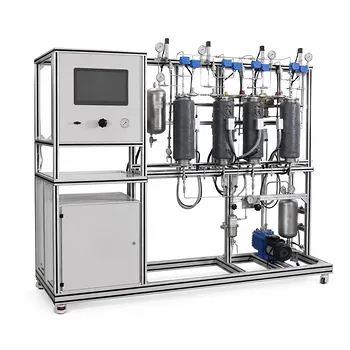
Integrated educational pilot plant for studying catalytic gas-solid reactions and downstream gas purification. Features dual fixed-bed reactor, three-stage heating, and touchscreen control for hands-on engineering training. Ideal for chemical and environmental engineering curricula.

Orifice and Venturi Flowmeter Calibration Educational Pilot Plant for Fluid Mechanics Laboratory

Orifice and Venturi Flowmeter Calibration Educational Pilot Plant for Fluid Mechanics Laboratory

Enhance fluid dynamics education with the Orifice and Venturi Flowmeter Calibration Educational Unit Operations Pilot Plant, featuring transparent orifice and Venturi meters, industrial sensors, touchscreen interface for real-time data analysis and automatic coefficient calculations in engineering student laboratories.

Multi-Functional Special Distillation Educational Pilot Plant

Multi-Functional Special Distillation Educational Pilot Plant

Versatile multi-functional special distillation pilot plant for chemical engineering education. Supports continuous, vacuum, azeotropic, reactive, extractive distillation. Transparent glass columns enable real-time visual observation of hydrodynamics and separation processes.

Solid Waste Pyrolysis and Refining Educational Pilot Plant for Unit Operations

Solid Waste Pyrolysis and Refining Educational Pilot Plant for Unit Operations

This pilot plant for solid waste pyrolysis and refining integrates pyrolysis, separation, distillation, and catalytic hydrogenation into one educational unit. It provides visual process observation, smart data logging, and industrial safety for hands-on learning of engineering unit operations.

Multi Functional Membrane Crystallization Educational Unit Operations Pilot Plant

Multi Functional Membrane Crystallization Educational Unit Operations Pilot Plant

Integrated bench-scale membrane crystallization pilot plant for engineering education. Provides hands-on training in advanced separation technologies, combining membrane distillation crystallization and process intensification. Features variable scaling vessels, industrial-grade flow control, and interactive digital data acquisition. Customizable for university labs.

Ion Exchange Water Purification Educational Pilot Plant for Engineering Unit Operations

Ion Exchange Water Purification Educational Pilot Plant for Engineering Unit Operations

This bench-scale ion exchange pilot plant trains engineering students in water purification. Dual transparent columns simulate industrial softening and demineralization. Students observe fluid dynamics, perform resin regeneration, and analyze breakthrough curves. The corrosion-resistant frame ensures durability in unit operations experiments.

Bench Scale Carbon Dioxide Capture Educational Unit Operations Pilot Plant

Bench Scale Carbon Dioxide Capture Educational Unit Operations Pilot Plant

This bench-scale educational pilot plant simulates industrial CO₂ separation using a multi-tower adsorption system for hands-on engineering training. Students achieve ≥90% CO₂ purity while studying pressure swing adsorption, desorption kinetics, and process control in gas purification experiments.


Leave Your Message