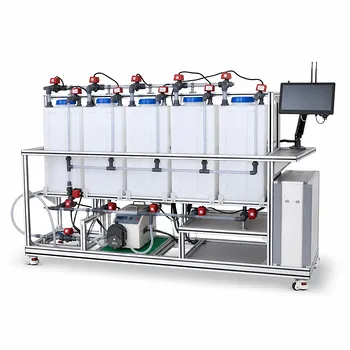
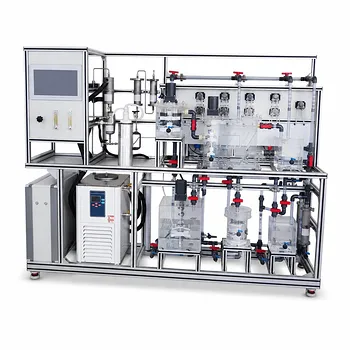
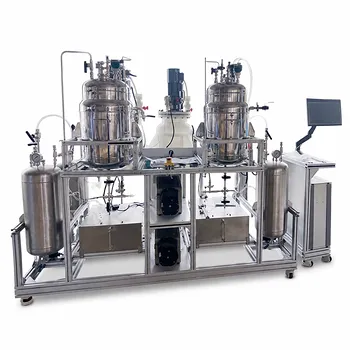
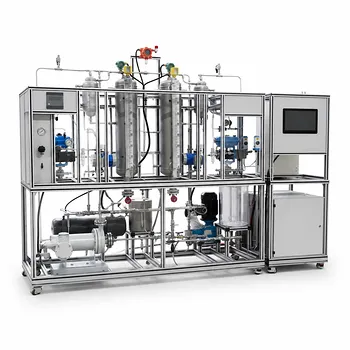
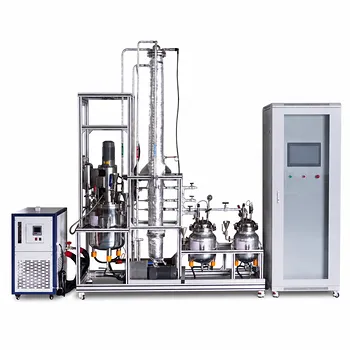
Real-time process analysis (PA) is the engine that transforms an environmental pilot plant from a static collection of pipes and tanks into a dynamic, data-driven teaching tool. In practice, it works by embedding water quality sensors and automated data acquisition directly into the process. Students then continuously monitor parameters such as pH, conductivity, and target chemical pollutants. This setup lets them actively track waste stream quality, automate chemical dosing for neutralization, verify equipment cleaning cycles, and enforce environmental safety parameters — all in a controlled, hands-on training environment.
Pilot plants use real-time PA to bridge the gap between manual laboratory sampling and modern industrial automation. The core insight is that when students can see process data streaming second-by-second and directly command dosing pumps or valves based on that data, they internalize not just how to measure a waste parameter, but why continuous monitoring and closed-loop control are essential for environmental compliance and resource efficiency.
What Real-Time Process Analysis Brings to Pilot Plant Training
From Periodic Grab Samples to Continuous Data Streams
Traditional teaching relies on students pulling a sample, walking to a lab, and analyzing it an hour later. Real-time PA eliminates that delay. By placing inline sensors directly in the process flow, students see the impact of an upset—like a sudden acid spike—instantly on a dashboard.
This live feedback loop builds intuition for process dynamics. Learners quickly connect a change in upstream conditions (e.g., a higher organic load) to the immediate response of downstream water quality. The pilot plant becomes a real-time simulator of an industrial waste treatment control room.
Key Parameters Taught Through Direct Measurement
The primary teaching targets are the critical water quality indicators that regulators and plant operators obsess over. In a pilot plant, these are monitored continuously:
- pH and conductivity: The universal first check for any waste stream, revealing acidity and total dissolved salts. Students learn to interpret these as proxies for reaction completion and effluent corrosivity.
- Specific chemical pollutants: Depending on the pilot plant’s configuration, sensors can track ammonia, nitrate, phosphate, or dissolved oxygen. This teaches students to monitor the effectiveness of biological or chemical treatment stages.
- Organic load indicators: Real-time surrogates such as UV absorbance or total organic carbon (TOC) allow prediction of chemical oxygen demand without a days-long lab test.
Automating Chemical Dosing and Neutralization
A central lesson is that measurement without action has limited value. Real-time PA directly feeds automated dosing systems. When a student observes that the pH in a neutralization tank drifts below a setpoint, the control system can automatically trigger a caustic dosing pump, bringing the waste back into the compliance range.
The teaching value lies in configuring and tuning this feedback loop. Students program the control logic, set alarm limits, and then test the system by intentionally introducing a shock load. They witness firsthand how a too-aggressive dosing scheme can overshoot and waste chemicals, while a slow response risks an out-of-spec discharge.
Verifying Clean-in-Place and Operational Safety
Waste handling equipment must itself be clean to avoid cross-contamination. Pilot plants use real-time conductivity or rinse-water absorbance sensors during cleaning cycles. Students can verify that a vessel has been fully flushed by watching the sensor signal return to baseline—a clear, quantitative demonstration of cleaning validation.
Safety is reinforced through continuous monitoring of confined spaces or gas headspace. For example, a real-time oxygen sensor in a covered equalization tank teaches automatic shutdown sequences when levels become dangerous, embedding a safety-first mindset.
Extending Learning with Advanced Process Analytics
Introducing Spectroscopic Sensors and Chemometrics
Beyond simple electrochemical probes, many pilot plants incorporate in situ spectroscopic tools such as UV-Vis or fluorescence probes. These allow students to track specific contaminants—like aromatic compounds or fluorescent active substances—in real time.
The teaching leap comes with chemometrics. Students learn to build calibration models that translate a complex spectral fingerprint into a concentration. This mirrors the PAT (Process Analytical Technology) revolution in regulated industries, where a single fiber-optic probe replaces a dozen offline tests.
Applying Quality by Design and Feedback Control
With rich real-time data streams, students can practice modern manufacturing philosophies like Quality by Design (QbD). Rather than simply testing the final effluent, they learn to define a design space—acceptable ranges for pH, temperature, and residence time—that guarantees the waste stream quality is always in specification.
This transforms the pilot plant into a teaching lab for closed-loop feedback control. Students adjust process parameters in response to sensor signals, training them to think in terms of root-cause analysis and predictive process management rather than reactive sampling.
Addressing Emerging Contaminants: A Real-Time Lens
Tracking Nanoparticles and Complex Pollutants
Environmental pilot plants are increasingly configured to handle engineered nanomaterials. Real-time PA is particularly valuable here because nanoparticles cannot be seen and are often difficult to measure offline. Laser-Induced Fluorescence (LIF) or specialized turbidimetric sensors allow students to monitor nanoparticle breakthrough curves in membrane filtration units.
For organic micropollutants, real-time fluorescence tracking can detect traces of antibiotics or algal pigments. Students learn to control advanced oxidation dosing precisely: too little oxidant leaves pollutants in the effluent; too much wastes energy and chemicals. This teaches the direct economic and environmental cost of poor process control.
Understanding the Limitations and Trade-offs
The Hidden Cost of Real-Time Data
Continuous sensors are not “install and forget.” Every instrument has a drift that must be corrected. Students must learn routine two-point calibrations and recognize when a fouled probe is giving a false reading. Teaching this manual verification step prevents blind trust in automation and builds troubleshooting skills.
The infrastructure to collect and store high-frequency data also brings complexity. Without careful thought, a student can be overwhelmed by data noise rather than enlightened by data clarity. Educators must design exercises that focus the learner on trend interpretation and signal filtering—skills that are exactly what industry demands but are easy to miss if the system simply churns out raw numbers.
Balancing Automation with Fundamental Understanding
There is a pedagogical risk: when dosing happens automatically, a student might never manually calculate the required chemical quantity. The pilot plant curriculum must therefore interleave real-time PA with manual exercises. For example, having students first perform a jar test and calculate neutralization demand, then contrast that with the automated loop’s behavior, cements the underlying chemistry behind the automation.
This balance ensures the pilot plant teaches not just how to watch a screen, but why the screen shows what it does — the heart of critical engineering judgement.
Making the Right Choice for Your Educational Goals
The most effective training pilot plant matches its real-time PA toolkit to the specific skills you want to build. Here is how to prioritize:
- If your primary focus is fundamental waste monitoring and regulatory compliance: Start with robust, industry-proven sensors for pH, conductivity, and dissolved oxygen. Teach manual calibration and basic alarm-driven feedback loops to ground students in the essentials of waste stream control.
- If your primary focus is advanced process control and modern PAT: Integrate a spectroscopic probe (UV-Vis or fluorescence) along with chemometric software. Use it to build a QbD exercise where students define a design space and implement a feedback loop based on a multivariate signal.
- If your primary focus is emerging contaminant removal (e.g., nanoparticles, antibiotics): Select sensors capable of real-time trace analytics, like LIF or online TOC. Design experiments around optimizing oxidation dosing or membrane rejection in response to live contaminant signals, directly linking sensor output to environmental protection.
- If your primary focus is operational safety and cleaning validation: Deploy rinse-water conductivity sensors and confined-space gas detectors. Make the automation sequence that stops a process upon a safety breach a core, graded assignment.
Ultimately, real-time process analysis elevates a water treatment pilot plant from a collection of unit operations into a living, responding system. By deliberately choosing what—and how—students monitor, you transform environmental education into a true apprenticeship in industrial-scale stewardship.
Summary Table:
| PA Application | Key Parameters | Educational Value |
|---|---|---|
| Neutralization Control | pH, Conductivity | Teach automated dosing & closed-loop feedback tuning. |
| Pollutant Tracking | TOC, UV Absorbance, Nutrients | Transition from manual grab samples to live data streams. |
| System Safety & CIP | Rinse-water conductivity, Gas sensors | Validate cleaning cycles and practice safety shutdowns. |
| Advanced Analytics | Nanoparticles, Organic micropollutants | Introduce chemometrics, QbD, and spectroscopic sensors. |
Elevate Your Environmental Engineering Training with LABPARK
To prepare the next generation of engineers, universities and research institutes need hands-on training systems that mirror real-world industrial automation. LABPARK provides state-of-the-art Educational and Vocational Unit Operations Pilot Plants in chemical engineering, bioprocess & biotech, and environmental & water treatment.
Our systems empower universities, research institutes, and enterprises to teach advanced closed-loop control, real-time process analysis (PA), and regulatory compliance monitoring on robust, safe, and industrial-grade equipment.
Ready to upgrade your laboratory? Contact our technical experts today to find the perfect pilot plant solution for your training and research goals.
Related Products
- Electrochemical Water Treatment Educational Unit Operations Pilot Plant
- Thermal Desorption Exhaust Gas and Tail Water Treatment Educational Pilot Plant
- Ion Exchange Water Purification Educational Pilot Plant for Engineering Unit Operations
- Water Electrolysis Hydrogen Production and Storage Educational Pilot Plant
- Alkaline Membrane Water Electrolysis Educational Pilot Plant Unit Operations Training System
People Also Ask
- What design features do educational electrochemical pilot plants utilize to manage gas liberation and water loss?
- How can unit operations pilot plants show lead-acid concentration vs state of charge? Real-time monitoring guide.
- How do educational electrochemical pilot plants scale up electrolysis? Master industrial engineering.
- How to Estimate Sulfate in Water Treatment Pilot Plant Deposits: Gravimetric Guide
- How can foaming be managed during steam generation experiments in water treatment unit operations pilot plants? Tips