Membrane filtration in water treatment pilot plants is defined by a clear hierarchy: larger pores remove particles and microbes, while tighter, energy-intensive membranes strip out dissolved salts and molecules. The exact removal capability—and the operational headaches you'll face—depends on where a technology sits on that spectrum.
Microfiltration (MF) and Ultrafiltration (UF) excel at sieving out suspended solids, turbidity, bacteria, and viruses in low‑pressure pilot setups. Nanofiltration (NF) and Reverse Osmosis (RO) operate at a molecular level; RO, with effectively non‑porous membranes, rejects nearly all dissolved solids (TDS), monovalent salts, heavy metals, and fluoride, while NF selectively removes divalent ions and larger organic molecules but allows much of the sodium chloride to pass. However, pilot‑scale study quickly reveals that membrane fouling, escalating energy demands, the need for scale inhibition, and finite membrane lifespan are the real‑world constraints that dictate system design and viability, regardless of theoretical rejection.
The core insight: In a pilot plant, you don’t just choose a membrane based on what it removes – you must manage a delicate balance between separation sharpness, operating pressure, fouling resistance, and chemical durability. The move from MF to RO yields exponentially finer separation, but it also trades low‑pressure simplicity for high‑energy, high‑maintenance operation that demands rigorous pre‑treatment and cleaning.
The Separation Spectrum: From Particles to Ions
Microfiltration: The Coarse Screen for Visible Contaminants
MF membranes have pore sizes of 0.1–10 µm and operate under very low pressure.
They physically sieve out suspended solids, silt, algae, and most bacteria.
In pilot plants, MF is often used as a pre‑treatment or in membrane bioreactors (MBRs) to clarify wastewater before downstream polishing.
Because the pores are large, dissolved substances and viruses easily pass through – MF alone will not improve TDS or microbial safety at a molecular scale.
Ultrafiltration: The Barrier for Macromolecules and Viruses
UF membranes narrow the pore range to 1–100 nm, corresponding to a molecular weight cut‑off (MWCO) in the kilodalton range.
They reliably retain colloids, proteins, viruses, and macromolecules while allowing water, salts, and small organics to permeate.
Pilot‑scale UF units thrive in applications like oil‑water separation, electrocoat paint recovery, and high‑purity water pre‑treatment for semiconductor or biotech industries.
Key operational learnings revolve around flux decline from colloidal fouling and the need for periodic backwashing – factors that become much more critical at this intermediate pore size.
Nanofiltration: Selective Softening and Organics Removal
NF sits between UF and RO with an effective pore size of roughly 1 nm and a MWCO of 100–1000 Da.
It is a partial desalting tool: pilot trials consistently show 90–98% rejection of divalent ions (calcium, magnesium, sulfate) but under 90% rejection of monovalent salts like NaCl.
This makes NF the membrane of choice for softening hard water, removing natural organic matter, and concentrating food‑grade streams without the extreme pressure of RO.
Operators quickly learn that NF’s selectivity is sensitive to feed chemistry: high monovalent ion concentration can alter osmotic pressure differentials and reduce effective salt separation.
Reverse Osmosis: Near‑Complete Demineralization
RO uses dense, non‑porous membranes with effective pore sizes below 1 nm (often cited as ~0.0001 µm).
The separation mechanism is not simple sieving; high transmembrane pressure (TMP) must overcome the natural osmotic pressure of the feed solution.
RO rejects virtually all dissolved salts, heavy metals (e.g., arsenic), fluoride, bacteria, and proteins, producing water with extremely low TDS – ideal for seawater desalination, ultrapure water production, and potable reuse.
In pilot plants, the steep trade‑off becomes obvious: while RO achieves unmatched purity, it demands energy‑intensive high‑pressure pumps, meticulous scale‑inhibitor dosing, and thorough pre‑treatment to fend off rapid fouling.
Key Operational Limits Observed in Membrane Pilot Plants
Fouling and Permeate Flux Decline
Across all membrane types, fouling is the primary operational bottleneck.
Dissolved organics, colloids, or biological growth form a cake or gel layer on the membrane surface, causing a gradual decline in permeate flux even at constant pressure.
Pilot studies reveal that MF/UF often suffer from cake layer fouling, while NF/RO grapple with organic biofouling and scaling from sparingly soluble salts.
Mitigation strategies – chemical cleaning, back‑pulsing, air scouring – must be systematically tested to establish sustainable flux rates before full‑scale design.
Energy and Pressure Demands
Pressure requirements climb dramatically as target solute size shrinks.
MF/UF operate at 0.1–5 bar – low enough to be gravity‑driven in some designs.
NF typically runs at 3.5–16 bar (50–225 psi), incurring moderate energy costs.
RO, especially for seawater, demands 55–70 bar (800–1000 psi) or more, making the efficiency of the high‑pressure pump and energy recovery devices central to pilot‑plant evaluations.
Pilot data on specific energy consumption (kWh/m³) directly informs the economic feasibility of the technology.
Chemical Compatibility and Membrane Lifespan
Polymeric membranes – the workhorses of most pilot plants – have limited tolerance to extreme pH, oxidants, and organic solvents.
Exposing thin‑film composite RO/NF membranes to chlorine or a pH swing outside their 2–11 range can cause irreversible structural damage.
For aggressive streams (strong acids, polar‑nonpolar solvent mixtures), pilot‑scale testing of ceramic, glass, or metal membranes becomes essential, even if they cost more.
Operators must document mechanical and chemical degradation rates to forecast membrane replacement intervals – a hidden operational cost easily overlooked at lab scale.
The Pre‑treatment Imperative
Pilot plants repeatedly confirm that a membrane’s performance is only as good as its pre‑treatment.
Insufficient particle removal leads to rapid fouling of RO/NF elements; poor scale inhibition allows gypsum or silica deposits that cleaning cannot recover.
Effective pre‑treatment – such as multimedia filtration, UF, or antiscalant dosing – directly extends membrane lifespan and stabilises production output.
Therefore, a pilot study must treat the entire treatment train, not just the membrane itself, to derive meaningful design data.
Understanding the Trade‑offs
Removal Perfection vs. Energy and Maintenance
Moving from MF to RO gives you exponentially cleaner water, but you trade low‑pressure simplicity for high‑pressure complexity.
An RO pilot plant demands specialized pumps, energy recovery, and more frequent cleaning, inflating both capital and operating expenses.
Pore Size vs. Throughput
A tighter NF membrane with a lower MWCO (e.g., 150 g/mol) rejects more organics but shows lower pure‑water flux than a looser variant (e.g., 300 g/mol) at the same pressure.
Hydrophilic membranes (low contact angle) can partially offset this by improving flux and fouling resistance, but they may have narrower pH tolerance, limiting cleaning options.
Fouling Resistance vs. Selective Rejection
Membranes with high surface charge or specialised coatings may repel foulants, but the same surface chemistry can alter ion selectivity, reducing the achievable rejection of target solutes.
Pilot trials are essential to strike the right balance – you can’t simply rely on a manufacturer’s ideal‑water specification sheet.
Material Choice: Polymeric vs. Inorganic
Polymeric membranes offer unbeatable cost per square meter but succumb to harsh chemicals and physical wear.
Ceramic or metallic alternatives survive aggressive cleaning and solvents, yet their upfront cost and brittleness demand careful pilot‑scale justification through longer lifespan and lower chemical costs.
Making the Right Choice for Your Pilot Study Goals
Based on real‑world pilot plant behaviour, specific technology selection depends on what you need to remove and what you can afford to manage.
- If your primary focus is removing turbidity, bacteria, and suspended solids: Start with MF or UF. Low energy, simple operation, and minimal chemical pre‑treatment make them ideal for clarifying feeds before further polishing.
- If your primary focus is softening water or selectively removing divalent ions and organic colour: Run NF pilot trials while closely watching osmotic pressure shifts and organic fouling. The moderate pressure penalty is worth the partial desalting if complete demineralisation isn’t required.
- If your primary focus is total dissolved solids reduction, seawater desalination, or elimination of heavy metals: RO is the only choice. Accept the high energy footprint and design a rigorous pre‑treatment and scale‑inhibition protocol to keep fouling at bay.
- If your feed contains aggressive chemicals or extreme pH: Evaluate ceramic or metal membranes early. Factor in higher material costs against the savings from less frequent replacement and harsher cleaning cycles.
A successful pilot plant doesn’t just prove a membrane’s impurity rejection – it reveals the true operational personality of the process, empowering you to scale up with confidence instead of surprises.
Summary Table:
| Technology | Pore Size / MWCO | Primary Target | Pressure (bar) | Main Challenge |
|---|---|---|---|---|
| MF (Microfiltration) | 0.1–10 µm | Suspended solids, algae, bacteria | 0.1–5 | Cake layer fouling |
| UF (Ultrafiltration) | 1–100 nm / Kilodaltons | Colloids, proteins, viruses | 0.1–5 | Colloidal fouling, flux decline |
| NF (Nanofiltration) | ~1 nm / 100–1000 Da | Divalent ions (hardness), organics | 3.5–16 | Scaling & organic fouling |
| RO (Reverse Osmosis) | < 1 nm | Dissolved salts (TDS), heavy metals | 55–70+ | High energy demand, scaling |
Optimize Your Process with LABPARK Pilot Plants
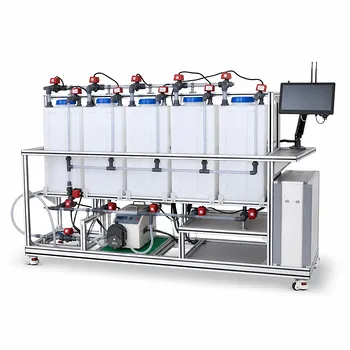
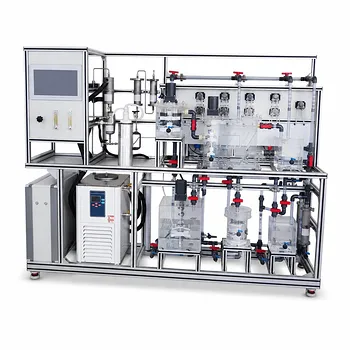
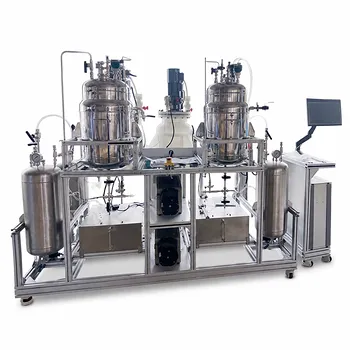
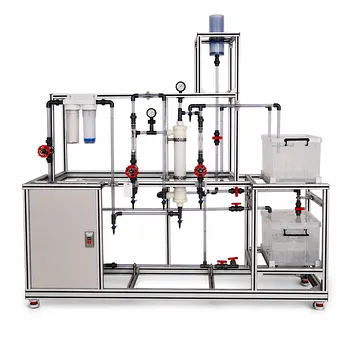
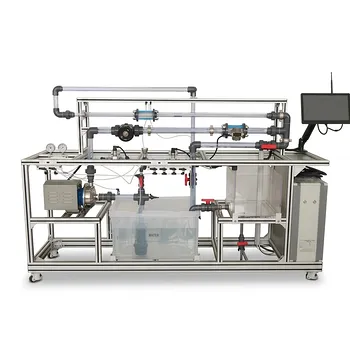
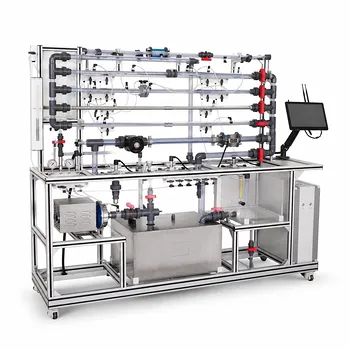
LABPARK provides state-of-the-art Educational and Vocational Unit Operations Pilot Plants in chemical engineering, bioprocess & biotech, and environmental & water treatment. Designed specifically for universities, research institutes, and enterprises, our systems enable hands-on study and testing of membrane filtration processes (MF, UF, NF, and RO) under real-world operational limits.
Ready to elevate your research or training capabilities? Contact LABPARK today to find the perfect pilot plant solution for your organization!
Related Products
- Electrochemical Water Treatment Educational Unit Operations Pilot Plant
- Thermal Desorption Exhaust Gas and Tail Water Treatment Educational Pilot Plant
- Ion Exchange Water Purification Educational Pilot Plant for Engineering Unit Operations
- Alkaline Membrane Water Electrolysis Educational Pilot Plant Unit Operations Training System
- Water Electrolysis Hydrogen Production and Storage Educational Pilot Plant
People Also Ask
- What design features do educational electrochemical pilot plants utilize to manage gas liberation and water loss?
- How can unit operations pilot plants show lead-acid concentration vs state of charge? Real-time monitoring guide.
- How do educational electrochemical pilot plants scale up electrolysis? Master industrial engineering.
- How to Estimate Sulfate in Water Treatment Pilot Plant Deposits: Gravimetric Guide
- How can foaming be managed during steam generation experiments in water treatment unit operations pilot plants? Tips