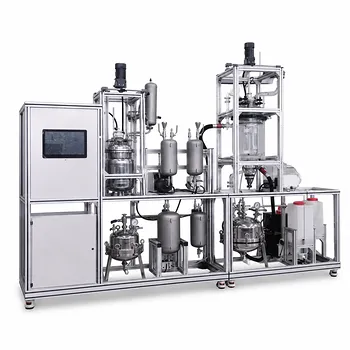
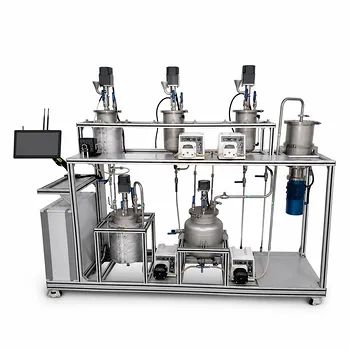
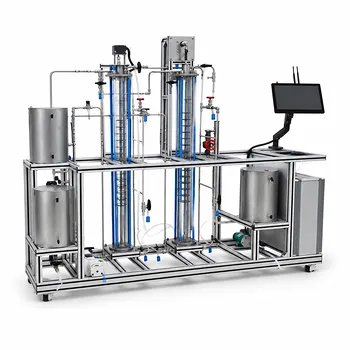
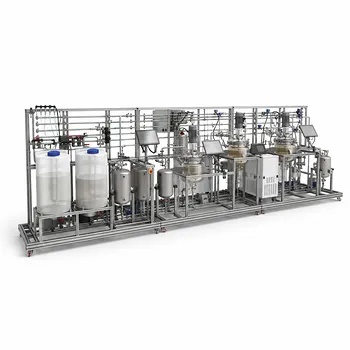
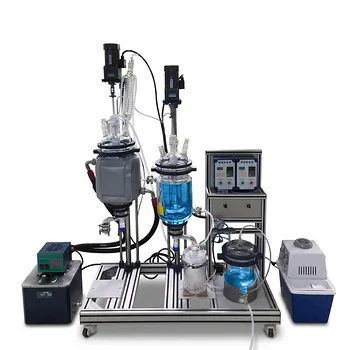
The leap from a gram-scale reaction flask to a multi-kilogram reactor is among the most treacherous in pharmaceutical development. Unit operations pilot plants specifically bridge this gap by serving as an intermediate-scale proving ground. Here, processes are scaled to the 10–100 kg range, critical scale-up factors are evaluated empirically, and the API’s physical form and quality attributes are locked in before committing to expensive clinical trial production.
The pilot plant is the critical translator of lab chemistry into manufacturing reality. By enabling hands-on study of heat and mass transfer, crystallization, and integrated unit operations at a representative scale, it transforms a fragile synthetic route into a robust, reproducible process that reliably produces API of the required purity and solid form for clinical trials.
Why Lab-Scale Success Doesn’t Guarantee Manufacturing Success
The Hidden Trap of Mass and Heat Transfer
Reactions that proceed smoothly in a few grams often behave radically differently when scaled. Mass and heat transfer limitations can transform a mild exotherm into a dangerous runaway, or starve a reaction of mixing intensity and create new impurities. What a lab chemist sees as a clean, fast reaction can collapse under the physical realities of a larger vessel.
The Physical Form Is Part of the Product
Lab teams may focus narrowly on chemical purity, but a medicine’s performance depends on solid-state attributes. Crystal form, particle size distribution, and powder flowability are not just handling characteristics—they directly influence bioavailability, formulation stability, and downstream processing. These crucial properties only fully emerge and become controllable at a pilot scale.
The Pilot Plant: Your Scale-Up Translator
Operating in the Kilo Lab to Pilot Plant Sweet Spot
Unit operations pilot plants occupy the exact intermediate space—typically 10–100 kg batch sizes—that bridges the gap between discovery grams and manufacturing hundreds of kilograms. This is the environment where process engineers finalize the sequence of unit operations, test equipment configurations, and generate meaningful data without the prohibitive cost of full-scale production.
From Grams to Patients: Enabling Clinical Supply Production
For the transition to Phase II clinical trials, the pilot plant is not just a test site—it is the production facility for the required quantities. It delivers the actual API used in clinical supplies, manufactured under rigorous conditions that prefigure commercial GMP standards. This direct link to patient material makes the data gathered there directly relevant and immediately impactful.
De-risking Through Empirical Data Collection
Validating Models and Assumptions
Process simulation models are built on assumptions that must be verified with physical reality. Pilot plants, configured with reactors, filters, and dryers, allow researchers to collect real-world data on material and energy balances, cycle times, and equipment sizing. Running physical experiments validates—or corrects—mathematical models before a multimillion-dollar manufacturing line is designed.
Uncovering Scale-Up Non-Linearities
The most dangerous scale-up failures are the ones that appear only above a critical volume. A reaction rate that is manageable at 100 grams can become uncontrollable at 10 kg due to volume-dependent heat removal. Pilot plant studies intentionally probe these limits under controlled conditions, identifying adverse behaviors and providing the data needed for safe equipment design and process control.
Finalizing the Blueprint for Quality
Locking in the API Solid Form
The pilot plant is where the API’s destiny as a drug substance is fixed. Through carefully managed crystallization and isolation steps, engineers define the polymorphic form and powder attributes. Having this control early prevents later failures in bioavailability or tablet pressing and ensures the drug product can be manufactured consistently.
Defining Critical Process Parameter Ranges
A robust process is one that operates safely within known boundaries. By running designed experiments in the pilot plant, teams identify critical process parameters (temperature, concentration, agitation rate) and their acceptable ranges. This establishes the proven acceptable range that is essential for regulatory filings and commercial quality assurance.
Choosing Your Path: Batch vs. Continuous Operations
When Continuous Flow Shines
Not all reactions are suited for a stirred tank. Fast or highly exothermic reactions often demand the superior mixing and heat transfer of continuous tubular reactors or inline static mixers. Pilot plants that offer both batch and continuous setups let developers directly compare residence time distributions and by-product profiles, selecting the safest and most efficient operational mode.
Integrating Downstream Separations
A continuous reaction is only as good as its downstream train. Pilot plants allow the coupling of flow reactors with continuous extraction, crystallization, and filtration. Testing this full integration reveals hidden bottlenecks, like hold-up volumes that degrade unstable intermediates, ensuring the entire manufacturing sequence works as a harmonious whole.
Understanding the Trade-offs
The Cost and Time Investment
Running pilot plant campaigns is resource-intensive—requiring dedicated equipment, experienced staff, and significant quantities of raw materials. It can be tempting to rush past this stage. However, the cost of a commercial-scale failure, where a whole batch is lost to a scale-up surprise, dwarfs the pilot plant investment many times over.
Don’t Underestimate Downstream Operations
The perfect reaction chemistry is irrelevant if you cannot isolate the product. Filtration and drying are classic bottlenecks where APIs can cake, degrade, or change form. Pilot plants force attention on these seemingly mundane steps, revealing how upstream reaction conditions directly affect downstream filterability and drying behavior so they can be designed in concert.
Making the Right Choice for Your Development Goal
How you leverage a pilot plant should directly align with your primary objective.
- If your primary focus is optimizing a trouble-prone reaction: Use pilot plant capabilities to systematically study heat and mass transfer, starting with the worst-case exotherm scenario, and collect data to define safe operating envelopes.
- If your primary focus is accelerating time to clinic: Invest early in pilot plant runs to produce non-GMP material for toxicity studies while simultaneously refining the final process for later GMP batches, running development and production tasks in parallel.
- If your primary focus is ensuring long-term commercial robustness: Use the pilot plant not just to replicate the lab process, but to actively test edge-of-failure conditions and identify the critical quality attributes of your API solid form that must be controlled for a lifetime of manufacturing.
- If your primary focus is training and building team expertise: Treat the pilot plant as an immersive learning platform where chemists and engineers debunk scale-up myths hands-on, bridging the knowledge gap between synthetic elegance and industrial process reliability.
Pilot plants are not simply bigger beakers—they are the strategic engine that converts a promising molecule into a reliable, manufacturable medicine, ensuring that what works in the lab truly works for patients.
Summary Table:
| Scale-Up Challenge | Pilot Plant Solution | Key Outcome |
|---|---|---|
| Heat & Mass Transfer | Empirically tests mixing & exotherms at 10–100 kg scale | Prevents runaway reactions and process collapse |
| Solid-State Attributes | Controls crystallization, particle size, and powder flow | Ensures consistent bioavailability and drug stability |
| Process Validation | Collects real-world data on material and energy balances | Verifies simulation models before commercial investment |
| Downstream Isolation | Integrates reaction with filtration and drying steps | Prevents caking and bottlenecking in final isolation |
Accelerate Your Scale-Up Success with LABPARK
Bridging the gap between laboratory research and industrial-scale production requires reliable, representative pilot equipment. LABPARK provides state-of-the-art Educational and Vocational Unit Operations Pilot Plants in chemical engineering, bioprocess & biotech, and environmental & water treatment.
We empower universities, research institutes, and enterprises to master process scale-up, validate kinetics, and train the next generation of engineers on industry-standard equipment.
Ready to de-risk your process scale-up and enhance educational excellence? Contact us today to find the perfect pilot plant solution for your laboratory.
Related Products
- Gallium and Indium Selective Extraction Educational Pilot Plant
- Ethyl Acetate Synthesis Unit Operations Pilot Plant for Practical Training
- Aspirin API Synthesis Unit Operations Training Pilot Plant
- Methanol Synthesis and Catalyst Performance Evaluation Educational Unit Operations Pilot Plant
- Continuous Batch Extractive Distillation Educational Pilot Plant
People Also Ask
- How do pilot plants differentiate physical vs chemical extraction? Enhance Chemical Engineering Training
- Why is predicting multicomponent LLE from binary data more challenging than VLE? Master your pilot plant design.
- How do droplet motion states affect kD in extraction pilot plants? Optimize Mass Transfer
- What is the significance of the isopycnic line in liquid-liquid extraction? Avoid Column Flooding
- How to Validate BIPs for LLE Pilot Plants? Steps to Align Simulations with Reality