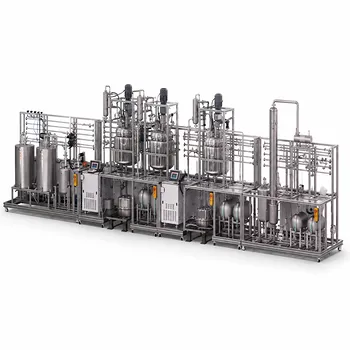
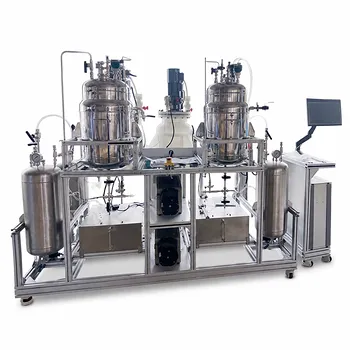
Bridging the gap between a textbook formula and a commercial drug begins with the physical reality of making it. Universities achieve this by leveraging bioprocess and chemical engineering pilot plants as hands-on training grounds. Through these scaled-down industrial environments, students confront the same mass transfer constraints, solubility hurdles, and process control challenges that define modern pharmaceutical formulation. The direct answer: pilot plants transform theoretical knowledge into the practical, problem-solving intuition required to manage increasingly complex active pharmaceutical ingredients (APIs) and delivery systems.
While coursework explains the "what" of drug formulation, pilot plants teach the "how." They are the educational prototypes where students learn to manipulate crystallization, filtration, and mixing at a tangible scale—validating parameters, troubleshooting failures, and internalizing the process rigor that modern pharmaceuticals demand.
Building the Bridge from Theory to Reality
The complexity of today’s pharmaceutical pipeline is a physical challenge. Many drug candidates show low water solubility, demand sub-milligram dosing precision, or require delicate handling of high-potency compounds. Pilot plants immerse students directly in these problems.
Confronting Real-World Material Behavior
Students don’t just read about solubility curves; they watch a batch crystallizer struggle against them. By working with solvent-based separation and purification in pilot-scale evaporators or distillation units, they see how temperature, agitation, and solvent ratios tangibly control crystal size and purity. This lived experience forges an intuitive grasp of thermodynamics that no simulation alone can provide.
Mastering Foundational Unit Operations
The core of formulation education lies in the unit operations that define API processing. A pilot plant environment lets students operate pilot-scale filtration, crystallization, and mixing systems as integrated systems. They learn to maintain precise formulation control when variables like viscosity or heat transfer change under load—skills critical for optimizing challenging commercial-scale formulations.
The Safeguards of a Professional Mindset
Handling complex pharmaceuticals demands a safety-first discipline that pilot plants enforce rigorously. This isn't just about compliance; it's about building the professional instincts that prevent catastrophic errors in industry.
Instilling a Culture of Process Safety
Before a valve is ever turned, students learn the rhythm of preparation: completing safety training, passing examinations, and signing commitment forms. In the plant, they locate emergency showers, eyewash stations, and master utility shut-offs. This ritualized approach—requiring pre-lab reports and proper PPE—crystallizes a habit of systematic risk assessment that is non-negotiable in pharmaceutical manufacturing.
Embedding Sustainability and Efficiency into Formulation
Tomorrow’s engineers must formulate not just effectively, but responsibly. Pilot plants provide a physical testbed for sustainability principles that are difficult to grasp in theory alone.
Running Green Experiments at Scale
Hands-on experience with energy and material consumption teaches students to optimize yield and perform real mass balances early in the development cycle. When they see the waste generated by a suboptimal reaction or purification step, the economic and environmental argument for process efficiency becomes undeniable. This early exposure is critical for designing greener, more cost-effective full-scale biopharmaceutical manufacturing.
Demonstrating Process Intensification
Modern pilot plants incorporate Process Intensification (PI) technologies—miniaturized, multi-functional devices with advanced mixing and integrated controls. Students observe how combining unit operations or shrinking equipment footprints directly optimizes resource use. This aligns their training with Industry 4.0 principles, preparing them to design compact, circular chemical systems rather than sprawling, wasteful ones.
Decoding the Scale-Up Puzzle
The leap from a lab bench to a production line is historically expensive and iterative. Pilot plants are the university's tool for teaching the modern, predictive alternative to trial-and-error scale-up.
From Scale-Down to Scale-Up
By analyzing process scalability on educational pilot plants, students confront how physical dynamics change with scale. They learn to model transport phenomena and apply scale-down techniques to predict behavior before full-scale manufacturing. This hands-on experience with scalability analysis aligns academic training directly with the industry’s shift toward predictive engineering, reducing reliance on costly industrial pilot plant runs.
Expanding Horizons with Bioprocessing
The complexity of pharmaceutical formulations increasingly embraces biological routes. Bioprocess pilot plants equipped with controlled bioreactors open that frontier to students.
Simulating Biocatalytic Alternatives
In these systems, students can simulate the enzymatic hydrolysis of biomass or the biocatalytic synthesis of APIs. By manipulating pH, temperature, and dissolved oxygen, they study enzyme kinetics and mass transfer limitations. This direct comparison of biocatalysis against traditional chemical synthesis equips them to evaluate greener, more specific manufacturing routes with scalable data and economic insight.
Understanding the Trade-offs
Pilot plants are powerful, but not without educational and operational challenges. A clear-eyed view of these limitations is essential for effective implementation.
The Resource Intensity Equation
Running a pilot plant requires significant capital investment and ongoing costs for maintenance, consumable materials, and dedicated technical staff. For a university, this can strain budgets. Additionally, the safety and operational overhead means throughput is low—only a few students can deeply engage with the equipment at any one time, demanding careful curriculum scheduling to ensure equitable access.
Navigating the Safety vs. Authenticity Balance
To keep students safe, the most hazardous compounds or extreme conditions are often swapped for benign simulants. While crucial, this can create a gap between the educational environment and industrial reality. Students might master the operation of a spray dryer but never feel the anxiety of handling a high-potency API. Educators must constantly reinforce the additional containment and procedural layers that real pharmaceutical production would demand.
Making the Right Choice for Your Program
The integration of pilot plants should serve your specific educational outcomes. The path you take depends on your primary focus.
- If your primary focus is building core process engineering intuition: Prioritize access to fundamental unit operations like crystallization, distillation, and mixing. The goal is deep familiarity with mass transfer and formulation control, not just flashy automation.
- If your primary focus is incorporating cutting-edge industry trends: Invest in pilot plants with Process Intensification modules and bioreactor controls. Center your curriculum around predictive scale-down models and biocatalytic synthesis to align graduates with Industry 4.0 roles.
- If your primary focus is justifying the investment to stakeholders: Frame the pilot plant as an educational prototype that reduces risk—not just for students, but for future employers. Emphasize how hands-on safety training, process validation skills, and the ability to troubleshoot complex formulations directly reduce onboarding time and costly industrial errors.
The true value of a university pilot plant isn't in the equipment list but in the transformation it triggers. It turns students from passive recipients of chemical knowledge into active problem-solvers, fully prepared to design the resilient, efficient, and safe formulations that the next generation of medicine will demand.
Summary Table:
| Key Focus Area | Practical Application in Pilot Plants | Student Learning Outcome |
|---|---|---|
| Material Behavior | Solvent separation, purification, and crystallization | Intuitive grasp of thermodynamics and solubility |
| Process Safety | Risk assessments, utility shut-offs, and PPE compliance | Professional safety habits and compliance discipline |
| Sustainability | Yield optimization and Process Intensification (PI) | Ability to design green, resource-efficient systems |
| Scale-Up Dynamics | Modeling transport phenomena and scale-down testing | Mastery of predictive engineering and scale transition |
Elevate Your Chemical Engineering & Bioprocess Programs with LABPARK
Ready to bridge the gap between textbook theory and commercial industrial reality? LABPARK provides state-of-the-art Educational and Vocational Unit Operations Pilot Plants designed specifically for chemical engineering, bioprocess & biotech, and environmental & water treatment fields.
We empower universities, research institutes, and enterprises to train the next generation of engineers on real-world safety, process intensification, and scale-up dynamics.
Contact LABPARK today to customize your pilot plant solutions and deliver high-impact, hands-on learning environments for your students.
Related Products
- Natural Product Extraction Unit Operations Training Pilot Plant
- Ethyl Acetate Synthesis Unit Operations Pilot Plant for Practical Training
- Bio-fermentation Ethanol Production Practical Training Unit Operations Pilot Plant
- Multi-Modal Distillation Unit Operations Training Pilot Plant
- Residence Time Distribution and Reactor Flow Characteristics Determination Educational Pilot Plant
People Also Ask
- How to Demo Solubility Sensitivity in SFE Pilot Plants? Practical Thermodynamics
- How do pilot plants differentiate physical vs chemical extraction? Enhance Chemical Engineering Training
- How are HTU and NTU applied to determine extraction column height? Guide to Pilot Plant Scaling
- How do fluid transport principles apply to pilot plant configuration? Optimize your unit operations.
- What are the limitations of acentric factor models? Avoid pilot plant errors with polar fluids.