Paramagnetic oxygen analyzers are more than just industrial workhorses—they are a tangible, real-time demonstration of molecular orbital theory in action. In chemical engineering pilot plants, the paramagnetism of oxygen, caused by its two unpaired electrons in degenerate antibonding pi orbitals, is directly measured by specialized process instruments. These analyzers translate a microscopic quantum property into a reliable signal for gas composition monitoring, process control, and safety.
The core insight: Oxygen’s unique magnetic susceptibility, predicted by molecular orbital theory and absent in most other common gases, is the physical foundation of paramagnetic analyzers. This connection offers a powerful, hands-on teaching tool that links abstract chemistry concepts to practical, industrial measurement technology.
The Molecular Origin of Oxygen’s Magnetism
Molecular Orbital Theory vs. Valence Bond Theory
Valence bond theory, with its localized electron pairs, erroneously predicts that oxygen is diamagnetic—all electrons paired. Molecular orbital theory, however, constructs a molecular diagram where electrons fill the lowest energy levels, leaving two unpaired electrons in the degenerate π antibonding orbitals*. This results in a net magnetic moment, making O₂ strongly attracted to a magnetic field.
The Key Role of Unpaired Electrons
The unpaired electrons are the source of paramagnetism. When an external magnetic field is applied, these electron spins align with the field, causing a measurable bulk attraction. Most other diatomic gases (N₂, CO₂, H₂) have all electrons paired and are weakly diamagnetic or nearly non‑magnetic, giving oxygen a standout physical signature that instruments can exploit selectively.
From Molecular Spin to Instrument Response
How Paramagnetic Oxygen Analyzers Function
A paramagnetic analyzer creates a non‑uniform magnetic field and channels a gas stream through it. The oxygen molecules are pulled into the strongest part of the field, creating a physical effect—a flow, a pressure differential, or a force on a suspended test body—that is proportional to the concentration of oxygen. This real‑time measurement is the direct consequence of the unpaired electrons.
The Dumb‑bell or Thermo‑magnetic Principle
One common design uses a heated filament and a dumb‑bell‑shaped rotor in a magnetic field. The cooler, more magnetic O₂ molecules are drawn into the field, but quickly heated and lose their susceptibility. This creates a continuous “magnetic wind” that cools the filament or generates a torque. The resulting change in resistance or rotor displacement quantifies oxygen content.
Magnetodynamic and Magnetopneumatic Designs
Modern industrial analyzers may use magnetodynamic sensors (measuring the force on a suspended body) or magnetopneumatic sensors (detecting a pressure wave produced by the alternating pull on O₂). These robust implementations are designed to operate in pilot‑plant environments with vibrations, temperature swings, and varying flow rates, converting the same basic paramagnetic effect into a 4–20 mA signal or digital readout.
Implementing the Demonstration in Your Pilot Plant
Choosing the Right Measuring Point
For educational clarity, place the analyzer on a gas stream where O₂ concentration is expected to change, such as the vent of a fermentation reactor, the off‑gas of a combustion unit, or the nitrogen purge line of an inerting system. A sampling system with a bypass loop ensures representative flow to the sensor.
Integrating into Unit Operations
Connect the analyzer’s output to the plant’s distributed control system (DCS) or a simple data‑logging interface. Students can then watch the real‑time oxygen signal correlate with process events—for example, a drop during nitrogen blanketing or a spike when a batch reactor is opened. This makes the molecular‑level paramagnetism an observable process variable.
Translating Data into Chemical Insights
Use the analyzer’s trending capability to calculate parameters like oxygen transfer rate in bioreactors or residual oxygen in safety‑critical headspaces. The invisible quantum property becomes a quantitative engineering metric, reinforcing that the design of the instrument is dictated entirely by the electron configuration of oxygen.
Understanding the Trade‑offs: Challenges and Pitfalls
Cross‑Sensitivity to Other Gases
While the paramagnetic effect is highly specific to oxygen, nitric oxide (NO) and nitrogen dioxide (NO₂) also have unpaired electrons and will interfere. In processes where these gases are present, correction algorithms or upstream scrubbing may be necessary. Failing to account for this can lead to significant measurement errors.
Sample Conditioning Requirements
The delicate magnetic field and heated filaments are sensitive to moisture, dust, and corrosive vapors. Proper sample conditioning—coalescing filters, membrane dryers, or cold traps—is mandatory. Otherwise, condensation or condensation by salt crystallization can damage the sensor and give false readings, complicating the demonstration rather than clarifying the principle.
Instrument Drift and Calibration
Over weeks of pilot‑plant operation, the sensor’s zero and span may drift due to filament aging or contamination. Regular calibration with certified O₂‑in‑N₂ gas mixtures is essential to maintain accuracy. In a teaching setting, this presents an opportunity to discuss calibration traceability and measurement uncertainty, but also adds operational overhead.
Making the Right Choice for Your Educational or Industrial Goal
- If your primary focus is teaching the direct link between MO theory and measurement: Select a transparent thermo‑magnetic analyzer with a visible rotor or a demonstrative unit that clearly shows the magnetic wind principle. Explain each physical step from the unpaired electrons to the electrical signal.
- If your primary focus is safety monitoring and reliable process control: Use a rugged, factory‑calibrated magnetopneumatic sensor with built‑in sample conditioning. Prioritize fast response time and low maintenance to ensure the instrument performs its critical task without frequent intervention.
- If your primary focus is demonstrating complete process integration: Integrate the analyzer’s signal into a control loop—for example, automatically adding nitrogen when oxygen levels rise. This shows students how a molecular property becomes an actionable control variable in chemical production.
By leveraging the simple yet profound paramagnetism of oxygen, you turn a quantum‑mechanical curiosity into a cornerstone of modern process instrumentation, making the invisible forces of chemistry visible and useful.
Summary Table:
| Analyzer Type | Operating Principle | Best Use Case |
|---|---|---|
| Thermo-magnetic | Uses "magnetic wind" generated by heated filaments to measure O₂ susceptibility. | Educational demos showing direct physical response. |
| Magnetodynamic | Measures physical force exerted on a suspended test body in a magnetic field. | Rugged, precise process control with low maintenance. |
| Magnetopneumatic | Detects pressure waves from alternating magnetic pull on O₂ molecules. | Fast-response safety monitoring & automated control loops. |
Bring Molecular Theory to Life in Your Lab
Looking to bridge the gap between abstract chemistry and practical process engineering?
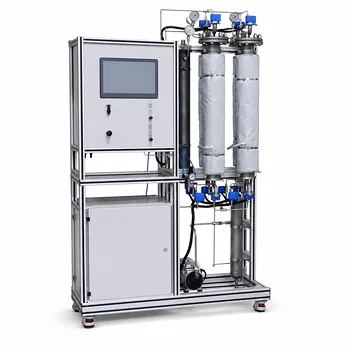
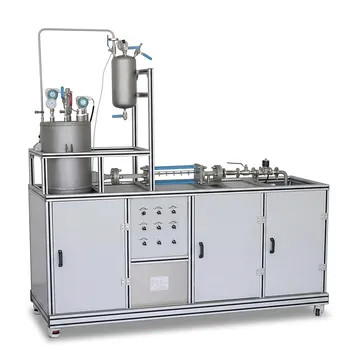
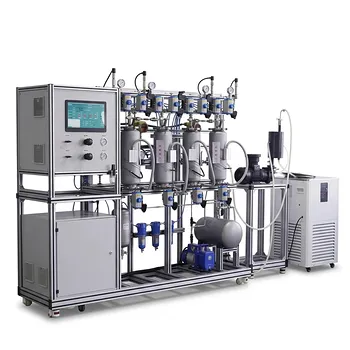
LABPARK provides premium Educational and Vocational Unit Operations Pilot Plants in chemical engineering, bioprocess & biotech, and environmental & water treatment. Designed specifically for universities, research institutes, and enterprises, our pilot plants integrate advanced process instrumentation to give your students and researchers hands-on, real-time experience with industrial control systems.
Ready to upgrade your training or research capabilities? Contact our experts today to find the perfect pilot plant solution for your facility!
Related Products
- Carbon Dioxide PVT Curve Determination Educational Unit Operations Pilot Plant
- Low Concentration Carbon Dioxide Capture Pressure Swing Adsorption Educational Pilot Plant
- Cavitation Phenomenon Demonstration and Analysis Educational Unit Operations Pilot Plant
- Multi-Component Gas Pressure Swing Adsorption Pilot Plant for Unit Operations Education
People Also Ask
- How do temperature variations affect CO2 transport models in pilot plants? Model vs Reality
- What unit operations are critical for CCUS training pilot plants? Build hands-on engineering expertise.
- What key thermodynamic properties & engineering challenges affect scCO2 reactions in pilot plants?
- How are titration curves used in pilot plants? Guide to process control & endpoint accuracy
- What are the applications and limitations of the Virial EOS? Enhance Your Pilot Plant Lab