When phases look identical, you don’t use your eyes—you use electricity. In a single‑stage extraction pilot plant, the endpoint of a phase split can be reliably determined by installing a conductivity probe near the bottom discharge valve. The aqueous phase is typically far more conductive than the organic phase, so the probe detects a sharp, unmistakable step change in conductance the moment the phase boundary passes. This signal can trigger an automatic valve closure or alert the operator, eliminating guesswork and preventing costly cross‑contamination.
While similar‑colored phases make visual interfaces useless, the deep need is a robust, hands‑off method to terminate the split exactly at the interface. Conductivity‑based endpoint detection solves the immediate problem, but true reliability depends on also managing the dispersion and solute conditions that keep that interface sharp and predictable.
Why Color Can’t Be Trusted in Pilot‑Scale Extractions
The Limits of the Sight Glass
Many pilot plants rely on sight glasses to visually track the descending liquid‑liquid boundary. When both phases share nearly the same hue or transparency, the interface vanishes. Operators are then forced to estimate the split point by timing or volume, which is inherently imprecise.
The High Cost of a Mistimed Split
Cutting off the discharge too early leaves valuable product in the vessel. Cutting too late sends droplets of the wrong phase into downstream storage, causing cross‑phase contamination. For high‑value specialty chemicals or pharmaceuticals, a single mis‑split can ruin an entire batch—a risk no pilot operation can afford.
The Electrical Solution: Conductivity Probes Pinpoint the Interface
How a Conductivity Probe Works
A conductivity probe measures the liquid’s ability to conduct electricity between two electrodes. Most aqueous solutions contain dissolved ions, giving them a significantly higher conductivity than typical organic solvents. As the phase boundary sweeps past the probe, the reading jumps or drops by an order of magnitude, creating an unmistakable digital signal.
Probe Placement and Automation
The probe is mounted just above the bottom discharge port, where the heavy aqueous phase (if that’s the continuous phase) or the bulk interface will exit last. In many setups, the probe signal feeds directly into a controller. When the conductance changes, the controller instantly closes the discharge valve or sounds an alarm, making the split operation both precise and repeatable.
What If the Conductivities Are Too Similar?
If both phases happen to have similar bulk conductivities—such as when the organic phase is heavily loaded with a polar solute—the jump may soften. In these cases, operators can still use a capacitance‑based probe or a density meter, but a well‑designed process will rarely reach this point if the solute concentration is kept below the plait‑point region (see below).
Ensuring a Sharp, Detectable Phase Boundary Every Time
Keep the Solute Concentration Out of the Danger Zone
Even a feed containing 40–50% solute can be diluted in the extractor with a high solvent flow rate, keeping the equilibrium solute concentration at or below 25% in the first stage. Operating well below the plait point prevents the two phases from dissolving into each other. When the phases remain fully immiscible, the interface stays razor‑sharp and the conductivity transition is instantaneous.
Match Agitation to the Minimum Dispersion Speed
Tiny, stable droplets dramatically slow phase separation—what takes 1 minute in a beaker can take 1 hour in a pilot‑scale vessel. Operating the agitator at or just above the minimum dispersion speed (NJD) creates enough interfacial area for mass transfer without generating fines. This yields a clean, quick coalescence and a distinct, easily detected interface.
Choose the Right Dispersed Phase to Simplify Splitting
The conductivity probe’s job becomes easier if you minimize the volume of the phase that wets internal surfaces or tends to form emulsions. Often, the organic phase is dispersed into the aqueous continuous phase to reduce film resistance. But in pilot‑scale packed or plate columns, also ensure the continuous phase is the one that wets the internals, preventing a non‑conductive film from fouling the probe or blurring the interface.
Understanding the Trade‑offs and Limitations
Probe Fouling Can Mask the Signal
Organic residues, crystal deposits, or emulsified layers can coat the conductivity probe’s electrodes over time. This increases electrical resistance and may delay or flatten the conductance change. Regular cleaning and proper probe orientation (flush with the wall, facing downward) mitigate this issue.
Not All Aqueous Phases Are Highly Conductive
Deionized water or organic‑rich aqueous phases can have very low conductivity, potentially narrowing the gap with the organic phase. In these niche cases, an ultrasonic interface detector or a guided‑wave radar might be necessary as a backup, though these add complexity.
The Probe Only Senses What Passes Over It
If the phase boundary bypasses the probe due to dead legs or heavy emulsion layers clinging to the vessel wall, the endpoint signal may fire prematurely or not at all. The discharge path must be designed so that the final portion of the heavy phase always washes past the sensor.
Making the Right Choice for Your Pilot Plant Operation
The right endpoint detection strategy depends on your main operational concern.
- If your primary focus is batch reproducibility: Use a conductivity probe with automatic valve shutoff to eliminate human variation in split timing.
- If your primary focus is avoiding any organic contamination: Position the probe conservatively high and pair it with a short post‑split polishing step in a decantation buffer.
- If your primary focus is handling variable feedstocks: Ensure the process chemistry keeps the equilibrium concentration below the plait point, so the phases remain demonstrably immiscible and the conductivity signal remains crisp.
Design your split around the electrical signature of the interface, not its color. A well‑placed conductivity probe transforms a delicate manual art into a robust, automated step that protects product integrity at pilot scale and beyond.
Summary Table:
| Method / Parameter | Function in Phase Splitting | Key Operational Benefit |
|---|---|---|
| Conductivity Probe | Detects step change in electrical conductance at the interface | Eliminates visual guesswork and prevents cross-contamination |
| Solute Control | Keeps concentration below the plait point | Prevents mutual dissolution to maintain a sharp interface |
| Agitation Speed | Operates at/near minimum dispersion speed (NJD) | Avoids fine emulsions, ensuring rapid coalescence |
| Alternative Sensors | Uses capacitance, density meters, or ultrasonic sensors | Acts as a reliable backup when liquid conductivities are similar |
Optimize Your Extraction Processes with LABPARK
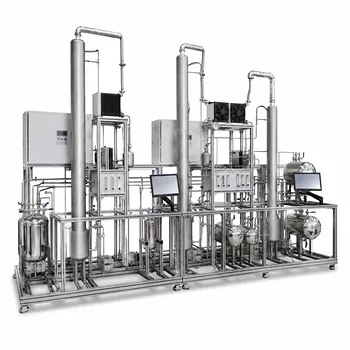
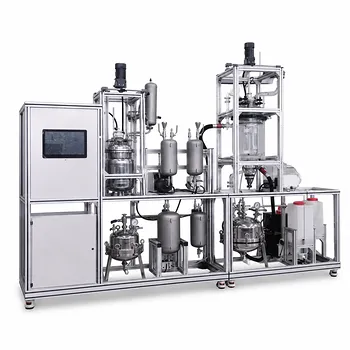
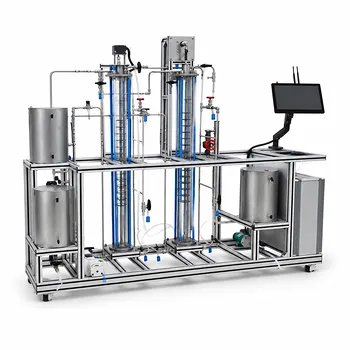
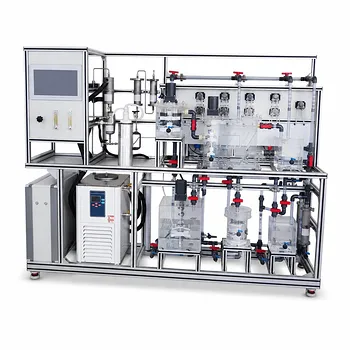
Achieving precise phase separation is critical for both educational and industrial success. LABPARK provides state-of-the-art Educational and Vocational Unit Operations Pilot Plants in chemical engineering, bioprocess & biotech, and environmental & water treatment. Designed specifically for universities, research institutes, and enterprises, our pilot plants integrate advanced control systems—such as conductivity-based endpoint detection—to ensure reliable, hands-off operations and prevent costly cross-contamination.
Ready to elevate your training or research facility? Contact LABPARK today to discover the ideal pilot plant solution for your needs!
Related Products
- Natural Product Extraction Unit Operations Training Pilot Plant
- Green Anhydrous Ethanol Purification Extractive Distillation Unit Operations Training Pilot Plant
- Continuous Batch Extractive Distillation Educational Pilot Plant
- Gallium and Indium Selective Extraction Educational Pilot Plant
- Comprehensive Liquid-Liquid Extraction Pilot Plant for Engineering Education
People Also Ask
- How to Demo Solubility Sensitivity in SFE Pilot Plants? Practical Thermodynamics
- How do pilot plants differentiate physical vs chemical extraction? Enhance Chemical Engineering Training
- How are HTU and NTU applied to determine extraction column height? Guide to Pilot Plant Scaling
- How do fluid transport principles apply to pilot plant configuration? Optimize your unit operations.
- What are the limitations of acentric factor models? Avoid pilot plant errors with polar fluids.