The answer is acidifying the water before introducing the metal salts. To prevent high-valence metal ions like aluminum ($Al^{3+}$) or iron ($Fe^{3+}$) from precipitating in your pilot plant feed solution, you must add a calculated amount of strong acid to the water first. This simple step suppresses the hydrolysis equilibrium, keeping the metal ions fully dissolved and the solution crystal clear for your unit operations.
These hydrated metal cations act as polyprotic acids in water. Left unchecked, their natural hydrolysis reaction releases hydrogen ions and eventually forms insoluble hydroxide flocs. Pre-acidification shifts the equilibrium back toward the dissolved metal ion, making it a foundational best practice for any environmental or chemical engineering pilot study.
Understanding the Chemistry Threatening Your Feed Solution
The tendency to form sludges and blockages isn't a defect in your salts—it's a predictable chemical behavior. When you dissolve a high-valence metal salt without pH control, you initiate a cascade that leads straight to precipitation.
How High-Valence Cations Act as Acids in Water
Hydrated trivalent cations like $Al^{3+}$ and $Fe^{3+}$ don't just float around inertly. Their high charge-to-radius ratio (ionic potential) polarizes surrounding water molecules so strongly that they release protons ($H^+$) in a step-wise hydrolysis.
This means the metal ion itself makes the solution more acidic over time. Each hydrolysis step generates hydrogen ions and moves the metal closer to forming an insoluble hydroxide.
Why Uncontrolled pH Triggers Immediate Precipitation
If the pH of the feed solution rises—whether because you used hard water, the metal salt isn't fully acidic, or you're blending with other alkaline streams—the hydrolysis equilibrium shifts forward. The final product of this cascade is a gelatinous precipitate like $Al(OH)_3$ or $Fe(OH)_3$.
These precipitates are not theoretical. They will clog dosing lines, alter reaction stoichiometry, and invalidate your pilot plant data. The higher the ionic potential of the metal, the stricter the pH must be controlled to avoid this fate.
The Operational Fix: Pre-Acidification Protocol
The solution is as fundamental as Le Chatelier’s principle. By flooding the water with protons before the metal salt ever enters the tank, you lock the hydrolysis equilibrium in the dissolved state.
The Acid-First Method
Never add the metal salt to neutral or alkaline water. Instead, add the strong acid (often a calculated volume of nitric, sulfuric, or hydrochloric acid) to the demineralized or process water first. Stir it thoroughly, then slowly introduce the metal salt.
This dramatically shifts the initial pH to a level where the metal’s hydrolysis is thermodynamically suppressed. The solution remains a true ionic solution, not a colloidal suspension. The choice of acid depends on the counter-ion compatibility with downstream reactions—introducing a foreign anion that interferes with your treatment chemistry would be counterproductive.
Determining How Much Acid You Need
The required dose isn’t guesswork. It’s based on the metal’s hydrolysis constants and the target pH where the ion remains fully soluble. A general rule: lower pH for higher-valence, smaller-radius ions. For $Fe^{3+}$, a pH below 2.0 is often necessary, while $Al^{3+}$ may require pH < 3.5 in concentrated stock solutions.
Operators should titrate a small batch with a calibrated pH probe while monitoring for turbidity. The goal is to find the minimum acid concentration that yields a crystal-clear solution after the metal salt dissolves. Overdosing is wasteful and poses safety risks, but underdosing guarantees a clogged system.
Understanding the Trade-Offs
Pre-acidification is essential, but it’s not a one-dimensional fix. You must navigate several practical constraints to avoid swapping a precipitation problem for a corrosion or compatibility issue.
The Over-Acidification Hazard
Adding too much strong acid can corrode stainless steel tanks, pump seals, and downstream piping. Pilot plants often use materials like 316L stainless steel, which has limits to its acid resistance. A pH of 0.5 might keep your metals soluble, but it will quickly degrade your infrastructure if not designed for it.
Always verify the wetted materials’ chemical compatibility with the concentrated acid and the final acidic feed solution. In some cases, a sacrificial plastic liner or a glass-lined mix tank becomes a necessary investment for long-term pilot reliability.
Material Compatibility and Process Integration
The acid you choose must not sabotage your unit operation. If your research involves sulfate precipitation (e.g., using a barium salt), adding sulfuric acid would introduce excess sulfate, creating an unwanted precipitate. If you’re studying nitrate removal, hydrochloric acid might be the safer, non-interfering option.
Every chemical addition to a pilot plant feed solution becomes a variable in your mass balance. Document the acid type, concentration, and pH meticulously so that your data remains interpretable and scalable to full-scale treatment systems.
Making the Right Choice for Your Pilot Plant
Your specific pilot objective dictates the exact pre-treatment strategy. Align your acid dosing protocol with your research or operational goal.
- If your primary focus is maintaining a completely clear, blockage-free feed line: Pre-acidify aggressively with a non-interfering strong acid to a pH at least one unit below the known precipitation threshold for that metal.
- If your primary focus is preserving precise reaction stoichiometry in the pilot unit: Choose an acid whose anion is already a spectator ion in your chemistry, and carefully document the proton contribution that will alter your reactor’s acid-base balance.
- If your primary focus is minimizing chemical consumption and waste: Titrate to the exact clarity endpoint using a stock solution and scale up the dose, accepting a slight margin of safety rather than a large excess.
You don’t have to fight the fundamental hydrolysis chemistry. You control it by setting the initial pH where the metal ion remains stable. That single operational discipline turns a potential maintenance nightmare into a repeatable, reliable pilot plant run.
Summary Table:
| Metal Cation | Target pH Range | Recommended Acids | Main Risk of Failure |
|---|---|---|---|
| Aluminum ($Al^{3+}$) | < 3.5 | Nitric, Sulfuric, or Hydrochloric | Gelatinous $Al(OH)_3$ precipitate & clogged lines |
| Iron ($Fe^{3+}$) | < 2.0 | Nitric, Sulfuric, or Hydrochloric | Gelatinous $Fe(OH)_3$ precipitate & stoichiometric errors |
Optimize Your Unit Operations with LABPARK
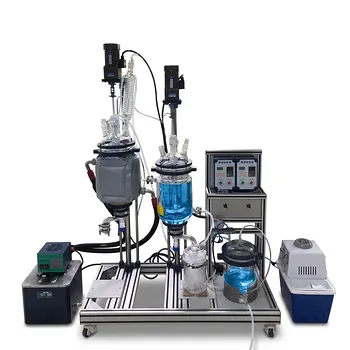
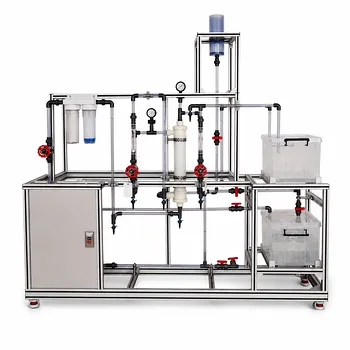
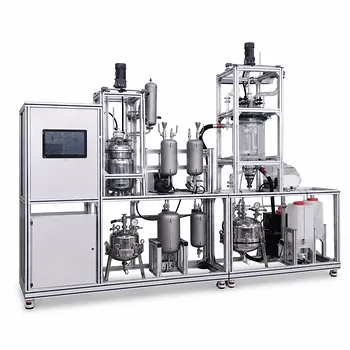
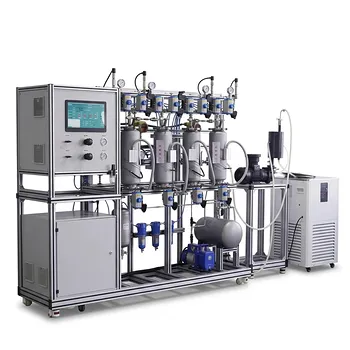
Don't let precipitation and clogged lines compromise your research data. LABPARK provides state-of-the-art Educational and Vocational Unit Operations Pilot Plants in chemical engineering, bioprocess & biotech, and environmental & water treatment. Tailored for universities, research institutes, and enterprises, our systems are designed for maximum reliability, compatibility, and ease of control.
Contact LABPARK today to discover how we can elevate your research and training capabilities!
Related Products
- Electrolyte Distillation Purification and Formulation Educational Pilot Plant
- Alkaline Membrane Water Electrolysis Educational Pilot Plant Unit Operations Training System
- Ion Exchange Water Purification Educational Pilot Plant for Engineering Unit Operations
- Multi-Functional Membrane Separation Educational Pilot Plant for Unit Operations Lab
- Water Electrolysis Hydrogen Production and Storage Educational Pilot Plant
People Also Ask
- Why does simple distillation yield higher efficiency than flash distillation? Key thermodynamic differences.
- How to Integrate Spectroscopy in Distillation Pilot Plants for Advanced Process Control
- How do batch and continuous distillation pilot plants differ? Master their dynamic behavior
- How does operating pressure influence Methylal/Methanol VLE? Discover its impact on distillation
- Why is the acentric factor important in pilot plants? Fluid property prediction.