A single overlooked section in an MSDS can be the difference between a controlled experiment and a lab evacuation. For laboratory instructors preparing unit operations pilot plant experiments, Material Safety Data Sheets are not just reference documents—they are the raw materials from which all safety protocols must be built. The most direct, actionable method is to extract and translate three critical data points: the chemical compatibility rules (Section 10) to prevent dangerous reactions, the exposure control and PPE specifications (Section 8) to safeguard students, and the emergency response measures (Sections 5 and 6) to ensure rapid fire suppression and spill containment are ready at the workstation.
The core takeaway: Effective protocol design means treating the MSDS as a safety checklist, not a textbook. Instead of simply reading the sheet, you must systematically map each high-impact section to a concrete, site-specific control—segregation plan, ventilation verification, PPE selection, and emergency equipment placement—turning static hazard data into living, lab-ready instructions.
From Data to Protocol: A Section-by-Section Approach
The primary insight is that every major hazard class has a dedicated MSDS section. By linking those sections directly to protocol elements, instructors eliminate guesswork.
Section 10: Building Chemical Compatibility Matrices
Start here to answer the most fundamental pilot plant question: “What substances must never meet?”
Section 10 (Stability and Reactivity) lists incompatible materials and hazardous decomposition products.
Step one: For every chemical in your process (distillation, absorption, extraction, etc.), extract that list verbatim. Step two: Build a simple matrix—acids away from bases, oxidizers away from flammables, light-sensitive compounds in amber containers. This directly translates into a written protocol for chemical segregation in the pilot plant’s storage area and feed system. Any shared lines or pumps that could cross-contaminate must be explicitly documented and controlled.
Section 8: Engineering Controls and Personal Protective Equipment (PPE)
Once reactivity is managed, shift to protecting the students who will run the equipment.
Section 8 specifies exposure limits and the precise PPE required—glove type, eye protection, and crucially, whether respiratory protection is necessary. For pilot-scale operations, the immediate protocol question is: “Is the integrated ventilation sufficient?” Many unit operations (like continuous distillation or solvent extraction) generate vapors at a scale far beyond a typical fume hood. Cross-check the MSDS’s ventilation recommendations against your pilot plant’s actual air-change rate and local exhaust capacity. If there’s any doubt, your protocol must mandate supplemental PPE (e.g., respirator fit-testing) and continuous air monitoring, not just a generic “wear gloves” note.
Sections 5 & 6: Pre-Positioning Emergency Equipment
These sections create the bridge between hazard knowledge and physical readiness.
Section 5 (Fire-Fighting Measures) tells you exactly which extinguishing media are suitable—water fog, CO₂, dry chemical—and, just as important, which are prohibited. Section 6 (Accidental Release Measures) dictates the right absorbent and containment method.
Your protocol must not simply list these; it must command their physical placement. A pilot plant workstation should have the correct fire extinguisher within arm’s reach and a pre-assembled spill kit containing the specified absorbent, neutralizer, and disposal containers. The protocol should also state “incompatible extinguishing media not present” as a pre-startup check.
The Holistic MSDS Review: Physical Properties, Storage, and Lifecycle
A section-specific focus is your scaffold, but a complete safety protocol also leverages the broader data sheet to anticipate process-specific risks.
Physical Properties and Process Safety
The physical property data—flashpoint, boiling point, vapor pressure, pH—is not just trivia.
For a distillation experiment, compare the chemical’s flashpoint to your planned operating temperatures. If the column base temperature approaches or exceeds that flashpoint, your protocol must integrate an inert atmosphere or explosion-proof equipment requirement. This transforms a static data point into a dynamic, experiment-specific safety rule.
Storage, Waste, and Lifecycle Planning
The supplementary references correctly emphasize that safety protocols extend before and after the experiment.
Use the CAS number to verify chemical identity beyond any trade name, and the UN number to comply with campus hazardous material transport rules when moving chemicals to the pilot plant. Sections on storage stability and disposal considerations dictate how to manage the feedstock before the run and how to safely handle the resulting waste stream. Your protocol must specify whether spent solvents require separate, labeled containers and how long a mixture can be safely held before disposal, preventing unintended reactions in the waste area.
Understanding the Trade-offs and Limitations
Trust is built on acknowledging where the MSDS falls short. A protocol based solely on a generic data sheet can create a false sense of security.
The Scale Gap
An MSDS is written for typical industrial use, not necessarily for the unique configuration of your pilot-scale unit operations. It can’t know your specific piping layout, your localized heat sources, or the potential for a runaway reaction under your precise process conditions. Therefore, the MSDS-derived protocol must be supplemented by a hands-on hazard review (like a what-if analysis or HAZOP) that accounts for your equipment’s specific failure modes.
Static Data in a Dynamic Lab
The data sheet reflects a pure chemical; in reality, your system may involve mixtures, unexpected side-products, or thermal degradation not covered in the sheet.
Your protocol must mandate that instructors re-evaluate the MSDS whenever a process parameter changes (e.g., higher temperature, longer run time) and use the “Hazard Identification” (Section 2) and “Toxicological Information” (Section 11) as a reminder to discuss symptoms of exposure with students during the pre-lab briefing—information that is often overlooked.
The Compliance Baseline, Not the Safety Ceiling
Treating an MSDS review as the final safety protocol is a mistake. It is the minimum legal framework. A robust protocol layers on institutional rules, student competency checks, and emergency communication procedures that the MSDS never touches.
Making Your Protocols Lab-Ready
To convert this knowledge into action, align your protocol-building effort with your primary risk concern.
- If your primary focus is preventing catastrophic chemical reactions: Build a compatibility matrix from Section 10 data and hardwire it into your storage, piping, and cleanup procedures. Physically separate incompatible feeds.
- If your primary focus is student health and exposure control: Cross-reference Section 8 rigorously with your pilot plant’s ventilation system; never assume benchtop rules apply at pilot scale. Protocol must include pre-run respirator or fume hood verification.
- If your primary focus is rapid emergency response: Mine Sections 5 and 6 to pre-position the exact correct extinguisher and spill kit at the workstation. Then, drill the response sequence with students before the experiment starts.
- If your primary focus is end-to-end compliance and lifecycle safety: Walk through all 16 sections, translate storage, handling, and waste disposal instructions into checklist steps, and document the CAS and UN numbers for transport and inventory logs.
Instructor-led safety begins with the MSDS, but it becomes real only when that data is shaped into a specific, physically verified, and student-communicated protocol that leaves nothing to chance.
Summary Table:
| MSDS Section | Key Hazard Data | Lab Protocol Action |
|---|---|---|
| Section 10 (Stability/Reactivity) | Incompatible materials & decomp products | Design chemical segregation matrices for storage & feeds |
| Section 8 (Exposure/PPE) | Exposure limits & gear requirements | Verify pilot plant ventilation & mandate specific PPE |
| Sections 5 & 6 (Fire/Spill) | Extinguishing media & containment | Pre-position correct fire extinguishers & spill kits |
| Section 9 (Physical Properties) | Flashpoint, boiling point, vapor pressure | Set dynamic temperature limits and inerting protocols |
Build a Safer, Compliant Unit Operations Lab
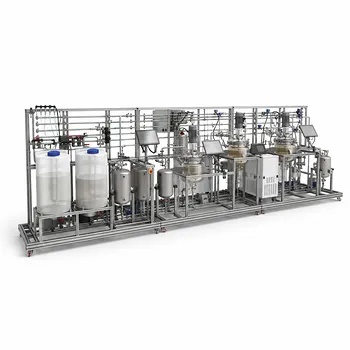
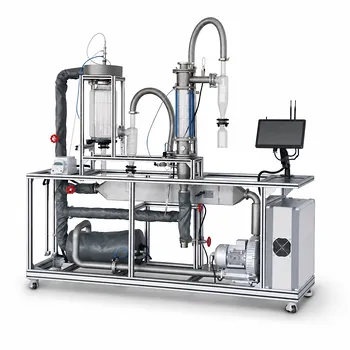
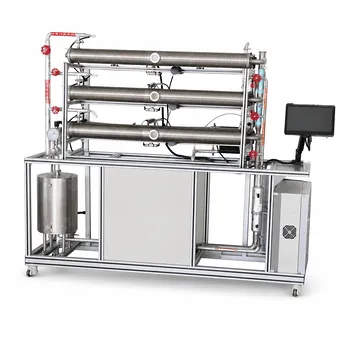
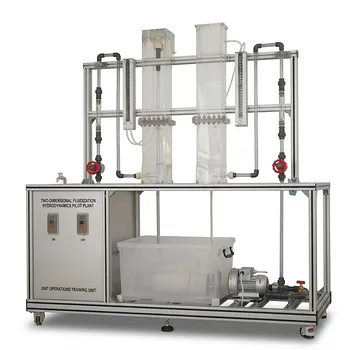
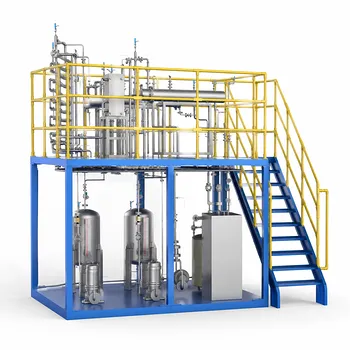
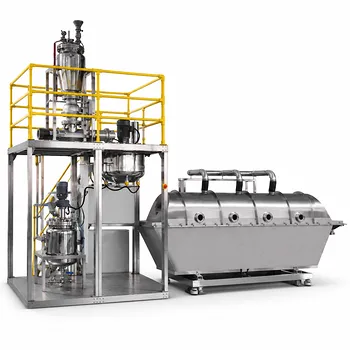
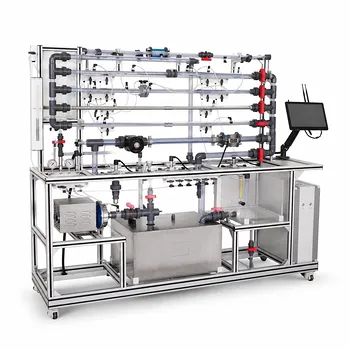
Designing fail-safe safety protocols starts with having the right equipment. LABPARK provides state-of-the-art Educational and Vocational Unit Operations Pilot Plants across chemical engineering, bioprocess & biotech, and environmental & water treatment. Tailored for universities, research institutes, and enterprises, our systems are engineered with integrated safety features, reliable containment, and clear process controls to align seamlessly with your MSDS compliance protocols.
Ready to upgrade your laboratory with safe, industry-standard pilot plants? Contact the LABPARK team today to request a catalog or custom configuration!
Related Products
- General Purpose Cosmetics Production Unit Operations Training Pilot Plant
- Multi Pump Fluid Transport Process Piping Unit Operations Training Pilot Plant
- Multi-Functional Drying Educational Unit Operations Pilot Plant
- Fixed-Bed Chemical Reaction and Gas Dust Tar Removal Unit Operations Pilot Plant
- 100L Continuous Loop Hydrogenation Educational Unit Operations Pilot Plant
People Also Ask
- How do deviations in estimating latent heat impact pilot plant thermal systems? Avoid hardware mis-sizing.
- Why is the chemical plant startup schedule crucial? De-risk scale-up with pilot plants.
- When to transition from PID to adaptive control in pilot plants? Key process indicators.
- Why Compare Predicted and Experimental Excess Enthalpy? Key to Accurate Pilot Plant Scale-up
- How to study gasification in pilot plants? Compare exit gas composition & efficiency