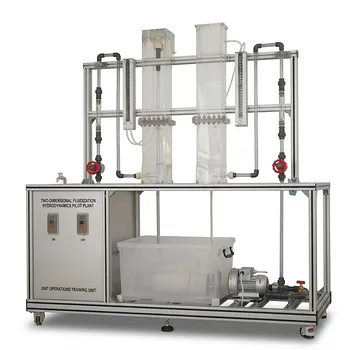
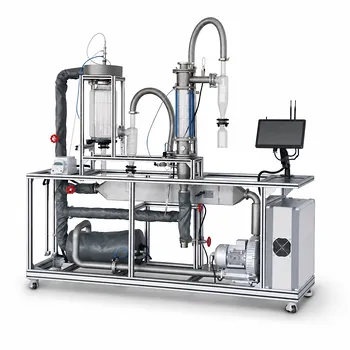
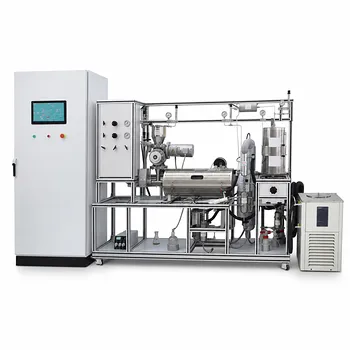
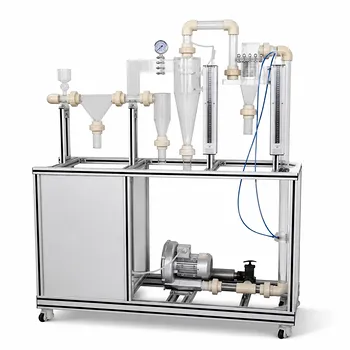
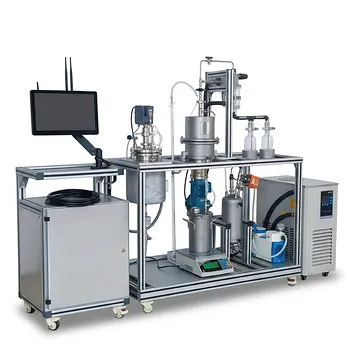
Human error analysis and FMECA transform safety training from a passive, rule-memorization exercise into an active, diagnostic discipline. By applying these structured risk-identification methods directly to the pilot plant, instructors create immersive learning experiences where students anticipate failures, recognize mistake-prone steps, and internalize a proactive safety mindset before they ever touch a real industrial control panel.
True safety mastery in a vocational pilot plant comes not from avoiding all errors, but from systematically understanding where and how failures originate. Human Error Analysis exposes the operational slip points, FMECA reveals the cascading consequences of equipment breakdowns, and together they forge operators who think in terms of risk rather than mere compliance.
Why Traditional Safety Training Often Misses the Mark
Traditional safety briefings tend to be reactive and checklist-driven. A student reads a list of rules, watches a video, and then proceeds to operate the plant. The problem is that rules alone cannot prepare someone for the unexpected—a sticky valve, a misleading interface, a subtle pressure fluctuation that suddenly cascades into a hazard.
Human error analysis and FMECA flip the model. Instead of telling students what to fear, you show them how to find it themselves. This fosters an investigative, forensic approach to safety that sticks because it is tied to the physical equipment they operate every day.
Transforming Pilot Plants into Living Risk Laboratories
The pilot plant itself becomes the primary teaching tool. Each pump, heat exchanger, and control valve is not just a unit operation component—it is a potential failure case study. By embedding these analysis methods into the curriculum, you shift from teaching safety as a separate topic to making it the very lens through which students view process engineering.
Using Human Error Analysis to Engineer Competent Operators
The primary reference puts it simply: human error analysis helps instructors identify operational steps or control panel layouts that are highly prone to user mistakes. This is the starting point for designing targeted, memorable training that reduces real-world slip-ups.
Identifying Error-Prone Tasks Directly on the Plant Floor
Walk through the standard operating procedure (SOP) step-by-step with your students. For each action—opening a valve, reading a gauge, initiating a sequence—ask: What could go wrong if someone misreads this? What if the operator is distracted? Which label could be misinterpreted? The goal is to create a “mistake map” of the pilot plant, highlighting controls with poor affordances or steps that require unreasonable memory load.
Designing Targeted Drills Around High-Risk Operational Steps
Once you have identified the top error-prone tasks, build micro-drills that isolate these moments. For example, if a specific push-button sequence is frequently confused, have students practice only that sequence under mild time pressure or with a simulated distraction. Immediate feedback cements the correct action far more effectively than a generic warning in a lecture.
Leveraging Control Panel Redesign as a Teaching Moment
When analysis reveals that poor layout contributes to errors, involve students in proposing a redesign. This does not mean you must physically rebuild the panel; even a paper exercise where they rearrange controls based on frequency and criticality embeds human-factors thinking deep into their operational philosophy. They learn that safety is a design outcome, not just an operator responsibility.
FMECA as a Training Framework for Equipment Safety
The primary reference notes that FMECA lists all equipment and identifies potential failure modes, then analyzes the impact on the chemical process. The supplementary reference adds a crucial quantitative layer: using a Risk Priority Number (RPN) and a critical threshold (like 100 on a 1–10 scale) to prioritize corrective actions.
Building a Comprehensive Failure Mode Catalogue with Students
Organise a workshop where students, guided by instructors and lab engineers, dissect a specific piece of equipment—say, a centrifugal pump. List every way it could fail: seal leakage, impeller wear, cavitation, motor burnout. For each failure, describe the immediate effect on the process and the ultimate safety consequence (release, runaway reaction, etc.). The supplementary reference’s insight that a valid study should contain 50 or more hazard checkpoints is crucial here: a too-brief list signals a superficial analysis, teaching students the value of thoroughness.
Calculating Risk Priority Numbers to Prioritize Learning
Introduce the RPN concept (severity × occurrence × detection). Have students rate each failure mode on these three scales based on their observations and available plant data. Any RPN exceeding 100 triggers a mandatory discussion: What must we change—the design, the procedure, or the protective system? This turns abstract safety theory into a tangible, number-driven decision process that mimics real industrial safety review teams.
Moving from Failure Effects to Preventative Maintenance Habits
Once students understand the criticality of each failure, they naturally begin to connect their daily rounds to those risks. A simple vibration check on a pump becomes more than a task: it is their way of detecting an incipient bearing failure before it hits the critical RPN threshold. FMECA thus converts routine maintenance into a series of risk-informed decisions.
Integrating Both Methods into a Coherent Safety Curriculum
The true power emerges when human error analysis and FMECA are combined into a single, repeating cycle of analysis, operation, and reflection.
Pre-Operation FMEA Workshops
Before any student operates the pilot plant, conduct an FMEA/FMECA workshop focused on that day’s experiment. The team (instructors, senior students, safety leads) predicts failure modes, scores their RPNs, and identifies the human errors most likely to trigger them. This primes the operators’ situational awareness and sets a baseline for safe behavior that is rooted in the specific process, not generic advice.
Post-Operation Error Debriefs
After the run, reconvene and compare predictions with reality. Did any unexpected errors occur? Did any high-RPN failure mode materialize? Use the human error analysis lens to examine why an operator may have made a mistake. This debrief is a no-blame, systems-focused investigation that reinforces the lesson that errors are generated by system weaknesses, not personal failings.
Creating Living Checklists from Your Analysis
The comprehensive hazard checkpoint list (the 50+ items from the supplementary reference) becomes a dynamic training document. It is not static; each class updates it based on new findings. Students are empowered to maintain and expand the checklist, giving them ownership of the safety process and a reference they can carry into industry.
Understanding the Trade-offs and Common Pitfalls
These methods are powerful but not without potential downsides if applied blindly.
- Analysis Paralysis: A superficial FMEA that lists hundreds of low-risk items can overwhelm students without improving safety. Use the RPN threshold (>100) to keep focus on the critical few, teaching prioritization as a core skill.
- Over-Reliance on Numbers: RPNs can create a false sense of precision. Emphasize that the discussion of severity, occurrence, and detection is more valuable than the final number itself. The goal is the conversation, not the calculation.
- Human Error Attribution Bias: When debriefing mistakes, it is tempting to stop at “human error.” The analysis must always push further into the system factors—procedure clarity, interface design, training quality—that made the error likely. Otherwise, students may internalize a blame culture rather than a learning culture.
- Checklist Complacency: If the checklist becomes a tick-box exercise, it loses its diagnostic power. Continuously reinforce that the checklist is a living map, and any check missing from it is a new hazard waiting to be discovered.
Making the Right Choice for Your Training Goal
How you emphasize these tools depends on your specific educational objective. Use the following guide to adapt your approach.
- If your primary focus is building fundamental operational discipline: Emphasize Human Error Analysis drills. Spend more time on the mistake map, targeted task practice, and interface redesign exercises to hard-wire correct responses for high-consequence steps.
- If your primary focus is developing equipment and maintenance awareness: Lean heavily into FMECA. Have students own specific equipment failure catalogues, perform RPN calculations, and directly link their inspection rounds to preventing the most critical failure modes.
- If your primary focus is cultivating a long-term process safety mindset: Integrate both in a cyclical workshop-debrief model. Let the pilot plant become a laboratory where every experiment starts with a risk prediction and ends with a systemic learning review.
When you treat the pilot plant as a source of ever-evolving risk knowledge rather than a static rig, you do not just train operators—you develop safety thinkers who will carry that diagnostic instinct into every plant they ever run.
Summary Table:
| Method | Key Focus | Primary Training Activity | Core Educational Benefit |
|---|---|---|---|
| Human Error Analysis (HEA) | Operator actions & SOPs | Mapping mistake-prone steps & targeted drills | Reduces operational slip-ups & improves safety design awareness |
| FMECA | Equipment & process failure | Cataloging failures & calculating RPNs (>100) | Establishes a proactive, risk-informed maintenance mindset |
Ready to Build a Safer, Industry-Ready Workforce?
At LABPARK, we design and manufacture state-of-the-art Educational and Vocational Unit Operations Pilot Plants in chemical engineering, bioprocess & biotech, and environmental & water treatment. We help universities, research institutes, and enterprises bridge the gap between classroom theory and real-world industrial safety.
By choosing LABPARK, you gain robust, industrial-grade training systems engineered to facilitate advanced risk-analysis training like FMECA and Human Error Analysis, ensuring your students and operators are fully prepared for the field.
Contact LABPARK today to request a quote and discover how we can elevate your training programs!
Related Products
- Three-Tube Heat Transfer Educational Pilot Plant for Unit Operations Training
- Multimodal Absorption and Desorption Pilot Plant for Unit Operations Training
- Two-Dimensional Fluidization Hydrodynamics Educational Pilot Plant for Unit Operations Training
- Dual-Mode Rectification Pilot Plant for Practical Training Unit Operations
- Dual Mode Heat Transfer Pilot Plant for Unit Operations Training
People Also Ask
- When is ε-NTU preferred over LMTD in pilot plants? Predict heat exchanger performance without iteration.
- How to Verify Air-Side Heat Transfer Coefficient with a Pilot Plant? Practical Lab Guide
- Why is emissivity critical in heat transfer pilot plants? Bridge the Gap Between Theory & Industrial Design
- How can a heat transfer pilot plant demonstrate waste heat recovery? Learn to optimize industrial thermal systems.
- How does transitioning to a multi-shell heat exchanger affect required area? Optimize pilot plant design.