The safest way to teach an inherently hazardous reaction is to intentionally scale it back—not to eliminate the risk, but to engineer it out of the system.
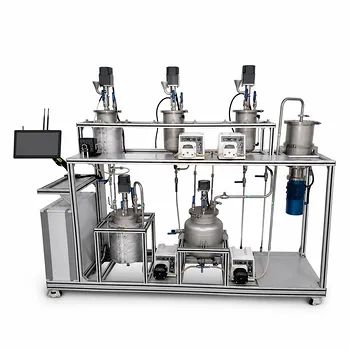
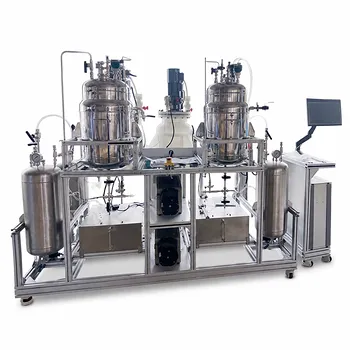
A chemical engineering pilot plant designed to safely demonstrate the Haber process achieves this by operating a pressurized catalytic tubular reactor at significantly reduced pressures and temperatures compared to industrial plants, typically within a bench-top or skid-mounted frame. This is accomplished by integrating precision mass flow controllers for hydrogen and nitrogen, multi-zone PID temperature regulation, and a layered safety architecture of overpressure relief valves, blast shields, hydrogen gas detectors, and automated emergency shutdown interlocks. The result is a controlled learning environment where students can still directly observe how temperature, pressure, and space velocity shift equilibrium yield and reaction kinetics.
The core challenge isn’t replicating industrial 1000-atm conditions—it’s preserving the thermodynamic and kinetic lesson while building a failsafe physical envelope. The most instructive pilot plants do this by deliberately moderating the process severity and layering independent, active safeguards that never require a student’s vigilance to activate.
The Design Philosophy: Scaling Down Without Sacrificing the Lesson
Reducing Pressure and Temperature to Safe Envelopes
Industrial ammonia synthesis runs at 200–1000 atm and 400–600°C. Educational reactors scale this down sharply—often to 10–50 bar and 350–450°C—using small-diameter stainless steel tubes.
This keeps the stored energy low enough to be managed by a simple rupture disc and relief valve, yet still produces a measurable, equilibrium-limited yield. The principle is preserved: increasing pressure shifts equilibrium toward ammonia (fewer gas molecules), and raising temperature accelerates kinetics but hurts yield.
Selecting the Right Reactor Configuration
The classic configuration is a fixed-bed tubular reactor packed with a commercial iron-oxide catalyst. The tube is housed inside a multi-zone electric furnace, with a moveable thermocouple to map axial temperature profiles.
For highly exothermic demonstrations, designers sometimes adopt monolithic or structured supports with internal cooling channels. This approach limits the temperature rise across the bed, preventing thermal runaway and any risk of catalyst sintering—exactly the kind of heat management insights a future process engineer needs.
Precise Control Is the Heart of the Experiment
Students manipulate process variables through a PID controller governing furnace temperature and back-pressure regulators that hold system pressure. Mass flow controllers set the N₂:H₂ stoichiometric ratio, while an online gas analyzer (often a thermal conductivity or FTIR unit) quantifies ammonia concentration at the outlet.
The system becomes a hands-on calculator for space velocity (GHSV), catalyst activity, and conversion rate—all while the PLC logs every sensor reading for post-run analysis.
Integrating Safety from the Ground Up
Overpressure Protection and Blast Shielding
Every high-pressure section begins with a burst disc set to a safe fraction of the reactor’s design pressure, venting into a safe exhaust. This is backed by a spring-loaded relief valve as a secondary defense.
A polycarbonate blast shield surrounds the reactor zone, and interlocks ensure that the furnace cannot energize unless the shield is fully closed. No amount of student curiosity can bypass this.
Gas Detection and Automated Shutdowns
Hydrogen leaks pose the greatest acute risk. Dedicated hydrogen-specific sensors are placed at the reactor connections, gas cabinet, and room exhaust. If a 25% LEL threshold is crossed, the PLC immediately closes automatic isolation valves on the gas supply, cuts heater power, and purges the reactor with inert nitrogen—all without human intervention.
This fail-safe logic is deliberately made visible to students: they learn not just what the safety system does, but why the chain of events was designed in that exact order.
Structured Reactors and Thermal Management
An alternative design uses a monolithic loop reactor with product gas recycle. Cold effluent is circulated back through an external heat exchanger and mixed with the feed, capping the adiabatic temperature rise. The monolith’s high surface-to-volume ratio dumps heat efficiently, turning a potentially runaway exotherm into a gentle, measurable profile.
This teaches both reaction engineering and intrinsic safety—the idea that the reactor geometry itself becomes a safety device.
Turning Data into Insight: Instrumentation and Analysis
Real-Time Gas Analysis
An in-line analyzer continuously samples the reactor effluent. Students watch the ammonia concentration rise as they tweak pressure upward, directly confirming Le Chatelier’s principle.
By calculating the reaction rate from the concentration change and residence time, they connect the abstract rate law to a physical measurement—exactly the bridge between theory and industrial operations that the pilot plant is meant to build.
Temperature Profiling for Kinetic Understanding
Catalytic beds often have irregular inner channels that prevent inserting thermocouples directly into the active zone. Educational plants solve this by placing moveable thermocouples in the inert pre- and post-bed zones, or by using extruded alumina monoliths with straight channels that allow a probe to slide along the centerline.
The resulting axial temperature profile tells a story: an initial cold zone where reaction hasn’t started, a hot spot where kinetics and exotherm peak, and a cooling tail. This mapping becomes a direct, visual lesson in reactor engineering.
The Core Curriculum: Demonstrating Le Chatelier and Kinetics
Pressure’s Dual Role
Increasing system pressure raises reactant concentration, boosting collision frequency and reaction rate. Simultaneously, it shifts equilibrium toward ammonia because 4 moles of gas become 2.
By holding temperature constant and ramping pressure, students can isolate this dual effect and confirm that conversion plateaus as equilibrium takes over—a concept that textbooks describe, but a pilot plant makes tangible.
Temperature as a Balancing Act
Raising temperature always increases the rate constant—but for an exothermic reaction, it also pushes the equilibrium toward reactants. The plant lets students map both curves and find the industrial “sweet spot” where a small yield penalty buys an enormous rate increase.
They can then relate this to the real Haber process, which sacrifices per-pass conversion for throughput, using condensation and recycle to recover ammonia. That system-level thinking only crystallizes when you’ve seen the tension on a live screen.
Understanding the Trade-offs
The Fidelity–Convenience Gap
Scaling down safety also scales down realism. An educational reactor operating at 50 bar misses the true industrial challenge of designing compressors, high-pressure seals, and thick-walled vessels. Students might not appreciate why ammonia plants invest so heavily in materials science until they are explicitly walked through the gap.
Mitigation: Augment the pilot plant experience with case studies or simulations of full-scale equipment, so the lesson includes the missing context rather than pretending it doesn’t exist.
Maintenance and Catalyst Management
Even a small catalyst bed requires careful reduction and protection from poisons (oxygen, moisture). A poorly activated catalyst yields misleading data, frustrating students and eroding confidence in the equipment.
Mitigation: Standardize a catalyst activation SOP that runs automatically under PLC control before the student session begins. Include a mandatory maintenance log and cartridge-style bed design for quick, safe swaps.
Making the Right Choice for Your Learning Objective
How you design—or select—a pilot plant depends entirely on which lesson you most want students to internalize.
- If your primary focus is process safety culture: Emphasize a plant with redundant interlocks, visible gas detection loops, and a structured reactor that is inherently stable. Let the safety architecture itself become the curriculum.
- If your primary focus is thermodynamics and kinetics: Prioritize a plant with high-fidelity online analysis and movable thermocouples, even if the pressure is scaled down further. The quality of the data stream matters more than the absolute pressure number.
- If your primary focus is mimicking industrial realism: Add a product condensation and recycle loop, even if the reactor is small. This shows the economic logic of the Haber process—recovering unreacted gas—better than a single-pass reactor ever could.
- If your primary focus is budget and rapid student turnover: Choose a pre-built skid with cartridge catalyst beds, automated shutdown sequences, and minimal manual gas connections. This minimizes startup time and user error, maximizing the number of students who can work with the unit safely.
A well-designed pilot plant doesn’t just prevent accidents—it makes safety, thermodynamics, and kinetics visible in a single, integrated experience that no textbook can replace.
Summary Table:
| Feature | Industrial Scale | Educational Pilot Plant | Safety/Learning Value |
|---|---|---|---|
| Pressure | 200–1000 atm | 10–50 bar | Reduces stored energy while preserving equilibrium shift lessons. |
| Temperature | 400–600°C | 350–450°C | Mitigates thermal runaway risk and catalyst sintering. |
| Safeguards | Complex relief systems | Rupture discs, blast shields, PLC interlocks | Provides automated, visible fail-safe shutdown training. |
| Analysis | Industrial GC | In-line analyzers & movable TCs | Enables real-time kinetic and thermodynamic profiling. |
Bring Safe, Hands-On Chemical Engineering to Your Institution
Looking to equip your department with advanced, inherently safe process systems? LABPARK provides state-of-the-art Educational and Vocational Unit Operations Pilot Plants in chemical engineering, bioprocess & biotech, and environmental & water treatment for universities, research institutes, and enterprises.
Our custom-designed pilot plants allow students to safely master high-pressure, high-temperature reactions through precise automation, redundant safety interlocks, and high-fidelity data acquisition.
Contact LABPARK today to discuss your laboratory specifications and request a customized project proposal!
Related Products
- Natural Product Extraction Unit Operations Training Pilot Plant
- Green Anhydrous Ethanol Refining Practical Training Pilot Plant
- High-Gravity Emulsification and Mass Transfer Educational Pilot Plant
- Electrolyte Distillation Purification and Formulation Educational Pilot Plant
- Water Electrolysis Hydrogen Production and Storage Educational Pilot Plant
People Also Ask
- How to Demo Solubility Sensitivity in SFE Pilot Plants? Practical Thermodynamics
- How do pilot plants differentiate physical vs chemical extraction? Enhance Chemical Engineering Training
- How are HTU and NTU applied to determine extraction column height? Guide to Pilot Plant Scaling
- How can Hotelling's T² & Q statistics detect pilot plant abnormalities? Optimize Safety
- Why use split-plot designs in pilot plants instead of CRD? Optimize process parameters effectively.