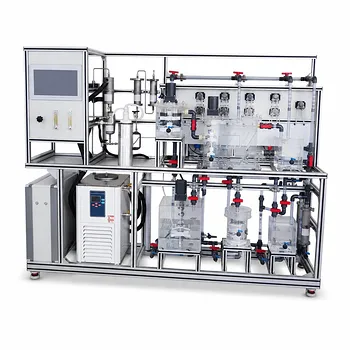
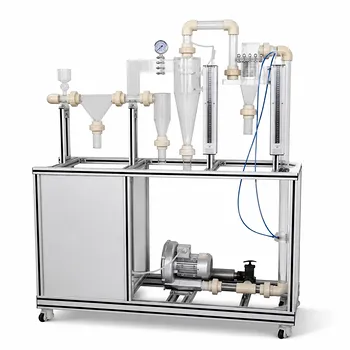
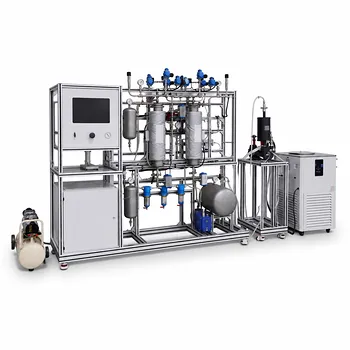
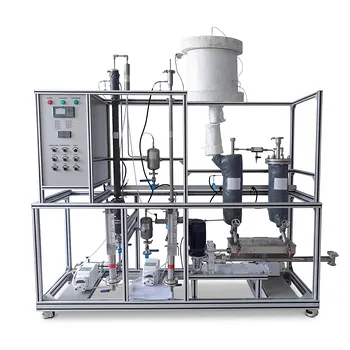
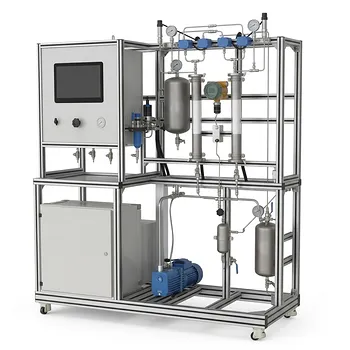
The pathway from a wood chip to a pipeline-ready fuel is a complex thermodynamic puzzle that cannot be solved in a textbook. Pilot plants serve as the critical experimental bridge, enabling researchers to physically integrate and control the multi-step conversion of biomass into synthetic gaseous fuels. Specifically, they provide scaled-down, instrumented platforms for biochemical routes—like anaerobic fermentation in controlled digesters—and thermochemical routes—such as gasification and pyrolysis in thermal reactors—allowing for the precise optimization of yield, purity, and energy efficiency.
While theoretical models provide a starting point, the inherent variability of biomass and the harsh conditions required for conversion create significant engineering risks. Unit operations pilot plants are essential for de-risking the process by allowing researchers to validate thermodynamic energy balances, master the integration of heat and mass, and empirically verify gas purification sequences before committing to a commercial-scale design.
Unlocking Two Core Conversion Pathways
The Biochemical Route: Mastering Methanogenesis
The primary reference highlights that gaseous fuels can be produced via anaerobic fermentation, which produces predominantly methane and carbon dioxide. This is a biological, not just a chemical, process.
The Impact of Controlled Culture Environments
A bioprocess pilot plant, in this context, is not a single tank but an integrated system. It houses the anaerobic fermenters where microbial consortia break down organic matter. The pilot scale allows researchers to control critical parameters—temperature, pH, and organic loading rate—that are often unstable at the lab bench but profoundly impact the final gas composition.
The Critical Role of Separation
Raw biogas is a mixture, not a fuel. The integrated gas-liquid separation and carbon dioxide scrubbing columns mentioned are what elevate the product from a crude off-gas to a methane-rich stream. Researchers use these pilot-scale absorption columns to test different solvents and packing materials, directly measuring how they affect the purity and energy content of the final gas under continuous operation.
The Thermochemical Route: Engineering Syngas
The second major approach involves heat, not biology. Pyrolysis and gasification reactors operate at high temperatures to thermally decompose complex biomass structures like lignin and cellulose into simpler molecules, primarily carbon monoxide and hydrogen.
Managing Endothermic Reality
The supplementary reference defines the core gasification reaction as strongly endothermic ($\Delta H = 74 \text{ kJ/mol}$) . A pilot plant's heating system is not just a furnace; it becomes a subject of study. Researchers must dynamically manage this heat input, often simulating how partial oxidation, which is exothermic ($\Delta H = -113 \text{ kJ/mol}$), can be carefully balanced to supply the required thermal energy without sacrificing gas quality. The pilot plant allows this heat integration to be visualized and measured directly.
The Integrated Pilot Plant as a Research Engine
From Raw Feed to a Pure Stream
Transitioning from a single reaction to a full process is where pilot plants prove their worth. The question of producing "fuel" is fundamentally about an integrated system architecture, not a lone reactor. The supplementary references describe this sequence as a chain of essential unit operations.
Pre-Reaction: Feed and Reformation
Before conversion, the pilot plant must handle feed preparation. Depending on the process, the primary reactor is configured for the specific chemistry: a steam reformer, a partial oxidation reactor, or a gasification unit. The entire sequence is conditioned on this starting choice.
Post-Reaction: Purification and Refinement
The raw synthesis gas, or syngas, leaving the reactor is impure. Downstream cleaning is non-negotiable. Researchers rely on a cascade of pilot-scale separation units:
- A water-gas shift reactor to precisely adjust the hydrogen-to-carbon monoxide ratio.
- An absorption column, such as an amine wash system, for targeted carbon dioxide removal.
- A pressure swing adsorption (PSA) unit or membrane separator to achieve final high-purity isolation.
This sequence transforms a theoretical chemical pathway into a tangible, tunable engineering flowchart.
Validating the Economic and Physical Model
Bridging Theory and Physical Reality
Theoretical calculations, such as determining a fuel's combustion enthalpy, provide only a baseline for efficiency. A pilot plant provides the empirical evidence that validates a process model. By running the integrated system, researchers collect real-world data on actual thermal inputs, parasitic energy losses, and material balances.
De-risking Scale-up
The raw, variable nature of biomass and the high-pressure, high-temperature conditions of conversion make scale-up exceptionally dangerous without physical data. The pilot plant serves as the instrument for "right-first-time" engineering. It allows the validation of mathematical models against cycle times, equipment constraints, and throughput, ensuring that the assumptions underpinning a commercial design are not just theoretically sound but physically manufacturable and economically safe.
Understanding the Trade-offs
The Inherent Drawbacks of Biomass as a Feedstock
Objectivity demands an honest assessment of the challenges. Pilot plant research must directly confront these limitations.
The Energy Density Problem
The supplementary references state that biomass suffers from low energy density compared to fossil sources. A pilot plant physically demonstrates this logistical reality. Researchers can quantify the significant volumes of feedstock required for even a modest fuel output, directly influencing the economic modeling for localized or mobile processing units.
The Complexity Penalty
Integrating a bioreactor or gasifier with a full suite of hot-gas cleanup and separation equipment creates a highly complex system. The operational difficulty and capital cost are substantial, and the pilot plant is the tool used to find process intensification solutions that reduce this footprint without abandoning physical viability.
Making the Right Choice for Your Goal
- If your primary focus is biogas upgrading: Prioritize pilot plants that integrate an anaerobic digester with a downstream gas-liquid separation train. The ability to test different chemical scrubbing solvents on a raw, variable biogas stream is the most critical capability.
- If your primary focus is thermochemical gasification and syngas refinement: Look for a pilot plant that allows full heat integration management and features a modular downstream system. The ability to reconfigure the water-gas shift, amine wash, and PSA sequence is key to optimizing for different syngas end-products.
- If your primary focus is system-wide commercial viability: Use the pilot plant to run an entire mass and energy balance loop. The goal is not maximum purity or yield for a single step, but rather generating the holistic datasets needed to calculate a positive net energy ratio and validate scale-up models under prolonged steady-state operation.
The best pilot plant research does not just prove a reaction is possible; it physically manifests the thermodynamic truth that will define the commercial limits of synthetic fuel production.
Summary Table:
| Pathway | Core Process | Key Equipment/Unit Operations | Key Parameters Optimized |
|---|---|---|---|
| Biochemical | Anaerobic Fermentation (Methanogenesis) | Digesters, Gas-liquid separators, CO2 scrubbing columns | Temperature, pH, Organic loading rate, methane purity |
| Thermochemical | Gasification, Pyrolysis & Syngas Refining | Steam reformers, Water-gas shift reactors, PSA units, Amine wash | Thermal energy balance, H2:CO ratio, gas cleanup |
Accelerate Your Biomass & Biofuel Research with LABPARK
Transitioning from theoretical models to viable synthetic fuel production requires reliable, hands-on testing. LABPARK provides advanced Educational and Vocational Unit Operations Pilot Plants in chemical engineering, bioprocess & biotech, and environmental & water treatment for universities, research institutes, and enterprises.
Whether you are refining anaerobic digestion or scaling high-temperature gasification and purification systems, our modular pilot plants provide the precise instrumentation needed to validate energy balances and de-risk commercial scale-up.
Contact LABPARK today to discover how we can customize a pilot plant solution for your lab!
Related Products
- Bio-fermentation Ethanol Production Practical Training Unit Operations Pilot Plant
- Carbon Dioxide Hydrogenation Methanol Synthesis Educational Unit Operations Pilot Plant
- Carbon Dioxide Hydrogen Methanol Synthesis Educational Unit Operations Pilot Plant
- Methanol Synthesis and Catalyst Performance Evaluation Educational Unit Operations Pilot Plant
- Natural Product Extraction Unit Operations Training Pilot Plant
People Also Ask
- Why Use PTFE & Hastelloy in Chemical Pilot Plants? Prevent Corrosion & Ensure Safety
- Why Compare Predicted and Experimental Excess Enthalpy? Key to Accurate Pilot Plant Scale-up
- Why is the chemical plant startup schedule crucial? De-risk scale-up with pilot plants.
- When to transition from PID to adaptive control in pilot plants? Key process indicators.
- Why must batch and fed-batch fermentation pilot plants be designed to accommodate changing rheological conditions?