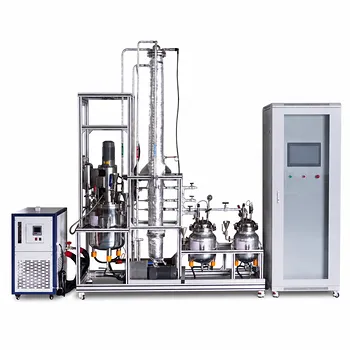
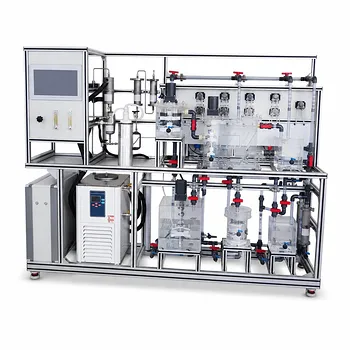
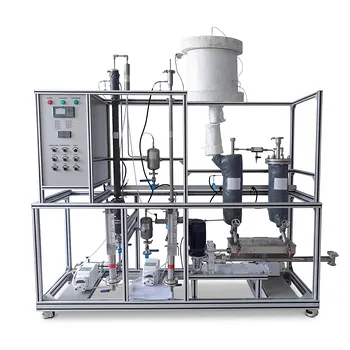
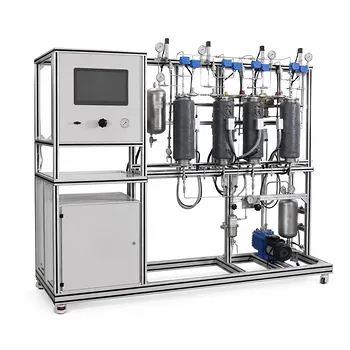
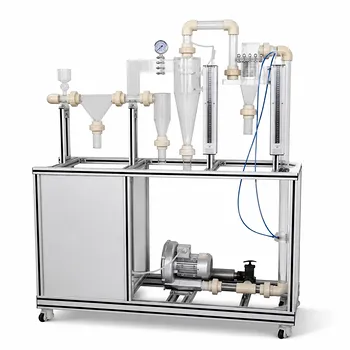
Biomass provides a renewable, drop-in alternative to crude oil by serving as the raw material for biofuels and platform chemicals in bioprocess pilot plants. These facilities use specialized bioreactors, fermentation systems, and thermochemical reactors to optimize conversion pathways—such as biological fermentation, pyrolysis, and C1-chemistry—without relying on fossil resources. The core purpose is to de-risk and validate these processes at a meaningful scale before committing to full industrial production.
Pilot plants are the essential proving ground where the theoretical potential of biomass becomes an industrial reality. By enabling systematic process optimization, resolving mass transfer challenges, and validating continuous operation on real feedstocks, they directly bridge the gap between laboratory research and the commercial replacement of fossil fuels.
The Indispensable Role of Pilot Plants
Replacing fossil fuels with biomass isn't just about chemistry—it's about engineering a reliable, scalable process. Pilot plants are the critical link that makes this transition possible.
From Lab Bench to Real-World Application
Laboratory experiments often use ideal substrates and perfectly controlled conditions. A pilot plant introduces real-world complexities: variable feedstock composition, continuous feeding, and the accumulation of minor byproducts over time. This exposure is vital. It reveals the stability of biocatalysts and the robustness of downstream separation under industrial-like stresses.
The Power of Integrated Unit Operations
A pilot plant is not just a bigger flask. It integrates upstream pretreatment, fermentation, and downstream separation into one continuous chain. This integration highlights the bottlenecks and synergies that isolated lab experiments miss. For example, you can study how a particular pretreatment method affects not only sugar release but also the performance of the subsequent fermentation and the fouling of distillation columns.
Core Platform: Bioreactors and Fermentation
At the heart of most bioprocess pilot plants is the bioreactor. These vessels allow researchers to precisely control pH, temperature, and dissolved oxygen. This control is non-negotiable for optimizing the metabolism of microorganisms that convert sugars from biomass into bio-ethanol, bio-based succinic acid, or polylactic acid. Pilot-scale fermentation validates that high yields are achievable outside the lab, using real agricultural residues.
Key Conversion Pathways in Pilot Plants
The term "biomass" covers everything from corn stover to wood chips. The pilot plant must therefore host multiple conversion strategies to handle this diversity.
Biological Fermentation for Biofuels and Chemicals
This is the most direct biological route. The process uses enzymes to break down the biopolymers in biomass into fermentable sugars. Pilot-scale fermentation then focuses on:
- Biocatalyst performance: Evaluating how well enzymes work under mild, industrially relevant conditions.
- Nutrient feeding strategies: Optimizing feeding profiles to maximize product titer and rate.
- Contamination control: Demonstrating long-term aseptic operation with non-sterile feedstock.
The result is a proven process for producing everything from fuel ethanol to high-value platform molecules like lactic acid, all from renewable agricultural or organic waste.
Thermochemical Routes: Pyrolysis and Gasification
Not all biomass can be easily broken down by enzymes. For stubborn lignocellulosic materials, thermochemical conversion is key. Pilot plants house two primary systems:
- Anaerobic fermenters that produce methane-rich biogas, which can be purified in integrated scrubbing columns to yield pipeline-grade synthetic natural gas.
- Pyrolysis reactors that heat biomass in the absence of oxygen to produce a liquid bio-oil, a solid char, and a gaseous fraction.
C1-Chemistry: Building Blocks from Syngas
This is a powerful, flexible pathway highlighted in primary research. Biomass can be gasified to produce synthesis gas (syngas), a mixture of CO and H₂. In pilot plants, this syngas can then undergo biological conversion using acetogenic bacteria. These microorganisms ferment the C1 gases into acetic acid, ethanol, or other building blocks, creating a route completely divorced from crude oil. These systems allow researchers to study gas-liquid mass transfer, a critical parameter for this pathway.
Turning Waste into a Feedable Form: the Pretreatment Imperative
Raw biomass is fibrous, moist, and heterogeneous—a processing nightmare. Continuous feeding into a pressurized reactor is often impossible without a focused pretreatment step. Pilot plants are used to master two leading technologies.
Fast Pyrolysis for Pumpable Bio-Oil
This process heats biomass rapidly in the absence of oxygen. The main goal is to convert the messy solid into a liquid bio-oil that can be easily pumped, poured, and atomized into a gasifier or boiler. A pilot-scale pyrolysis unit demonstrates the continuous production of this oil and its handling characteristics, solving the solid-feeding problem at the source.
Torrefaction for Crushable Bio-Coal
Torrefaction is a milder thermal treatment that roasts the biomass. It destroys the fibrous, tenacious structure and drives off moisture. The result is a brittle, carbon-rich material often called "bio-coal." This material can be easily crushed into fine particles (less than 0.1 mm), making it a perfect, drop-in solid fuel for entrained-flow gasifiers that normally run on pulverized coal.
Understanding the Trade-offs and Pitfalls
A purely optimistic view is dangerous. A pilot plant’s value lies in honestly revealing the downsides so they can be mitigated.
Feedstock Variability Is the Constant Enemy
A process optimized for clean corn stover will fail when fed mixed forestry residue. The variation in moisture, ash content, and carbohydrate composition directly impacts yields. Pilot plants force researchers to confront this variability and design robust, forgiving processes with adaptive control strategies.
The Energy and Economic Tug-of-War
Not all conversion is sustainable. A process that consumes more fossil energy in pretreatment and purification than it displaces in the final product is a net-negative. Pilot plants provide the real-world energy balance data—on heating, cooling, and separation demands—needed for a genuine life-cycle assessment and economic model.
Scale-Up Is Not Linear
The biological and mass-transfer efficiencies observed in a 1-liter flask are rarely replicated in a 1000-liter pilot reactor on the first try. Mixing patterns, shear stress on microorganisms, and heat transfer all change. A pilot plant’s purpose is to map these non-linearities, build accurate scale-up models, and avoid the catastrophic failure of a premature industrial-scale investment.
Making the Right Choice for Your Goal
The optimal approach depends entirely on your specific objective and the biomass you have available.
- If your primary focus is producing a specific high-value molecule: Prioritize a pilot plant with flexible fed-batch bioreactors and advanced downstream processing. Biological fermentation optimized for product titer and easy purification will be your most direct path.
- If your primary focus is utilizing fibrous, low-cost lignocellulosic waste: Center your efforts on integrated pretreatment (torrefaction or fast pyrolysis) and thermochemical conversion. Mastering the solid-feeding and gasification steps is the key that unlocks this feedstock.
- If your primary focus is creating a drop-in fuel that fits existing gas infrastructure: Focus on anaerobic digestion or syngas fermentation pathways. The pilot plant’s gas cleaning and scrubbing modules become your most critical unit operations for proving pipeline-quality output.
- If your primary focus is building a complete, fossil-free chemical platform: Investigate the C1-chemistry route via gasification and syngas fermentation. This pathway offers the greatest product flexibility, moving beyond fuels into a universe of bio-based chemicals.
The journey from oil-based to bio-based production is a systems challenge, not a single-invention fix. A well-chosen pilot plant operation de-risks that entire system, turning sustainable ambition into proven industrial practice.
Summary Table:
| Conversion Pathway | Primary Feedstock | Key Output | Pilot Plant Focus |
|---|---|---|---|
| Biological Fermentation | Sugars, Agricultural Residues | Biofuels, Platform chemicals | Biocatalyst performance & contamination control |
| Thermochemical | Lignocellulosic waste, Organic waste | Bio-oil, Biogas, Bio-coal | Feedstock pretreatment & continuous feeding |
| C1-Chemistry | Synthesis gas (CO & H2) | Acetic acid, Ethanol, Building blocks | Gas-liquid mass transfer & syngas fermentation |
Scale your bio-based research with confidence. LABPARK provides premium Educational and Vocational Unit Operations Pilot Plants in chemical engineering, bioprocess & biotech, and environmental & water treatment. Designed specifically for universities, research institutes, and enterprises, our systems help you de-risk processes, optimize yields, and transition seamlessly from laboratory to industrial scale. Contact LABPARK today to discuss your pilot plant requirements!
Related Products
- Bio-fermentation Ethanol Production Practical Training Unit Operations Pilot Plant
- Natural Product Extraction Unit Operations Training Pilot Plant
- Dual-Mode Rectification Pilot Plant for Practical Training Unit Operations
- High-Gravity Emulsification and Mass Transfer Educational Pilot Plant
- Polymerization Granulation and Pellet Processing Educational Unit Operations Pilot Plant
People Also Ask
- Why Use PTFE & Hastelloy in Chemical Pilot Plants? Prevent Corrosion & Ensure Safety
- Why Compare Predicted and Experimental Excess Enthalpy? Key to Accurate Pilot Plant Scale-up
- Why is the chemical plant startup schedule crucial? De-risk scale-up with pilot plants.
- When to transition from PID to adaptive control in pilot plants? Key process indicators.
- Why must batch and fed-batch fermentation pilot plants be designed to accommodate changing rheological conditions?