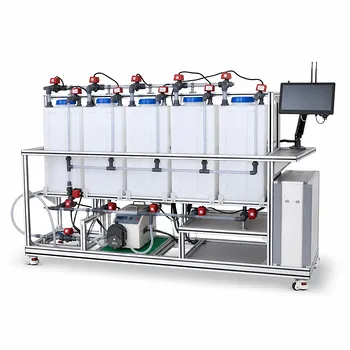
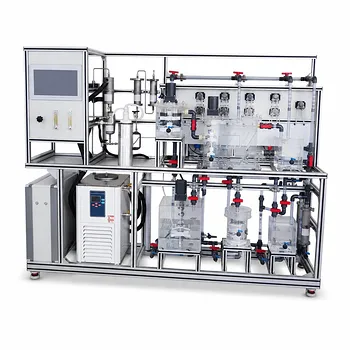
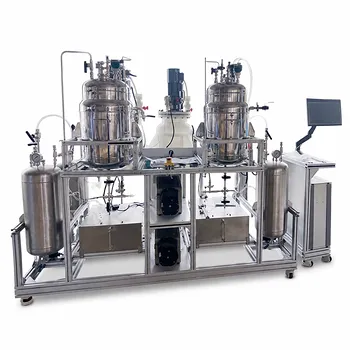
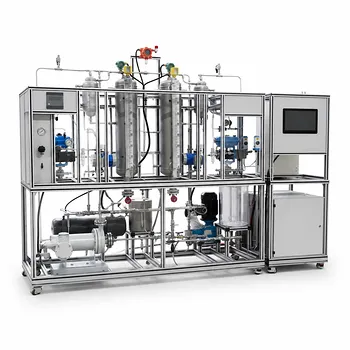
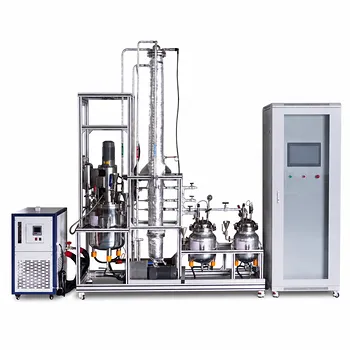
For water treatment operators, the difference between continuous and intermittent blowdown is often just a sentence in a manual—until they see it in action. A well-designed environmental and water treatment pilot plant brings that sentence to life. It simulates the relentless concentrating effect of a steam boiler, allowing students to continuously adjust a bleed valve to keep dissolved solids below critical thresholds, then periodically crack a bottom valve to violently purge settled sludge. This hands-on control turns abstract mass balances and threshold limits into immediate, intuitive lessons under varying pressure conditions.
A pilot plant transforms abstract blowdown theory into tangible experience, allowing students to master the distinct operational rhythms of continuous dissolved solids control and intermittent sludge purging—all while learning the critical measurement techniques that prevent real-world failures.
The Power of Hands-On Learning for Boiler Blowdown Control
Why a Textbook Just Isn't Enough
The equations for blowdown ratio are simple: you measure chloride (or conductivity) and compute the cycles of concentration. But no equation can teach the feel of a valve adjustment, or the sight of a murky sludge release. Operators need to understand not just the math, but the physical reality behind it, including the energy cost of every liter dumped.
Creating a Safe, Scaled-Down Steam Environment
A pilot plant provides a low-risk, transparent loop. Water with a known concentration of dissolved silica and suspended solids is fed to a small steam generator. As steam leaves, the remaining water concentrates. The transparent sight glasses and accessible sample points let students watch the process and collect data without the hazards of a full-scale boiler room.
Demonstrating Continuous Blowdown: Mastering Dissolved Solids Equilibrium
Simulating the Concentration Cycle
The core lesson starts with turning on the heat. As steam is produced, the water volume in the boiler shell decreases, but the dissolved salts remain behind. Students quickly measure a rise in conductivity or silica. The continuous blowdown line, typically located below the water surface, is their tool to arrest this climb.
Adjusting the Bleed Rate to Maintain Thresholds
Using a needle valve on the continuous blowdown line, students establish a small, steady trickle of concentrated water. They compare the blowdown rate to the feedwater rate, calculating the percent blowdown. Boiler water chloride is often the indicator of choice, though for reliable pilot-plant control conductivity or mercuric nitrate titration is preferred over the classic Mohr method, which can overestimate the blowdown ratio. By tweaking the valve, they learn to hold total dissolved solids (TDS) exactly at the permissible limit—balancing the incoming solids from feedwater with the outgoing bleed.
Learning by Doing: The Mass Balance in Action
Students record feedwater flow, blowdown flow, and steam output, then compute the mass balance for chloride. When they see that the chloride in equals the chloride out, the principle settles in their bones. They can also inject a slug of concentrated brine into the feedwater tank to simulate a raw water upset and practice ramping up the blowdown rate to avoid silica scaling.
Practicing Intermittent Blowdown: The Art of Sludge Purge
The Role of Bottom Blowdown in Suspended Solids Control
Dissolved solids aren’t the only enemy. Many contaminants, like iron oxides and hardness precipitates, form dense, coagulated sludge that settles in the bottom header. Continuous blowdown is ineffective against these heavy particles. This is where intermittent bottom blowdown enters the picture—a short, high-volume purge designed to eject the sludge blanket.
Executing Timed 'Puff Blows'
In the pilot plant, a quick-opening bottom valve is installed. Students practice opening it fully for just a few seconds to create a “puff blow.” They see a sudden turbid plume of dark water exit the boiler, confirming the removal of suspended solids. They learn the critical operational rhythm: frequent small purges prevent the sludge from baking onto hot surfaces and avoid dangerous water slugs.
Visualizing the Invisible
The moment a student opens that bottom valve, the theoretical becomes visceral. The sound of the sudden discharge and the sight of concentrated sludge change a mental concept into a physical fact. They immediately grasp why intermittent blowdown must be done on schedule, not when you remember, and why its timing is completely decoupled from the steady continuous bleed.
Bridging the Gap: Measurement Techniques and Critical Thinking
Every blowdown decision depends on a water sample. The pilot plant is an ideal laboratory for teaching analytical trade-offs. Students can run side-by-side tests using the Mohr method and a conductivity meter, discovering firsthand how the Mohr method often underestimates feedwater chlorides and overestimates boiler water chlorides. This drives home a vital lesson: blind reliance on a single lab method can lead to massive over- or under-blowdown. Conductivity becomes their trusted field proxy, offering immediate feedback that sharpens their control instincts.
Understanding the Trade-offs
The Energy Cost of Every Drop
Hot blowdown water carries thermal energy straight to the drain. Students quickly calculate that every extra percentage point of blowdown represents a measurable loss of fuel. The pilot plant lets them visualize the link between tight solids control and energy efficiency, pushing them to optimize rather than simply “blow down a little extra for safety.”
Continuous vs. Intermittent: Not an Either/Or
The two blowdown methods serve completely different purposes. Continuous blowdown controls dissolved solids. Intermittent blowdown ejects accumulated heavy sludge. Relying too heavily on continuous blowdown to remove sludge wastes water and energy. Neglecting intermittent blowdown invites under-deposit corrosion and hot spots. The pilot plant makes this symbiosis obvious, because students see that both actions are needed to keep all water quality parameters in check.
Scaling Complexity: Pilot Plant vs. Real System
A pilot plant will never perfectly replicate the scaling chemistry of a high-pressure utility boiler. However, that is not its purpose. Its value lies in isolating fundamental operational behaviors—valve sequence, mass balance response, and measurement interpretation—without the overwhelming complexity of a full-scale unit. It builds the mental model that operators will later apply to any boiler in their fleet.
Making the Most of Your Pilot Plant Training
Your choice of pilot-plant exercises should match the core skill you need to build.
- If your primary focus is mastering dissolved solids control: Zero in on continuous blowdown and conductivity tracking; let students tune the bleed rate to hold a steady TDS ceiling under varying load.
- If your primary focus is preventing sludge-related damage: Design exercises around bottom blowdown timing; have students measure the suspended solids content before and after a “puff blow” to quantify removal efficiency.
- If your primary focus is teaching analytical rigor and troubleshooting: Run parallel chloride tests (Mohr vs. potentiometric) and let the discrepancies spark a discussion on how measurement errors ripple into plant shutdowns.
- If your primary focus is energy and water minimization: Add an energy meter to the pilot plant and challenge students to find the absolute minimum combined blowdown volume that still holds solids within limits.
A few hours inside a transparent, forgiving pilot plant can produce an operator who truly understands the blowdown valve, not just one who knows how to open it.
Summary Table:
| Feature | Continuous Blowdown | Intermittent Blowdown |
|---|---|---|
| Primary Target | Dissolved solids (TDS, silica, chlorides) | Suspended solids (dense sludge, precipitates) |
| Operation Method | Continuous, steady bleed via needle valve | Periodic, high-volume "puff blows" via bottom valve |
| Key Objective | Maintain TDS equilibrium & mass balance | Purge accumulated sludge to prevent scale/corrosion |
| Measurement Tool | Conductivity meter / Chloride titration | Turbidity visual checks / Sludge level tracking |
Elevate Your Water Treatment Training with LABPARK
Bridging the gap between abstract blowdown theory and hands-on engineering skills requires robust, real-world training systems. LABPARK provides state-of-the-art Educational and Vocational Unit Operations Pilot Plants in chemical engineering, bioprocess & biotech, and environmental & water treatment.
We empower universities, research institutes, and enterprises to train students and operators using physical, visual, and safe scaled-down environments. Help your team master mass balances, valve control, and energy optimization with industry-grade equipment.
Ready to transform your laboratory training? Contact LABPARK today to discover our custom pilot plant solutions!
Related Products
- Electrochemical Water Treatment Educational Unit Operations Pilot Plant
- Thermal Desorption Exhaust Gas and Tail Water Treatment Educational Pilot Plant
- Ion Exchange Water Purification Educational Pilot Plant for Engineering Unit Operations
- Water Electrolysis Hydrogen Production and Storage Educational Pilot Plant
- Alkaline Membrane Water Electrolysis Educational Pilot Plant Unit Operations Training System
People Also Ask
- What design features do educational electrochemical pilot plants utilize to manage gas liberation and water loss?
- How can unit operations pilot plants show lead-acid concentration vs state of charge? Real-time monitoring guide.
- How do educational electrochemical pilot plants scale up electrolysis? Master industrial engineering.
- How to Estimate Sulfate in Water Treatment Pilot Plant Deposits: Gravimetric Guide
- How can foaming be managed during steam generation experiments in water treatment unit operations pilot plants? Tips