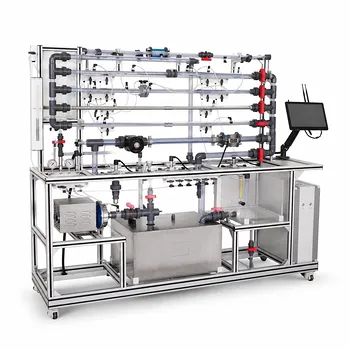
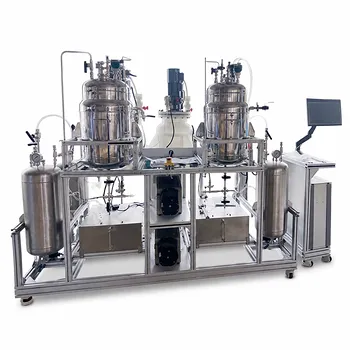
An answer starts with the bolded takeaway: A pilot plant configured with stirred-tank reactors and a filtration module transforms the wet-process phosphoric acid reaction from a theoretical exercise into a practical optimization tool. By independently controlling the solid‑to‑liquid ratio, sulfate concentration, and reaction temperature (80–85 °C), engineers can directly observe how these variables govern phosphate rock decomposition and, crucially, the crystal habit of the by‑product gypsum. The resulting data on filtration rate, cake wash efficiency, and phosphorus recovery builds the quantitative bridge between benchtop chemistry and the selection of full‑scale filters.
The core value of the pilot plant lies in mapping the cause‑and‑effect chain: sulfate concentration and temperature define gypsum crystal morphology, and crystal morphology dictates the resistance of the filter cake, the efficiency of acid recovery, and the long‑term operability of the process. Without this intermediate‑scale evidence, reaction optimization remains disconnected from the economic realities of solid‑liquid separation.
The Pilot Plant Setup: Reactors and Filtration
A Multi‑Stage Reactor Train Mimics Industrial Flow
A typical pilot plant uses multiple continuous stirred‑tank reactors (CSTRs) in series to replicate the residence time distribution and progressive conversion of a commercial phosphoric acid line. This arrangement lets you study how the decomposition of phosphate rock progresses across stages, rather than in a single batch pot. It also reveals how sulfate availability, temperature, and solids loading evolve from the first attack tank to the final crystallization zone.
The Filtration Unit Seals the Learning Loop
Downstream of the reactors, a modular filtration unit – often a rotary vacuum filter or a plate‑and‑frame filter press – separates the product acid from the gypsum cake. Because the slurry is highly corrosive and abrasive, the pilot filter must mimic the materials of construction (e.g., stainless steel, rubber‑lined components) to generate reliable scale‑up data. This setup directly exposes the researcher to the real‑world challenges of handling an acidic, solids‑laden stream.
Key Reaction Parameters to Manipulate
Solid‑to‑Liquid Ratio: Balancing Reactivity and Pumpability
Increasing the proportion of phosphate rock relative to the return acid stream raises the slurry density and can improve reactor productivity. However, a high solids concentration increases the apparent viscosity, which impairs mixing and heat transfer. In the pilot plant, you intentionally sweep this ratio while measuring the degree of rock decomposition at each stage, finding the sweet spot that maximizes dissolution without causing localized reagent starvation.
Sulfate Concentration: The Master Switch for Crystallization
The dissolved sulfate level exerts an outsized influence on the average grain size, shape, and degree of agglomeration of the calcium sulfate crystals. In a pilot reactor, you can hold an excess of sulfate ions (by controlling the sulfuric acid feed rate) to promote the growth of large, blocky gypsum crystals. Too much sulfate, however, can blind the unreacted rock surface or trigger the co‑precipitation of unwanted phases. The pilot plant yields the precise titration curve between sulfate level and filterability.
Temperature Control: Protecting the Dihydrate Window
The primary reference specifies a reaction temperature of 80–85 °C, which stabilizes the dihydrate form of calcium sulfate (gypsum) . Straying lower risks forming the hemihydrate, which re‑hydrates and creates needle‑like particles that clog filters. Running hotter accelerates corrosion and can dissolve too much organic matter from the rock, generating foam and slowing filtration. The pilot plant makes it possible to maintain tight temperature control while measuring both the crystal phase by X‑ray diffraction and the subsequent filtration performance.
How Crystal Morphology Drives Filtration Efficiency
From Crystal Habit to Cake Permeability
When the gypsum crystallizes as compact, rhombohedral crystals, the filter cake remains porous and allows acid to drain rapidly. Conversely, if the crystals grow as thin platelets or needles – often a consequence of improper sulfate control or rapid cooling – they pack into a dense, compressible cake. In the pilot plant, you can correlate the specific crystal habit with the measured specific cake resistance (α) . This data feeds directly into the sizing equation for a commercial filter.
Washing Efficiency and Phosphorus Loss
Residual phosphoric acid trapped in the filter cake represents a direct yield loss. The pilot plant’s filtration module allows you to experiment with wash‑water distribution, wash ratios, and displacement vs. dilution washing. Because large, well‑formed gypsum crystals create a more uniform pore network, wash liquor penetrates the cake evenly, displacing acid with minimal bypassing. The pilot facility quantifies this relationship, translating crystal quality into a predicted phosphorus recovery.
Measuring and Optimizing Filtration Performance
Quantifying Filtration Resistance and Cycle Time
On a pilot filter, you can record the filtrate volume over time under constant vacuum or pressure and apply the classic Ruth equation to extract the medium resistance and cake‑specific resistance. By varying the pH, temperature, and solids content in the feed, you build a performance map that shows exactly how much filtration area will be needed at full scale. This prevents the expensive mistake of under‑sizing or over‑sizing the production filter.
Filtrate Clarity and Downstream Processing
Beyond the filtration rate, the pilot plant lets you evaluate the turbidity and solids carryover in the filtrate. Excessive fine gypsum particles in the product acid can foul evaporator tubes during concentration. The pilot system therefore includes the ability to measure filtrate clarity under different process conditions, guiding decisions about the need for in‑line flocculants or a polishing filtration step.
Understanding the Trade‑offs and Pitfalls
Reaction Yield vs. Filtration Throughput
Pushing the reaction to higher conversion often requires finer grinding of the rock or more aggressive sulfate levels, which can generate a filter cake that is more resistant and harder to wash. In the pilot plant, you deliberately run the tension between complete rock decomposition and a filterable solid, quantifying the net economic return rather than chasing a single maximum.
Heat Transfer Fouling and Process Variability
The same gypsum slurry that leaves the reactor can scale on heat exchanger surfaces, extending heating times and blurring the temperature control. The pilot plant reveals how often cleaning cycles are needed and how the operator’s skill in managing start‑up protocols affects the consistency of reaction time and filtration cycle duration. Raw material variability – e.g., different phosphate rock origins – further tests the robustness of the chosen parameters.
Traditional Cake Filtration vs. Alternative Approaches
While the pilot plant often focuses on conventional vacuum filtration, it can also be adapted to cross‑flow filtration or membrane modules to explore whether limiting cake build‑up or using a solid membrane yields a more consistent flux. These comparisons, made at the pilot scale, inform whether a capital‑intensive filtration technology justifies the reduction in phosphorus loss or filter aid consumption.
Making the Right Choice for Your Optimization Goal
Your specific optimization objective determines how you use the pilot plant and which trade‑offs you accept.
- If your primary focus is minimizing phosphorus loss: Prioritize sulfate and temperature settings that produce the most washable gypsum crystals, and use the pilot filter to find the minimum wash ratio that still achieves a target acid recovery. Accept a slightly slower filtration rate if it preserves yield.
- If your primary focus is maximizing filtration throughput: Run the pilot plant to identify the solid‑to‑liquid ratio and sulfate level that give the lowest specific cake resistance, even if this means a small loss in reactor conversion. The pilot data will define the economic break‑even between filtration speed and rock utilization.
- If your primary focus is creating a robust, scalable design: Introduce intentional variations in rock source and operator technique during pilot runs to stress‑test the chosen parameters. Document the resulting cycle times and cleaning frequencies to build a realistic commissioning and maintenance plan for the full‑scale plant.
The pilot plant transforms the art of wet‑process phosphoric acid production into a measurable, repeatable science – giving you the evidence you need to design a process that is not only chemically elegant but also mechanically and economically sound.
Summary Table:
| Parameter | Control Target | Process Impact |
|---|---|---|
| Solid-to-Liquid Ratio | Variable Sweep | Balances rock dissolution against slurry viscosity and pumpability |
| Sulfate Concentration | Controlled Excess | Governs gypsum crystal size, morphology, and cake permeability |
| Reaction Temperature | 80–85 °C | Stabilizes dihydrate gypsum to prevent needle crystals and filter clogging |
| Crystal Morphology | Compact Rhombohedral | Lowers specific cake resistance and maximizes phosphorus wash recovery |
Elevate Your Chemical Engineering Research and Training with LABPARK
Transitioning from benchtop chemistry to industrial-scale production requires reliable, real-world data. LABPARK provides state-of-the-art Educational and Vocational Unit Operations Pilot Plants in chemical engineering, bioprocess & biotech, and environmental & water treatment.
Designed specifically for universities, research institutes, and enterprises, our modular pilot systems empower you to optimize reaction kinetics, filtration parameters, and crystallization habits under precise control.
Contact LABPARK today to discover how our custom pilot solutions can accelerate your process development, optimize your yields, and enhance your training programs!
Related Products
- Multi-Functional Special Distillation Educational Pilot Plant
- Continuous Batch Extractive Distillation Educational Pilot Plant
- Fixed-Bed Chemical Reaction and Gas Dust Tar Removal Unit Operations Pilot Plant
- Comprehensive Fluid Mechanics Educational Unit Operations Pilot Plant
- Electrolyte Distillation Purification and Formulation Educational Pilot Plant
People Also Ask
- Why does simple distillation yield higher efficiency than flash distillation? Key thermodynamic differences.
- Why is the acentric factor important in pilot plants? Fluid property prediction.
- How Batch vs Continuous Configuration Affects Distillation Pilot Plant Versatility & Footprint
- How does double temperature difference control improve distillation pilot plants? Stabilize purity.
- How to Estimate Distillation Pilot Plant Tray Efficiency? O'Connell's Correlation Guide