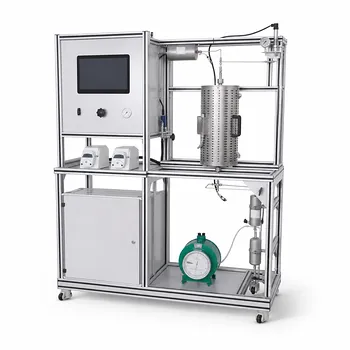
The three primary reaction pathways in Fischer-Tropsch synthesis are alkane formation, alkene formation, and alcohol formation, all proceeding from syngas (CO + H₂) over an iron or cobalt catalyst. For a chemical engineering pilot plant demonstrating indirect coal liquefaction, iron catalysts are overwhelmingly the practical choice due to their lower cost, inherent ability to handle the H₂‑lean syngas from coal gasification, and straightforward operation in common educational reactor setups.
The heart of F‑T synthesis is not a single reaction but a branching network where catalyst identity and process conditions dictate whether you make waxes, liquid fuels, or oxygenates. For a coal‑based pilot plant, an iron catalyst in a fixed‑bed or fluidized‑bed reactor delivers the versatility needed to teach the full process while controlling the intense heat release.
The Core Chemical Pathways of Fischer‑Tropsch Synthesis
Every F‑T product slate traces back to a few fundamental carbon‑chain‑building steps. All are highly exothermic, making heat management the central engineering challenge.
Alkane Synthesis: The Paraffinic Route
This is the classic F‑T reaction, producing straight‑chain alkanes: (2n+1)H₂ + nCO ⇌ CₙH₂ₙ₊₂ + nH₂O It generates water, and under certain conditions CO can be consumed via a side water‑gas shift that yields CO₂ instead. The alkanes are predominantly linear and form the backbone of diesel and wax fractions.
Alkene Synthesis: The Olefinic Route
Direct olefin production follows an analogous stoichiometry: 2nH₂ + nCO ⇌ CₙH₂ₙ + nH₂O The 1‑alkenes created here are highly reactive, giving a route to chemicals and improving fuel properties. Olefin selectivity is strongly temperature‑ and catalyst‑dependent.
Alcohol Synthesis: The Oxygenate Branch
A smaller but important pathway yields oxygenated products like methanol and higher alcohols. The primary reference describes these as molecules carrying a hydroxyl group on the hydrocarbon chain. In a coal‑liquefaction context, oxygenates can enhance fuel stability and combustion, but they also complicate downstream separation.
Catalyst Selection: The Decisive Factor
The catalyst is the switch that biases the reaction network and determines how the pilot plant handles real syngas.
Iron Catalysts: The Workhorse for Coal‑Based Syngas
Iron catalysts possess intrinsic water‑gas shift activity, meaning they can generate H₂ in situ by converting CO with the water produced. This makes them uniquely tolerant of the low H₂/CO ratio syngas (often ~0.7–1) that comes from coal gasifiers.
- Cost and availability: Iron is far cheaper than cobalt, a decisive advantage for educational pilot plants with limited budgets.
- Versatility: Iron works reliably in fixed‑bed, slurry‑phase, and fluidized‑bed reactors, handling the wax‑forming low‑temperature range and the olefin‑producing high‑temperature range.
- Drawbacks: Iron has lower per‑gram activity than cobalt and deactivates faster, though its robustness in sulfur‑containing coal syngas partly mitigates this.
Cobalt Catalysts: High Activity for Clean Syngas
Cobalt is the mainstay of modern gas‑to‑liquids plants but is less common in coal‑based educational pilots.
- Superior activity: Cobalt delivers higher conversion per reactor volume and produces a cleaner paraffinic wax, ideal for lubricant studies.
- Syngas requirement: Cobalt is a poor water‑gas shift catalyst, so it needs a H₂/CO ratio close to 2. Using it with raw coal syngas would require a costly upstream shift reactor, adding complexity.
- Operational sensitivity: Cobalt can be poisoned by sulfur compounds, which are often present in coal‑derived syngas unless deep cleaning is applied.
Reactor Dynamics: Turning Reactions into Products
The reactor type couples with the catalyst to control temperature, product spectrum, and pilot‑plant practicality.
Low‑Temperature FT for Wax Production
LTFT systems operate between about 220°C and 260°C (496 K – 533 K inlet) and keep the catalyst immersed in liquid wax.
- Multitubular fixed‑bed reactors work as trickle‑flow units; liquid wax drains over the catalyst pellets, simplifying design and product collection.
- Slurry‑phase reactors suspend fine catalyst particles in a wax medium, giving superb temperature control and easier catalyst replacement.
Both formats are used to maximise heavy waxes for subsequent hydrocracking.
High‑Temperature FT for Light Olefins and Gasoline
HTFT systems run at 320–340°C (593–610 K) and use fluidized‑bed reactors without a condensing liquid phase. This prevents wax from coating the catalyst and causing defluidization. Iron catalysts are standard here because of their mechanical strength and low cost. The product slate shifts dramatically toward light olefins, gasoline, and less wax.
Understanding the Trade‑offs in Pilot Plant Design
Every choice involves a compromise. Acknowledging them upfront builds a credible experimental foundation.
Cost Versus Performance
An iron‑based fixed‑bed reactor minimizes capital and catalyst expense, making it ideal for teaching. A cobalt‑based slurry system would process syngas faster and make higher‑quality wax, but at a cost and complexity that often undermine educational objectives.
Syngas Fit
Indirect coal liquefaction feeds the F‑T unit with syngas that is naturally low in hydrogen. Iron’s water‑gas shift activity compensates for this without an extra process step. Cobalt would force you to either add a shift stage or blend in pure hydrogen, distancing the pilot plant from the real industrial sequence.
Product Targeting
- Wax‑focused studies benefit from LTFT with either iron or cobalt.
- Olefin and gasoline studies favour HTFT fluidized beds with iron.
- Educational demonstrations gain the most from the wide product distribution that iron gives, letting students observe alkanes, alkenes, and oxygenates in a single run.
Making the Right Choice for Your Goal
- If your primary focus is demonstrating the complete indirect coal liquefaction chain with authentic coal syngas: Choose an iron catalyst in a fixed‑bed reactor. It directly processes low‑ratio syngas, keeps capital low, and produces a broad enough product range to teach separations and analytics.
- If your primary focus is producing heavy waxes for upgrading or lubricant studies: Consider an iron or cobalt catalyst in a slurry‑phase LTFT unit. Cobalt gives cleaner wax, but you must pre‑adjust the syngas composition.
- If your primary focus is exploring light olefin yields for chemical‑industry applications: Operate an iron catalyst in a circulating fluidized‑bed HTFT mode, targeting short‑chain hydrocarbons and avoiding wax condensation.
By anchoring your catalyst and reactor selection to the unique demands of coal‑derived syngas, your pilot plant becomes a faithful and instructive miniature of real‑world indirect coal liquefaction.
Summary Table:
| Catalyst | Syngas Compatibility (H₂/CO) | Cost | Reactor Temp & Selectivity | Key Benefit |
|---|---|---|---|---|
| Iron (Fe) | High (0.7–1.0 ratio; ideal for coal gas) | Low | LTFT (Wax) & HTFT (Olefins/Gasoline) | Inherent water-gas shift activity |
| Cobalt (Co) | Low (Requires ~2.0 ratio; needs adjustment) | High | LTFT (Clean paraffinic wax) | High conversion activity per volume |
Bring Industrial-Scale Chemical Engineering to Your Lab
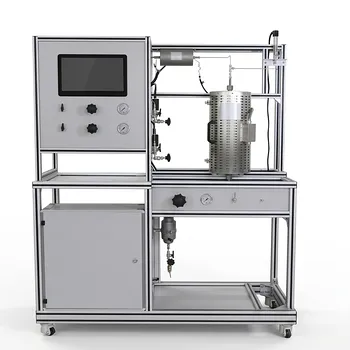
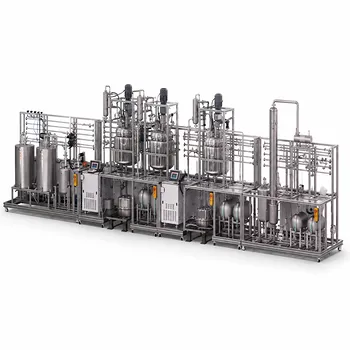
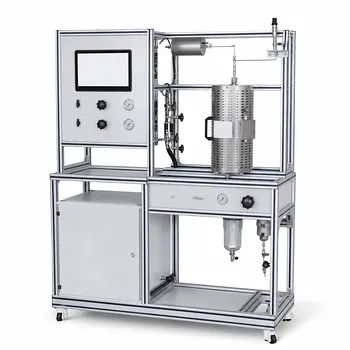
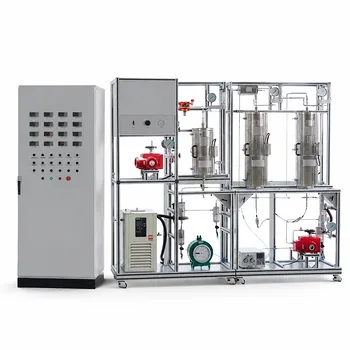
Looking to design or upgrade your department's process systems? LABPARK provides state-of-the-art Educational and Vocational Unit Operations Pilot Plants in chemical engineering, bioprocess & biotech, and environmental & water treatment. We help universities, research institutes, and enterprises bridge the gap between classroom theory and industrial reality with safe, robust, and highly instructive equipment.
Ready to elevate your research and teaching capabilities? Contact LABPARK today to discuss your customized pilot plant requirements!
Related Products
- Ethyl Acetate Synthesis Unit Operations Pilot Plant for Practical Training
- Methanol Synthesis and Catalyst Performance Evaluation Educational Unit Operations Pilot Plant
- Natural Product Extraction Unit Operations Training Pilot Plant
- Carbon Dioxide Hydrogen Methanol Synthesis Educational Unit Operations Pilot Plant
- Aspirin API Synthesis Unit Operations Training Pilot Plant
People Also Ask
- How do pilot plants demonstrate esterification? Visualizing Chemical Engineering Equilibrium
- Why is the chemical plant startup schedule crucial? De-risk scale-up with pilot plants.
- When to transition from PID to adaptive control in pilot plants? Key process indicators.
- Why Use PTFE & Hastelloy in Chemical Pilot Plants? Prevent Corrosion & Ensure Safety
- Why Compare Predicted and Experimental Excess Enthalpy? Key to Accurate Pilot Plant Scale-up