Immediate chemical behavior is the dividing line. Sodium aluminate is preferred over aluminum sulfate when the treatment goal demands no increase in sulfate content and no decrease in alkalinity. While both compounds deliver the active aluminum needed for coagulation, sodium aluminate hydrolyzes to form the same aluminum hydroxide floc while releasing hydroxyl ions (OH⁻) and adding no sulfate. In contrast, aluminum sulfate (alum) releases sulfate ions and consumes alkalinity by releasing acidic aluminum species. In boiler feedwater preparation, this difference is decisive for corrosion and scale control.
The core reason sodium aluminate wins in specific boiler feedwater scenarios is its ability to maintain or even bolster alkalinity without introducing corrosive sulfates. A well-designed pilot plant can confirm this advantage by directly comparing the effluent chemistry—pH, alkalinity, and sulfate levels—after treating the same raw water with each coagulant.
The Chemical Fork in the Road: Alkalinity and Sulfate
Both sodium aluminate and alum ultimately deliver trivalent aluminum ions that form a gelatinous aluminum hydroxide floc. This floc is the workhorse that sweeps up turbidity, color, and hardness precipitates. The critical difference lies in what each compound leaves behind in the water after hydrolysis.
How Alum Changes Water Chemistry
When aluminum sulfate is added to water, it dissociates and the aluminum ions undergo hydrolysis. This reaction consumes alkalinity and releases acidity in the form of hydrogen ions (H⁺). More importantly, every molecule of alum adds three sulfate ions (SO₄²⁻) to the water. In boiler water, sulfates concentrate under high heat and can form tenacious calcium sulfate scale, which is much harder to remove than carbonate scale. The simultaneous drop in alkalinity also reduces the water's buffering capacity, making pH control more difficult.
How Sodium Aluminate Changes Water Chemistry
Sodium aluminate (NaAlO₂) hydrolyzes along a fundamentally different path. The aluminum part still forms the desired Al(OH)₃ floc, but the byproduct is sodium hydroxide, which dissociates into sodium and hydroxyl ions. The hydroxyl ions increase the water's alkalinity and pH. Crucially, no sulfate is introduced. This makes sodium aluminate a dual-purpose chemical: it provides a coagulant while acting as an alkalinity supplement, directly countering the acid-forming tendencies of many industrial water sources.
The Boiler Feedwater Imperative
Boiler feedwater quality dictates equipment life. The chemical choice isn't just about clarifying water; it's about preventing two specific threats: corrosion and scale.
Sulfate-Induced Scaling and Corrosion
Under the extreme temperatures and pressures inside a boiler, sulfates can reach solubility limits rapidly. Calcium sulfate scale is a dense, hard deposit that drastically reduces heat transfer efficiency and can lead to tube overheating. At the same time, high sulfate concentrations, especially if pH control is lost, can accelerate pitting corrosion in boiler steel. Avoiding any chemical that intentionally adds sulfate is a fundamental risk-reduction strategy.
The Alkalinity Buffer as a Shield
Alkalinity—primarily in the form of carbonate and hydroxide—is the boiler water's primary defense against acid attack and a key player in forming a protective magnetite layer on steel surfaces. Any coagulant that depletes this buffer forces operators to add more caustic soda to compensate. Sodium aluminate preserves and even builds this shield, simplifying chemical control and reducing the risk of low-pH excursions that can cause catastrophic oxygen pitting.
Demonstrating the Difference in a Pilot Plant
A pilot-scale treatment system allows you to isolate the chemical effect from all other variables. The goal is not to judge which coagulant “works” in a general sense, but to quantify the specific chemical trade-offs for a given raw water source.
Pilot Plant Configuration
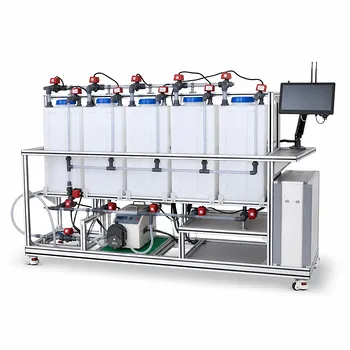
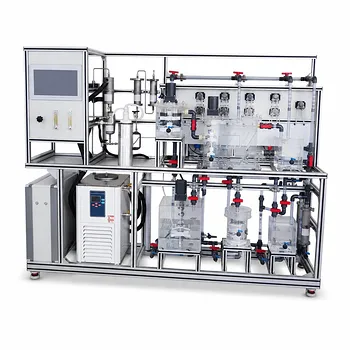
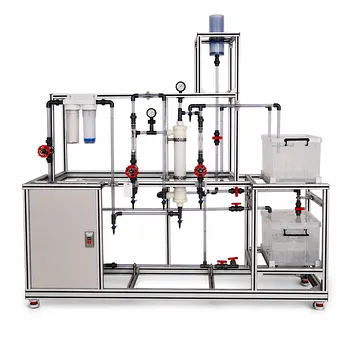
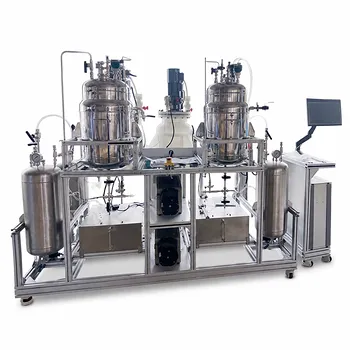
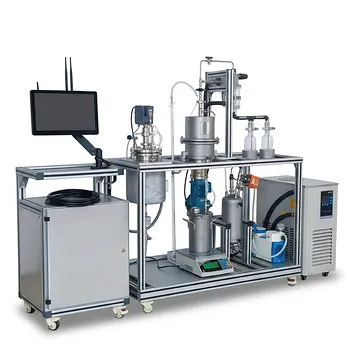
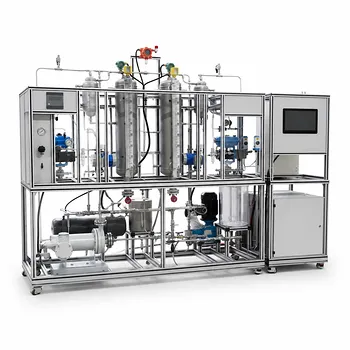
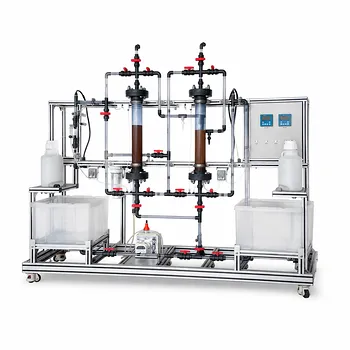
Set up two parallel treatment trains, each receiving the exact same raw water feed. Both trains should follow the typical boiler pretreatment sequence: chemical injection, rapid mixing, flocculation, and clarification or filtration. One train is dosed with aluminum sulfate at an optimized concentration; the other with sodium aluminate at an equivalent dose of active aluminum. All other parameters—flow rate, mixing energy, pH adjustment chemical type (if any)—must remain identical. The only deliberate variation is the primary coagulant.
Measuring the Decisive Parameters
Sample water from the effluent of each clarifier or filter. The demonstration hinges on three measurements:
- pH: The sodium aluminate effluent will consistently show a higher, more stable pH without external caustic addition. The alum effluent will typically be lower unless a separate alkalinity booster was used.
- Total Alkalinity (as CaCO₃): Titration will reveal that sodium aluminate has increased or maintained alkalinity, while alum has reduced it. For boiler feed, this alkalinity reserve is a direct indicator of protective capacity.
- Sulfate Concentration: Ion chromatography or a simple turbidimetric test will show a clear sulfate rise in the alum-treated stream and no increase in the sodium aluminate stream. This visually proves the prevention of sulfate loading.
Observing Coagulation Efficiency as a Control
While the chemical byproducts are the heart of the test, you must also verify that both coagulants are performing their primary job. Monitor turbidity and residual aluminum in both effluents. The sodium aluminate train should produce a floc that effectively reduces turbidity and hardness to acceptable levels, proving that the performance advantage in the treated water's chemistry does not come at the expense of clarity. If necessary, a small dose of a flocculant aid can be identical in both trains to keep the focus on the coagulant chemistry.
Understanding the Trade-offs
A purely chemical advantage does not make sodium aluminate the universal best choice. Objectivity demands a clear-eyed look at its limitations.
- Higher Chemical Cost per Pound of Aluminum: Sodium aluminate is typically more expensive than alum on a delivered basis. The decision must weigh the cost of the coagulant itself against the reduced need for caustic soda and the elimination of a sulfate removal process downstream.
- Sodium Loading: While sodium is far less problematic than sulfate in a boiler, it still contributes to the total dissolved solids (TDS). In very high-pressure boilers with strict TDS limits, even the sodium added by the aluminate must be accounted for in blowdown calculations.
- Handling and Storage: Sodium aluminate is a highly alkaline liquid or solid. It requires similar safety protocols to concentrated caustic soda, whereas dry alum, while acidic, is often handled differently. The existing chemical feed infrastructure may influence feasibility.
- Cold Water Performance: The hydrolysis and floc formation kinetics of sodium aluminate can be slightly different in very cold water. Pilot testing across seasonal temperature ranges is essential to confirm that turbidity removal targets are met year-round without excessive overfeeding.
Making the Right Choice for Your Goal
The pilot plant results give you a data-driven basis for a chemical selection that aligns with your specific boiler system constraints.
- If your primary focus is preventing sulfate scale in a high-pressure boiler: The pilot data will likely point decisively to sodium aluminate, especially if your raw water already contains significant sulfates.
- If your primary focus is maintaining alkalinity and minimizing caustic feed: The preserved or elevated alkalinity from sodium aluminate directly reduces your operational complexity and chemical pump maintenance.
- If your primary focus is minimizing treatment chemical cost for a low-to-medium pressure boiler: The pilot may show that alum performs acceptably, and the cost of supplementary caustic is low enough to justify avoiding the premium price of sodium aluminate, provided sulfate levels remain safe.
- If your primary focus is optimizing an existing lime-soda softening plant: The ability of the aluminum hydroxide floc to scavenge magnesium and calcium precipitates is the same regardless of source, but the alkalinity boost from sodium aluminate can help complete the softening reactions, potentially improving overall hardness removal.
The choice is never about good versus bad, but about which chemical’s fingerprint best matches the needs of your boiler and your budget. The pilot plant gives you the foresight to make that match with confidence.
Summary Table:
| Feature / Parameter | Sodium Aluminate ($NaAlO_2$) | Aluminum Sulfate (Alum) |
|---|---|---|
| Alkalinity Impact | Replaces/increases alkalinity (releases $OH^-$) | Depletes alkalinity (releases acid $H^+$) |
| Sulfate Loading | Zero sulfates added | Adds substantial sulfate ions ($SO_4^{2-}$) |
| Boiler Scale & Corrosion Risk | Low (prevents calcium sulfate scaling) | High (promotes hard scale & acid corrosion) |
| Chemical Role | Coagulant + alkalinity supplement | Coagulant only (requires caustic soda buffer) |
| Cost & Handling | Higher chemical cost; highly alkaline handling | Lower chemical cost; acidic handling |
Enhance Your Chemical Engineering Lab with LABPARK Pilot Plants
Ready to bring real-world industrial water chemistry to life? LABPARK designs and manufactures high-performance Educational and Vocational Unit Operations Pilot Plants in chemical engineering, bioprocess & biotech, and environmental & water treatment.
We help universities, research institutes, and enterprises bridge the gap between theory and practice with robust, scalable systems ideal for demonstrating complex processes like coagulation, scale prevention, and boiler feedwater treatment.
Contact LABPARK today to discuss your laboratory's training and research equipment needs!
Related Products
- Electrochemical Water Treatment Educational Unit Operations Pilot Plant
- Thermal Desorption Exhaust Gas and Tail Water Treatment Educational Pilot Plant
- Hot Filtration Educational Unit Operations Pilot Plant Laboratory System
- Multifunctional Membrane Separation Educational Pilot Plant with Ultrafiltration, Nanofiltration, Reverse Osmosis
- Ultrafiltration Membrane Separation Educational Pilot Plant
People Also Ask
- What design features do educational electrochemical pilot plants utilize to manage gas liberation and water loss?
- How can unit operations pilot plants show lead-acid concentration vs state of charge? Real-time monitoring guide.
- How do educational electrochemical pilot plants scale up electrolysis? Master industrial engineering.
- How to Estimate Sulfate in Water Treatment Pilot Plant Deposits: Gravimetric Guide
- How can foaming be managed during steam generation experiments in water treatment unit operations pilot plants? Tips