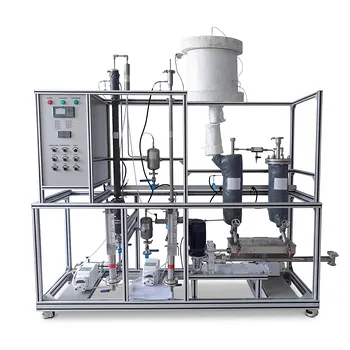
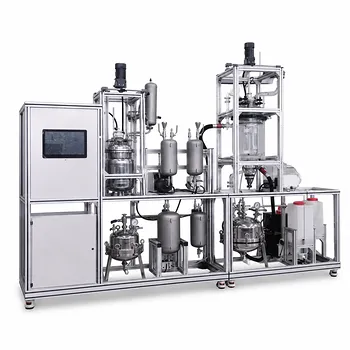
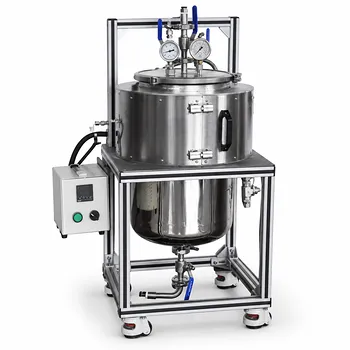
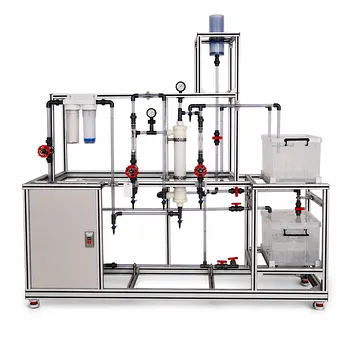
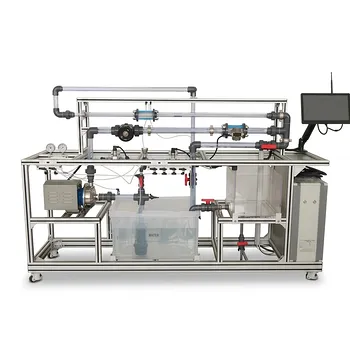
Extracting high-value biomolecules without leaving a trace of toxic solvent is no longer a laboratory fantasy—it’s a pilot-scale reality with supercritical fluid extraction.
An SFE pilot plant is critical for bioprocess research because it enables the clean, thermal‑damage‑free recovery of heat‑sensitive, high‑value bioactives (e.g., omega‑3 fatty acids, essential oils, decaffeinated products) while teaching engineers to master the pressure–temperature–density relationship that governs solvent power and selectivity. The key parameters that must be optimized during unit operations training are temperature and pressure (which dictate solvent density and solvating power), depressurization sequence (for efficient solute precipitation and energy recovery), and frequently co‑solvent composition (to tune polarity and selectivity for target compounds).
An SFE pilot plant turns thermodynamic principles into a hands‑on learning platform. Mastering the pressure–temperature–density interplay unlocks selective, residue‑free extraction of delicate bioactives. The core operational levers are precise supercritical condition control, depressurization energy management, and co‑solvent integration.
The Critical Role of SFE Pilot Plants in Bioprocess Research
Supercritical fluid extraction is more than an alternative extraction method—it addresses the exact pain points of bioprocess development: thermal degradation, toxic solvent carry‑over, and slow mass transfer. A pilot‑scale unit lets researchers bridge the gap between benchtop curiosity and industrial reality.
Preserving Heat‑Sensitive Bioactives
Many high‑value bioproducts—such as unsaturated omega‑3s (EPA/DHA), natural antioxidants, and delicate flavor compounds—degrade at moderate temperatures.
Because supercritical CO₂ works at a low critical temperature of only 31 °C, the extraction can proceed without ever reaching temperatures that would destroy these molecules.
Engineers learn to keep the entire process in a thermally gentle window, directly protecting product integrity during scale‑up.
Enabling Residue‑Free, Green Chemistry
Liquid organic solvents inevitably leave traces that require costly purification and raise regulatory hurdles for food‑ and pharma‑grade products.
A supercritical fluid pilot plant demonstrates that CO₂ is a tunable, self‑removing solvent: depressurize the stream, and the CO₂ flashes off as a clean gas, leaving zero chemical residue in the extract.
This single feature makes the plant indispensable for researching solvent‑free decaffeination, essential‑oil isolation, and pharmaceutical purification.
Accelerating Mass Transfer for Higher Yields
Conventional liquid–liquid extraction often suffers from slow diffusion and viscous boundary layers.
Supercritical CO₂ exhibits gas‑like diffusivity (on the order of 0.2 × 10⁻³ m²/s) combined with liquid‑like density (400–900 kg/m³), delivering mass transfer rates an order of magnitude faster.
The pilot plant provides a platform to quantify how this boosted kinetics translates into faster extraction cycles, higher throughput, and better overall yield without increasing solvent volume.
Parameters Engineers Must Optimize During Unit Operations Training
Hands‑on training on an SFE pilot plant revolves around manipulating a small set of highly interconnected variables. Understanding their impact turns a black‑box extraction into a rational separation design.
Temperature and Pressure: The Density Dictators
Above the critical point (31 °C, 73.8 bar for CO₂), subtle shifts in temperature or pressure cause dramatic swings in fluid density.
Because density is the primary driver of solvent power, engineers learn to map a target compound’s solubility curve and then lock in pressure and temperature that maximise its dissolution while leaving unwanted matrix components behind.
The pilot plant’s heat exchangers and high‑pressure pump become the student’s principal knobs for navigating this density–selectivity landscape.
Depressurization and Fractionation: Controlling Separation and Energy Use
Extraction is only half the picture; solute precipitation and solvent recovery complete the loop.
The depressurization sequence—the rate and stage number at which pressure is dropped—determines how selectively different fractions can be collected and how much energy is wasted in recompression.
Training on a pilot plant ingrains the practice of designing multi‑stage depressurization to minimise energy consumption while isolating target compounds at their highest purity.
Co‑solvent Composition: Tuning Selectivity for Polar Compounds
Pure supercritical CO₂ is non‑polar, making it an excellent match for lipids and essential oils but a poor solvent for more polar bioactives.
Adding a small percentage of a food‑grade co‑solvent (e.g., ethanol) adjusts the polarity and hydrogen‑bonding capacity of the fluid without sacrificing the residue‑free advantage.
During unit ops training, engineers vary co‑solvent concentration and observe the direct effect on extraction yield for compounds like polyphenols, alkaloids, or pharmaceutically active glycosides.
Flow Rate and Extraction Kinetics
Solvent‑to‑feed ratio and residence time dictate how close the extraction approaches equilibrium within a fixed bed.
A pilot plant lets researchers measure dynamic extraction curves under different CO₂ flow rates, teaching the interplay between throughput and completeness.
This directly informs the design of counter‑current or multi‑stage extraction schemes that can be scaled up with confidence.
Understanding the Trade‑offs
No separation technology is a universal panacea, and an SFE pilot plant makes the inherent trade‑offs tangible early in the development cycle.
- High capital and operating pressure – The 73+ bar working pressure demands robust, expensive vessels and compressors, making SFE less attractive for low‑margin bulk commodities. Pilot‑scale testing helps justify the investment by demonstrating added value in product purity or bioactivity.
- Energy and thermal management – Re‑compressing CO₂ after depressurization consumes energy; without well‑designed heat integration, the overall process can be less energy‑efficient than traditional distillation. Training focuses on identifying the sweet spot that balances yield against recompression costs.
- Selectivity versus solubility – Raising pressure increases density and dissolves more overall solute, but often reduces selectivity for the target compound. The pilot plant teaches engineers to navigate this conflict by combining pressure, temperature, and co‑solvent adjustments to hit the desired purity–recovery profile.
- Bed channelling and static effects – At pilot scale, non‑uniform packing or moisture can create preferential flow paths that sabotage extraction efficiency. Hands‑on problem‑solving with real biomass feedstocks reveals these practical pitfalls and how to mitigate them through proper packing and pre‑treatment.
Making the Right Choice for Your Research Goal
The SFE pilot plant is a tool, not a goal. Your specific research objective determines which parameters deserve the most attention.
- If your primary focus is stabilising highly heat‑labile compounds (e.g., EPA/DHA, live‑enzyme‑containing extracts): Keep extraction temperature at the minimum allowed by the critical point and prioritise the pressure that delivers adequate solubility without thermal stress.
- If your primary focus is achieving absolute solvent‑free purity for food or pharma: Relegate temperature–pressure mapping to the background and invest training time in optimising the multi‑stage depressurisation sequence that guarantees zero carry‑over.
- If your primary focus is fast screening of extraction conditions for a new natural product: Use the pilot plant’s flexibility to co‑vary pressure, temperature, and co‑solvent flow rates, building a rapid solubility‑profile matrix that identifies the most promising process window.
- If your primary focus is process energy efficiency and scale‑up readiness: Concentrate on thermal integration of the depressurisation–recompression loop and on flow‑rate optimisation that minimises specific energy consumption per kilogram of extract.
By turning the abstract principles of supercritical fluid thermodynamics into a tangible, measurable experience, the SFE pilot plant transforms researchers into confident process designers who know exactly which lever to pull to extract maximum value—cleanly, gently, and efficiently.
Summary Table:
| Parameter | Role in Extraction | Key Optimization Goal |
|---|---|---|
| Temperature & Pressure | Dictates solvent density & solvating power | Maximize solute solubility while protecting heat-sensitive bioactives. |
| Depressurization | Controls solute precipitation & separation | Maximize purity via multi-stage fractionation and minimize energy use. |
| Co-solvent (e.g., Ethanol) | Adjusts polarity & hydrogen-bonding capacity | Enable extraction of polar bioactives without leaving toxic residues. |
| Flow Rate | Dictates residence time & mass transfer kinetics | Balance throughput and extraction efficiency for reliable scale-up. |
Empower Your Research and Training with LABPARK
Are you looking to bridge the gap between laboratory theory and industrial practice? LABPARK provides premium Educational and Vocational Unit Operations Pilot Plants across chemical engineering, bioprocess & biotech, and environmental & water treatment. Tailored for universities, research institutes, and enterprises, our advanced pilot plants—including Supercritical Fluid Extraction (SFE) systems—enable hands-on mastery of complex process parameters.
Take your training and research to the next level. Contact LABPARK today to discover how we can customize the perfect pilot plant solution for your institution!
Related Products
- Supercritical High-Gravity Flash Evaporation Educational Unit Operations Pilot Plant
- Steam Methane Reforming Hydrogen Production and Purification Educational Pilot Plant
- Multi-Functional Special Distillation Educational Pilot Plant
- Comprehensive Liquid-Liquid Extraction Pilot Plant for Engineering Education
- Gallium and Indium Selective Extraction Educational Pilot Plant
People Also Ask
- How is the heat transfer area calculated for an evaporation unit operations pilot plant during experimental design? Guide
- How to select educational evaporator pilot plants for thermal & scaling solutions? Complete Guide
- What is the practical significance of Kb in pilot plant evaporation? Master process design.
- How do flash calculations relate to flash evaporation pilot plants? Bridge Theory and Practice
- Vacuum vs. Atmospheric Evaporation: Key Pilot Plant Trade-Offs to Evaluate