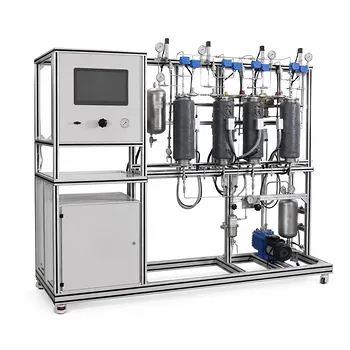
Condensation is the silent failure mode that can ruin a pilot plant run.
Dew point and relative humidity calculations are far more than textbook definitions—they are the critical control parameters that determine whether your process succeeds or fails. They allow operators to prevent destructive condensation, maintain the thermodynamic driving force for drying, and execute the material and energy balances needed for scale‑up. In a pilot plant, ignoring these numbers can lead to caked product, corroded exhaust ducts, and data that simply cannot be trusted.
Dew point tells you exactly how low a temperature you can tolerate before moisture turns back into liquid, while relative humidity tells you how much more moisture the air can accept. Together they form the essential control levers that keep a drying or environmental pilot plant stable, efficient, and ready to produce scale‑up‑worthy results.
The Physics of Moisture in Gas Streams
To understand why these calculations matter, you first need to see what dew point and relative humidity actually describe in a flowing, moisture‑laden gas.
Dew Point: The Condensation Threshold
The dew point is the temperature at which a vapor‑gas mixture becomes saturated and condensation begins. It is the exact point where the air can hold no more water, no matter how much humidity it already carries.
In a pilot plant, you can determine the dew point by cooling a process gas until the first microscopic droplet appears, or by calculating it from the system pressure and the absolute humidity using the saturation vapor pressure equation. This single number defines a hard floor for any surface temperature inside the drying chamber, ductwork, or downstream equipment.
Relative Humidity: The Capacity Gauge
Relative humidity indicates how close the air is to its full moisture‑carrying capacity at a given temperature. Air at 50% relative humidity still has half of its potential water‑holding ability unused.
That unused capacity is the fundamental reason drying works—it is the “open headroom” that lets the gas accept more vapor from the wet product. The lower the relative humidity, the higher that capacity, and the more aggressively the air can pull moisture away.
Why Condensation Must Be Avoided at All Costs
The dew point matters because crossing it triggers a cascade of undesirable events that directly compromise process integrity.
Product Degradation and Process Failure
If any surface inside the pilot plant drops below the dew point, water vapor instantly condenses back onto the product, the column walls, or the baghouse fabric. A drying run that took hours can be ruined in seconds.
Condensation on the product leads to caking, re‑wetting, and inconsistent moisture profiles. For heat‑sensitive materials, it can initiate unwanted reactions or spoilage that invalidate the entire experimental batch.
Equipment Damage and Safety Hazards
Condensate doesn’t only damage the product. It causes corrosion in metal ducts, clogs filter bags, and can create slip hazards or mold growth in environmental chambers.
In a pilot plant designed for long‑term testing, repeated condensation events accelerate wear and generate unreliable performance data, making it impossible to separate process variables from equipment failure.
The Driving Force Behind Drying
Condensation prevention is a defensive strategy. The offensive side—making drying actually happen—is controlled by relative humidity and its effect on the water vapor partial pressure gradient.
Vapor Pressure Differential and the Role of Relative Humidity
The essential driving force for convective drying is the difference between the partial pressure of water vapor at the wet material’s surface and the partial pressure of water vapor in the drying gas.
A lower relative humidity directly translates to a lower partial pressure in the gas stream, which widens this differential. The wider the gap, the faster moisture leaves the product. As soon as the air becomes saturated (100% relative humidity), the driving force drops to zero and drying stops, regardless of how hot the air is.
Maintaining Superheat for Stable Operation
To keep the process reliably away from saturation, operators manage the degree of superheat—the margin between the process temperature and the dew point.
By adjusting thermal inputs and gas flow rates, you can set a consistent superheat that prevents local cold spots, guarantees the air’s moisture‑carrying ability, and keeps the drying rate predictable. This is the active control that turns a theoretical understanding of dew point into a stable, repeatable operation.
Material and Energy Balances: The Quantitative Backbone
Pilot plants exist to gather data for commercial design. Dew point and relative humidity aren’t just safety limits—they’re the numbers you need to solve the equations that size the full‑scale equipment.
Calculating Air Flow and Heat Input
In a convective drying pilot plant, the humid air stream acts as both heat carrier (supplying the latent heat of vaporization) and moisture carrier (removing the evaporated water).
To perform a reliable material balance, you must know the inlet and outlet humidity ratios—values derived from relative humidity and temperature. These allow you to calculate the exact mass flow rate of dry air required to remove a targeted amount of water from the wet feed, and the heat input needed in the preheater.
Optimizing Energy Efficiency in Real Time
Continuous monitoring of dew point and relative humidity enables real‑time energy optimization. If the outlet air still shows low relative humidity, you may be over‑ventilating and wasting heat.
Conversely, if the outlet air approaches saturation, energy may be used efficiently, but you risk condensation in the exhaust duct. Balancing these observations lets you tune the process to the sweet spot where energy use is minimized without crossing the condensation threshold.
Understanding the Trade‑offs
No single operating point satisfies every goal. A pilot plant operator must constantly balance competing priorities, and dew point and relative humidity lie at the center of those decisions.
Higher Temperatures vs. Product Sensitivity
Raising the air temperature lowers the relative humidity and increases the driving force, speeding up drying. But many materials cannot tolerate high heat—they degrade, shrink, or undergo unwanted chemical changes.
You must work within the temperature limits of the product while still maintaining enough superheat to keep the dew point safely below the process temperature. That often means accepting a slower drying rate to avoid ruining the product.
Energy Cost vs. Drying Speed
You can drive the dew point very low by using extremely dry air, but that demands large amounts of energy for dehumidification or high fresh‑air intake rates.
In a thermally integrated pilot plant, every extra degree of superheat or additional percentage point of dryness comes with a real cost. The skill lies in identifying the minimum viable value that delivers the required product quality and cycle time without inflating the utility bill.
How to Apply This in Your Pilot Plant
The right approach depends on what you are trying to achieve with your run. Use dew point and relative humidity as your direct control readout, and let your primary objective guide your setpoints.
- If your primary focus is protecting a heat‑sensitive product: Keep the process temperature as low as the product will allow, and then set the air humidity low enough to maintain a dew point at least 5‑10°C below that temperature. The goal is safety margin, not peak speed.
- If your primary focus is maximizing throughput and drying rate: Push the air temperature as high as the product tolerates and the relative humidity as low as feasible to create the steepest vapor pressure gradient. Continuously monitor exhaust humidity to know when the drying curve flattens.
- If your primary focus is generating accurate scale‑up data: Instrument the air path to calculate real‑time material and energy balances. Use the dew point at the chamber inlet and outlet to verify the actual water removal rate, and never allow the exhaust temperature to approach the dew point—that guarantees condensation‑free data and a clean energy balance.
The moment you treat dew point and relative humidity as variable control knobs rather than fixed attributes of the air, you gain command over your pilot plant’s performance and the quality of the engineering data it produces.
Summary Table:
| Parameter | Definition | Critical Role in Pilot Plants | Key Control Strategy |
|---|---|---|---|
| Dew Point | Saturation temperature where condensation begins | Hard floor for surface temp; prevents caking & corrosion | Maintain superheat margin (5-10°C above dew point) |
| Relative Humidity | Ratio of current vapor pressure to saturation pressure | Determines the thermodynamic driving force for drying | Adjust air flow and thermal input to balance speed & energy |
Optimize Your Drying and Environmental Unit Operations with LABPARK
Achieving precise control over complex parameters like dew point and relative humidity is critical for generating reliable scale-up data. LABPARK provides advanced Educational and Vocational Unit Operations Pilot Plants in chemical engineering, bioprocess & biotech, and environmental & water treatment for universities, research institutes, and enterprises.
Our systems are built with high-precision instrumentation to help you prevent process failures, protect heat-sensitive materials, and optimize energy efficiency.
Ready to elevate your research and training capabilities? Contact our expert team today to find the perfect pilot plant solution for your lab!
Related Products
- Multi-Functional Drying Educational Unit Operations Pilot Plant
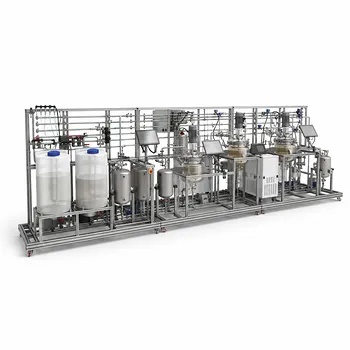
- Multi-Reactor Educational Pilot Plant for Reaction Engineering Unit Operations
- Solid Waste Pyrolysis and Refining Educational Pilot Plant for Unit Operations
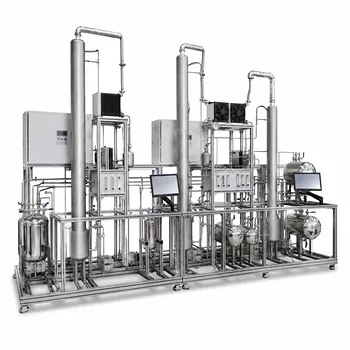
- Multi-Modal Distillation Unit Operations Training Pilot Plant
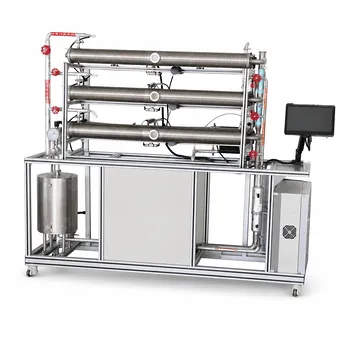
- Three-Tube Heat Transfer Educational Pilot Plant for Unit Operations Training
People Also Ask
- Why Use PTFE & Hastelloy in Chemical Pilot Plants? Prevent Corrosion & Ensure Safety
- How do deviations in estimating latent heat impact pilot plant thermal systems? Avoid hardware mis-sizing.
- Why is the chemical plant startup schedule crucial? De-risk scale-up with pilot plants.
- How to study gasification in pilot plants? Compare exit gas composition & efficiency
- When to transition from PID to adaptive control in pilot plants? Key process indicators.