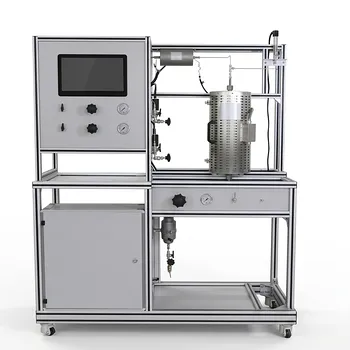
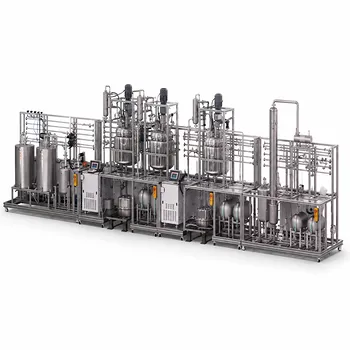
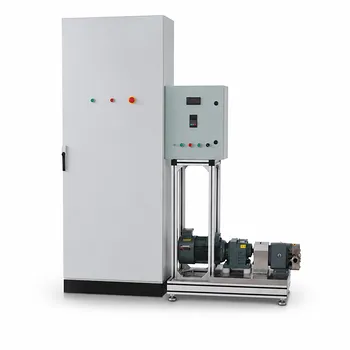
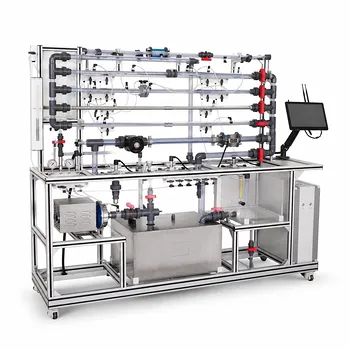
The technical evaluation of a supplier's proposal for a vocational pilot plant must begin by looking past the glossy cover page and into the fundamental process control and safety specifications. Your primary goal is to validate that the proposed technology description, equipment selections, and material specifications directly address your specific training fluids and required unit operations. The proposal must convincingly demonstrate not just what the equipment is, but how it will safely and effectively allow students to observe and control core chemical engineering principles, and the key lies in the technical details the supplier provides about raw material requirements, product grade capabilities, and the specific reactor or separation device recommendations.
Procuring an effective vocational pilot plant is not a simple equipment purchase; it's a rigorous engineering validation process. The supplier's proposal must prove that the system is designed for the specific hazards of your lab, integrates with your existing utility infrastructure, and prioritizes durable, chemically compatible construction over superficial features. A proposal that fails to detail safety relief systems, precise utility consumption, and materials of construction should be disqualified immediately.
Deconstructing the Supplier's Technical Narrative
The proposal's description of the technology and raw material specifications is the starting point, but you must push beyond generic statements. You need to validate the "how" and the "why" behind every component.
Validating the Process Flow and Equipment Utilization
The supplier must map their proposed equipment directly onto the core stages of an industrial chemical process: raw material preparation, reaction, separation, purification, and waste treatment. Look for a proposal that explains how students will balance capacity across these different steps and implement continuous automated control.
A high-quality technical proposal will not offer isolated units. It will present an integrated system that simulates real-world operational constraints, forcing students to optimize conversion rates and manage recycle streams. The configuration must be flexible enough to teach these principles without requiring a complete system redesign for every experiment.
Scrutinizing the Core Equipment Recommendations
The primary reference correctly identifies that the proposal must outline critical equipment like fluid handling devices and heat exchangers. However, a superior proposal will specify the type, not just the category. For pumps, does it propose a positive displacement pump for viscous fluids or a centrifugal pump? For heat exchangers, is it shell-and-tube or plate-and-frame, and why?
The rationale is the most critical part. It signals whether the supplier has thought deeply about your curriculum. The proposal should link equipment selection to the achievement of specific educational outcomes and operational stability across a range of process conditions.
Verifying Safety as a Non-Negotiable Specification
A technical proposal’s discussion of safety is more revealing than any performance metric. This isn't about a generic safety paragraph; it's about component-level hazard mitigation.
Demanding Design Validation for Hazardous Systems
A trustworthy supplier will move from general process hazard analysis methodologies to specific design features. The proposal must detail how joint connections, gaskets, pump seals, and sight glasses are designed to prevent leaks, especially in systems with frequent thermal expansion.
A major red flag is the absence of documentation on heat transfer system safety. If the pilot plant uses thermal oil or any fluid operating near its flashpoint, the proposal must specify the inclusion of robust safety relief systems. The supplier must demonstrate that a comprehensive process safety evaluation, incorporating data on thermal hazards and off-gassing characteristics, was a primary design input, not an afterthought.
The Absolute Requirement for Certified Over-Pressure Protection
Pressure ratings must be evaluated with zero tolerance for ambiguity. If a system operates under pressure, the proposal must list specific pressure ratings for every vessel and line. More importantly, it must specify the type, set pressure, and certification of pressure relief devices—valves and burst discs. This is a fundamental litmus test of the system's design integrity and the supplier's technical credibility, not a topic for negotiation.
Ensuring Long-Term Integrity Through Material Selection
The laboratory environment and the chemicals you will use dictate a non-negotiable set of material requirements. A proposal’s material choices reveal whether it's engineered for a decade of service or just the warranty period.
Matching Construction Materials to Chemical Compatibility
The proposal must explicitly state the materials of construction for all wetted parts and justify them against your stated experimental chemicals. While carbon steel might be economical for basic, non-corrosive training fluids, its use must be justified if that is your only use case.
For any experiment involving corrosive chemistry, even at a small scale, 304 or 316 stainless steel is the only technically sound recommendation. The proposal should detail how this choice prevents rust and ensures structural integrity, especially in humid lab environments that accelerate the degradation of inferior materials.
Specifying Integrity at Critical Interfaces
Look for a detailed breakdown of sealing and gasket materials at every joint, sight glass, and pump interface. The supplier must show that they have selected these materials for both chemical compatibility and resilience under thermal cycling. High-integrity sealing materials are a critical line of defense against the primary hazard of leaks, and their specification in a proposal demonstrates a mature, safety-first engineering approach.
Aligning the System with Your Lab’s Hidden Architecture
The most technically brilliant pilot plant is useless if it cannot be integrated into your building. A professional proposal will proactively address this critical dependency.
Demanding a Precise Utility Consumption Profile
The proposal must go beyond a simple power requirement. It must contain a detailed, tabulated estimation of all utility consumption: electricity (with voltage and phase), cooling water (with required flow rate, pressure, and temperature delta), any required process air, and steam requirements. This specification is not for the supplier’s convenience; it is for your facilities team to pre-validate the installation and prevent operational failure on day one. A proposal lacking this data is fundamentally incomplete.
Planning for Waste Streams and Ventilation from the Start
A responsible technical proposal will address the entire lifecycle of the experiment. It must directly confront how the system’s liquid effluents will be safely collected and treated and how any hazardous vapors will be contained or ventilated. This must align with your local environmental and regulatory compliance standards. The proposal’s stance on waste treatment and safe drainage is a direct measure of its suitability for a teaching environment.
Critically Evaluating Instrumentation and Control
An analyzer’s specification sheet means nothing without the context of the process. The proposal must demonstrate a clear, defensible link between the process need and the instrument chosen.
Connecting the Analyzer to the Process Condition
The supplier must detail, for every key sensor, how its technical specifications match your specific process conditions. They should explain whether the measurement is quantitative or qualitative, define the required speed, accuracy, and precision, and state precisely how the instrument handles the physical state of your process material—be it a slurry, a viscous fluid, or a toxic gas. Proposals that list sensor brands without this engineering justification should be challenged.
Separating Educational Necessity from Cosmetic Complexity
A strong proposal will help you distinguish 'nice-to-have' features from specifications essential for demonstrating process control. The goal of a vocational plant is to visualize principles and teach control. The supplier should justify each instrument loop by explaining the fundamental chemical engineering principle it illuminates, such as mass balance, energy balance, or reaction kinetics. This ensures the system is a true pedagogical tool, not just a display of advanced, unserviceable sensors.
Understanding the Trade-offs
Every technical choice in a proposal involves a trade-off. A trustworthy supplier will make these explicit rather than hiding them.
The Frugality Trap with Materials of Construction
Specifying carbon steel for non-corrosive training fluids is economical but creates a latent risk. A change in curriculum to even mildly acidic compounds will destroy a carbon steel system. Pressing a supplier on the specific grade and schedule of stainless steel will increase capital cost but directly buys decades of curriculum flexibility and safety margin.
Maintenance Complexity as a Hidden Cost
The technical complexity of the pilot plant must match the expertise of your lab instructors. A highly sophisticated system with advanced automated control and delicate analyzers offers immense educational value but demands a high level of skill to maintain and troubleshoot. Proposals that do not address the "labor and expertise" requirements, or that lack a clear plan for supplier support and spare parts proximity, are trading short-term budget wins for long-term operational headaches. The risk is not the purchase; it is the downtime.
Making the Right Choice for Your Goal
Your evaluation of the technical proposal must be ruthlessly tied back to your lab's core mission. The same feature can be a strength or a weakness.
-
If your primary focus is maximizing student safety and minimizing institutional risk: Prioritize the proposal with the most comprehensive and verifiable documentation of hazard containment, certified pressure relief, and leak prevention strategies. Material selection must be unassailable.
-
If your primary focus is curriculum breadth and long-term research capability: Reject any proposal that does not specify 304/316 stainless steel and a flexible control system. The design must demonstrate how it can be reconfigured for multiple unit operations without compromising its structural integrity.
-
If your primary focus is seamless installation and operational reliability: The decision hinges on the detail in the utility consumption profile and the documented performance history at commercial or pilot scale. A supplier's proximity and spare parts support plan are not ancillary benefits; they are core specifications that ensure uptime.
Select a supplier whose technical proposal doesn't just answer your questions but predicts the problems you haven't yet considered, securing the safety and education of your students for the next decade.```
Summary Table:
| Evaluation Area | Key Specifications to Verify | Educational & Safety Goal |
|---|---|---|
| Safety & Pressure | Certified relief devices, leak-proof seals, hazard mitigation | Ensure student safety and hazard containment |
| Materials (MOC) | 304/316 Stainless Steel, chemical-compatible gaskets | Long-term durability and corrosion resistance |
| Utility Profiles | Detailed consumption data (electricity, water, steam, air) | Validate facility integration before installation |
| Control Systems | Process-matched sensors, pedagogical control loops | Facilitate clear demonstration of engineering principles |
Secure Your Lab's Future with LABPARK
Ensure your procurement meets the highest safety, compliance, and academic standards. LABPARK designs and manufactures high-quality Educational and Vocational Unit Operations Pilot Plants in chemical engineering, bioprocess & biotech, and environmental & water treatment.
Specially tailored for universities, research institutes, and enterprises, our systems prioritize process safety, rugged construction, and clear pedagogical outcomes. Don't compromise on engineering quality—contact our technical team today to review your project requirements!
Related Products
- Multi-Reactor Educational Pilot Plant for Reaction Engineering Unit Operations
- Natural Product Extraction Unit Operations Training Pilot Plant
- Multi-Modal Distillation Unit Operations Training Pilot Plant
- Multi Pump Fluid Transport Process Piping Unit Operations Training Pilot Plant
- Bio-fermentation Ethanol Production Practical Training Unit Operations Pilot Plant
People Also Ask
- How do educational unit operations pilot plants address safety and waste management when scaling up?
- How do educational unit operations pilot plants bridge theory and design? Bridge the Engineering Gap
- Why Compare Predicted and Experimental Excess Enthalpy? Key to Accurate Pilot Plant Scale-up
- How to study gasification in pilot plants? Compare exit gas composition & efficiency
- Why Use PTFE & Hastelloy in Chemical Pilot Plants? Prevent Corrosion & Ensure Safety