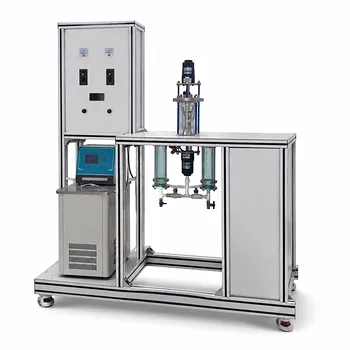
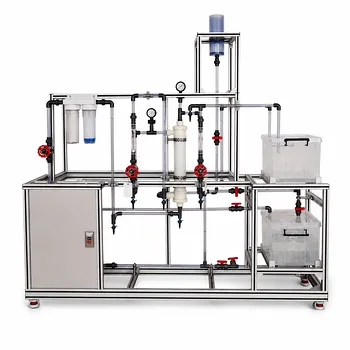
The four non-negotiable design pillars for a safe polymer microencapsulation pilot plant are precise heat management for viscous alginate solutions, dedicated acid vapor ventilation for chitosan dissolution, an adjustable droplet-formation system with controlled height, and streamlined product-washing infrastructure.
These core considerations address the immediate physical and chemical hazards of chitosan-alginate bead production. However, designing a truly effective educational pilot plant requires integrating these with broader control-system safety barriers, rigorous student training protocols, and—where necessary—cGMP-compliant documentation to turn a simple benchtop procedure into a safe, repeatable, and industry-relevant learning experience.
The central takeaway: A safe educational microencapsulation pilot plant is not just a scaled-up dripping rig—it is a fully engineered system that manages thermal, chemical, and operational risks through engineered controls (ventilation, agitation, interlocks), administrative controls (training, PPE, pre-lab verification), and design foresight that prevents splashing, contamination, and runaway reactions from the very first student run.
Managing the Material Challenges: Heat, Viscosity, and Corrosive Vapors
Why Sodium Alginate Demands Active Agitation
Sodium alginate solutions are inherently highly viscous. When heated without agitation, they develop localized hot spots near the vessel wall.
This leads to product burning, gel degradation, and a dangerous risk of liquid boiling over. The design must therefore couple every heating unit—whether a stirred tank or a jacketed vessel—with continuous, reliable mechanical agitation to ensure uniform temperature distribution.
Capturing Acidic Vapors at the Source
Chitosan dissolution requires solvents like acetic acid, which release corrosive and irritating vapors. A standard fume hood is insufficient if the dissolving station is integrated into a larger pilot-plant skid.
The workstation must incorporate local exhaust ventilation (slot hood or canopy) that captures vapors directly at the mixing vessel. This protects students from inhalation exposure and prevents acidic condensation from corroding nearby instrumentation.
Engineering the Encapsulation Process for Safety and Consistency
Controlling Droplet Trajectory and Splash
A dripping apparatus without height control is a splash hazard. The primary design requirement is an adjustable-height mechanism that allows the dispensing needle to be set precisely between 5 and 12 cm above the receiving bath.
This prevents the droplet from breaking apart on impact, eliminates splashing of the crosslinking solution, and keeps students’ hands at a safe distance from sharp needles. Needle guards or retractable mounts add an extra layer of cut protection.
Designing for Efficient Washing and Contamination Control
The harvested microcapsules carry unreacted surface monomers that can interfere with release studies or—in future pharmaceutical contexts—cause adverse effects.
The plant layout must include a dedicated washing station with filtered, flowing rinse water and gentle agitation. This station should be positioned to allow gravity-assisted transfer, minimizing manual handling and reducing the risk of cross-contamination between batches.
Building the Safety System: Alarms, Interlocks, and Redundancy
Fail-Safe Instrumentation and Alarms
Educational pilot plants must mirror industrial safety logic. Every critical variable—temperature, pressure, level, and flow—requires high and low alarms that trigger visible and audible alerts.
For the heating system, a high-temperature trip and a low-agitation interlock are essential. If the stirrer stops, the heat source must automatically cut off to prevent the overheating scenario described earlier.
Remote Isolation and Emergency Shutdown
Students cannot be expected to manually close a valve during a thermal runaway or a hazardous vapor release. The control system must include remotely operable cut-off valves on steam, solvent, and nitrogen lines, all tied to a single emergency stop (E-stop) button.
This E-stop should trigger a pre-configured shutdown sequence that isolates energy sources, opens vent dampers fully, and places the system in a safe state. Backup power supplies, particularly for the control system and exhaust fans, ensure this sequence completes even during a mains failure.
Explosion-Proofing and Ventilation for Ancillary Processes
While chitosan-alginate encapsulation is aqueous-based, educational plants often share space with other polymer labs. Supplementary references highlight the need for explosion-proof design and nitrogen purging for processes like methyl methacrylate polymerization.
If the same pilot plant bay will ever host such exothermic free-radical reactions, the ventilation system must be rated for flammable and anesthetic monomer vapors, and the electrical hardware must meet intrinsic safety standards through properly selected safety barriers.
The Human Element: Training, PPE, and Pre-Lab Discipline
Moving Beyond On-the-Spot Instruction
A pilot plant is not a teaching lab benchtop. Before any student enters the facility, they must complete a formal safety education program, pass a written examination, and sign a safety commitment form.
They must also submit a pre-lab report that details the experiment’s chemical principles, step-by-step procedure, and identified hazards. This shifts the student’s mindset from passive recipient to active safety participant.
PPE and Emergency Familiarity
The minimum PPE for microencapsulation work includes chemical-resistant gloves (rated for acetic acid), splash goggles, and a lab coat. Tasks involving hot surfaces or needle adjustments may additionally require cut-resistant or heat-resistant gloves.
Before the first run, each student must physically locate all emergency resources: the master shutoff valves for water, electricity, and gas, as well as eyewash stations, emergency showers, fire extinguishers, and first-aid kits.
Understanding the Trade-offs
Educational Flexibility vs. Industrial Rigidity
A plant designed exclusively for chitosan-alginate work can be simple and low-cost. But a multi-purpose bioprocess pilot plant that also accommodates future continuous culture or polymerization experiments demands greater hardware redundancy and more complex interlocks.
This raises cost and requires more extensive student training. The design team must decide early whether to optimize for a single teaching module or for a shared research facility, accepting that the latter’s cGMP compliance burden may slow down turn-over between student groups.
Operator Independence vs. Supervisory Control
Giving students full manual control over the dripping height, agitation speed, and bath temperature teaches process understanding. However, it also introduces operator error risks.
A fully automated sequence with pre-set recipe parameters is safer but diminishes the educational value of learning to adjust process variables. The most effective educational plants implement a “guided manual” mode where students make real-time adjustments within software-enforced safe limits, and the system overrides them only when a predefined safety boundary is breached.
Making the Right Choice for Your Educational Goal
Your final design will depend heavily on what you aim to teach and the regulatory context of your products. Use these goal-driven recommendations to select the right depth of integration.
- If your primary focus is fundamental lab safety training: Prioritize local exhaust ventilation, adjustable needle mounts with guarding, and the simple heat-off/low-agitation interlock, then build the entire student experience around the pre-lab report and emergency facility walkthrough.
- If your primary focus is scalable bioprocess engineering: Integrate the pilot plant into a Distributed Control System (DCS) with redundant I/O, remote cut-off valves, and a single E-stop, then write standard operating procedures that mimic industrial batch records.
- If your primary focus is pharmaceutical or food-grade product development: Involve cGMP quality experts from the conceptual design phase, validate the washing station with documented cleaning protocols, and ensure every material change (e.g., a new alginate supplier) triggers a formal management-of-change safety review.
A well-designed educational microencapsulation plant transforms a simple polymer droplet into a powerful lesson in risk management, process control, and responsible engineering practice.
Summary Table:
Key Safety and Design Controls for Microencapsulation Pilot Plants
| Design Area | Hazard & Operational Risk | Recommended Engineering Control |
|---|---|---|
| Material Prep | Viscous hot spots & corrosive acetic acid vapors | Active mechanical agitation & local exhaust ventilation |
| Droplet Formation | Splashing crosslinker & needle cut risks | Adjustable-height mechanism (5–12 cm) & needle guards |
| Process Safety | Thermal runaway & operational deviations | Fail-safe high-temp interlocks & remote E-stop isolation |
| Product Washing | Monomer carryover & manual handling risks | Gravity-assisted batch transfer & dedicated wash station |
Elevate Your Educational & Research Labs Safely with LABPARK
At LABPARK, we understand that practical, hands-on training must never compromise on safety. We provide industry-standard Educational and Vocational Unit Operations Pilot Plants in chemical engineering, bioprocess & biotech, and environmental & water treatment for universities, research institutes, and enterprises.
Our pilot plants are meticulously engineered with robust fail-safes, precise process controls, and flexible configurations to let your students master complex bioprocess operations—like polymer microencapsulation—in a completely safe and controlled environment.
Ready to bring safe, scalable bioprocess training to your institution? Contact LABPARK today to discuss your custom pilot plant needs!
Related Products
- Polymerization Granulation and Pellet Processing Educational Unit Operations Pilot Plant
- Continuous Batch Extractive Distillation Educational Pilot Plant
- Multi-Functional Special Distillation Educational Pilot Plant
- High-Gravity Emulsification and Mass Transfer Educational Pilot Plant
- Liquid-Liquid Mass Transfer Coefficient Determination Educational Pilot Plant
People Also Ask
- How to configure a polymerization pilot plant for molecular weight control? Key Setup Guide
- How do educational unit operations pilot plants bridge theory and industrial process development? Hands-On Learning
- How do educational unit operations pilot plants address safety and waste management when scaling up?
- How do unit operation requirements differ between traditional chemical processes and bioprocesses? Build Better Pilot Plant Curricula
- How do educational unit operations pilot plants bridge theory and design? Bridge the Engineering Gap