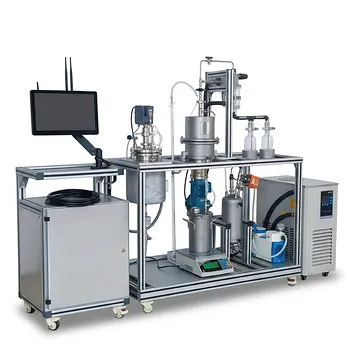
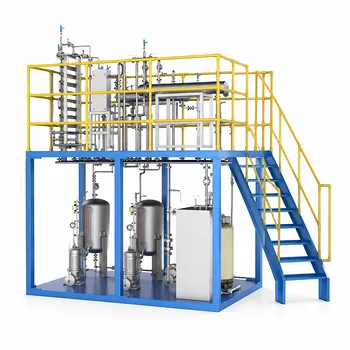
The safe handling of combustible dusts in a pilot plant hinges on a disciplined, standards-based strategy. You must combine dust containment and ignition source control with explosion protection, guided by standards such as NFPA 654, NFPA 68, and BS EN 1127. The core approach is to prevent a dust cloud from forming, eliminate any spark or hot surface that could ignite it, and then add mitigation measures like venting or suppression as a safety net.
A layered safety philosophy—fuel control, oxidant reduction, ignition elimination, and consequence mitigation—is non‑negotiable. Standards like NFPA 654 define this hierarchy, but the specific engineering choices depend entirely on the dust’s explosibility characteristics and the unit operation. Effectiveness in a pilot plant comes from integrating these measures into every solids‑handling process, from drying and milling to pneumatic conveying.
Understanding the Hazard: Why Pilot Plants Are Different
The Explosion Pentagon
A dust explosion requires five elements: combustible dust (fuel), oxygen (oxidant), an ignition source, dispersion of the dust into a cloud, and confinement. Remove any one, and the explosion cannot happen.
Pilot plants are especially vulnerable because they frequently change materials, often handle fine powders at the bench‑to‑process interface, and may have less rigorous housekeeping than full‑scale production. A primary explosion can loft settled dust into the air, triggering a far more destructive secondary explosion throughout the room.
Material Properties Drive Every Decision
You cannot design safety measures without knowing the dust’s Minimum Ignition Energy (MIE), explosion severity (KSt, Pmax), and minimum explosible concentration. These data define the electrical classification, grounding requirements, and whether a dust is even ignitable by a static spark. Pilot plant staff must test a representative sample of every new material before it enters the facility.
Key Standards That Define the Safety Framework
NFPA 654: The Overarching Code for Combustible Dusts
NFPA 654 provides the general requirements for preventing fire and dust explosions in manufacturing and processing facilities. It mandates a dust hazard analysis (DHA), housekeeping to limit dust layer thicknesses, and engineered controls like deflagration venting or suppression for equipment that cannot be made inherently safe. For pilot plants, the DHA must be reviewed whenever a new campaign changes the dust hazard profile.
NFPA 68: Sizing Deflagration Venting
When you cannot eliminate the risk of an internal explosion, NFPA 68 tells you how to design vents that safely relieve the pressure. Pilot‑scale vessels often need vent panels or doors that open at a low pressure, but for indoor equipment you must also use flameless vents or duct the vent to a safe outdoor location.
BS EN 1127 and ATEX/DSEAR Requirements
BS EN 1127 and the ATEX directives (in the EU) require a systematic ignition hazard assessment. They classify zones based on the likelihood of a dust cloud and then mandate equipment with an appropriate ATEX category. Even outside Europe, the zoning principle is fundamental: use it to select explosion‑proof motors, conveyors, and instrumentation.
Controlling the Dust Cloud: The First Line of Defence
Design for Containment and Minimal Accumulation
Dust‑tight equipment is the starting point. All transfer points, hoppers, and conveyors must be enclosed and sealed. Flex connections should be conductive and grounded. Smooth interior surfaces and sloped hoppers prevent material hang‑ups that later become dust sources.
Use local exhaust ventilation (LEV) at every open‑point dust source—bag dump stations, mill inlets, and dryer discharge. The LEV must capture the dust before it becomes airborne in the room. In addition, operating the process under negative pressure ensures that any leak draws air in rather than emitting a dust cloud.
Wet Processing and Inherent Dust Suppression
Whenever the chemistry allows, choose wet processing methods. Spraying a mist or using a liquid carrier suppresses dust at the source. For dry conveying, cyclone separators and bag filters upstream of exhaust systems capture fine particulates and return them to the process, dramatically reducing emissions.
Housekeeping: The Non‑Negotiable Daily Routine
Housekeeping is a safety control, not afterthought. Standards specify maximum allowable dust layer thicknesses (often as low as 0.8 mm for organic dusts). Use explosion‑proof vacuums with conductive hoses—never compressed air blow‑downs, which create a suspended dust cloud.
Eliminating Ignition Sources: The Electrical and Mechanical Checklist
Grounding and Bonding for Static Control
All conductive equipment must be grounded with a resistance to earth of less than 1 megaohm. This includes pipes, flexible ducts, metal containers, and even operators through static‑dissipative footwear and flooring. For non‑conductive equipment, inerting becomes essential because you cannot dissipate charge accumulation.
Electrical Classification Based on MIE
The plant’s electrical area classification (Class II, Division 1/2, or ATEX Zone 20/21/22) must match the dust’s MIE. For extremely sensitive dusts with MIE below 3 mJ, even standard grounding may be insufficient; choose inert gas blanketing or deep‑zoning with intrinsically safe circuits. All motors, lights, and instrumentation inside zoned areas must carry the correct certification.
Mechanical Ignition Risks Are Often Overlooked
Rotating equipment such as mills, blowers, and rotary valves can generate sparks from metal‑to‑metal contact or hot surfaces from friction. Mitigate these by cooling jackets on mills, gas cooling loops for pneumatic conveyors, and magnetic separators or metal detectors upstream of size‑reduction equipment.
Engineering the Oxidant Out: Inerting Strategies
Closed‑Loop Inert Gas Systems
For unit operations with a high inherent ignition risk—dryers, mills, and dust collectors—an inert gas atmosphere (typically nitrogen or argon) replaces air. A closed‑loop circulation system, as required for open‑air drying prohibition, continuously recycles the inert gas through a filter, a condenser (for solvent recovery), and a reheater. Oxygen monitoring with automatic shutdown keeps the O₂ level below the limiting oxygen concentration (LOC).
Makeup Gas and Pressure Balancing
When solids are discharged, a makeup gas system compensates for the volume lost, maintaining the inert blanket. The system design must prevent air ingress during normal operation and emergency shutdowns. Pilot plants often use a simplified version of full‑scale closed‑loop inerting, but the fail‑safe injection and O₂ interlocks remain mandatory.
Explosion Protection: When Prevention Is Not Enough
Deflagration Venting Vs. Suppression
Where the explosion hazard cannot be fully eliminated, NFPA 68 vents reduce the pressure to a safe level. For indoor pilot‑scale vessels, flameless venting quenches the flame front while releasing pressure. An alternative is explosion suppression—fast‑acting canisters that inject suppressant within milliseconds of ignition. This is often cost‑effective for pilot plants with many small vessels.
Isolation Prevents Propagation
A dust explosion must be prevented from travelling through ducts to other equipment. Chemical isolation barriers or mechanical rotary valves certified for explosion isolation cut off the flame and pressure wave. In pilot plants with multiple interconnected process units, this isolation is as important as the vent itself.
Understanding the Trade‑offs and Common Pitfalls
Inerting Adds Complexity and Cost
Nitrogen consumption can become substantial if the system is not tightly sealed. Continuous oxygen monitoring sensors need regular calibration. A leak could create an asphyxiation hazard in the laboratory if the ventilation is inadequate. You must weigh this complexity against the process flexibility inerting provides—it may be the only way to run highly sensitive dusts.
Indoor Venting Requirements Can Clash with Layout
Flameless vents are larger than conventional vents and may still produce a pressure wave. The pilot plant’s physical space may dictate equipment placement that makes vent ducting to the outdoors difficult. Early collaboration between process engineers and facility architects is essential to avoid costly redesigns.
Over‑Reliance on PPE Is a Dangerous Substitution
Respiratory protection and flame‑retardant clothing do not prevent explosions. A dust explosion is too fast and violent to rely on personal protective equipment as a primary defense. The only valid approach is to stop the explosion from happening or contain it with engineered systems.
Making Safety the Foundation of Your Pilot Plant
Your choice of precautions must be driven by the specific materials you handle and the unit operations you run.
- If your primary focus is a multi‑purpose pilot plant with frequent material changes: Invest in a strong dust‑hazard analysis process, a flexible zoning philosophy, and mobile inerting/ventilation solutions that can be reconfigured quickly.
- If your primary focus is milling or size reduction of high‑energy dusts: Always operate under a closed‑loop inert atmosphere with integrated cooling and gas purification. Never rely solely on grounding for ignition control.
- If your primary focus is drying and solvent recovery: Design a fully closed inert‑gas circulation loop with oxygen interlocks, and train operators in the makeup gas procedure and response to seal‑loss alarms.
- If your primary focus is conveying and packaging: Prioritize dust‑tight transfer points, LEV with cyclones, and rigorous housekeeping schedules—these are your most cost‑effective safeguards against a catastrophic secondary explosion.
Safety in a pilot plant is not a static checklist but a living system that evolves with every new campaign. When standards, engineering controls, and a questioning mindset work together, you transform a significant hazard into a well‑managed risk.
Summary Table:
| Safety Dimension | Key Standards & Controls | Practical Application |
|---|---|---|
| Containment | NFPA 654, LEV | Dust-tight enclosures, negative pressure, and HEPA vacuums. |
| Ignition Control | BS EN 1127, ATEX | Equipment grounding (<1 MΩ), static-dissipative materials. |
| Inerting | Closed-loop N2 Systems | Nitrogen blanketing with continuous O2 monitoring. |
| Mitigation | NFPA 68 | Flameless venting and explosion isolation barriers. |
Build Safe, Compliant, and High-Performing Pilot Plants with LABPARK
Ensuring safety in pilot-scale solids handling and unit operations requires precise engineering and strict compliance. At LABPARK, we specialize in providing state-of-the-art Educational and Vocational Unit Operations Pilot Plants across chemical engineering, bioprocess & biotech, and environmental & water treatment.
We empower universities, research institutes, and enterprises to conduct research and train personnel safely with robust, engineered safety controls.
Ready to design a safe and efficient pilot facility? Contact us today to collaborate with our engineering team on your custom pilot plant requirements!
Related Products
- Fixed-Bed Chemical Reaction and Gas Dust Tar Removal Unit Operations Pilot Plant
- Solid Waste Pyrolysis and Refining Educational Pilot Plant for Unit Operations
- Gas-Solid Heterogeneous Separation Demonstration Educational Unit Operations Pilot Plant
- Hot Filtration Educational Unit Operations Pilot Plant Laboratory System
- Educational Unit Operations Pilot Plant for Intraparticle Diffusion Effective Factor Measurement
People Also Ask
- When to transition from PID to adaptive control in pilot plants? Key process indicators.
- How do deviations in estimating latent heat impact pilot plant thermal systems? Avoid hardware mis-sizing.
- Why Compare Predicted and Experimental Excess Enthalpy? Key to Accurate Pilot Plant Scale-up
- How to study gasification in pilot plants? Compare exit gas composition & efficiency
- Why Use PTFE & Hastelloy in Chemical Pilot Plants? Prevent Corrosion & Ensure Safety