Seeding is the single most powerful technique for imposing control over an otherwise chaotic crystallization process. By introducing a known mass of carefully sized seed crystals into a supersaturated solution, you can decisively bypass the unpredictable primary nucleation step. This action directly dictates the final crystal size distribution, polymorphic form, and product purity by forcing crystal growth to be the dominant mechanism.
While crystallization without seeds is a gamble on spontaneous nucleation, seeding transforms the process into a predictable engineering discipline. Its true significance lies in decoupling nucleation from growth, granting operators direct command over particle size and process scalability. The pilot plant is the essential tool for translating this command from theory into a robust, empirical manufacturing recipe.
The Core Significance of Seeding in Crystallization
Seeding is not merely an operational step; it is a fundamental control strategy that addresses the inherent variability of particle formation.
Bypassing the Unpredictability of Primary Nucleation
Unseeded crystallization relies on primary nucleation, which demands high supersaturation levels beyond the metastable limit. This event is inherently stochastic and difficult to reproduce across different scales, often leading to an uncontrolled burst of fine particles.
Seeding strategically introduces the desired crystal surface at a lower, manageable supersaturation level within the metastable zone. This eliminates the lag time and unpredictability of spontaneous nucleation. The seeds act as a template, immediately providing a surface for the dissolved solute to attach to, establishing growth as the sole pathway for desupersaturation from the very beginning of the batch.
Driving Growth Mechanisms Through Desupersaturation Control
The primary function of a seed is to consume supersaturation at a controlled rate. High supersaturation is the thermodynamic driving force that would otherwise trigger secondary nucleation, creating unwanted new crystals and a bimodal size distribution.
By precisely balancing the seed surface area with the rate of supersaturation generation, you keep the system in the growth-only domain. The crystal mass increases, and the seed size distribution shifts uniformly, but no new particles form. This direct control over the desupersaturation profile is the kinetic lever that defines the final product's mean size and uniformity, preventing the physical entrapment of impurities or solvent within the rapidly growing lattice.
Ensuring Process Robustness and Scalability
A process that depends on a spontaneous nucleation event is notoriously difficult to scale up. The nucleation kinetics you observe in a beaker are strongly influenced by surface-to-volume ratios and heat transfer rates, which change dramatically in a larger vessel.
A seeded process, where the initial crystal surface is defined by you, is inherently scalable. It shifts the critical parameter from an unpredictable nucleation rate to a controllable growth rate. Reproducibility becomes a function of recipe adherence—adding the same seed loading and size—rather than hoping for a consistent nucleation event in a new environment.
Optimizing Seed Loading and Size with Pilot-Scale Equipment
Understanding why to seed is only the starting point. The pilot plant is the engineering proving ground where you determine how much and what size to seed, transforming these variables from academic concepts into optimized process parameters.
Decoding the Seed Response Curve
Optimization is an empirical exercise, and the pilot plant allows you to construct a precise seed response curve. This involves running a series of identical batch crystallizations while systematically varying a single seed variable.
You generate the curve by performing runs at different seed loadings, defined as the mass of seed crystals to the expected mass of product solids. For each loading, you measure the final product's mean crystal size. Plotting these results will reveal a powerful inverse relationship: increasing seed loading, which provides more total surface area, results in a smaller final crystal size, as the same solute mass is distributed across more seeds. This map is your primary guide for hitting a target particle size specification.
The Critical Pilot Plant Variables for Seed Optimization
A crystallization unit operations pilot plant provides the precise control loop needed to make these response curves meaningful and translatable to manufacturing.
Controlling the Supersaturation Engine The pilot plant’s ability to precisely control the cooling jacket and, if applicable, the vacuum pressure for evaporation, is paramount. This controls the thermal load, which dictates the rate at which supersaturation is generated. A slow, linear cooling ramp ensures that the supersaturation level never breaks through the metastable limit, keeping the seed growth the sole consumer of the generated driving force.
Agitation: From Suspension to Attrition Power per unit volume (P/V) is the most common scaling criterion for agitation. An impeller speed that is too low fails to suspend the seeds, leading to a non-uniform slurry and uncontrolled growth. Speed that is too high, particularly at the pilot scale where tip speeds can be high, generates crystal-crystal and crystal-impeller collisions, causing secondary nucleation and severe attrition. The pilot plant allows you to find the operational window that achieves full solids suspension—just beyond the minimum suspension speed (Njs)—while minimizing this destructive breakage.
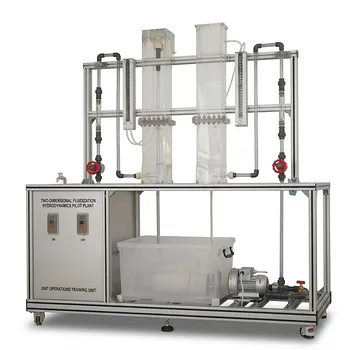
Circulation Flow Rates for Fluidized Suspension In forced-circulation crystallizers, the pump speed dictates the fluidization of the crystal bed. This controls the solid-liquid balance and the suspension classification. By adjusting circulation, you directly influence the relative velocity between the crystals and the mother liquor, which modulates the mass transfer rate and, consequently, the growth kinetics. This level of control is essential for achieving both targeted size and high purity.
The Inherent Trade-offs and Pitfalls
A disciplined approach to seeding requires acknowledging its limitations and the potential for things to go wrong. True optimization involves navigating these trade-offs.
The Non-Trivial Art of Seed Preparation
The optimization you perform on a pilot plant is only as good as the seeds you use. Seed quality is a critical variable. If your seeds are agglomerated, poorly sieved, or from a different polymorph, you will create a product that is out of specification, regardless of your loading calculations. Wet-milling or isolation just before use is often required to provide a de-agglomerated, high-surface-area slurry, adding an upstream processing step that must be strictly controlled.
The Risk of Secondary Nucleation
Even with seeding, secondary nucleation is an ever-present threat. This occurs when microscopic fragments, shaved off the parent crystals by collisions, act as new, uncontrolled nuclei. This directly counteracts the goal of seed loading by creating a bimodal distribution of large, grown seeds and small, newly nucleated fines.
The operating window you define in the pilot plant must explicitly balance the agitation intensity needed for suspension against the gentleness needed to prevent this catastrophic attrition. A secondary nucleation event invalidates your entire seed response model.
Balancing Suspension Against Attrition
This trade-off is felt most acutely during scale-up. Scaling rules that maintain constant tip speed may preserve the hydrodynamic environment for attrition but often fail to keep solids suspended in a larger vessel, leading to a settled mass of crystals and an inhomogeneous product. Conversely, scaling for constant P/V can achieve good suspension but, if calculated incorrectly, may introduce a higher local energy dissipation rate near the impeller, increasing attrition. The pilot plant is the crucible where you find the optimal compromise between these conflicting scale-up criteria.
How to Apply This to Your Project
Optimization is a goal-driven exercise. Your strategy for manipulating seed loading and pilot plant parameters must align with your final product objective.
After defining your goal, design your pilot-plant experiments to generate the specific seed-response curve you need.
- If your primary focus is to maximize mean crystal size: Generate a seed response curve at low seed loadings. Use a very fine seed size to provide minimal initial surface area and couple this with a slow cooling rate to maintain low supersaturation, favoring growth of fewer crystals.
- If your primary focus is to achieve a tight, monomodal particle size distribution: Select a higher seed loading with a narrowly sieved seed fraction. Your pilot plant study must then focus on identifying the minimum agitation speed (Njs) needed for complete suspension, as this minimizes attrition-induced secondary nucleation and the resultant fines.
- If your primary focus is on ensuring first-time-right scale-up: Build a predictive model from pilot-plant experiments that correlate final particle size with the seed loading ratio and the proven window of agitation (P/V and tip speed) that balances suspension and attrition. Use this data envelope as your target, not a single data point.
- If your primary focus is on combating impurity incorporation: Use the pilot plant to study the interplay of a very slow cooling profile with a moderate seed loading. The goal is to demonstrate that crystal growth occurs so slowly and uniformly that impurities have time to diffuse away from the growing lattice, a kinetic effect you can prove empirically.
The crystallizer will always do exactly what thermodynamics and kinetics dictate. Through the strategic use of seeding and a pilot plant, you earn the authority to define those parameters, and with them, your product's destiny.
Summary Table:
| Optimization Goal | Seed Loading Strategy | Key Pilot Control Parameter |
|---|---|---|
| Maximize Crystal Size | Low loading (fine seeds) | Slow cooling rate (low supersaturation) |
| Tight Size Distribution | High loading (narrowly sieved) | Minimum agitation speed ($N_{js}$) to prevent attrition |
| Robust Scale-Up | Balanced loading | Verification of power/volume ($P/V$) and tip speed |
| Impurity Control | Moderate loading | Slow, uniform cooling profile for stable growth |
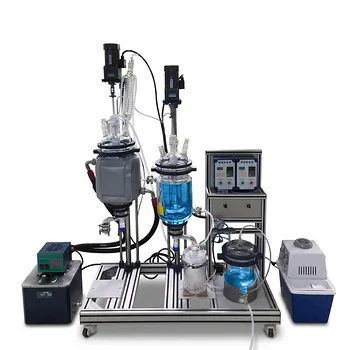
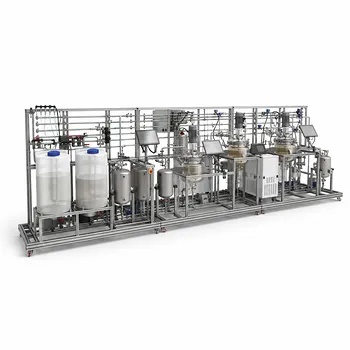
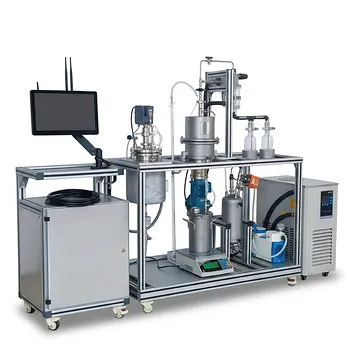
Ready to optimize your crystallization processes and achieve predictable scale-up? LABPARK provides state-of-the-art Educational and Vocational Unit Operations Pilot Plants in chemical engineering, bioprocess & biotech, and environmental & water treatment. Designed specifically for universities, research institutes, and enterprises, our pilot plants deliver the precise control over thermal load, fluidization, and agitation required to master seed loading and crystal growth.
Contact LABPARK today to find the perfect pilot plant solution for your lab!
Related Products
- Multi Functional Membrane Crystallization Educational Unit Operations Pilot Plant
- Potassium Salt Thermal Dissolution and Crystallization Separation Educational Unit Operations Pilot Plant
- Multi-Functional Special Distillation Educational Pilot Plant
- Two-Dimensional Fluidization Hydrodynamics Educational Pilot Plant for Unit Operations Training
- Multi-Modal Distillation Unit Operations Training Pilot Plant
People Also Ask
- Why is precise temperature control critical in crystallization pilot plants? Key to Scale-Up Success
- Control Crystallization Pilot Plant Secondary Nucleation: 4 Key Adjustments
- What key factors should be considered when configuring a crystallization unit operations pilot plant?
- What are the benefits of integrating online PAT tools like ATR-FTIR into crystallization unit operations pilot plants?
- How to use crystallization pilot plant agitation speed to identify diffusion vs reaction growth?