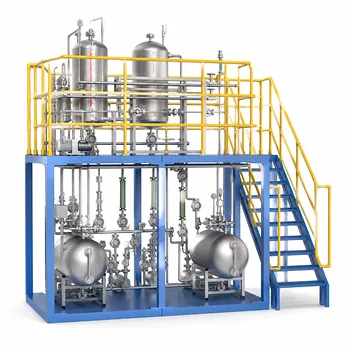
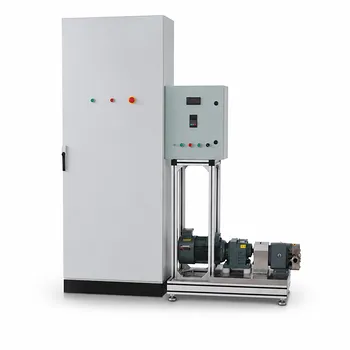
The technologies you cannot skip are inline spectroscopic sensors for real-time chemical concentration—primarily Raman, FTIR, and Near-Infrared (NIR) spectroscopy—combined with thermographic imaging for temperature mapping and redox-potential probes for automated control loops. These sensors, integrated into a modern process control system, turn a simple pilot plant into a living laboratory that teaches 21st‑century process analytical technology (PAT).
The real value of these technologies is not just measurement speed, but how they close the loop: you move from “take a sample, wait for the lab” to “see the reaction dynamics live and let the control system act on them immediately.” This transforms a training rig from a static demonstration into a platform for understanding transient behavior, model‑based control, and process safety.
The Crucial Inline Sensing Technologies for Reaction Monitoring
Traditional thermocouples and timed grab samples fail when you need to see inside a fast, temperature‑sensitive, or hazardous reaction. The following technologies bridge that gap, each providing a unique window into the process.
Thermographic Imaging: Seeing the Temperature Landscape
Even a small microreactor can develop hot spots that a single thermocouple would never catch. Infrared thermographic cameras map the entire temperature profile across a reactor surface in real time.
This is critical for student learning because it makes exothermic runaway behaviour visible and intuitive. Instead of a number on a screen, you see a thermal gradient develop, helping trainees connect heat transfer theory with immediate physical reality.
Vibrational Spectroscopy: Raman and FTIR
For direct, continuous chemical identification, no technique is more powerful in pilot‑plant education than Raman spectroscopy and Fourier‑Transform Infrared (FTIR) spectroscopy. Both work inline, probing the reaction mixture through an optical window without ever breaching the process.
- Raman spectroscopy is particularly valuable for aqueous‑phase reactions and for tracking reactant depletion and product formation in real time. Because water gives a weak Raman signal, it does not obscure the organic reactants and intermediates you care about most.
- FTIR excels at monitoring functional group changes, making it ideal for reactions like esterifications or polymerizations where carbonyl or hydroxyl bands shift dramatically.
Together, they show students that a reaction’s progress is not a black box—it is a live, quantifiable signal that can feed directly into a control strategy.
Redox‑Potential Sensors: The Gateway to Automated Feedback
Many important reactions—such as diazotizations or oxidations—depend on a delicate redox balance. Here, a redox‑potential electrode inserted directly into the flow stream becomes the primary sensor.
What makes this transformative in training is the ability to close the loop: the measured potential can be used as the process variable for a PID controller that adjusts a dosing pump speed. Students literally watch an algorithm maintain a reaction on a knife edge, learning both process chemistry and automation in one exercise.
Near‑Infrared (NIR) and PAT Integration for Model‑Based Control
While Raman and FTIR are unsurpassed for molecular detail, transmission NIR spectroscopy gives you instantaneous multicomponent composition data on flowing systems—such as the output of an extruder or a tubular reactor. When this continuous data stream is used to calculate a First Order Plus Dead Time (FOPDT) model, the pilot plant becomes a tool for teaching model‑based quality control.
Students can introduce step changes in feed composition, watch the dynamic response, estimate dead times and time constants, and then tune a controller accordingly. This single setup covers everything from basic statistics to advanced process dynamics.
The Supporting Cast: Control Systems and Data Infrastructure
Inline sensors generate value only when their signals are captured, visualized, and acted upon. The surrounding control architecture is just as crucial as the probes themselves.
Essential Peripheral Systems
To run a catalytic microreactor experiment safely and reproducibly, the training system must include:
- Mass flow controllers for gaseous reactants and bubbling systems that use a carrier gas (like argon) to deliver volatile liquids.
- Digital pressure sensors at the reactor inlet and outlet, permitting students to monitor pressure drops indicative of fouling, phase change, or blockage.
- Precision thermal blocks with resistive heaters and integrated thermocouples that maintain the reactor temperature to within a fraction of a degree.
These modules teach the fundamentals of process resilience: how to detect a developing problem before it becomes a safety incident.
Operator Interface and Data Trending
A well‑designed human‑machine interface (HMI) transforms raw data into understanding. The interface should include at least:
- A P&ID‑based flowchart screen that shows valve positions, pump status, and active fluid paths in real time, bridging theory and hardware.
- A trend screen with adjustable sampling intervals—from one second for fast dynamics to one hour for slow drifts—so that students can study transient startup behavior and process disturbances.
- A control group screen that groups PID loops together, displaying the process variable, setpoint, and manipulated variable side by side. This makes tuning exercises safe and immediate.
When all these screens are fed by inline sensors, the plant becomes a data‑rich teaching tool, not a closed black box.
Understanding the Trade‑offs and Practical Limitations
Inline spectroscopy is not a magic bullet. Each technique carries constraints you must plan for in an educational setting.
- Raman can suffer from fluorescence in certain samples, requiring a longer‑wavelength laser or a sample pre‑check to avoid a frustrating blank signal.
- FTIR requires short pathlengths (often less than 100 µm) in a flow cell, making it sensitive to particle blockages and requiring regular cleaning—an important hygiene lesson for students.
- Redox‑potential probes are specific to electrochemical reactions and provide no direct information on non‑ionic species; they must be paired with another sensor if you need full conversion data.
- Thermographic imaging is surface‑based. For a jacketed glass reactor, the wall temperature may mask the true bulk liquid temperature, so it must be calibrated and used in tandem with internal probes.
- NIR produces broad, overlapping bands that demand chemometric models. This introduces a learning curve—but it is exactly that complexity that makes it a gold‑standard PAT teaching tool.
Acknowledging these limitations in the curriculum is itself a valuable exercise in critical sensor selection and data interpretation.
Making the Right Choice for Your Educational Goals
The ideal sensor mix depends on what specifically you want to teach. Prioritize based on the learning outcomes.
- If your primary focus is reaction kinetics and concentration profiling: Start with Raman or FTIR spectroscopy. They give direct, molecular‑level proof of reactant consumption and product formation.
- If your primary focus is thermal safety and runaway prevention: Combine thermographic imaging with a fast‑response thermocouple and use that data to automatically cut off heating via the PLC.
- If your primary focus is automated process control and PAT: Integrate a redox‑potential sensor or an NIR spectrometer, feed the signal into a PID loop, and have students fit FOPDT models to predict system behaviour.
- If your primary focus is green chemistry and waste reduction: Use inline spectroscopic sensors (Raman or NIR) to eliminate manual sampling and solvent‑based analysis, and let the control system stop the reaction at exactly the right endpoint to minimize by‑products.
Ultimately, the most crucial technology is the one that lets your students see a dynamic, unstable process brought under control by their own decisions—closing the loop between measurement, model, and action. Choose the sensors that make that loop visible.
Summary Table:
| Technology | Primary Function | Key Educational Value |
|---|---|---|
| Thermographic Imaging | Maps reactor surface temperature profiles in real time | Visualizes exothermic runaway behavior and heat transfer |
| Raman & FTIR Spectroscopy | In-situ molecular identification and concentration tracking | Shows real-time reactant depletion without physical sampling |
| Redox-Potential Sensors | Monitors electrochemical balance in flow streams | Acts as the process variable for automated PID dosing loops |
| NIR Spectroscopy | Continuous multicomponent composition analysis | Provides data to teach model-based quality control (FOPDT) |
Bring Modern Process Analytical Technology (PAT) to Your Lab
Equip your students and researchers with hands-on experience in advanced reaction monitoring. LABPARK provides state-of-the-art Educational and Vocational Unit Operations Pilot Plants in chemical engineering, bioprocess & biotech, and environmental & water treatment.
Designed specifically for universities, research institutes, and enterprises, our training systems integrate crucial inline sensing and modern automation to bridge the gap between theory and industrial practice.
Ready to elevate your training curriculum? Contact LABPARK today to explore our customizable pilot plant solutions!
Related Products
- Multi-Modal Distillation Unit Operations Training Pilot Plant
- Natural Product Extraction Unit Operations Training Pilot Plant
- Multi Pump Fluid Transport Process Piping Unit Operations Training Pilot Plant
- Multi-Reactor Educational Pilot Plant for Reaction Engineering Unit Operations
- Ethyl Acetate Synthesis Unit Operations Pilot Plant for Practical Training
People Also Ask
- How can energy balance equations for condensers & reboilers be validated experimentally? Guide
- What are the primary reflux ratio control strategies? Master Distillation Unit Operations
- How can real-time carbon number prediction improve distillation pilot plants? Optimize control.
- Why is vacuum operation capability an essential feature for a distillation unit operations pilot plant? Unlock Efficiency
- How does catalyst water concentration affect distillation pilot plant design? Key separation train choices.