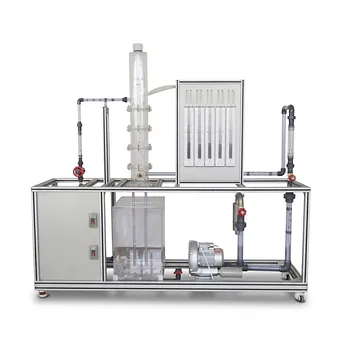
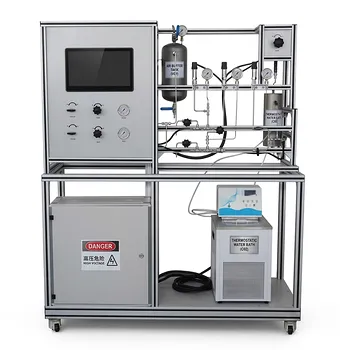
The safest educational pilot plant isn't one that never fails—it's one that fails predictably. You can integrate fault detection and diagnosis (FDD) by layering model-based residual generation, rule-based expert systems, and data-driven neural networks on top of fault-tolerant hardware like sensor redundancy and automatic interlocks. Together, these methods catch sensor drift, actuator faults, and process anomalies before a student's mistake becomes a safety incident.
While each FDD method alone can flag deviations, true operational safety in a teaching environment comes from blending a proactive design-phase approach (like FMEA) with real-time diagnostics—so you not only detect faults but also hardwire the plant to respond safely when they occur.
Understanding the Core FDD Methods for Student-Operated Plants
You need FDD that is robust to operator error, interpretable by learners, and responsive enough to prevent damage. The three primary categories meet different parts of that need.
Model-Based FDD: Residuals from a Digital Twin
A dynamic mathematical model of the pilot plant—say, a distillation column—runs in parallel with the actual process. Residuals are calculated by subtracting the model’s predicted sensor values from the real-time measurements.
When residuals exceed a threshold, a fault is flagged. This approach directly isolates faults in sensors, actuators, or the process itself, because each component leaves a distinct signature in the residual pattern.
For educational plants, model-based methods also serve a teaching purpose. Students can visualize how process physics deviates under fault conditions, reinforcing control theory. However, they demand accurate first-principles models and can struggle with unmodeled dynamics like fouling or ambient temperature swings.
Expert System-Based FDD: Rule-Based Reasoning
An expert system evaluates real-time parameters—pressure, flow, temperature—against a knowledge base of if–then rules. For example: If column pressure rises while reboiler duty is constant, then check the condenser coolant valve for partial closure.
No mathematical model is needed. This makes expert systems easy to retrofit onto an existing pilot plant and highly transparent—every alarm comes with a traceable logic chain. In a classroom, instructors can explain exactly why the system triggered.
The trade-off is maintenance: rule bases must be manually updated as equipment ages or modifications are made. They also struggle with novel faults that fall outside the pre-programmed logic.
Neural Network-Based FDD: Learning from Historical Data
Artificial neural networks (e.g., BP, RBF) are trained on historical operational data, including labeled fault examples like valve clogging, sensor drift, or pump degradation. They learn nonlinear relationships between sensor readings and fault states without explicit process equations.
Once trained, a neural network can recognize early signatures of a known fault in milliseconds. This makes them excellent at catching slow-developing failures that rule-based thresholds might miss until too late.
The downside for educational settings is the black-box nature: students can’t easily unpack why the network flagged a fault. There’s also a dependency on large, representative fault datasets—which may be scarce for custom pilot plants—and a risk of overfitting to the training conditions.
Hardening the Plant: Beyond Detection to Fault-Tolerant Design
FDD alone won’t guarantee safety if a single sensor failure can trigger a dangerous state. You must also build in fault tolerance at the hardware and control level.
- Sensor Redundancy: Voting logic (e.g., 2oo3) rejects faulty readings without tripping false alarms.
- Automatic Safety Interlocks: Hardwired logic that shuts off heat sources, closes emergency valves, or stops pumps when critical limits are breached—independent of the control system.
- Graceful Degradation: When a component fails, the plant transitions to a lower-capacity but stable mode rather than a complete shutdown, allowing students to witness controlled recovery.
Prevention Through Design: FMEA in the Early Phase
A complementary practice is to apply Failure Mode and Effects Analysis (FMEA) during the pilot plant design or modification stage.
A cross-disciplinary team—process engineers, chemists, control experts, safety officers—brainstorms failure modes for each unit operation. They rate Severity, Occurrence, and Detection on a standardized scale and calculate a Risk Priority Number (RPN).
Any scenario with an RPN above a critical threshold (often >100) forces a design change or updated operating procedure before students ever touch the plant. This upstream analysis prevents latent hazards, making downstream FDD less critical but still essential as a safety net.
Understanding the Trade-offs
Each approach carries consequences for implementation cost, interpretability, and long-term maintainability.
Accuracy vs. Transparency
Model-based and neural network methods achieve high diagnosis accuracy but often hide the reasoning. Expert systems are transparent but brittle when facing unanticipated scenarios.
Development Effort vs. Long-Term Flexibility
Model-based FDD demands substantial upfront effort to build and validate models, yet can be reused across student experiments. Rule-based systems are fast to set up but can become obsolete as the plant evolves unless a dedicated person maintains the rule base.
Data Dependence
Neural networks need historical data that includes representative faults—difficult to gather without deliberately introducing failures. For a new plant, you might have to rely on simulated data, which reduces real-world reliability.
Operational vs. Design Phase
Operational FDD methods (model, rule, neural) detect faults in real time. FMEA operates only in the design phase, preventing faults from existing in the first place but not catching unforeseen wear or misuse later. You need both.
Making the Right Choice for Your Goal
Your ideal mix depends on whether you prioritize student comprehension, deployment speed, or maximum protection.
- If your primary focus is teaching FDD concepts and process dynamics: Start with a model-based approach. Students can watch residuals evolve and link faults back to changes in mass and energy balances—making the abstract tangible.
- If your primary focus is fast deployment on an existing plant with limited historical data: Implement a rule-based expert system. It leverages instructor experience, delivers clear alarms, and doesn’t require a high-fidelity simulation.
- If your primary focus is catching subtle, developing failures before they create a safety incident: Add a neural network layer trained on a combination of real and simulated fault data. Use it to supplement rules, not replace them, always confirming alarms through an expert system’s logic.
- If your primary focus is maximum safety from day one: Run a structured FMEA during design to eliminate high-RPN hazards, then layer fault-tolerant hardware with at least two operational FDD methods. This defense-in-depth ensures that even if a student makes an unforeseen error, the plant protects itself.
Ultimately, an educational pilot plant transforms from a fragile teaching tool into a resilient learning platform when you integrate real-time diagnostics with design-phase foresight and hardware-level safeguards.
Summary Table:
| FDD Method | Key Strength | Main Limitation | Best For |
|---|---|---|---|
| Model-Based | High accuracy, physical insights | Requires precise mathematical models | Teaching process dynamics & control theory |
| Rule-Based | Easy to retrofit, highly transparent | High maintenance, ignores novel faults | Quick deployment on existing plants |
| Neural Network | Detects complex, slow-developing faults | "Black-box" nature, requires massive data | Catching subtle, non-linear anomalies |
Elevate Safety and Learning in Your Lab with LABPARK
Building a safe, reliable, and hands-on learning environment requires the right equipment and robust diagnostic integration. LABPARK provides state-of-the-art Educational and Vocational Unit Operations Pilot Plants in chemical engineering, bioprocess & biotech, and environmental & water treatment. Designed specifically for universities, research institutes, and enterprises, our systems support advanced FDD integration to teach students how to manage processes safely.
Ready to upgrade your engineering labs? Contact LABPARK today to discover our customizable pilot plant solutions!
Related Products
- Multi-Reactor Educational Pilot Plant for Reaction Engineering Unit Operations
- Multi-Functional Special Distillation Educational Pilot Plant
- Multi-Functional Membrane Separation Educational Pilot Plant for Unit Operations Lab
- Micro-Scale Gas-Solid Catalytic Reaction Educational Pilot Plant
- High-Gravity Emulsification and Mass Transfer Educational Pilot Plant
People Also Ask
- How do reactor pilot plants define QbD design space? Master chemical process scale-up.
- When configuring a reactor unit operations pilot plant for highly exothermic reactions, how to prevent thermal runaway?
- How do metal ion-catalyzed reaction mechanisms inform chemical engineering pilot plant design? From kinetics to scale-up
- What are the barriers to process intensification & how do pilot plants help?
- What role do educational pilot plants play in scaling green chemistry? Bridging the Lab-to-Industry Gap