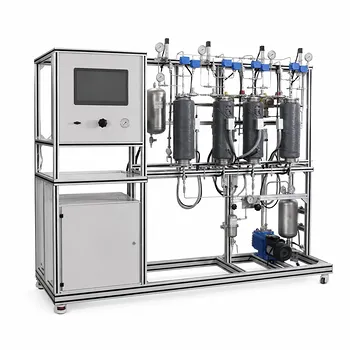
Choosing a drying unit operation pilot plant for educational labs means evaluating not just the dryer’s mechanics, but how its characteristics intersect with your teaching objectives and the materials students will handle. The primary factors are the material’s physical form and thermal sensitivity, the pedagogical aims—whether you need to illustrate drying kinetics or mimic continuous industrial processes—and the laboratory’s utility infrastructure. Safety, batch versus continuous operation, and the ability to control and observe the process all further narrow the field.
The optimal dryer for chemical engineering instruction is never a one-size-fits-all decision. It depends on a deliberate alignment of your curriculum goals with the material’s behavior, the safety envelope, and the real-world constraints of your lab. Understanding each dryer’s strengths and blind spots is what turns a piece of equipment into a learning platform.
Match the Dryer to the Educational Goal
The dryer must serve as a concrete teaching tool, not just a processing device. Each type reveals different unit operation principles.
Batch Tray Dryers Teach Drying Fundamentals
Tray dryers excel at demonstrating drying kinetics and drying rate curves. Students can easily weigh samples over time, plot moisture loss, and identify constant-rate and falling-rate periods. This makes them the gold standard for small-scale, hands-on experiments where the batch cycle is directly observed.
They are also forgiving with material types—fine powders, pastes, and high-value solids can all be processed in small trays. The downside is that tray drying is slow, labor-intensive, and not representative of high-capacity industrial drying, so it has limited value if your goal is to simulate a production line.
Fluidized Bed Dryers Reveal Transport Phenomena
Fluidized bed dryers put fluidization principles front and center. Students see how gas velocity transitions a packed bed into a bubbling fluid, and they learn that high heat and mass transfer rates cause drying to happen in minutes rather than hours.
These units are ideal for granular materials with particle sizes between 0.5 and 3 mm. Because the bed temperature is uniform and controllable, they provide a predictable environment for studying process dynamics. However, fluidization fails with very fine particles (<20 μm) that channel gas or with large particles (>8 mm) that require unwieldy gas velocities.
Continuous Rotary and Flash Dryers Bridge to Industry
Rotary dryers demonstrate high-throughput, continuous operation with free-flowing solids, making them the closest analogue to many bulk chemical processes. Students grapple with real-world challenges like non-uniform residence time distributions and dust generation.
Flash (pneumatic) dryers highlight the concept of simultaneous conveying and drying. With residence times as short as 0.5–5 seconds, they teach how heat-sensitive materials can be dried before they suffer thermal degradation. The trade-off is that fragile particles may break due to wall collisions, and the tall vertical setup requires significant headroom and high air flow.
Understand the Material’s Physical Nature
The material you plan to dry dictates which dryer designs are even feasible. A mismatch turns an experiment into a frustration.
Feed State Defines the Starting Point
Solutions and pumpable slurries cannot be charged into a tray or fluid bed dryer without some preconcentration. They demand spray, drum, or flash dryers where the feed is atomized or distributed as a continuous film.
Wet, free‑flowing solids (crystals, granules) are the natural feed for fluidized beds, rotary drums, and conveyor-type dryers. In contrast, sticky or pasty feeds may ball up in a rotary or fluidized bed unless blended with dried product to improve flowability.
Particle Size and Thermal Sensitivity Drive Selection
- Tray dryers: Handle a wide size range but are inherently slow; suitable for heat-sensitive items only if operated under vacuum with conductive heating.
- Fluidized beds: Best for particles roughly 0.03–6 mm. Outside this window, fluidization collapses or becomes prohibitively energy‑intensive.
- Flash dryers: Excel with fine, heat‑sensitive powders because of extremely short contact times. They are, however, unsuitable for fragile particles that attrite easily.
For materials that are both heat‑sensitive and fragile, you might need a vacuum tray dryer or a gentle tumble dryer, accepting that the teaching focus shifts away from high‑efficiency convection.
Balance Scale and Operational Mode
The choice of batch versus continuous operation is rarely about the size of the dryer alone; it’s about what you want students to learn.
Batch Mode for Deep Kinetic Analysis
Batch dryers (tray, fluidized‑bed when operated batchwise) allow precise control over drying time and easy extraction of samples. This makes them ideal for teaching drying‑rate curves, critical moisture content, and the influence of air temperature, humidity, and velocity. Students can pause, measure, and reflect—a luxury continuous systems do not afford.
Continuous Mode for Industrial Context
Continuous dryers (rotary, continuous fluid bed, pneumatic) force students to think in terms of steady‑state mass balances, residence time distributions, and product uniformity. They require reliable feed systems and produce a constant stream of dried material, mimicking real‑world production lines. The downside is that start‑up and shutdown are more complex, and troubleshooting instability can be challenging at a teaching scale.
Align with Laboratory Infrastructure and Utilities
Even the most elegant dryer design is worthless if the lab cannot power, ventilate, or cool it.
Electricity, Steam, and Air Supply
A fluidized bed or flash dryer needs substantial process air—blowers, compressors, and often heating elements. Rotary dryers may require steam for jacket or tube heating. Tray dryers can operate on simple electrical heating and natural convection but can also be upgraded to forced‑air or vacuum models that need cooling water and vacuum pumps. Verify that your electrical panels can handle the motor loads and that the facility’s voltage and phase match the equipment.
Drainage, Ventilation, and Safety
Dryers generate humid exhaust air that must be vented safely to prevent condensation in the lab and to avoid exceeding occupancy‑based humidity limits. If volatile solvents are present, the exhaust must be routed through an explosion-proof, filtered system. Dust control is a significant concern with rotary and flash dryers; you may need cyclone separators or baghouses, which add footprint and cost.
A common pitfall is ignoring the upstream step. Since thermal drying is energy-intensive, teaching pilot plants often incorporate a mechanical dewatering pre‑treatment (filter press, hydrocyclone) to concentrate the feed. This allows students to see the overall separation train and improves the dryer’s thermal efficiency.
Integrating Safety and Process Requirements
Safety is a prerequisite for any instructional unit, and dryer selection must account for both material hazards and operational risks.
Containment for Toxic or Potent Compounds
If your curriculum involves fine organic powders, APIs, or materials with exposure limits, an open tray dryer is unacceptable. Instead, choose a closed system such as a conical dryer, filter dryer, or a fully contained fluid bed dryer. These designs minimize operator contact and allow inert‑gas blanketing to reduce oxidation or explosion risk.
Shear Sensitivity and Mechanical Stresses
For materials that produce excessive dust or degrade under mechanical impact, a tumble dryer provides gentle, low‑shear movement. Highly agitated dryers (filter‑agitated, conical with an intensifier bar) can destroy particle integrity, which may be a valuable teaching point if particle attrition is the subject, but a liability if the goal is simple drying.
Understanding the Trade-offs
No dryer excels at everything. Recognizing the inherent trade-offs is critical for instructor decision‑making.
Speed Versus Material Uniformity
A flash dryer dries in seconds, but it can leave a wide moisture distribution and overheated fines. A tray dryer gives uniform final moisture, but at the cost of hours of processing time. Fluidized beds offer a middle ground—good uniformity and fast drying—unless the material segregates by size, causing uneven drying.
Energy Efficiency Versus Control
Continuous dryers can achieve much higher thermal efficiency than batch units, but batch dryers give you intimate control over every drying phase. If your teaching objective is to explore how changing temperature or air flow alters the drying curve, you may willingly sacrifice efficiency for flexibility.
Complexity Versus Educational Clarity
A fully instrumented continuous fluidized bed with air‑handling, feed auger, and dust collection is an engineering marvel. It can also overwhelm students who are still learning the basics. Sometimes a simple tray dryer with a fixed air speed and a timer is the better vehicle for teaching fundamental principles.
How to Choose the Right Dryer for Your Lab Curriculum
The selection process simplifies dramatically when you prioritize your primary teaching goal and then work backward to the equipment constraints.
- If your primary focus is teaching drying kinetics and fundamentals: Choose a batch tray dryer with precise weight logging capabilities. Students will directly observe the constant‑rate and falling‑rate periods, building a solid foundation.
- If your primary focus is demonstrating fluidization and rapid heat transfer: Select a fluidized bed dryer designed for granular solids. It will showcase high‑rate drying and uniform bed temperature while illustrating the principles of particle fluid mechanics.
- If your primary focus is simulating a high‑throughput industrial process: A continuous rotary dryer or continuous fluid bed is ideal. It forces students to handle steady‑state operation, residence time variability, and product consistency.
- If your primary focus is processing heat‑sensitive or very fine powders safely: A flash (pneumatic) dryer with a short residence time is the right call, but you must ensure the lab has the height and dust collection infrastructure to support it.
- If your primary focus is minimizing risk with toxic or potent materials: Prioritize a closed, contained system such as a vacuum‑jacketed tumble dryer or conical dryer that protects operators and allows inert gas blanketing.
Ultimately, the best drying pilot plant for your educational program is the one that makes the underlying transport phenomena visible, aligns with the materials you can safely handle, and fits the utility profile of your lab—never the one with the most impressive spec sheet.
Summary Table:
| Dryer Type | Best Educational Focus | Ideal Materials | Operation Mode |
|---|---|---|---|
| Tray Dryer | Drying kinetics & rate curves | Fine powders, pastes, heat-sensitive solids | Batch |
| Fluidized Bed | Fluidization & high heat transfer | Granular solids (0.5–3 mm) | Batch or Continuous |
| Rotary Dryer | Continuous industrial simulation | Free-flowing, bulk solids | Continuous |
| Flash Dryer | Short residence time & conveying | Fine, heat-sensitive powders | Continuous |
Optimize Your Chemical Engineering Lab with LABPARK
Choosing the right drying unit operation pilot plant is crucial for delivering impactful student experiences. LABPARK provides high-quality Educational and Vocational Unit Operations Pilot Plants in chemical engineering, bioprocess & biotech, and environmental & water treatment for universities, research institutes, and enterprises.
Let us help you select the ideal tray, fluidized bed, or rotary dryer tailored to your educational goals and lab infrastructure.
Contact LABPARK for a Custom Quote & Consulting
Related Products
- Multi-Functional Drying Educational Unit Operations Pilot Plant
- Natural Product Extraction Unit Operations Training Pilot Plant
- Fixed-Bed Chemical Reaction and Gas Dust Tar Removal Unit Operations Pilot Plant
- Multi-Modal Distillation Unit Operations Training Pilot Plant
- Multi-Reactor Educational Pilot Plant for Reaction Engineering Unit Operations
People Also Ask
- Vacuum vs. Atmospheric Drying: How to Choose the Right Pilot Plant Configuration for Your Lab
- How do seasonal changes affect drying pilot plant blower requirements? Key sizing tips.
- Why is dry-basis moisture content preferred over wet-basis? Simplify your drying pilot plant balances.
- How can unit operations pilot plants demonstrate simultaneous removal of light and heavy impurities? Configure a modular setup
- Why Use PTFE & Hastelloy in Chemical Pilot Plants? Prevent Corrosion & Ensure Safety