Powder segregation is the silent thief of pharmaceutical quality. It strikes during routine handling—discharging from a hopper, transferring to a press, or simply vibrating on a chute—and it is driven primarily by differences in particle size, shape, and density. In a pilot plant, blending equipment can be used to impose uniform mixing forces, but when segregation still occurs afterward, dry or wet granulation becomes the corrective engineering step. The granulation unit operations modify particle size distribution and create cohesive agglomerates that lock together, preventing the smaller, more mobile particles from sifting out and ruining downstream content uniformity.
Powder segregation isn’t a mysterious phenomenon; it is a direct consequence of physical property mismatches between particles. A pilot plant’s true value is that it lets you both diagnose these forces in a controlled environment and then deploy blending and granulation to systematically engineer a segregation-resistant powder system—rather than just hoping the problem disappears.
The Driving Forces Behind Powder Segregation
To mitigate segregation, you must first understand the exact mechanisms that unmix your powder. These forces are not subtle, and they act on the blend every time it moves.
The Particle Size Effect: Percolation and Sifting
Smaller particles act like sand filtering through gravel. When a powder bed is disturbed—by hopper flow, vibration, or even aeration—small particles find pathways between larger ones and migrate downward. This percolation concentrates fines at the base, causing a drastic shift in the active ingredient distribution.
The primary reference makes clear that differences in particle size distribution are a root cause. Even a modest size ratio between an active pharmaceutical ingredient (API) and an excipient can trigger percolation. The pilot plant study begins here: you can sample from different locations during discharge to quantify the size-dependent segregation.
Density-Driven Segregation: The Trajectory Problem
Heavier particles don’t follow the same path as lighter ones. During powder transfer through chutes or into bins, particles are thrown into free fall or fluidized zones. Dense particles have a shorter, steeper trajectory and can concentrate in specific regions, while low‑density particles drift.
This density‑based segregation is especially insidious because it can co-exist with size segregation. A small but dense API particle might behave like a much larger excipient granule. The pilot plant environment lets you observe these trajectory effects with high-speed cameras and by taking stratified samples after a controlled drop test.
The Role of Particle Shape
Needle‑like or plate‑like particles interlock, while spherical ones roll away. This mechanical interlocking can prevent segregation locally, but it can also create voids and rat holes that exacerbate size segregation. In your pilot study, microscopy and dynamic image analysis of raw materials become essential to correlate shape with the observed segregation pattern.
Blending in the Pilot Plant: A Diagnostic and Corrective Tool
Blending is not just about making the mixture uniform; it’s your first experimental probe to understand how the powder holds together under stress.
Using Impeller Energy Transfer to Achieve Uniformity
The primary reference notes that students can transfer mass and energy from a mixer’s impeller to the powder to achieve a uniform blend. In a pilot‑scale tumble blender or high‑shear mixer, you control impeller speed and fill level. The impeller imparts shear to overcome the natural tendency of particles to segregate.
But blending also introduces a critical diagnostic: You can measure blend uniformity at different time points. If a uniform blend can be reached but then re‑segregates within seconds of discharge, your problem is not the mixer—it is the inherent instability of the mixture. This observation directly points you toward granulation.
Identifying Segregation Potential During Post‑Blending Transfer
The real test comes after the blender stops. In a pilot plant, you set up sequential sampling steps: immediately after discharge from the blender into a hopper, and then after that hopper discharges into a container. By comparing the active content uniformity at each stage, you can pinpoint the unit operation responsible for the segregation and quantify its severity.
Granulation: Engineering an End to Segregation
When blending alone cannot hold the mixture together, granulation changes the physical state of the powder. You essentially design a new, composite particle that resists the separating forces.
Dry Granulation: Locking in Particle Size Distribution
The primary reference states that if segregation occurs, dry granulation and milling unit operations can be utilized to modify the particle size distribution of the active powder blend. In roller compaction, for example, you force the blend between two rolls to form a ribbon, then mill that ribbon into granules.
But the success of dry granulation hinges on your parameter choices. Supplementary data show that using low roller speed combined with high roller pressure produces high‑density ribbons with high tensile strength. These ribbons resist attrition during milling, yielding larger, stronger granules with a lower fraction of fines. A low fines fraction means fewer small particles to percolate, directly targeting the segregation mechanism. This parameter combination also ensures stable powder flow behavior, which is critical for preventing weight variability in downstream tablet pressing.
Wet Granulation: Creating Unbreakable Agglomerates
When dry methods cannot produce sufficiently strong bonds, wet granulation offers a more robust solution. A binder solution is used to glue smaller API particles firmly to larger excipient particles, creating agglomerates that are larger and more cohesive. This directly attacks percolation and sifting segregation: the small, mobile particles are now locked into a larger granule matrix.
The pilot plant plays a crucial role here because wet granulation introduces additional process variables—binder type, spray rate, and drying temperature. You can systematically vary these to produce granules with the desired size and strength, then immediately test their segregation resistance in a standard hopper discharge simulator.
From Data to Model: The Role of CFD and DEM
A pilot plant does not have to be a purely empirical tool. The primary reference highlights that pilot plant data can be coupled with computational fluid dynamics (CFD) and discrete element method (DEM) modeling to track particle velocities, forces, and residence times.
This coupling transforms your pilot data into a predictive model. After calibrating the DEM simulation with your measured segregation patterns from a small‑scale blend transfer, you can then virtually test different hopper geometries, transfer chute angles, or granule size distributions—dramatically reducing the number of physical trials needed and giving you a mechanistic understanding of exactly why a particular granulation recipe works.
Understanding the Trade-offs of Different Mitigation Strategies
No single approach is perfect. An objective advisor must acknowledge the downsides and help you navigate them.
The Risk of Over‑Reliance on Blending Alone
A “just blend longer” mentality can backfire. Over‑blending can increase particle attrition, creating additional fines that actually worsen segregation potential. Moreover, a blend that is uniform only inside the static mixer provides a false sense of security; the moment it moves, the size‑ and density‑based forces take over. Your pilot study must always include a post‑transfer segregation check to avoid this trap.
The Complexity and Cost of Wet Granulation
Wet granulation solves segregation for many challenging formulations, but it introduces a liquid addition and drying step, which adds cycle time, energy cost, and the risk of API degradation if heat‑sensitive. Your pilot plant evaluation must weigh the absolute segregation prevention against the process complexity. In many cases, the same goal can be reached by dry granulation with carefully controlled roller parameters, avoiding the need for a wet granulation line entirely.
The Milling Tightrope in Dry Granulation
Milling the ribbon into granules is a critical step. Too aggressive milling generates a high proportion of fines, which defeats the purpose by recreating the segregation‑prone small‑particle population. The low‑speed/high‑pressure parameter set from supplementary references is specifically designed to minimize this risk, but it demands precise control and a robust roller compactor capable of delivering the required force.
Making the Right Choice for Your Process Goal
Your mitigation strategy must align with your final product’s needs and your tolerance for process complexity. Use these goal‑driven guidelines:
- If your primary focus is to understand segregation mechanisms and validate a rapid fix: Start with a pilot‑scale blending study that includes stratified sampling after every transfer step. Use the data to build a CFD/DEM model that predicts the effect of equipment changes.
- If your primary focus is to eliminate segregation in a cost‑sensitive, high‑volume product without introducing a liquid phase: Optimize dry roller compaction using low roller speed and high roller pressure to produce high‑strength, low‑fines granules. Validate granule integrity with a standardized hopper discharge test.
- If your primary focus is to guarantee absolute content uniformity for a highly potent, low‑dose API where any segregation is unacceptable: Integrate a wet granulation step to bind API particles to excipient and then carefully assess the additional drying requirements in your pilot plant to balance quality with throughput.
Ultimately, powder segregation is a solvable engineering problem. By using your pilot plant not just to blend but to deliberately provoke and then systematically redesign away the separation forces, you transform a persistent quality risk into a controlled process parameter.
Summary Table:
| Strategy | Primary Mechanism | Key Advantages | Major Limitations / Trade-offs |
|---|---|---|---|
| Blending | Impeller energy transfer | Excellent diagnostic tool for testing stability | High risk of re-segregation during transfer |
| Dry Granulation | Roller compaction & milling | Creates low-fines granules; no liquid/drying required | Critical milling control needed to prevent fines |
| Wet Granulation | Binder-induced agglomeration | Maximum segregation resistance for low-dose APIs | High process complexity, energy cost, & drying time |
Optimize Your Powder Processing with LABPARK Pilot Plants
Powder segregation compromises pharmaceutical and chemical product quality, but the right equipment allows you to study, model, and eliminate these driving forces.
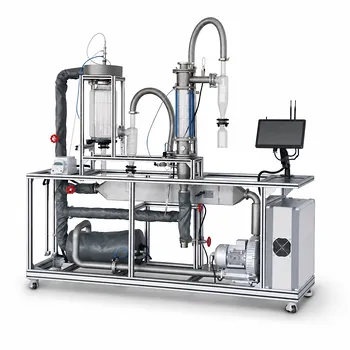
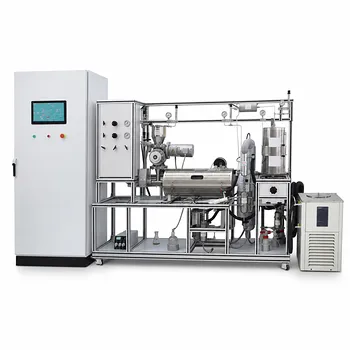
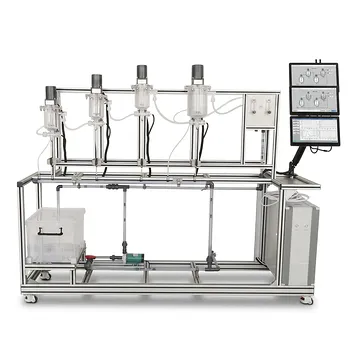
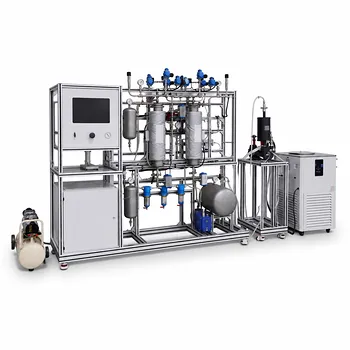
LABPARK provides premium Educational and Vocational Unit Operations Pilot Plants in chemical engineering, bioprocess & biotech, and environmental & water treatment. Designed specifically for universities, research institutes, and enterprises, our pilot systems empower you to master blending, granulation, and other critical unit operations with hands-on precision.
Ready to enhance your research, training, and process development capabilities? Contact LABPARK today to find the perfect pilot plant solution for your lab.
Related Products
- Polymerization Granulation and Pellet Processing Educational Unit Operations Pilot Plant
- Bio-fermentation Ethanol Production Practical Training Unit Operations Pilot Plant
- Multi-Functional Special Distillation Educational Pilot Plant
- Green Anhydrous Ethanol Refining Practical Training Pilot Plant
- Ethyl Acetate Synthesis Unit Operations Pilot Plant for Practical Training
People Also Ask
- How do educational unit operations pilot plants bridge theory and design? Bridge the Engineering Gap
- How do educational unit operations pilot plants address safety and waste management when scaling up?
- Why Compare Predicted and Experimental Excess Enthalpy? Key to Accurate Pilot Plant Scale-up
- When to transition from PID to adaptive control in pilot plants? Key process indicators.
- How do deviations in estimating latent heat impact pilot plant thermal systems? Avoid hardware mis-sizing.