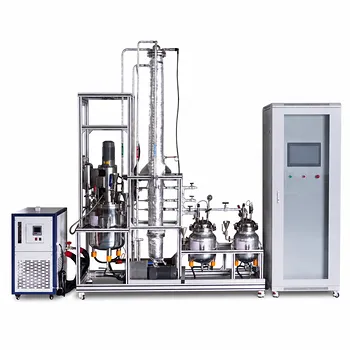
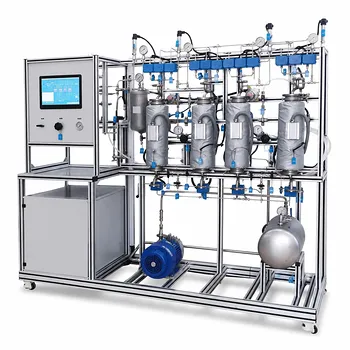
Retention in normal phase is driven by polar interactions with a hydrophilic stationary phase, while reversed-phase retention relies on hydrophobic interactions with a nonpolar stationary phase. In a pilot plant training environment, normal phase operations demand organic solvents and demand meticulous control of water content, whereas reversed-phase methods use water-rich blends and offer flexible gradient elution. This fundamental divergence shapes everything from mobile phase preparation to method development strategy. Understanding it is the first step toward robust, scalable separations.
The core distinction: normal phase chromatography separates compounds by their polarity, as polar analytes stick to a polar stationary phase, requiring primarily organic solvents. Reversed-phase separates based on hydrophobicity, as nonpolar analytes stick to a nonpolar stationary phase, using water-organic solvent mixtures that allow easy manipulation of retention through gradient elution, pH, and additives.
Understanding the Two Retention Mechanisms
How Normal Phase Retention Works
In normal phase mode, the stationary phase is polar—typically bare silica. This surface is covered with silanol groups that strongly interact with polar analytes. The separation mechanism is dominated by adsorption of polar functional groups onto these active sites.
Analytes with greater polarity, such as those with hydroxyl or amine groups, exhibit longer retention times. The competition for binding sites means that even small changes in sample polarity can yield large differences in resolution.
How Reversed-Phase Retention Works
Reversed-phase chromatography employs a nonpolar stationary phase, most commonly silica particles bonded with C18 hydrocarbon chains. Retention is based on hydrophobic interactions. Analytes partition into the stationary phase driven by their dislike for the mobile phase—the more nonpolar the analyte, the stronger it holds.
This mechanism favors compounds with alkyl chains, aromatic rings, or other hydrophobic moieties. It also opens the door to fine-tuning via mobile phase additives that alter ionization states.
The Role of Mobile Phase in Driving Retention
In normal phase, the mobile phase is a blend of organic solvents—hexane, ethyl acetate, isopropanol. Polarity order is reversed relative to the stationary phase: increasing mobile phase polarity increases its eluting strength, knocking polar analytes off the column sooner.
In reversed-phase, the mobile phase is a mixture of water and a water-miscible organic solvent like acetonitrile or methanol. Water is the weakest eluent; increasing the organic component increases eluting strength for hydrophobic compounds. This inverted relationship is a pivotal operational difference.
Solvent Requirements and Practical Implications
Solvent Composition and the Water Factor
Normal phase separations are exquisitely sensitive to water. Even trace moisture in solvents can deactivate the silica surface, drastically altering retention times. Pilot plant operators must use rigorously dried solvents and often sparge with dry nitrogen. This makes normal phase more demanding from a solvent handling perspective.
Reversed-phase systems intentionally embrace water as the primary weak solvent. This reduces flammability risks for large-scale operations and lowers solvent costs, but requires high-purity water systems to avoid contamination and microbial growth.
Isocratic vs. Gradient Operation
Normal phase methods are typically run isocratically. The delicate equilibrium of adsorption is easily disrupted, making reproducible gradient formation challenging. This limits the ability to handle wide polarity ranges within a single run.
Reversed-phase easily accommodates gradient elution. Programmatically increasing the organic modifier content elutes increasingly hydrophobic compounds in a controlled manner. For a pilot plant trainer, this means teaching operators to master gradient pump calibration and understand gradient delay volumes.
pH Control and Ion-Pairing Additives
In reversed-phase, retention of ionizable compounds can be manipulated by adjusting the pH of the aqueous phase. Suppressing ionization makes weak acids or bases more hydrophobic and increases retention. This is a powerful method development tool that is practically absent in normal phase.
Additionally, ion-pairing reagents can be added to the reversed-phase mobile phase. These agents dynamically coat the stationary phase or form neutral ion pairs with charged analytes, adding another dimension of control over selectivity that normal phase cannot easily replicate.
Understanding the Trade-offs
Normal phase offers superior resolution for structural isomers and very polar compounds that would elute at the void in reversed-phase. It also avoids problems with sample dissolution in aqueous media. However, it suffers from poor reproducibility due to water sensitivity and lacks the easy tunability of reversed-phase systems.
Reversed-phase provides unmatched versatility and robustness for the vast majority of small-molecule applications. The ability to run gradients, adjust pH, and use additives means one column type can handle diverse sample sets. The downside is that very polar or charged molecules may be poorly retained, requiring alternative strategies like HILIC or ion-exchange.
Operationally, reversed-phase wins on ease of use and speed in a training context. Normal phase demands more experiential skill to manage solvent activity consistently. The choice often hinges on the specific analysis goal rather than a universal “better” option.
Making the Right Choice for Your Training Goals
When deciding which mode to emphasize in a pilot plant curriculum, align the technology with the learning outcomes.
- If your primary focus is teaching fundamental separation theory: Start with normal phase. Its adsorption mechanism tangibly illustrates the concept of stationary phase competition and the dramatic impact of mobile phase polarity. The sensitivity forces careful technique.
- If your primary focus is method development for pharmaceuticals and routine analysis: Prioritize reversed-phase. Its gradient, pH, and additive capabilities provide a rich sandbox for teaching systematic method optimization that translates directly to industry.
- If your primary focus is operational safety and solvent handling at scale: Compare both. Normal phase teaches rigorous solvent drying and explosion-proof procedures; reversed-phase teaches high-purity water system maintenance and buffer handling.
Master both modes and you gain a deep, intuitive understanding of chromatographic principles that no single mode can provide alone.
Summary Table:
| Feature | Normal Phase Chromatography | Reversed-Phase Chromatography |
|---|---|---|
| Stationary Phase | Polar (e.g., bare silica) | Nonpolar (e.g., C18 bonded silica) |
| Mobile Phase | Nonpolar/organic solvents (e.g., hexane) | Polar/aqueous blends (water + organic) |
| Retention Driver | Polar interactions / adsorption | Hydrophobic interactions |
| Water Sensitivity | Extremely sensitive (demands dry solvents) | Tolerant (uses water-rich blends) |
| Elution Mode | Mostly Isocratic | Isocratic and Gradient (highly flexible) |
Elevate Your Chromatography Training with LABPARK
Ready to equip your facility with advanced separation systems? LABPARK provides state-of-the-art Educational and Vocational Unit Operations Pilot Plants in chemical engineering, bioprocess & biotech, and environmental & water treatment.
Whether you are a university, research institute, or enterprise, our pilot plants deliver the hands-on training environment your students and teams need to master complex chromatographic processes.
Contact LABPARK today to request a quote or customize your pilot plant setup!
Related Products
- Multi Functional Membrane Crystallization Educational Unit Operations Pilot Plant
- Natural Product Extraction Unit Operations Training Pilot Plant
- Multimodal Absorption and Desorption Pilot Plant for Unit Operations Training
- Dual-Mode Rectification Pilot Plant for Practical Training Unit Operations
- General Purpose Cosmetics Production Unit Operations Training Pilot Plant
People Also Ask
- Control Crystallization Pilot Plant Secondary Nucleation: 4 Key Adjustments
- Why is precise temperature control critical in crystallization pilot plants? Key to Scale-Up Success
- What key factors should be considered when configuring a crystallization unit operations pilot plant?
- What are the benefits of integrating online PAT tools like ATR-FTIR into crystallization unit operations pilot plants?
- How to use crystallization pilot plant agitation speed to identify diffusion vs reaction growth?