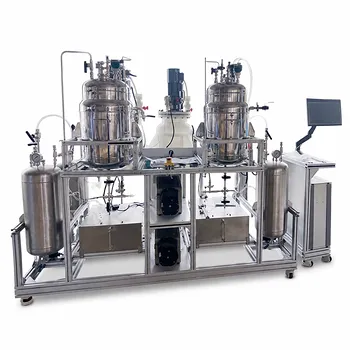
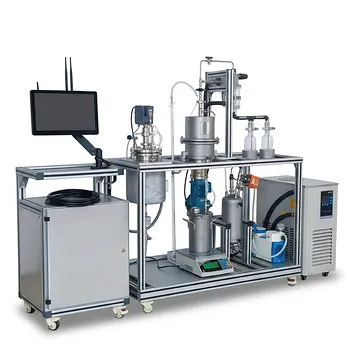
Cell culture is a delicate art—fermentation is an industrial sprint. Hybridoma technology and recombinant bacterial fermentation represent two fundamentally different operational philosophies for antibody production. The first relies on fragile mammalian cells that require meticulous care and slow growth cycles, while the second harnesses robust microbes that can be driven to high densities in rapid, cost-effective campaigns. In educational pilot plants, these contrasts are distilled into hands-on modules that teach parameter control, scale-up logic, and downstream processing, directly mirroring real-world manufacturing constraints.
The central challenge is not simply growing cells or bacteria—it is managing the divergent environments each system demands at increasing scale. Hybridoma processes prioritize cellular health and product secretion into a clean supernatant, whereas bacterial systems wrestle with high biomass, intracellular product release, and the need for lysis. Pilot plants model these tensions to equip learners with the operational instincts needed for both pathways.
The Two Production Paradigms
Before diving into scale-up and education, it's crucial to map the core operational differences that define each platform. These are not just academic distinctions—they dictate every choice from bioreactor design to purification strategy.
The Biological Foundation of Production
Hybridoma cells are immortalized mammalian lymphocytes that secrete full-length, properly glycosylated antibodies directly into the culture medium. They are, by nature, slow-growing and demand a tightly controlled environment. Recombinant bacteria like E. coli are genetic workhorses engineered to churn out antibody fragments, such as Fab, inside the cell. Their growth rate is explosive, and they tolerate a wider range of conditions.
Media and Growth Requirements
Mammalian cell cultures require complex, serum-free or chemically defined media rich in amino acids, vitamins, and growth factors. This media is a major cost driver and must be sterilized by filtration, not heat. Bacterial fermentation uses simple, inexpensive defined media based on glucose, salts, and trace elements. It can be autoclaved, and costs per liter are often an order of magnitude lower.
Bioprocess Kinetics and Density
A hybridoma culture may take two to three weeks to reach a peak cell density of a few million cells per milliliter in a fed-batch process. The product accumulates gradually in the spent medium. A bacterial fermentation reaches tens of billions of cells per milliliter in one to two days, with product synthesized during a much shorter induction phase. This speed dictates a completely different rhythm for monitoring and intervention.
The Scale-Up Dilemma
Scaling up each system magnifies its inherent vulnerabilities. Understanding these challenges is the real purpose behind pilot plant training exercises.
Hybridoma Scale-Up: Keeping Fragility at Bay
The primary challenge is shear sensitivity. Mammalian cells lack a cell wall and can be destroyed by sparging bubbles and impeller forces if not engineered carefully. As reactors grow from bench scale to pilot scale, maintaining homogeneous mixing without killing cells becomes a non-trivial engineering problem. Oxygen transfer must be elevated, but the hydrodynamic forces must stay gentle—a constant push-pull.
Bacterial Scale-Up: Taming the Heat and the Feast
The primary challenge is metabolic byproduct accumulation. Bacteria grow so rapidly that they can exhaust oxygen even in well-sparged tanks, creating local anaerobic zones and acidifying the broth with acetate. This inhibits protein expression. Heat generation is another critical hurdle. High-density fermentation generates significant metabolic heat that must be removed efficiently, or the entire batch collapses. Scale-up models often highlight the "scale-down" approach to mimic large-scale inhomogeneities in small reactors.
Downstream Divergence
For hybridoma processes, the antibody is in the culture supernatant. Downstream begins with a clear liquid after cell removal, amenable to straightforward protein A capture. For bacterial processes, the antibody fragment is trapped inside the cell. Downstream starts with cell lysis, releasing a messy mixture of host cell proteins, DNA, and debris. This demands extra purification steps and rigorous nuclease treatment, adding significant operational complexity that pilot plants deliberately emphasize.
How Educational Pilot Plants Bridge the Gap
The ultimate question is how these industrial realities are translated into pedagogical exercises. The answer lies in modular unit operations that force students to think like process engineers.
The Fermenter as a Teaching Tool
Pilot plants use benchtop microbial fermenters (1–10 L) as scaled-down models. Students learn to configure probes for dissolved oxygen (DO) and pH, and to write cascaded control loops: DO drives the stirrer and sparge rate, pH triggers acid/base pumps. These are the exact same feedback loops used at 10,000-L scale. The exercise is not to grow cells, but to understand how a controller responds to a biological demand.
Modeling the Mammalian Process Through Perfusion and Fed-Batch
Mammalian cell culture training often uses spinner flasks or rocking bioreactors for simplicity, but more advanced pilots incorporate fully instrumented stirred-tank reactors with low-shear impellers. Students practice adjusting the feed rate in fed-batch mode or manage perfusion through cell retention devices. The lesson is resource management: balancing nutrient supply against osmolality and toxic byproduct buildup over a long culture lifespan.
Simulating Downstream Realities
Pilot plants deliberately split the purification tracks. After a bacterial fermentation, the class moves to a high-pressure homogenizer for lysis, then to centrifugation and depth filtration to clear debris before column chromatography. After a hybridoma run, they go straight to fluid clarification and capture chromatography. This dual-track approach ingrains the operational decision tree: "Is my product extracellular or intracellular?"—a cornerstone of bioprocess design.
Understanding the Trade-Offs
No single platform is universally superior. A critical part of the advisor’s role is to lay bare the compromises so decision-makers can align technology with real goals.
Glycosylation and Functionality
Bacteria cannot perform the complex post-translational modifications that mammalian cells can. If a therapeutic effect requires a fully glycosylated antibody Fc region to trigger immune effector functions, hybridoma-derived material is mandatory. Bacterial platforms produce only fragments, limiting them to applications where simple binding is sufficient, such as diagnostics or certain blocking therapies.
Cost, Speed, and Safety
Bacterial processes are dramatically cheaper and faster. For research reagents, diagnostic antibodies, or early-stage hit screening, this speed-to-material can outweigh the lack of glycosylation. Moreover, bacterial cultures carry no risk of propagating mammalian viruses, simplifying some biosafety concerns. The choice often hinges on whether the deep need is a functional biologic or a binding tool.
Operational Complexity
Teaching hybridoma technology imparts skills in aseptic technique, cell line stability, and long-term culture maintenance. It trains a workforce for the mammalian cell culture domination of the biopharma industry. Teaching bacterial fermentation builds skills in metabolic engineering, induction timing, and handling high-biomass systems. A truly comprehensive pilot plant curriculum must integrate both to produce bioprocess professionals who can navigate any production scenario.
Making the Right Choice for Your Bioprocess Education Program
If you are designing or evaluating a pilot plant curriculum, your primary goal should dictate the equipment and lesson plans you prioritize.
- If your primary focus is preparing students for the biopharmaceutical industry: Invest heavily in mammalian cell culture stations with fed-batch and perfusion capabilities, and emphasize the shear-protection and long-duration control strategies that dominate commercial antibody production.
- If your primary focus is speed, cost, and teaching core fermentation principles: Center your pilot plant on microbial bioreactors with advanced DO/pH cascade controls, rapid induction protocols, and a full downstream lysis track to demonstrate the complete workup from raw biomass to purified fragment.
- If your primary focus is a balanced biomanufacturing workforce: Integrate both platforms side by side, using hybridoma runs to teach disciplined aseptic processing and bacterial runs to teach high-intensity process control, then highlight the contrast in downstream unit operations as a capstone lesson.
The distinctions between hybridoma and bacterial production are not merely academic—they are the operational blueprints that shape the entire biomanufacturing landscape, and a well-modeled pilot plant ensures that the next generation of engineers can read those blueprints fluently.
Summary Table:
| Feature | Hybridoma Technology | Recombinant Bacterial Fermentation |
|---|---|---|
| Cell Type | Mammalian (fragile, no cell wall) | Microbial / E. coli (robust) |
| Growth Cycle | Slow (2–3 weeks) | Rapid (1–2 days) |
| Product Location | Extracellular (supernatant) | Intracellular (requires lysis) |
| Scale-Up Focus | Low-shear mixing & gentle oxygenation | Metabolic heat removal & oxygen transfer |
| Glycosylation | Full glycosylation (active antibodies) | None (produces antibody fragments) |
Build a World-Class Bioprocess Lab with LABPARK
Equipping students and researchers with hands-on scale-up experience requires industrial-grade training tools. LABPARK provides state-of-the-art Educational and Vocational Unit Operations Pilot Plants tailored for universities, research institutes, and enterprises. Our specialized bioprocess & biotech, chemical engineering, and environmental & water treatment systems allow learners to master parameter control, downstream processing, and scale-up logic in real-world scenarios.
Ready to elevate your training curriculum? Contact us today to explore our pilot plant solutions!
Related Products
- Bio-fermentation Ethanol Production Practical Training Unit Operations Pilot Plant
- Natural Product Extraction Unit Operations Training Pilot Plant
- Aspirin API Synthesis Unit Operations Training Pilot Plant
- Ethylbenzene Dehydrogenation Educational Unit Operations Pilot Plant
- Educational Unit Operations Pilot Plant for Intraparticle Diffusion Effective Factor Measurement
People Also Ask
- Why Use PTFE & Hastelloy in Chemical Pilot Plants? Prevent Corrosion & Ensure Safety
- Why Compare Predicted and Experimental Excess Enthalpy? Key to Accurate Pilot Plant Scale-up
- Why is the chemical plant startup schedule crucial? De-risk scale-up with pilot plants.
- When to transition from PID to adaptive control in pilot plants? Key process indicators.
- Why must batch and fed-batch fermentation pilot plants be designed to accommodate changing rheological conditions?