Non-fluorinated membranes like sulfonated polyimides and sPEEK offer a path to potentially lower-cost electrochemical pilot plants, but their real-world performance is defined by a trade-off between tunable chemistry and long-term stability. These materials can be engineered for high proton conductivity through structural modifications, yet they consistently struggle with hydrolytic degradation and short operational lifetimes—often failing to surpass 500 hours in continuous use.
Electrochemical pilot plants evaluating non-fluorinated membranes must confront a critical reality: while structural innovations (e.g., placing sulfonic groups on side chains) can improve proton conductivity and water uptake, the fundamental limitation of membrane lifespan—driven by hydrolysis and chemical degradation—remains the primary bottleneck for scaling these materials.
The Architectural Promise of Non-Fluorinated Membranes
Non-fluorinated ion-exchange membranes gain their functionality from aromatic hydrocarbon backbones decorated with sulfonic acid groups. Unlike their fluorinated counterparts, this chemistry enables a wide design space for tailoring performance.
Structural Control Over Proton Conductivity
Sulfonated polyimides can be synthesized with precisely controlled molecular architectures. By selecting specific dianhydride and diamine monomers, engineers can manipulate the size and distribution of ionic channels. This directly influences proton conductivity, the membrane's core electrochemical function.
The location of the sulfonic acid group is equally critical. Research on sPEEK isomers demonstrates that attaching sulfonic groups to side chains—as in sPPBP—rather than directly to the main polymer backbone significantly alters hydration behavior. This structural shift leads to higher water uptake at low relative humidity and better proton conductivity at elevated temperatures, both crucial for fuel cell and electrolyzer efficiency.
Cost-Driven Motivation for Pilot Testing
The primary allure of these materials is economic. Fluorinated membranes, such as Nafion, carry a significant cost premium. Pilot plants serve as the proving ground where the lower material cost of sulfonated polyimides and sPEEK can be weighed against their operational drawbacks. The goal is to determine if total lifecycle costs, including replacement intervals and cleaning procedures, justify a switch.
The Unforgiving Wall of Operational Limitations
The pilot plant environment exposes the deep, often fatal, weaknesses of these membranes. Their elegant chemistry collides with the harsh realities of continuous electrochemical operation.
Hydrolytic Instability: The 500-Hour Barrier
Hydrolysis is the Achilles' heel of sulfonated polyimides. The very functional groups that provide proton conductivity make the polymer backbone vulnerable to attack by water, especially at elevated temperatures and acidic pH values typical of fuel cells.
Even advanced formulations using more robust naphthalenic structures have failed to overcome this limit. The primary reference is stark: these membranes "often fail to achieve more than 500 hours of continuous operation." This is a catastrophic shortfall for any commercial system requiring thousands of hours of durability. The 500-hour mark isn't a gradual decline; it's often the point of mechanical failure or complete loss of selectivity.
The Triple Threat Facing Polymeric Membranes
Beyond specific hydrolysis, all polymeric membranes in pilot plants face three universal killers: fouling, chemical incompatibility, and physical degradation.
Membrane fouling causes a steady decline in permeate flux or ionic conductivity. In electrochemical cells, ionomer poisoning or scale formation on the membrane surface adds resistance, requiring systematic cleaning protocols that themselves can accelerate chemical degradation.
Chemical compatibility is a severe constraint. The supplementary references highlight that standard polymers falter when exposed to extreme pH or organic solvents. For non-fluorinated membranes, the acidic, oxidizing environment inside a fuel cell or electrolyzer is already at the edge of their stability window. Any upsets in process conditions can trigger rapid dissolution or embrittlement.
Physical aging and degradation lead to an intrinsically shorter operational lifetime. Pilot plant operators cannot simply “set and forget” these membranes; they must plan for regular, costly module replacements and implement rigorous performance monitoring to catch failure before it compromises the entire unit.
Understanding the Trade-offs
Objective evaluation demands that we map the landscape of compromises clearly. The choice of a non-fluorinated membrane is never a simple upgrade.
Conductivity vs. Stability: An Inverse Relationship
The fundamental trade-off is between proton conductivity and long-term stability. Strategies that boost conductivity—like increasing the ion exchange capacity (IEC) or swelling the membrane with water—almost invariably accelerate hydrolytic degradation and dimensional swelling. A highly conductive sPEEK membrane that swells excessively will delaminate from electrodes or lose mechanical integrity rapidly. The engineer’s task is to find the narrow operating window where performance is acceptable without triggering rapid catastrophic failure.
Synthetic Complexity vs. Real-World Robustness
While the ability to tailor sulfonated polyimides is a characteristic, it also becomes a limitation. Complex, multi-step syntheses required to create hydrolysis-resistant structures are themselves costly and difficult to scale, eroding the initial cost advantage. Moreover, a pilot plant environment is unforgiving of fragility; a membrane with perfectly engineered nanochannels becomes useless if a minor temperature excursion causes irreversible structural collapse. The “characteristic” of design flexibility is, in practice, a warning about sensitivity.
Comparison to Industry-Standard Polymers
In the broader universe of polymeric membranes, a pattern emerges. Standard materials like cellulose acetate or Matrimid polyimide persist in industrial gas separation because their stable, predictable performance outweighs the allure of higher permeability from advanced polymers like PTMSP. The non-fluorinated electrochemical membrane story is identical: sPEEK and sulfonated polyimides promise superior properties compared to older materials, but they inherit the same life-cycle limitations—physical aging, solvent susceptibility—that make standard, less exotic polymers the reliable choice for long-term operation.
Making the Right Choice for Your Pilot Plant
Selecting a membrane for an electrochemical pilot plant requires brutal honesty about your objectives. The following recommendations align material selection with your ultimate goal.
- If your primary focus is fundamental material research and short-term performance screening: Leverage sulfonated polyimides and sPEEK isomers. Their structural tunability is unmatched for studying structure-property relationships. Plan your experiments in time blocks well under 500 hours to stay ahead of failure.
- If your primary focus is demonstrating a scalable, commercially relevant process: Avoid non-fluorinated membranes that have not demonstrated thousands of hours of stable operation. Prioritize known durable materials, even at a higher cost, because a pilot plant that cannot run reliably fails to generate the data needed for scale-up.
- If your primary focus is lifetime cost analysis: Run controlled aging studies to map the exact degradation rate of your chosen sPEEK or polyimide membrane under your specific operating conditions (temperature, pH, current density). Use this data to build a predictive replacement model, comparing the material savings against the combined cost of downtime, cleaning chemicals, and replacement modules.
The true value of non-fluorinated membranes in pilot plants is not as a direct drop-in replacement, but as a critical research tool that illuminates the path toward solving the hydrolytic stability problem. Until that problem is solved, their role remains in the laboratory, not on the factory floor.
Summary Table:
| Aspect | Key Characteristics / Advantages | Operational Limitations & Risks |
|---|---|---|
| Proton Conductivity | Highly tunable molecular structures (e.g., side-chain groups). | Swelling leads to delamination and mechanical failure. |
| Economic Value | Significantly lower initial material cost than fluorinated membranes. | High replacement frequency due to short operational life. |
| Lifespan | Ideal for short-term performance screening (<500 hours). | Hydrolytic instability; struggles to exceed a 500-hour limit. |
| Robustness | Adaptable synthetic chemistry for custom research. | Vulnerable to fouling, chemical degradation, and physical aging. |
Optimize Your Process Scale-Up with LABPARK
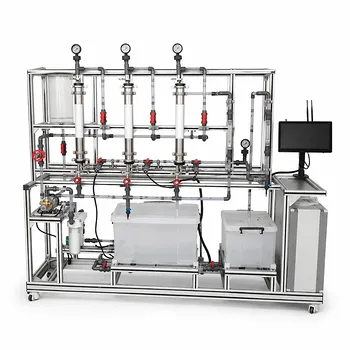
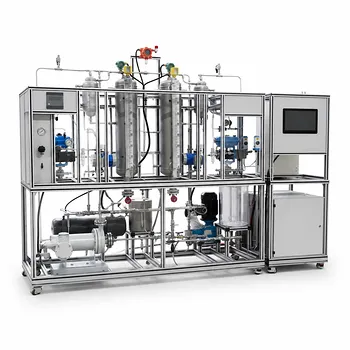
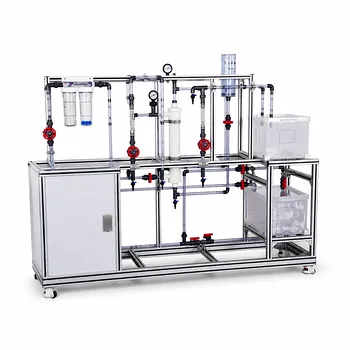
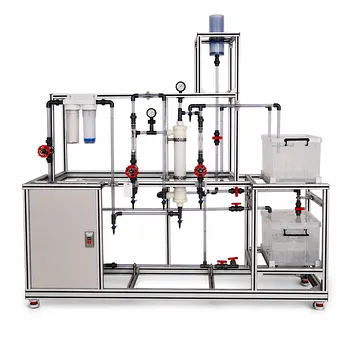
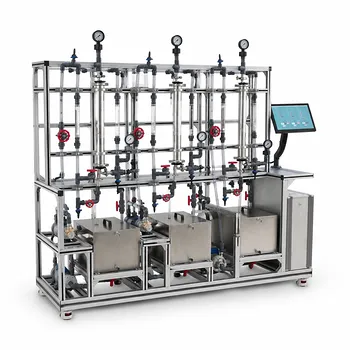
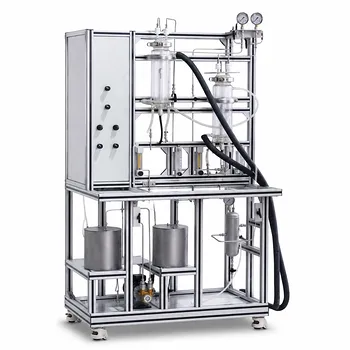
Evaluating advanced membrane materials requires robust, reliable testing systems. LABPARK offers premium Educational and Vocational Unit Operations Pilot Plants across chemical engineering, bioprocess & biotech, and environmental & water treatment. Tailored for universities, research institutes, and enterprises, our systems provide the precise control and durability needed to generate scalable real-world data.
Ready to elevate your research capabilities? Contact us today to explore our pilot plant solutions!
Related Products
- Multifunctional Membrane Separation Educational Pilot Plant with Ultrafiltration, Nanofiltration, Reverse Osmosis
- Alkaline Membrane Water Electrolysis Educational Pilot Plant Unit Operations Training System
- Hollow Fiber Ultrafiltration Membrane Separation Educational Pilot Plant
- Ultrafiltration Membrane Separation Educational Pilot Plant
- Multi-Functional Membrane Separation Educational Pilot Plant for Unit Operations Lab
People Also Ask
- Isotropic vs. Anisotropic Membranes: How to Choose the Best Pilot Plant Modules
- How can operators optimize operating conditions and cleaning protocols in membrane separation pilot plants to mitigate fouling?
- Why is membrane fouling a critical focus area? De-risk your bioprocess and food-grade scale-up success.
- How do PEI, PVDF, and PSU membranes compare in pilot plants? Find the best fit.
- How does surface modification mitigate membrane fouling? Key grafting & charge strategies.