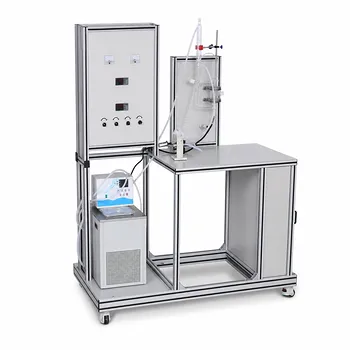
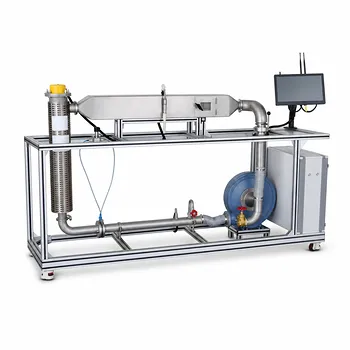
Multi-effect evaporators reuse thermal steam across several pressure stages, while MVR evaporators recycle vapor using mechanical compression. Multi-effect systems reduce fresh steam consumption by cascading vapor from one effect to the next at progressively lower pressures. MVR systems compress the vapor produced by evaporation, raising its pressure and saturation temperature so it can return as the heating medium.
The central difference is the energy input: multi-effect evaporation primarily saves steam by reusing heat across multiple effects, whereas MVR replaces most external heating steam with electrical compressor work. MVR can achieve very low thermal utility consumption, but its overall advantage depends on electricity cost, power-source efficiency, boiling-point elevation, and operating conditions.
How Multi-Effect Evaporators Operate
Sequential evaporation at decreasing pressure
A multi-effect evaporator divides evaporation into several connected effects. The first effect receives external heating steam, while each subsequent effect operates at a lower pressure and therefore a lower boiling temperature.
The vapor generated in one effect becomes the heating medium for the next effect. This allows the same latent heat to drive evaporation more than once.
Steam economy through heat cascading
The primary energy benefit is steam economy. Instead of condensing all generated vapor and discarding its latent heat, the system reuses that vapor in downstream effects.
As the number of effects increases, fresh steam demand generally decreases. However, the available temperature difference is divided among more effects, so each effect has a smaller driving force for heat transfer.
Pressure and temperature control
The pressure profile is essential to operation. Each downstream effect must be sufficiently cooler than the preceding effect to permit vapor condensation and heat transfer.
In pilot plants, this makes multi-effect systems useful for studying thermal residence time, pressure control, heat-transfer rates, and scale-up behavior.
How MVR Evaporators Operate
Mechanical compression of secondary vapor
An MVR evaporator captures the vapor produced by the boiling liquid and sends it to a compressor or vapor blower. Compression increases the vapor’s pressure and saturation temperature.
The compressed vapor is then returned to the evaporator heating side, where it condenses and transfers its latent heat back to the feed solution.
Electrical energy replaces most fresh steam
Unlike a conventional evaporator, an MVR unit does not normally require continuous external heating steam during steady operation. Its main energy input is the electrical work required by the compressor.
Fresh steam may still be needed during startup, for control, or when operating conditions cannot be maintained by vapor recompression alone.
Internal heat recovery
MVR recycles latent heat within essentially the same evaporation stage. It therefore achieves a multi-effect-like heat-reuse function without requiring several evaporation bodies in series.
This can reduce cooling-water demand because less vapor needs to be rejected to an external condenser.
Energy-Efficiency Comparison
Multi-effect efficiency depends on the number of effects
Multi-effect evaporators reduce steam consumption by reusing vapor successively. More effects can improve steam economy, but the improvement is not unlimited.
Additional effects introduce more equipment, pressure levels, heat-transfer surfaces, controls, and potential sources of fouling or operational imbalance.
MVR efficiency depends on compressor work
MVR can reduce external thermal energy demand substantially because the evaporated solvent’s latent heat is recovered and reused. The key energy penalty is the compressor’s electrical consumption.
The relevant question is therefore not simply whether MVR uses less steam. It is whether the electrical energy required for compression is favorable compared with the thermal energy and utility costs of the alternative multi-effect arrangement.
Thermal efficiency is not the same as total energy efficiency
A system that uses very little steam is not automatically more energy-efficient in every context. Electricity may have a higher cost or primary-energy impact than low-pressure process steam, depending on the site utilities.
For pilot-plant comparisons, engineers should evaluate both:
- Steam consumption and steam economy
- Electrical power consumed by the compressor
- Total utility cost
- Heat-transfer performance
- Cooling-water demand
- Startup and transient energy requirements
Where Each Technology Fits Best
Multi-effect evaporators suit steam-available operations
Multi-effect systems are attractive when plant steam is available at a reasonable cost and the process benefits from staged evaporation.
They are also valuable when the feed has conditions that make mechanical compression difficult, including significant boiling-point elevation or vapor characteristics unsuitable for the compressor.
MVR suits low-boiling-point-elevation solutions
MVR is generally best suited to solutions with relatively low boiling-point elevation (BPE). The compressor must raise the vapor temperature enough to create a useful temperature difference across the heating surface.
A high BPE reduces that available driving force. Overcoming it may require a higher compression ratio, increasing compressor power, capital cost, and maintenance burden.
Pilot plants enable direct comparison
A pilot plant can quantify the actual trade-off rather than relying only on theoretical steam economy. Operators can measure feed rate, concentration, vapor production, steam use, compressor power, heat-transfer coefficients, and product residence time.
This is particularly important because fouling, viscosity changes, non-ideal heat transfer, and control behavior can alter performance substantially from simplified calculations.
Understanding the Trade-offs
Multi-effect systems are mechanically complex
Multi-effect evaporators require multiple effects, separators, heat-transfer surfaces, pressure controls, and interconnecting equipment. They typically have a larger footprint and more involved pressure and temperature management than a single-effect unit.
Their capital cost and maintenance requirements increase as the number of effects rises.
MVR concentrates complexity in the compressor
MVR can have a simpler evaporation train, but the compressor becomes a critical component. It requires appropriate control, protection, maintenance, and resistance to process contaminants or entrained liquid.
Compressor failure can directly interrupt the primary heat source, whereas a multi-effect system distributes heat transfer across several stages.
Neither technology eliminates fouling
Both configurations remain sensitive to fouling, scaling, viscosity, and concentration-dependent heat-transfer deterioration. Reduced heat-transfer performance can lower the available temperature driving force and increase utility consumption.
Pilot testing is therefore important for determining cleaning intervals and realistic operating limits.
Startup behavior differs from steady-state behavior
MVR’s strongest energy performance is usually associated with steady operation after vapor circulation has been established. Startup may require external steam or another auxiliary heat source.
Multi-effect systems also have startup requirements, but their performance is more directly tied to the availability and pressure of heating steam throughout the train.
Making the Right Choice for Your Goal
The appropriate choice depends on the process solution, available utilities, and what the pilot plant needs to demonstrate.
- If your primary focus is minimizing fresh steam use: Evaluate MVR first, provided the solution has low BPE and the required electrical power is economically and operationally acceptable.
- If your primary focus is using available process steam efficiently: Consider a multi-effect evaporator that cascades vapor through progressively lower-pressure effects.
- If your primary focus is teaching or researching staged heat integration: Multi-effect evaporation provides direct insight into pressure sequencing, steam economy, and heat-transfer allocation across effects.
- If your primary focus is studying internal latent-heat recovery: MVR provides a clear platform for measuring compressor work, vapor recompression, and recovered heat.
- If your primary focus is difficult or high-BPE solutions: Treat MVR cautiously and compare its required compression ratio and power demand against a multi-effect alternative.
- If your primary focus is scale-up decisions: Use pilot measurements of both thermal and electrical utilities rather than comparing steam consumption alone.
The best selection is the one that minimizes total energy and operating cost while matching the solution’s thermophysical behavior and the pilot plant’s learning or development objectives.
Summary Table:
| Factor | Multi-effect evaporator | MVR evaporator |
|---|---|---|
| Operating principle | Reuses vapor across multiple pressure stages | Compresses secondary vapor and recycles it as heating vapor |
| Main energy input | External process steam | Electrical compressor power |
| Key efficiency benefit | Reduces fresh steam consumption through heat cascading | Minimizes external steam by recovering latent heat internally |
| Best suited for | Sites with affordable steam and staged evaporation needs | Low-BPE solutions with economical, reliable electricity |
| Main limitations | More effects increase equipment, controls, footprint, and fouling risks | Compressor power, maintenance, and higher compression needs for high-BPE feeds |
| Pilot-plant measurements | Steam use, pressure profile, heat transfer, residence time | Compressor power, vapor recovery, heat transfer, and cooling-water demand |
| Selection basis | Steam availability, process behavior, and staged heat integration | Total utility cost, BPE, compressor performance, and steady-state operation |
Planning a pilot study for evaporation, concentration, or heat recovery? Contact LABPARK to discuss the right Educational or Vocational Unit Operations Pilot Plant for your needs. LABPARK supports universities, research institutes, and enterprises with chemical engineering, bioprocess and biotech, and environmental and water treatment pilot systems. We can help you compare multi-effect and MVR configurations, evaluate steam and electrical energy use, study fouling and heat-transfer performance, and generate reliable data for teaching, research, process development, and scale-up decisions.
Related Products
- Rising and Falling Film Evaporation Educational Unit Operations Pilot Plant
- Supercritical High-Gravity Flash Evaporation Educational Unit Operations Pilot Plant
- Natural Product Extraction Unit Operations Training Pilot Plant
- Binary System Vapor Liquid Equilibrium Data Determination Educational Unit Operations Pilot Plant
- Circulating Wind Tunnel Drying and Convective Heat Transfer Coefficient Determination Educational Pilot Plant
People Also Ask
- How to Select Natural vs. Forced Circulation Evaporators by Feed Type
- How do educational unit operations pilot plants bridge theory and design? Bridge the Engineering Gap
- How do unit operation requirements differ between traditional chemical processes and bioprocesses? Build Better Pilot Plant Curricula
- How do educational unit operations pilot plants address safety and waste management when scaling up?
- How do educational unit operations pilot plants bridge theory and industrial process development? Hands-On Learning