The short answer? It can completely erase the tin from your sample. Evaporation with hydrochloric acid during sample preparation causes substantial volatilization of tin as volatile tin(IV) chloride. In methods that concentrate or take the digest to dryness, even a 10 mg tin spike can be lost entirely, producing falsely low or non-detect results and completely undermining the quantitative determination.
Scale analysis in chemical engineering operations demands precise composition data. Tin loss under HCl evaporation is not a marginal error—it is a potential systematic failure that masks corrosion signatures, distorts water chemistry decisions, and directly threatens process safety. The deep challenge is to select a sample preparation pathway that eliminates volatilization or to correct for it rigorously.
Why Tin Disappears: The Volatile Chloride Mechanism
The Chemistry That Drives Loss
Under hot, oxidizing conditions, hydrochloric acid converts tin first to stannous chloride and then, in the presence of oxidizing agents (like nitric acid, air, or perchloric acid), to stannic chloride (SnCl₄). SnCl₄ is a covalent liquid with a boiling point of only 114 °C.
During evaporation on a hotplate, SnCl₄ co‑distills with HCl and water vapor. Repeated evaporations with HCl—common in classic silicate decomposition or scale dissolution—progressively strip tin from the residue. The loss is not a constant fraction; it can be complete.
Factors That Magnify Volatilization
- Chloride concentration – High HCl molarity drives SnCl₄ formation.
- Oxidizing environment – Oxidants push tin to the +4 state, which forms the volatile tetrachloride far more readily than SnCl₂.
- Temperature and evaporation rate – A rapid boil‑off physically carries droplets of SnCl₄ into the fume hood.
- Multiple evaporations – Each evaporation cycle sweeps away additional tin until nothing remains.
Quantifying the Loss: A 10 mg Wake‑Up Call
A Complete Loss Scenario
The primary reference confirms that under certain procedures treating a sample containing 10 mg of tin with hydrochloric acid can lead to complete volatilization. In a scale analysis context, 10 mg is a massive load—it corresponds to a bulk sample that is visibly rich in tin. Yet the metal entirely vanishes from the analytical result.
This is not a subtle bias. It transforms a 1% tin scale into a 0% tin scale, hiding the presence of potent corrosion indicators like tin‑bronze alloys, solder fluxes, or organotin additives that may have entered the system.
How It Distorts Trace‑Level Data
When tin is present only at trace levels (micrograms), the same mechanism can push the measured concentration below detection limits. You then report “not detected” when tin is actually there. In cooling water scales, that misreading can mask the early signs of microbiologically influenced corrosion or the degradation of tin‑based biocides.
Implications for Scale Analysis in Unit Operations
Corrosion Diagnosis on False Premises
In power plants, refineries, and chemical facilities, scale deposits often carry a “corrosion fingerprint.” Tin signals specific metallurgies: admiralty brass, tin‑bronze pump components, or lead‑tin solders. If volatilization deletes tin from the data, an analyst may wrongly conclude that brass corrosion is absent, leading to the wrong chemical treatment program.
Compliance and Asset‑Life Decisions
Many industrial water treatment specifications require monitoring of tin as a regulated heavy metal or as a surrogate for other contaminants. A lab that uses a standard HCl‑evaporation digestion without accounting for tin loss is systematically underreporting concentrations. That can cause permit violations, misinformed blowdown adjustments, and undetected excursions that shorten equipment life.
Navigating Away from the Problem: Digestion Pathways That Retain Tin
The Sulfuric Acid Fuming Conversion
A classic workaround is to add sulfuric acid before any HCl evaporation. Heat the sample to dense white fumes of SO₃. Under strongly oxidizing‑acid conditions, tin forms the non‑volatile tin(IV) sulfate. Once excess HCl has been driven off, the residue can be diluted safely. This method deliberately trades a volatile chloride for a refractory sulfate, stabilizing tin entirely.
Closed‑Vessel Microwave Digestion
Modern labs increasingly rely on sealed, high‑pressure microwave systems. HCl can be used without loss because no evaporation occurs while the vessel is sealed. After mineralization, the digest is simply diluted. This approach combines the attacking power of HCl with zero‑volatilization containment and is the gold standard for volatile element profiles.
Controlled Evaporation with a Complexing Agent
If HCl evaporation is unavoidable because the scale contains silicates that require fluoride/HCl mixtures, adding a complexing agent like potassium sulfate or boric acid can help. Borate complexes residual tin, while sulfate converts chlorides to non‑volatile species during the final stages. The effectiveness depends on temperature control; it is less robust than a sealed‑vessel method but can salvage an existing SOP.
Understanding the Trade‑offs
Safety and Speed
- Sulfuric acid fumes are dangerous, require a perchloric‑acid‑rated fume hood (often perchloric acid is used with H₂SO₄), and prolong digestion time. Accidental overheating can lead to explosive perchlorate formation if organics are present.
- Closed‑vessel microwave digestion is fast and safe but requires capital investment and method development for each scale type.
- Complexing agents add reagent‑blank contributions that must be monitored for other trace metals.
Method Validation Is Non‑Negotiable
No matter which pathway you choose, you must validate it with spiked tin standards that mimic your matrix. A spike of 5 mg/kg tin in a synthetic scale matrix must show recovery within 90–110% to be reliable. Running a certified reference material that contains tin is even better. Validation at the low end is especially critical because the loss effect can be nonlinear: small absolute amounts volatilize proportionally more under aggressive evaporation.
Impact on Multi‑Element Packages
Many scale analysis methods are designed for a suite of 20+ elements. Changing the acid matrix to retain tin may shift the response of other analytes. For example, sulfate matrices can suppress calcium sensitivity in ICP‑OES. You may need to recalibrate or accept that a single digestion cannot optimally serve every element. A well‑designed lab will either run two parallel digestions or use a sealed‑vessel method that handles all elements simultaneously.
How to Apply This to Your Scale Analysis Program
- If your primary focus is maximum accuracy for trace tin in corrosion scale: Use sealed microwave digestion with a validated HCl‑based mix. This eliminates volatilization and provides the cleanest blanks.
- If your primary focus is adapting a legacy procedure that requires HCl evaporation: Add sulfuric acid, evaporate to SO₃ fumes only, and never to complete dryness. Validate with spiked samples at the low end of your expected range.
- If your primary focus is a rapid screening where tin is a secondary concern: Acknowledge that the data may be significantly low. Flag any tin measurement on samples prepared by evaporation as a “minimum value only” to prevent false negatives from driving safety decisions.
In every case, the core principle is the same: treat tin as a volatile analyte during sample preparation. Design your digestion around that physical reality, and your quantitative scale data will finally reflect what is actually in the deposit.
Summary Table:
| Digestion Method | Mechanism for Tin Retention | Key Pros & Cons |
|---|---|---|
| Sulfuric Acid Fuming | Converts tin to non-volatile tin(IV) sulfate | Retains tin safely; requires toxic H2SO4 fumes and long times. |
| Closed-Vessel Microwave | Sealed containment prevents volatilization | High safety and speed; requires higher equipment investment. |
| Controlled Complexing | Uses agents (potassium sulfate/boric acid) | Works for legacy SOPs; risk of reagent-blank contamination. |
Optimize Your Chemical Engineering Training and Research with LABPARK
Accurate analytical skills and scale analysis are fundamental to successful chemical engineering. LABPARK provides premium Educational and Vocational Unit Operations Pilot Plants in chemical engineering, bioprocess & biotech, and environmental & water treatment. Designed specifically for universities, research institutes, and enterprises, our systems bridge the gap between bench-scale chemistry and industrial operations.
Ready to elevate your training facilities and research accuracy? Contact us today to discuss how LABPARK pilot plants can empower your laboratory!
Related Products
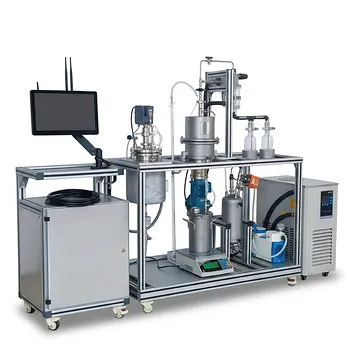
- Supercritical High-Gravity Flash Evaporation Educational Unit Operations Pilot Plant
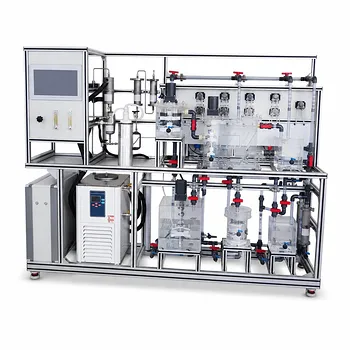
- Rising and Falling Film Evaporation Educational Unit Operations Pilot Plant
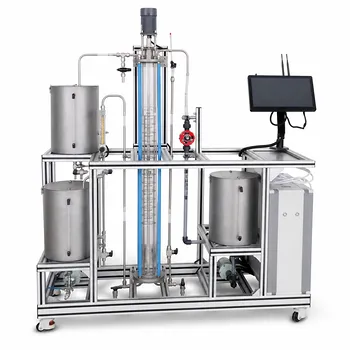
- Natural Product Extraction Unit Operations Training Pilot Plant
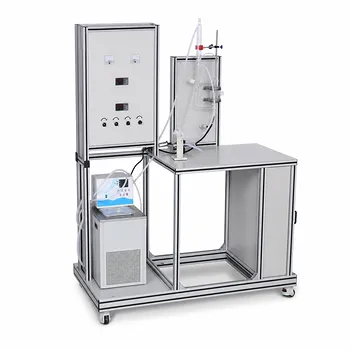
- Thermal Desorption Exhaust Gas and Tail Water Treatment Educational Pilot Plant
- Educational Rotary Disc Liquid-Liquid Extraction Pilot Plant
People Also Ask
- How is the heat transfer area calculated for an evaporation unit operations pilot plant during experimental design? Guide
- How to select educational evaporator pilot plants for thermal & scaling solutions? Complete Guide
- What is the practical significance of Kb in pilot plant evaporation? Master process design.
- How to Select Natural vs. Forced Circulation Evaporators by Feed Type
- How do flash calculations relate to flash evaporation pilot plants? Bridge Theory and Practice