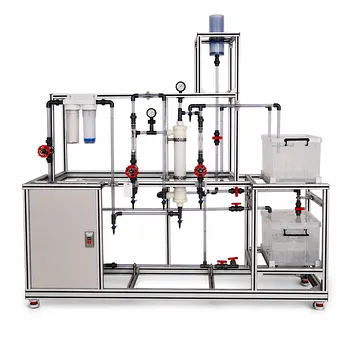
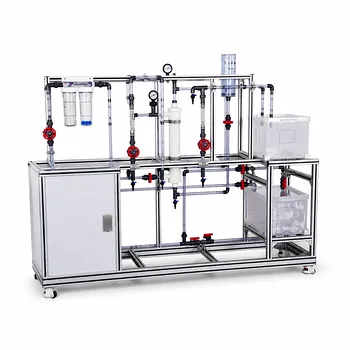
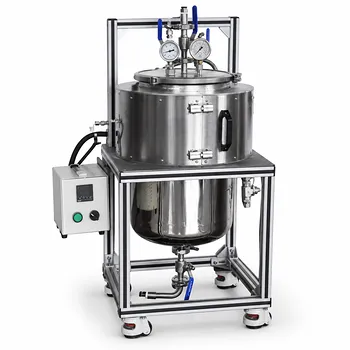
At the core of a pilot-scale bioprocess training program, microfiltration and ultrafiltration crossflow systems are not just filtration units—they are the primary hands-on platforms for ingraining the art and science of downstream processing. Specifically, crossflow microfiltration (MF) teaches the fundamentals of cell harvesting, broth clarification, and sterile water production, while crossflow ultrafiltration (UF) anchors the skills of protein concentration, desalting, macromolecule fractionation, and biopharmaceutical purification. Together, they form the essential backbone of any vocational or academic unit operations pilot plant, transforming theoretical knowledge into practical, problem-solving expertise.
The real value of MF and UF in pilot training lies beyond their individual separation tasks: they allow students and professionals to confront and control the dynamic variables—crossflow velocity, shear rates, membrane fouling, and cleaning-in-place protocols—that define successful, scalable bioprocess engineering.
The Educational Roles of Microfiltration in Pilot-Scale Training
Microfiltration’s relatively open pore structure (0.05–10 µm) positions it as the workhorse for the critical first steps of downstream processing. In a training environment, it makes physical sieving visible and intuitive, while introducing the core concept of tangential-flow operation.
Clarifying and Harvesting: The Front-Line Separation
MF is used for cell harvesting and clarification of fermentation broths.
When students run a broth through an MF cassette, they immediately witness the removal of whole cells, debris, and suspended solids. This links the feed turbidity reduction directly to membrane pore selection. The task also teaches them to manage biological load variability, a key industrial challenge.
Building the Pre-Treatment Mindset
MF is routinely employed to produce sterilized water and to remove suspended particles.
This trains users to see filtration as a chain, not an isolated step. By positioning MF as a protective barrier for downstream ultrafiltration membranes, students learn integrated process design—how an MF pre-treatment step prolongs UF membrane life and maintains system productivity.
The Essential Functions of Ultrafiltration in Bioprocess Training
With pore sizes in the range of 1–20 nm, UF operates at a molecular level that turns a pilot run into a lesson in protein biophysics and process economics.
Protein Concentration and Desalting
Ultrafiltration is critical for protein concentration, desalting, and fractionating macromolecules.
In training, this means students measure concentration factors, plot transmembrane pressure (TMP) versus flux, and see how water and small solutes pass through while a valuable protein is retained. This direct experience cements an understanding of molecular weight cut-off (MWCO) and its impact on yield and purity.
Purifying Biopharmaceuticals with Tangible Metrics
UF equipment is used to purify biopharmaceuticals, requiring students to balance recovery rate with product quality.
By analyzing permeate and retentate samples, they learn to detect protein leakage or aggregation. This translates abstract purification principles into measurable outcomes, preparing them for the rigor of GMP-like environments.
Key Process Variables Students Master During Operation
The true gift of a pilot-scale crossflow system is that it transforms static pump curves and data sheets into a living process. Trainees learn to manipulate variables whose interaction determines the economic feasibility of an entire downstream line.
Crossflow Velocity and Shear: Controlling the Flux Balance
Feed flow rate and crossflow velocity directly determine the shear rate at the membrane surface.
Unlike dead-end filtration, crossflow directs the slurry parallel to the membrane, creating shear that sweeps away retained solids. Students who adjust the recirculation pump quickly see the difference: a higher crossflow velocity mitigates concentration polarization and maintains a stable permeate flux, while a low velocity allows a stagnant gel layer to build.
Cleaning-in-Place (CIP) and Fouling Mitigation
Cleaning-in-place protocols are central to pilot-scale training.
Trainees must execute chemical cycles (caustic, acidic, enzymatic) and evaluate flux recovery after every run. This ingrains the reality that membrane performance is stored not in the initial data but in how well the equipment is cleaned. Understanding this operational routine—temperature, concentration, soak time—is as vital as running the separation itself.
Understanding the Trade-offs
No pilot plant membrane skid is without constraints. Acknowledging these trade-offs builds the critical thinking a future process engineer needs.
The Fouling-Flux Dilemma
High fluxes accelerate biological and colloidal fouling, forcing a choice between short-term throughput and long-term campaign runtime. Students learn that operating below the limiting flux often delivers the most consistent economic outcome, even if it feels counterintuitive at first.
Complexity versus Scalability
A pilot MF/UF system introduces many more variables (pulsations, air entrainment, pressure drops in narrow channel gaps) than a stirred-beaker demonstration. While this complexity mirrors reality, it can overwhelm new users. However, the hands-on cognitive load is exactly what builds the competence to troubleshoot full-scale systems.
The Gap to Manufacturing Scale
Single-element pilot rigs cannot fully replicate the hydrodynamic distribution or holding times of large industrial membrane arrays. Still, they teach the governing principles of tangential flow, and the data from intelligent pilot trials remain the foundation of scale-up design.
How to Apply This to Your Training Setup
The specific roles MF and UF play must be aligned with the learning outcomes you intend to deliver.
- If your primary focus is fermentation and cell culture: Structure MF training around cell viability, harvest yield, and clarifying efficiency to bridge upstream biology with downstream recovery.
- If your primary focus is protein purification and biopharmaceutical processing: Build UF modules around diafiltration volume optimization, protein aggregation monitoring, and MWCO selection so students master the economics of high-value molecule isolation.
- If your primary focus is process engineering and scale-up: Design experiments that systematically vary crossflow velocity and TMP while recording flux decline curves and CIP restorability. This builds the data-driven, fouling-aware mindset that distinguishes proficient process developers.
Master the interplay of these two crossflow systems and your training plant transforms from a demonstration loop into a true crucible of bioprocess expertise.
Summary Table:
| System Type | Pore Size / Range | Core Training Roles | Key Variables Mastered |
|---|---|---|---|
| Microfiltration (MF) | 0.05–10 µm | Cell harvesting, broth clarification, system pre-treatment | Crossflow velocity, shear rate, cell debris control |
| Ultrafiltration (UF) | 1–20 nm (MWCO) | Protein concentration, desalting, macromolecule fractionation | Transmembrane pressure (TMP), MWCO selection, CIP cycles |
Build Real-World Bioprocess Expertise with LABPARK
Bridging the gap between classroom theory and industrial execution requires hands-on experience on pilot-scale systems. LABPARK provides state-of-the-art Educational and Vocational Unit Operations Pilot Plants in chemical engineering, bioprocess & biotech, and environmental & water treatment designed specifically for universities, research institutes, and enterprises.
Our customizable crossflow filtration skids allow trainees to master critical variables like flux optimization, fouling control, and CIP protocols in a safe, controlled environment.
Ready to elevate your training curriculum? Contact LABPARK today to request a quote or custom design consultation!
Related Products
- Multifunctional Membrane Separation Educational Pilot Plant with Ultrafiltration, Nanofiltration, Reverse Osmosis
- Ultrafiltration Membrane Separation Educational Pilot Plant
- Multi-Functional Membrane Separation Educational Pilot Plant for Unit Operations Lab
- Hollow Fiber Ultrafiltration Membrane Separation Educational Pilot Plant
- Hot Filtration Educational Unit Operations Pilot Plant Laboratory System
People Also Ask
- How do PEI, PVDF, and PSU membranes compare in pilot plants? Find the best fit.
- Pervaporation vs. Vapor Permeation: Handling Suspended Solids in Membrane Pilot Plants
- What are the trade-offs of polymer vs inorganic membranes in teaching pilot plants? Key laboratory comparison.
- What are the advantages of membrane separation in pilot plants? Efficient Organic Vapor Recovery
- How can operators optimize operating conditions and cleaning protocols in membrane separation pilot plants to mitigate fouling?