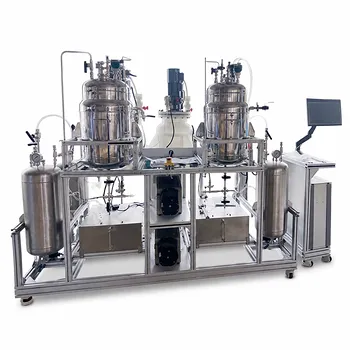
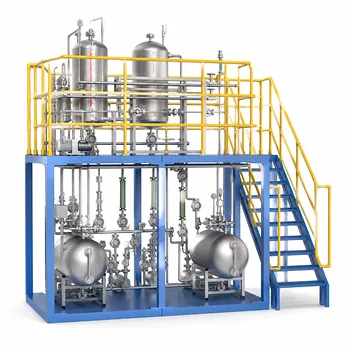
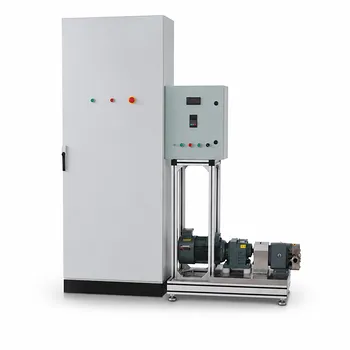
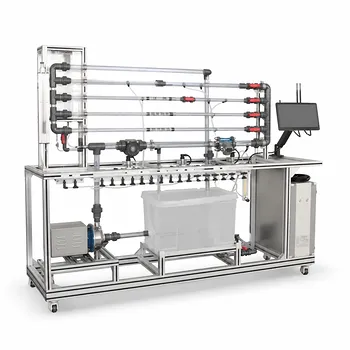
The core principle of pump selection for a training unit is to match the pump’s performance envelope to the specific fluid behavior and operating point you want to demonstrate. Laboratory engineers must start by overlaying their desired flow rate, required head, and fluid properties onto the natural capabilities of each pump class. Centrifugal pumps dominate high-flow, low-to-medium head applications with clean, low-viscosity liquids, delivering steady, non-pulsating flow. When low flow must overcome a high head with a clean fluid, a vortex (regenerative turbine) pump becomes the candidate. For high head at low flows with viscous, shear-sensitive, or precisely metered fluids, reciprocating pumps provide accurate dosing but introduce pulsation. And when high-head pumping must handle notoriously viscous fluids smoothly, rotary positive displacement pumps are the definitive choice.
Training units aren’t just a collection of pumps—they’re a physical decision tree.
The real lesson lies in why we place centrifugal pumps in one circuit, rotary pumps in another, and how that choice pivots on a handful of fundamental fluid parameters. The entire unit should make the “why” visible.
The Pump Selection Framework for Educational Units
Starting with the Flow-Head Matrix
Every pump has a natural operating zone. For a lab-scale training system, precise numbers matter.
- High flow, low-to-medium head (roughly 0.25–103 m³/h and 10–50 m head): This is centrifugal territory. Their efficiency and simplicity make them the baseline.
- Low flow, high head (down to a few liters per minute, but heads up to 200 m): Positive displacement pumps take over. Reciprocating and rotary options both live here.
- Ultra-low flow, high head with a clean fluid: A vortex pump can achieve steep head curves in a compact single stage, but it pays a steep efficiency penalty.
Mapping out exactly where each pump type sits on a head-versus-flow chart gives students an immediate, graphic decision aid.
The Viscosity Threshold
Viscosity changes everything. Centrifugal pumps lose efficiency rapidly as viscosity climbs—internal friction throttles their ability to move fluid. In a training unit, switching from water to a 50 cP oil demonstrates this collapse beautifully.
Rotary positive displacement pumps (gear, screw) actually thrive on viscosity. The fluid’s resistance to flow fills clearances and improves volumetric efficiency. For shear-sensitive, high-viscosity fluids, this is the point when you move from a centrifugal to a rotary PD pump.
Fluid Properties That Dictate Pump Type
Beyond viscosity, three fluid traits override all flow-head logic:
- Corrosiveness: Requires corrosion-resistant materials (F-type centrifugal pumps with specialized mechanical seals) or sealless magnetic drive pumps (C-type) for zero-leak protection with toxic/volatile fluids.
- Solids content: Soft solids or slurries demand open or semi-open impellers in a centrifugal pump (P-type), or a specific positive displacement design that won’t block. Closed impellers become a nightmare.
- Abrasiveness: Any pump chosen must have hardened wear parts, and this often shifts the choice toward a simpler, easier-to-repair design.
A Deep Dive into Each Pump Class
Centrifugal Pumps – The Workhorse of Low-Viscosity Systems
They provide large flow rates, low-to-medium heads, and steady, non-pulsating flow. For standard process water or clear chemical solutions, a single-stage centrifugal with a closed impeller offers the highest efficiency and simplest maintenance in the training lab.
However, the term “centrifugal” hides a family tree. Engineers should build training units that let students see the sub-selections:
- Clean water tasks → standard single-stage or multi-stage centrifugal.
- Corrosive acids/bases → F-type with corrosion-resistant metallurgy and seals.
- High-temperature oils (above 200°C) → Y-type oil pumps with cooling jackets.
- Slurries with suspended particles → P-type impurity pumps with semi-open impellers.
- Toxic or flammable fluids → C-type sealless magnetic drive pumps for zero leakage.
Vortex Pumps – High Head at the Cost of Efficiency
They excel at producing high heads from low flow rates when handling clean, low-viscosity fluids. In a training unit, a vortex pump is a compact way to show students how a single impeller can generate discharge pressures that would normally require a multi-stage centrifugal.
The educational punch comes from demonstrating its steeply declining power curve and why efficiency is sacrificed for that head boost—a trade-off that isn’t evident in a simple performance table.
Reciprocating Pumps – Precision and Pulsation
They are the go-to when low flow must meet high head, high viscosity, and precise volumetric control. Diaphragm and piston metering pumps can dose at flows as low as 0.05 m³/h, yet stand up to challenging chemical environments.
The pulsating flow they generate is not a flaw—it’s a feature that students must learn to dampen. Training units often pair a reciprocating pump with a pulsation dampener to make this dynamic instantly observable.
Rotary Positive Displacement Pumps – Taming Viscous Fluids
Gear, screw, and lobe pumps handle low-to-medium flows, extreme heads (up to 200 m), and viscosities that would stall a centrifugal. Their self-priming nature and relatively smooth flow make them indispensable in pilot-plant setups for oil, polymer, or syrup training exercises.
The tight internal clearances that give them their volumetric efficiency also mean they are sensitive to solids and subject to wear. A well-designed unit will include a strainer upstream and a variable-speed drive to make the relationship between viscosity, speed, and flow rate tangible.
Navigating Sub-Classification: Impeller and Material Choices
Impeller Geometry: Closed vs. Open for Particle-Laden Fluids
Closed impellers have front and back cover plates, delivering high efficiency but only with clean fluids. Semi-open and open impellers lack one or both covers—their efficiency drops because of internal recirculation, but they resist clogging.
Training units that run clean water through both impeller types on the same pump curve outfit make the efficiency penalty intuitively clear. Then switching to a fluid with fine particles shows immediately why an open impeller becomes non-negotiable.
Material and Seal Specialization for Chemical Compatibility
The pump body and seal material must survive the test fluid, or the training unit becomes a maintenance lesson. Magnetic drive (sealless) pumps remove the seal entirely for toxic or volatile liquids. For corrosive fluids, an F-type centrifugal with a silicon carbide mechanical seal and fluoropolymer linings keeps the system safe.
Engineers should treat these material selections as additional decision nodes on a master selection chart that students can follow for any new fluid they encounter.
Understanding the Trade-offs and Educational Value
A training unit only works if it exposes the tensions engineers face:
- Steady flow vs. pulsation: Centrifugal (smooth) vs. reciprocating (requires dampening) – vital for sensitive reactors.
- Efficiency vs. solids handling: Closed impeller (efficient, clean-only) vs. open impeller (clog-resistant, less efficient).
- Viscosity tolerance: Centrifugal efficiency plunges with viscosity, while rotary PD pumps improve – a behavioral cliff you can plot live.
- Head capability per stage: Vortex pump achieves high head in one stage, but wastes energy. Centrifugal multi-stage stacks heads efficiently but adds complexity.
- Self-priming vs. flooded suction: Rotary PD pumps often self-prime; a centrifugal typically needs a flooded suction or a foot valve—an operational hazard worth demonstrating.
- Precision vs. simplicity: Reciprocating metering pumps hit tight accuracy, but their moving parts and pulsation demand more care; simple centrifugal pumps deliver reliable, if less precise, flow.
Designing a Purpose-Built Training Unit
Your instructional goals should dictate which pump types take center stage. Mix and match based on what you need the unit to teach.
- If your primary focus is demonstrating industrial standard operations and pump curves: Anchor the unit with a standard single-stage centrifugal pump, and run it over a wide flow range with water, then introduce a viscous fluid to show efficiency collapse.
- If your primary focus is handling viscous or shear-sensitive fluids: Include a rotary gear pump circuit next to a similar-head centrifugal. Run both on an oil at increasing temperature—the gear pump’s steady, high-head flow will contrast the centrifugal’s struggle.
- If your primary focus is precision dosing and chemical metering: Install a diaphragm reciprocating pump with a pulsation dampener. Show the difference between dampened and undamped discharge, and verify volume per stroke under varying discharge pressures.
- If your primary focus is solids handling and wastewater training: Use a P-type centrifugal with a semi-open impeller side-by-side with a closed-impeller pump, flowing a benign slurry. Let students see the clogged closed impeller versus the open impeller’s continued operation.
- If your primary focus is safety and chemical compatibility: Incorporate a sealless magnetic drive centrifugal pump and an F-type centrifugal with mechanical seal. Pump colored water with a harmless “tracer” leak indicator to visualize where a seal would release fluid vs. a magnetic drive’s containment.
The most effective training unit is one that turns pump selection into a hands-on lesson in engineering trade-offs, not just a catalog of components.
Summary Table:
| Pump Type | Flow & Head Range | Fluid Properties | Key Educational Value |
|---|---|---|---|
| Centrifugal | High flow, low-med head | Low viscosity; handles solids/corrosives with correct specs | Standard pump curves, cavitation, & efficiency drops |
| Vortex | Low flow, high head | Low viscosity, clean fluids | Steep head curves & efficiency trade-offs |
| Reciprocating | Low flow, high head | Viscous, precise dosing | Pulsation demonstration & dampener dynamics |
| Rotary PD | Low-med flow, high head | Highly viscous, clean fluids | Volumetric efficiency & self-priming behavior |
Build Next-Generation Labs with LABPARK
Looking to configure the perfect fluid transport system for your students or researchers? LABPARK provides high-quality Educational and Vocational Unit Operations Pilot Plants in chemical engineering, bioprocess & biotech, and environmental & water treatment.
Tailored for universities, research institutes, and enterprises, our pilot plants help students visualize pump selection trade-offs, cavitation, and system dynamics firsthand.
Partner with LABPARK to benefit from:
- Industry-Standard Components: Hands-on training using real-world centrifugal, rotary, reciprocating, and vortex pumps.
- Flexible Configurations: Custom pilot plants designed to match your specific curriculum or research goals.
- Durable & Safe Design: Built with high-grade, corrosion-resistant materials for long-term educational use.
Ready to enhance your training capabilities? Contact LABPARK today to discuss your laboratory requirements!
Related Products
- Two Phase Flow Pattern Velocity Resistance Measurement Educational Pilot Plant
- Centrifugal Pump Performance and Orifice Flowmeter Calibration Educational Pilot Plant
- Multi Pump Fluid Transport Process Piping Unit Operations Training Pilot Plant
- Chemical Pipeline Assembly and Fluid Transport Practical Training Unit Operations Pilot Plant
- Centrifugal Pump Performance Determination Educational Unit Operations Pilot Plant
People Also Ask
- How to update chemometric calibration models in pilot plants? Best practices for process engineers.
- Why Correct Sig Figs & Rounding Matter in Educational Pilot Plants: Ensure Data Accuracy
- How does nuclear yield inefficiency translate to chemical engineering education? Optimize kinetics with pilot plants.
- How can educational pilot plants be used to teach process safety and risk assessment in chemical engineering curricula?
- How to identify two-phase gas-liquid flow patterns? Master fluid dynamics with pilot plants