Your choice of thermodynamic framework is not just a mathematical preference—it’s a decision about how you’ll model molecular reality.
Chemical engineering students and researchers often default to the Equation of State (EOS) method because it feels uniform, or to the activity coefficient method because a professor recommended it. The real guideline is this: use a single EOS for both phases (the φ-φ method) when your system is non-polar, far from ambient, or operating near the critical point. Switch to the activity coefficient approach (the γ-φ method), which pairs an EOS for the vapor phase with a liquid-phase activity model, when your mixture contains polar, hydrogen-bonding, or large molecules and you’re running at low to moderate pressures—the exact conditions of most unit operations pilot plants.
The φ-φ and γ-φ frameworks solve the same vapor-liquid equilibrium problem from opposite starting points. For the polar, atmospheric separations that dominate educational pilot plants, the γ-φ method is the more reliable default. For high-pressure, light-hydrocarbon research, the φ-φ method is essential. Your choice ultimately trades simplicity near the critical point for flexibility in describing complex liquid mixtures.
Defining the Two Thermodynamic Paths
The φ-φ Approach (Full Equation of State)
In this method, a single Equation of State calculates fugacity coefficients for both vapor and liquid. No standard states are needed, and in principle only P-V-T-X data are required.
It is mathematically consistent, reducing programming effort and eliminating phase‑split discontinuities. However, the quality of the prediction depends entirely on the EOS and its mixing rules.
The γ-φ Approach (Activity Coefficient Method)
This framework treats the liquid phase differently: activity coefficients (γ) capture liquid‑solution non‑ideality, while an EOS handles the vapor phase through fugacity coefficients.
The method relies on a separate standard‑state fugacity for each component—a concept that anchors the activity coefficient to a well‑defined reference point. It is beautifully extensible to polar, polymeric, and electrolyte mixtures, where simple liquid‑mixture models often suffice.
When the Full EOS Method Wins
High‑Pressure and Supercritical Operation
The EOS method becomes indispensable when you operate near the critical region. Once a component exceeds its critical temperature, defining a liquid standard state (required by the γ-φ method) becomes cumbersome or impossible.
A single EOS naturally describes the continuous transition from vapor to supercritical fluid without conceptual hiccups. That is why natural‑gas processing, supercritical extraction, and down‑hole reservoir simulations lean heavily on this framework.
Non‑Polar, Light Hydrocarbon Systems
For mixtures of small, non‑polar molecules—light alkanes, nitrogen, oxygen, argon—a well‑tuned cubic EOS like Peng‑Robinson or Soave‑Redlich‑Kwong can describe both vapor and liquid properties with excellent accuracy.
These systems are forgiving. The dominant molecular interactions are weak dispersion forces, and most equations of state were originally parameterized against this exact chemical family.
When the Activity Coefficient Method Becomes Irreplaceable
Polar, Hydrogen‑Bonding, and Complex Mixtures
As soon as your pilot‑plant stream contains alcohols, ketones, organic acids, water, or electrolytes, the φ-φ method struggles. No universal equation of state can handle strong, orientation‑dependent interactions or large size asymmetries without elaborate, system‑specific mixing rules.
The γ-φ approach shines here. Activity coefficient models like Wilson, NRTL, or UNIQUAC are explicitly designed to capture the excess Gibbs energy of mixing in such systems. Polymers, ionic liquids, and even biochemicals can be accommodated.
The Reality of Educational Pilot Plants
Most university‑scale distillation, absorption, and stripping columns run at atmospheric pressure with polar test mixtures—ethanol‑water, acetone‑chloroform, or MEK‑toluene.
In these environments, the γ-φ method is not just defensible; it is the standard against which experimental data are correlated. Students who master it are aligning themselves with the way the vast majority of industrial and academic VLE work is actually done outside the oil‑and‑gas bubble.
The Inescapable Trade‑offs
Sensitivity to Mixing Rules in the φ-φ Method
A full‑EOS calculation stands or falls on the quality of its mixing rules. Even the same EOS can give wildly different results when you switch from van der Waals one‑fluid mixing to more complex combining rules.
There is no universally accurate EOS for all densities. The method falters with polar compounds, polymers, and electrolytes, and its predictions become increasingly questionable as molecules grow in size and shape.
The Standard‑State Conundrum in the γ-φ Method
The γ-φ method’s elegance comes with a price: you must calculate a standard‑state fugacity for every component. For sub‑critical species this is straightforward, but for supercritical gases (like CO₂ above 31 °C) it becomes an arbitrary mathematical construct.
Moreover, the method breaks down entirely in the critical region. If your pilot‑plant experiments approach a mixture’s critical point, the γ-φ framework will generate non‑physical results, and you must switch to a full EOS.
Data Hunger versus Pedagogical Clarity
Complex equations of state—like the 20‑parameter Bender equation—can reproduce VLE, heats of mixing, and residual heat capacities with stunning precision. But they demand extensive, high‑quality experimental data for small, non‑polar molecules and are overkill for most teaching labs.
In contrast, simple cubic EOS (Redlich‑Kwong‑Soave, Peng‑Robinson) or minimal‑parameter activity models (two‑parameter Wilson) give students the foothold they need to understand the thermodynamics without drowning in parameter regression.
From Framework to Model: Practical Choices for Pilot Plants
Matching the Model to the Separation Task
Once you commit to the γ-φ framework, the specific activity coefficient model must align with the phase behavior you expect. The Wilson equation is excellent for completely miscible mixtures—distillation of alcohols, ketones, aromatics—but cannot predict liquid‑liquid splitting.
If your pilot plant involves liquid‑liquid extraction or heterogeneous azeotropic distillation, you need a model that handles two liquid phases. NRTL and UNIQUAC both do this reliably, with UNIQUAC offering better performance for components of vastly different molecular sizes.
Teaching versus Research: A Different Emphasis
In a teaching laboratory, the goal is often to illustrate a principle—how non‑ideality alters relative volatility, or how an azeotrope shifts with pressure. Simpler models (Redlich‑Kwong for vapor, two‑parameter Wilson for liquid) reduce computational overhead while still capturing the essential physics.
For graduate research where pilot‑plant data are being published, you may need to climb the complexity ladder: use UNIFAC to estimate missing parameters, then refine with NRTL or UNIQUAC against your experimental tie‑line data. Always document your modeling choices so that the next student inherits a coherent methodology, not a black box.
Making the Right Choice for Your Goal
- If your primary focus is teaching thermodynamic principles in a unit ops lab: Start with the γ-φ method using a simple cubic EOS for the vapor and Wilson or NRTL for the liquid; atmospheric, polar experiments will directly match this framework.
- If your primary focus is designing a high‑pressure, light‑hydrocarbon separation: Adopt the φ-φ method with a well‑tested cubic EOS (Peng‑Robinson or Soave) and pay meticulous attention to the binary interaction parameters.
- If your primary focus is characterizing a polar azeotropic mixture for a distillation column: Use the γ-φ method with an NRTL or UNIQUAC model fitted to experimental VLE data, and validate the model’s ability to predict the azeotropic composition.
- If your primary focus is modeling a liquid‑liquid extraction process: Immediately reach for NRTL or UNIQUAC within the γ-φ framework; avoid Wilson, and always check that the model reproduces the observed phase split before trusting it for design.
The framework you choose is not a one‑time checkbox—it is the lens through which your pilot‑plant data will speak. Pick the lens that matches the molecular story your chemicals are trying to tell, and both your research and your teaching will gain clarity.
Summary Table:
| Feature | EOS (\phi-\phi) Method | Activity Coefficient (\gamma-\phi) Method |
|---|---|---|
| Phase Treatment | Single EOS for both vapor and liquid | EOS for vapor, Activity model for liquid |
| Ideal System Type | Non-polar, light hydrocarbons, supercritical | Polar, hydrogen-bonding, electrolytes |
| Pressure Range | High pressure, near-critical | Low to moderate pressure |
| Limitations | Poor handling of polar interactions | Fails near critical points; standard-state needed |
| Pilot Plant Use | Supercritical extraction, gas processing | Distillation, absorption, liquid-liquid extraction |
Bring Thermodynamic Principles to Life with LABPARK
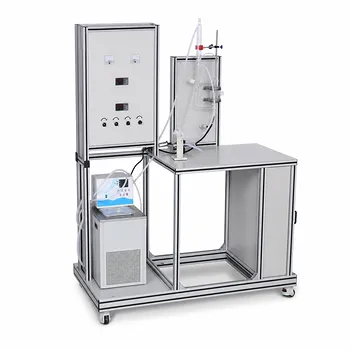
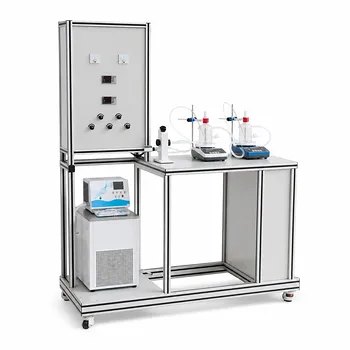
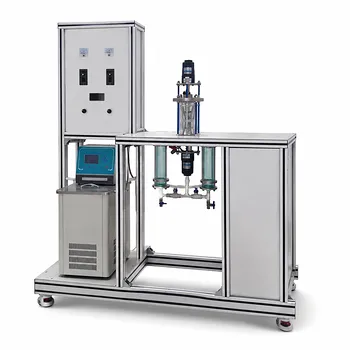
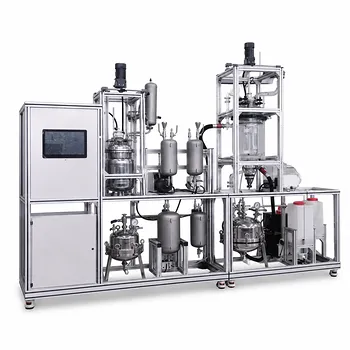
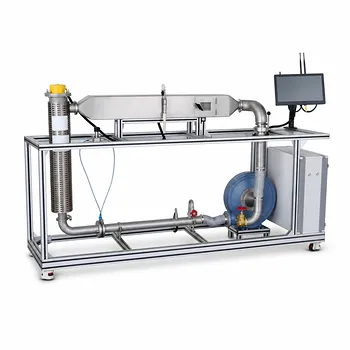
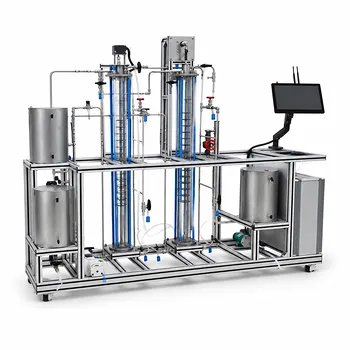
Bridge the gap between VLE mathematical modeling and physical reality. LABPARK provides premium Educational and Vocational Unit Operations Pilot Plants in chemical engineering, bioprocess & biotech, and environmental & water treatment.
Designed specifically for universities, research institutes, and enterprises, our pilot plants enable you to:
- Validate Thermodynamic Frameworks: Allow students and researchers to collect high-accuracy, real-world data to test EOS and activity coefficient models.
- Enhance Vocational Training: Deliver hands-on experience in distillation, absorption, and extraction using industrial-grade instrumentation.
- Optimize Process Scalability: Safely model and transition processes from benchtop theory to pilot-scale operation.
Ready to elevate your department's research and teaching capabilities? Contact LABPARK today to find the perfect pilot plant solution for your lab!
Related Products
- Binary System Vapor Liquid Equilibrium Data Determination Educational Unit Operations Pilot Plant
- Ternary Liquid-Liquid Equilibrium Educational Pilot Plant
- Liquid-Liquid Mass Transfer Coefficient Determination Educational Pilot Plant
- Gallium and Indium Selective Extraction Educational Pilot Plant
- Circulating Wind Tunnel Drying and Convective Heat Transfer Coefficient Determination Educational Pilot Plant
People Also Ask
- For VLE Experiments: Fugacity vs. Activity Coefficient Method Selection Criteria
- Why correlate VLE pilot plant data using Wilson, NRTL, and UNIQUAC? Achieve Accurate Column Scale-Up
- How do pilot plants assist in teaching & researching non-ideal VLE? Bridge Theory & Physical Validation
- How to Model VLE for Supercritical & Unstable Components? Pilot Plant Methods
- Why is accurate VLE data critical? Optimize Unit Operations & Process Scale-Up