Accurate phase equilibrium data is the linchpin of any successful chemical engineering pilot plant operation. It directly governs how you design, operate, and validate separation units like distillation columns and extraction towers. Without it, predictions for separation efficiency, column sizing, reflux ratios, and energy consumption become little more than guesswork, creating a chasm between the clean world of thermodynamic theory and the messy reality of a physical process.
The core challenge isn't just a lack of data; it's that real chemical mixtures frequently defy idealized models. Accurate VLE data is critical because it is the only definitive way to diagnose non-ideal behavior, validate theoretical models under real operating pressures, and ultimately transform pilot plants from static instructional exhibits into powerful tools for process development and scale-up.
The High Cost of Inaccurate VLE Data
In chemical engineering, design and operational decisions are overwhelmingly data-driven. A staggering 70% of engineering data requests for process design focus on phase equilibrium, with a further 25% on enthalpy. This reveals a fundamental truth: defining the separation challenge is the first and most critical step.
The Foundation of All Separation Design
When you lack precise phase distribution coefficients, you cannot reliably determine the very metrics that define your column's success.
- This data dictates the number of theoretical stages, directly influencing the physical height and capital cost of your equipment.
- It establishes the required reflux ratio, the single most important parameter for balancing product purity against energy operating costs.
From Guesswork to Catastrophic Failure
Attempting to scale a process with flawed equilibrium predictions is a primary cause of pilot plant failure.
- An under-designed column, based on optimistic separation predictions, will never meet its purity targets.
- Conversely, over-designing leads to excessive energy consumption and wasted capital, undermining the process's economic viability.
From Abstract Theory to Physical Reality
A pilot plant’s core educational value is in bridging the gap between textbook thermodynamics and physical operations. The fundamental equation f̂iv = f̂il is an abstract concept until you make the system reach equilibrium and physically sample both phases.
The Rule of Equal Potentials, Demonstrated
Educational VLE units allow users to witness the thermodynamic rule that equilibrium is reached when the chemical potential of each component is equal in both the liquid and vapor phases.
- By controlling pressure and temperature and waiting for stabilization, students observe the system settling into this state.
- Extracting physical samples to determine liquid (x_i) and vapor (y_i) compositions provides a direct, tangible measurement of the K-value (K_i = y_i / x_i) , which defines the separation.
Beyond Atmospheric Pressure
Most standard VLE data is recorded at 1 atm, yet industrial processes frequently operate at pressures up to 15 atm to optimize energy integration.
- Pilot plants that enable pressurized distillation are invaluable because they allow researchers to collect VLE data under actual industrial conditions.
- This is crucial for understanding how increasing pressure fundamentally alters the relative volatility, often making a separation harder and requiring a different column design strategy.
Predicting the Unpredictable: Handling Non-Ideality
The most critical skill for a future chemical engineer is not the application of a simple model, but the ability to identify when it fails. Simple mixtures behave; real mixtures demand respect.
The Failure of Standard Models
For mixtures involving highly polar solvents, like glycols or phenolics, the intermolecular interactions are so specific that standard equations of state can be wrong by an order of magnitude.
- This isn't a minor adjustment; it's a catastrophic failure in prediction that can render an entire design useless.
- Teaching students to identify these highly non-ideal behaviors is a key function of a pilot plant, forcing them to move beyond the ideal gas and liquid assumptions.
Applying Local Composition Models
When non-ideality strikes, the solution lies in more sophisticated local composition models like Wilson, NRTL, and UNIQUAC.
- These models account for the fact that molecule-to-molecule local concentrations differ from the bulk average composition.
- The pilot plant takes center stage here, as users generate the high-quality experimental data (P-T-x-y) needed to fit the adjustable binary interaction parameters for these complex models.
The Critical Step of Model Validation
You cannot simply trust the binary interaction parameters in a database. They might have been measured under limited or non-representative conditions, making their blind application a dangerous assumption.
Binary Diagnostics Before Multicomponent Simulation
Before running a full multicomponent distillation simulation, a rigorous engineer first validates that the chosen model can at least predict the binary pairs correctly.
- This is done by generating diagnostic diagrams like y-x, T-x-y, and P-x-y plots.
- For a target system like acetone-water, you use experimental data and a fitting tool, such as VLEFIT, to tune the model parameters and visually confirm the predicted curve matches the physical reality.
The Art of Parameter Fitting
Generating the data is only half the challenge; fitting it correctly is the other.
- Programs like VLEFIT use experimental P-T-x-y data to optimize the adjustable parameters of activity coefficient models.
- This process teaches a healthy skepticism and a critical engineering mindset: you must always verify the predictive accuracy of the thermodynamics you are entrusting with your entire design.
Understanding the Trade-offs
Nothing in engineering comes without a compromise. A pilot plant's VLE data is a powerful asset, but it is not a perfect crystal ball.
Experimental Limitations
The data you collect is only as good as your experimental technique and patience.
- Reaching true thermodynamic equilibrium can be time-consuming, and sampling a high-pressure system without disturbing the equilibrium is technically challenging.
- The purity and stability of the chemicals used will also directly affect the reliability of your measured equilibrium states.
The Scarcity of Reliable Parameters
While models like UNIFAC provide a group contribution method, they are still predictions with inherent error, especially for complex multifunctional molecules.
- Truly robust process design often requires experimentally regressed interaction parameters for a specific system, which demands time and resources that may not be available.
- You are constantly balancing the desire for perfect physical data against the practical need to use a trusted model prediction to get a process moving.
Making the Right Choice for Your Goal
Your focus when using VLE data should shift depending on your ultimate objective. The depth of your investigation must match the need.
- If your primary focus is mastering thermodynamics fundamentals: Concentrate on simple, well-documented mixtures at atmospheric pressure to directly connect measured T, P, x_i, and y_i values to the core theories of Raoult’s law and relative volatility.
- If your primary focus is on rigorous process design for a novel compound: Be prepared to invest in the entire experimental cycle—operating the pilot plant across a range of conditions to generate the VLE data you need to regress custom binary interaction parameters for the NRTL or Wilson model.
- If your primary focus is scaling up a known process to industrial conditions: Prioritize operating the pilot plant at the target elevated pressures to collect data and validate your thermodynamic model, as pressure can significantly alter phase behavior and column sizing requirements.
The true confidence to scale a process is not born from a theory that looks good on paper, but from a model that has been physically tested and validated against the irreducible complexity of a real chemical mixture in a pilot plant.
Summary Table:
| Aspect | Role of Accurate VLE Data | Risk of Inaccurate VLE Data |
|---|---|---|
| Separation Design | Determines theoretical stages & reflux ratio | Under-designed columns; high energy costs |
| Non-Ideality | Identifies deviations in polar/complex mixtures | Inaccurate predictions & process failure |
| Model Validation | Regresses binary parameters (NRTL, Wilson) | Blind trust in unverified database values |
| Process Scale-Up | Simulates industrial pressures (up to 15 atm) | Flawed column sizing & scale-up failure |
Bring Thermodynamic Theory to Life with LABPARK
Bridging the gap between textbook equations and physical reality requires robust, reliable equipment. LABPARK provides state-of-the-art Educational and Vocational Unit Operations Pilot Plants in chemical engineering, bioprocess & biotech, and environmental & water treatment. Designed specifically for universities, research institutes, and enterprises, our systems enable students and researchers to collect accurate VLE data, validate thermodynamic models, and confidently scale up processes.
Ready to elevate your engineering lab or research facility? Contact LABPARK today to discuss your pilot plant needs.
Related Products
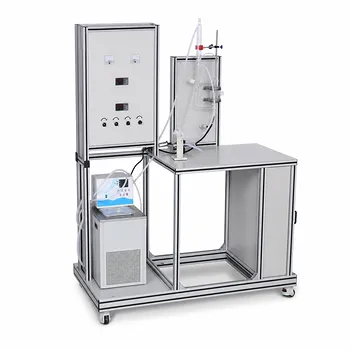
- Binary System Vapor Liquid Equilibrium Data Determination Educational Unit Operations Pilot Plant
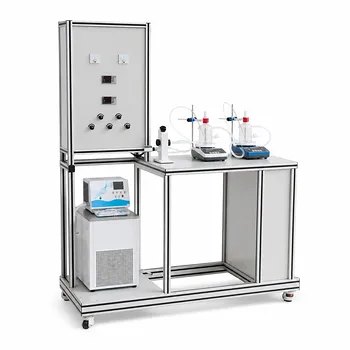
- Ternary Liquid-Liquid Equilibrium Educational Pilot Plant
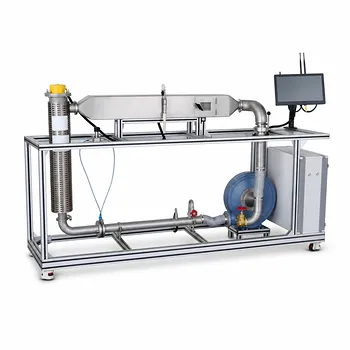
- Circulating Wind Tunnel Drying and Convective Heat Transfer Coefficient Determination Educational Pilot Plant
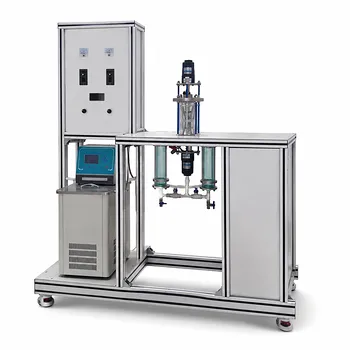
- Liquid-Liquid Mass Transfer Coefficient Determination Educational Pilot Plant
People Also Ask
- Why correlate VLE pilot plant data using Wilson, NRTL, and UNIQUAC? Achieve Accurate Column Scale-Up
- For VLE Experiments: Fugacity vs. Activity Coefficient Method Selection Criteria
- How do pilot plants assist in teaching & researching non-ideal VLE? Bridge Theory & Physical Validation
- How to Model VLE for Supercritical & Unstable Components? Pilot Plant Methods
- How Gibbs Energy & VLE Activity Coefficients Relate to Distillation Pilot Plant Education